


Did you know that nearly 18% of I-485 application denials are linked to missing or outdated medical forms? It’s completely natural to feel a sense of unease when your future depends on a clinical appointment. You might worry about a past illness or feel anxious about the laboratory tests required for your I-693 form. We’re here to demystify the process and show you exactly what happens during immigration medical exam visits so you can walk into your appointment with confidence.
This guide provides a clear roadmap of the appointment flow, from the initial physical examination to the specific vaccinations you’ll actually need for a successful submission. You’ll learn which documents are essential to avoid delays and gain a better understanding of how we handle your health history with professional care. Our goal is to transform this high-stakes hurdle into a routine, manageable medical check-up that supports your path forward.
Key Takeaways
- Discover exactly what happens during immigration medical exam visits to transform an anxious hurdle into a routine check-up.
- Prepare your identity documents and medical history in advance to ensure a smooth, professional review process with your civil surgeon.
- Navigate mandatory laboratory requirements, including current tuberculosis and syphilis screening standards, to avoid common application delays.
- Clarify misconceptions regarding drug testing and mental health evaluations to approach your consultation with transparency and peace of mind.
- Understand the latest submission rules, including why your sealed I-693 must now be filed concurrently with your adjustment of status application.
The Purpose of the USCIS Immigration Medical Examination
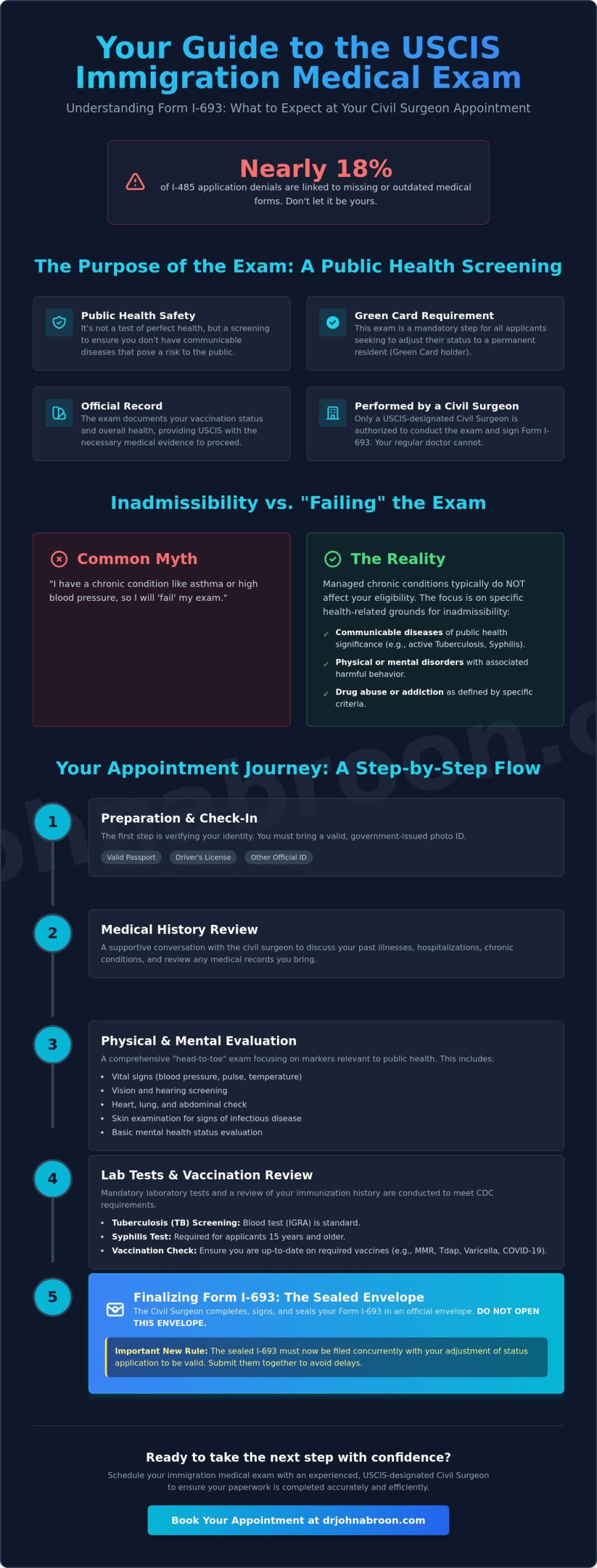
The USCIS immigration medical examination is a vital milestone for any individual seeking to adjust their status to a permanent resident. While it might feel like a daunting legal hurdle, it’s actually a standardized public health screening designed to ensure the safety of the community. Every Green Card applicant must undergo this evaluation to confirm they aren’t inadmissible to the United States on health-related grounds. Understanding what happens during immigration medical exam appointments helps replace uncertainty with a sense of control over your application process. When you step into our office, knowing what happens during immigration medical exam procedures allows you to focus on the next chapter of your life.
Unlike a standard diagnostic visit where the focus is on managing personal symptoms or optimizing your daily wellness, this exam follows strict federal guidelines. The primary objective is to identify communicable diseases of public health significance, such as tuberculosis or syphilis. It’s a formal assessment that documents your vaccination history and overall health status for the official record. By completing this step, you provide the government with the necessary medical evidence to move your case forward. This isn’t a replacement for your routine care; it’s a specific, proactive requirement for your residency path.
Why a USCIS Civil Surgeon is Required
You cannot visit just any healthcare provider for this specific requirement. The government mandates that only a USCIS-designated civil surgeon can perform the examination and sign your Form I-693. These physicians undergo specific training and background checks to ensure they understand the complex regulations surrounding immigration law and public health. A regular primary care doctor, while excellent for your yearly check-up, doesn’t have the legal authority to certify these forms. Dr. Abroon serves as an experienced civil surgeon in Manhattan, offering the clinical authority and personalized attention necessary to navigate these requirements accurately. Choosing a designated professional ensures your paperwork is completed correctly the first time.
The Difference Between ‘Pass/Fail’ and Inadmissibility
Many patients arrive with anxiety, fearing that a chronic condition like high blood pressure or asthma might “fail” their exam. It’s important to understand that this isn’t a test of perfect health. USCIS is primarily concerned with specific categories that could impact the broader public. These include certain communicable diseases, physical or mental disorders associated with harmful behavior, and drug addiction. If you manage a chronic illness with medication, it typically won’t affect your immigration eligibility. We focus on the specific criteria set by the CDC, ensuring your screening is thorough yet supportive of your long-term goals. This distinction allows us to provide a high level of care while fulfilling our duty to the public.
Step-by-Step: What Happens During the Physical and Mental Evaluation
The journey through your clinical evaluation begins the moment you step into our Manhattan office. Your first step involves a formal check-in to verify your identity. You’ll need to present a government-issued photo ID, such as a valid passport or driver’s license. Verification ensures all records align perfectly with your official application. Once your identity is confirmed, we transition into a detailed medical history review. We’ll discuss past illnesses, any previous hospitalizations, and chronic conditions you currently manage. This conversation is designed to be supportive, ensuring that the Official Form I-693 Information accurately reflects your health journey.
Next, we move into the physical examination room for a comprehensive “head-to-toe” evaluation. We check your vision and hearing, listen to your heart and lungs, and examine your skin. This isn’t just about general fitness. We’re looking for specific clinical markers that relate to public health safety. If you’re feeling nervous about what happens during immigration medical exam visits, remember that this is a non-invasive, standard health screening. Our team maintains a steady, professional rhythm to keep you at ease throughout the process.
The Physical Health Assessment
We start with standard vitals: blood pressure, pulse, and temperature. These baseline metrics provide a snapshot of your current physiological state. A key component is the skin exam. We look for signs of infectious diseases or markers that might suggest substance use, as required by federal guidelines. This process is handled with the utmost clinical authority and respect for your privacy. If you have questions during the physical, we encourage you to ask, as patient empowerment is a cornerstone of our concierge-style immigration services.
Understanding the Mental Health Screening
The mental health portion is often a source of anxiety, but it’s primarily a conversation-based assessment. The doctor isn’t looking for a “perfect” psychological profile. Instead, we evaluate for disorders associated with “harmful behavior” toward yourself or others. Having common conditions like anxiety or depression usually doesn’t make you inadmissible. We’ll ask a series of questions about your history and current mental state to ensure you meet the safety criteria defined by the CDC.
Finally, the doctor reviews all initial findings with you. This is the moment where we summarize the physical and mental evaluations before moving on to the next phase. We’ll explain the laboratory orders required based on your age and history. Knowing what happens during immigration medical exam stages like this helps you feel prepared for the blood draws and screenings that follow. Our structured approach ensures no detail is overlooked, keeping your application on a clear path toward approval.
Laboratory Tests and Vaccination Record Review
Once the physical evaluation is complete, the focus shifts to the clinical data that confirms your health status. This phase is highly objective and relies on precise laboratory diagnostics. Many patients feel a bit of trepidation regarding blood draws or urine samples, but these are standard components of the screening. Understanding what happens during immigration medical exam laboratory phases can help ease your mind. We prioritize your comfort while ensuring every sample is handled with the highest standard of clinical excellence. These tests are essential for identifying specific conditions that USCIS monitors for public safety.
The core screening includes blood tests for syphilis and a urine test to screen for gonorrhea. These requirements apply to applicants within specific age ranges determined by the CDC. We facilitate these tests seamlessly within our workflow, ensuring you don’t have to navigate multiple facilities to complete your requirements. Our team provides clear instructions for every step, so you feel supported from the moment you provide a sample until the results are processed. This structured diagnostic approach ensures that your medical record is both accurate and compliant with federal standards.
Tuberculosis (TB) Testing Requirements
As of June 2026, the Interferon-Gamma Release Assay (IGRA) blood test remains the gold standard for tuberculosis screening. We no longer use the traditional “skin prick” test because the IGRA is significantly more accurate and doesn’t require a follow-up visit just to read the results. If your IGRA test returns a positive result, don’t panic. A positive blood test often indicates latent TB, which isn’t contagious. In these cases, we’ll order a chest X-ray to confirm your lungs are clear. A latent diagnosis is entirely manageable and typically doesn’t prevent you from moving forward with your immigration journey.
Completing Your Vaccination Record
Your vaccination history is a critical piece of the I-693 puzzle. We compare your existing records against the current requirements set by the CDC. Essential vaccines for most adults include MMR (Measles, Mumps, Rubella), Varicella (Chickenpox), Polio, and Tetanus (Tdap). If you’re missing records or need a booster, Dr. Abroon can provide green card shots directly in-office. This convenience saves you time and ensures your record is 100% compliant. It’s also important to note that while the influenza vaccine is required during flu season (October through March), the COVID-19 vaccination is no longer a requirement as of early 2025. We’ll ensure your record is tailored to your age and the specific time of your application.
Addressing Common Concerns: Drug Testing and Medical History
Understanding the nuances of your clinical history is a key part of what happens during immigration medical exam consultations. Many applicants arrive with concerns regarding drug testing, fearing it’s a mandatory, universal requirement for every individual. In reality, while a drug test isn’t automatically required for every person, a Civil Surgeon has the authority to order one if clinical indicators or your medical history suggest it’s necessary. This often correlates with the mental health screening we discussed earlier, where we evaluate past behaviors and substance use to ensure there’s no ongoing risk to the community. Honesty is your best asset during this conversation. Being transparent about your history allows us to provide the most accurate documentation for your case.
Prescription Medications and Chronic Illness
If you currently manage a chronic condition like diabetes, heart disease, or hypertension, there’s no reason to worry about your eligibility. We recommend bringing your original medication bottles or a clear, updated list of your prescriptions to the appointment. Dr. Abroon specializes in managing patients with complex medical backgrounds, ensuring that your conditions are documented as stable and well-controlled. A well-managed illness is not a ground for inadmissibility. Our focus is on your total well-being, providing a high-level medical experience that prioritizes clarity over confusion. By presenting your treatment plan clearly, you help us demonstrate that your health is being managed with professional care.
What if the Doctor Finds a Problem?
Sometimes, the screening process identifies an underlying health issue you weren’t aware of. If this happens, conditions are categorized as either “Class A” or “Class B.” A Class A designation refers to conditions that make an applicant inadmissible, such as an active, untreated communicable disease of public health significance. A Class B designation refers to physical or mental abnormalities that are significant but don’t prevent you from obtaining a Green Card. If a concern arises, our role is to guide you through the next steps. This might include a referral to a specialist or a specific course of treatment to clear the condition. We’re here to help you navigate these medical decisions with confidence and clinical authority.
Our ultimate goal is to see you succeed in your residency journey by providing an accurate and timely I-693. We don’t just perform a screening; we offer a supportive environment where your health concerns are addressed with expertise. If you’re ready to begin your process, you can schedule an immigration medical exam to ensure your health history is handled with the precision it deserves. Knowing what happens during immigration medical exam stages like these ensures that you remain empowered throughout the entire process. We’re committed to getting you healthy and your paperwork signed so you can focus on your future.
Finalizing Form I-693: The Sealed Envelope and Results
After your clinical evaluation and laboratory work are complete, the final phase of your journey begins. We understand the anticipation that follows your visit. Typically, your laboratory results arrive within a few business days. Once every metric is reviewed and confirmed, we compile the data into your official Form I-693. This marks the conclusion of what happens during immigration medical exam procedures in our Manhattan office. Our team ensures that every detail is meticulously documented to meet the highest standards of clinical excellence.
The “Sealed Envelope” rule is an absolute requirement for your application. USCIS mandates that the official medical report must be submitted in a packet sealed by the Civil Surgeon. If you break this seal, the form becomes void and will be rejected by immigration officers. We handle this step with strict security protocols to ensure your application remains valid. While you cannot open the official packet, you won’t be left in the dark. We always provide a complete duplicate copy of your results for your personal records, giving you full transparency into your health status.
Your immigration medical exam nyc results carry specific validity rules. For forms signed on or after November 1, 2023, the document generally remains valid for the specific immigration benefit application it accompanies. However, a June 2025 update emphasizes that these results are tied to that original submission. To ensure the most efficient processing, you should submit your Form I-693 alongside your Form I-485. This concurrent filing has been a requirement since December 2, 2024, and it helps you avoid unnecessary delays or additional requests for evidence.
The Signing and Sealing Process
When your laboratory results are processed, Dr. Abroon conducts a final, thorough review of your entire file. He signs the Form I-693 and places it into a specialized envelope. We apply secure tape and official stamps across the flap to prevent any tampering. If your envelope is accidentally opened before it reaches USCIS, you must contact our office immediately. We’ll need to verify that the contents remain unchanged before we can provide a new, properly sealed document for your filing.
Next Steps for Your NYC Application
Our Upper East Side office is designed to provide fast, reliable results in a concierge-style environment. By submitting your medical forms with your initial residency application, you streamline your path to permanent status. We move logically from your health needs to the final paperwork, ensuring you feel empowered rather than overwhelmed. Before you leave our care, please review this final checklist for a stress-free experience:
- Valid Identification: Ensure your government-issued photo ID is current.
- Vaccination History: Keep your personal copy of all shots administered or reviewed.
- Payment: Complete all administrative fees to avoid processing delays.
- Sealed Packet: Keep the official envelope in a safe place until it is mailed.
Knowing what happens during immigration medical exam stages provides the peace of mind you need to focus on your future. We take pride in our high industry rankings and our commitment to personalized care for every patient. Your health and your residency goals are our top priorities.
Secure Your Path to Residency with Confidence
Navigating the clinical requirements of your Green Card application doesn’t have to be a source of stress. By understanding what happens during immigration medical exam visits, you’ve already taken the first step toward a successful submission. Remember that this process is a routine public health screening designed to keep you and your community safe. Bringing your government-issued ID and organized vaccination records ensures your appointment flows smoothly without unnecessary interruptions.
You deserve a medical experience that combines elite credentials with a supportive, patient-centered approach. Dr. Abroon brings over 25 years of medical expertise in Manhattan to every consultation, operating as a board-certified USCIS Civil Surgeon. Our Upper East Side facility offers the convenience of in-office lab services, ensuring your results are processed with both precision and speed. Take the next decisive step in your health journey and Schedule Your NYC Immigration Medical Exam with Dr. Abroon Today. Your future is within reach, and we’re here to help you cross the finish line with peace of mind.
Frequently Asked Questions
Do they drug test for the immigration medical exam?
A routine drug test is not a mandatory requirement for every applicant, but the civil surgeon has the authority to order one if clinical indicators suggest a need. This decision typically stems from the medical history review or the mental health portion of the evaluation. We handle these situations with professional discretion, focusing on ensuring your health meets the safety standards required for your residency application.
How long does the immigration medical exam take?
The in-office portion of the evaluation typically takes between 30 and 60 minutes to complete. This timeframe includes identity verification, a review of your medical history, and the physical examination. While the consultation is efficient, you should plan for the entire process to span a few business days to allow for laboratory processing and the final sealing of your Form I-693.
What should I bring to my immigration medical exam in NYC?
You should bring a valid government-issued photo ID, such as a passport, along with all available immunization records and a list of current medications. If you have chronic conditions, bringing recent medical reports can also be helpful. Having these documents ready helps us maintain a steady, productive rhythm during your visit to our Upper East Side office.
Can I have my immigration medical exam while on my period?
Yes, you can proceed with your appointment during your menstrual cycle without any complications. Menstruation does not interfere with the physical examination or the mental health screening required by USCIS. Our laboratory protocols for the mandatory gonorrhea urine test are designed to provide accurate results regardless of your cycle, ensuring your process remains on schedule.
What happens if I don’t have my vaccination records?
If you lack official vaccination records, we can perform blood titer tests to check for existing immunity to required diseases. If immunity isn’t found, Dr. Abroon provides the necessary vaccinations directly in our office to ensure you meet CDC standards. This concierge-style approach saves you from visiting multiple clinics and ensures your vaccination record is 100% compliant before your forms are signed.
Do I need to fast before the blood tests?
No, you don’t need to fast before the blood draws for syphilis or tuberculosis. These specific screenings aren’t affected by food or drink, allowing you to maintain your normal routine on the day of your visit. Understanding these small details about what happens during immigration medical exam appointments helps you arrive feeling prepared and physically comfortable for your diagnostics.
Will I find out the results of the exam immediately?
You won’t receive your results or the sealed envelope immediately because the laboratory tests require time for accurate processing. Most patients receive their completed Form I-693 within three to five business days after their initial physical. We’ll contact you as soon as your results are ready so you can pick up your personal copy and the official sealed document.
What if I test positive for Tuberculosis (TB)?
A positive IGRA blood test usually indicates latent tuberculosis, which is not contagious and doesn’t mean you have the active disease. If this happens, we’ll order a chest X-ray to confirm your lungs are clear and that you aren’t a public health risk. Once the X-ray results are reviewed, we can proceed with finalizing your paperwork, ensuring your path to residency remains secure.