


What if a positive lab result isn’t actually a failure, but simply the first step toward a more personalized treatment plan? Many applicants feel a wave of panic when they start wondering what happens if you fail medical exam for green card, fearing that a single health issue will end their American dream. It’s completely natural to feel overwhelmed by the high stakes and complex requirements of the immigration process, especially when your future feels tied to a blood test or a chest X-ray.
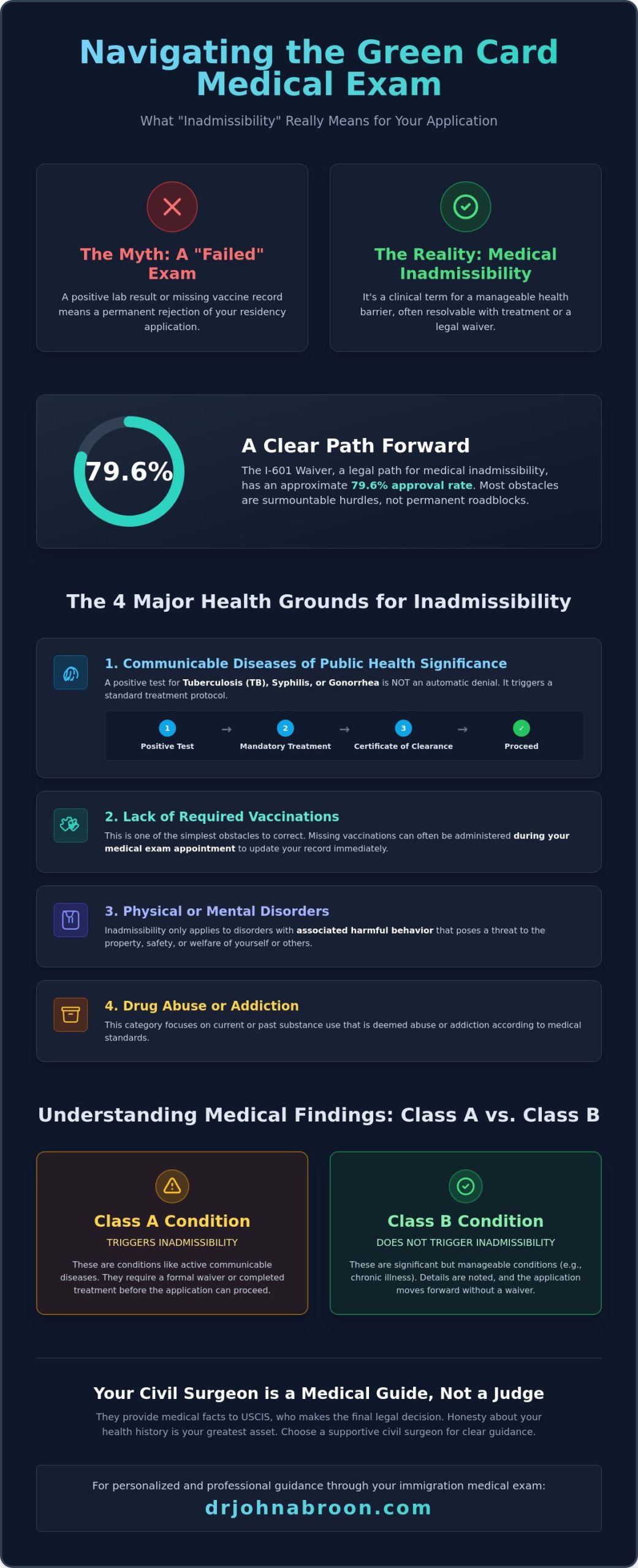
We understand that this stress is real, but a failed exam is rarely a permanent rejection. In fact, with an I-601 waiver approval rate of approximately 79.6 percent, most obstacles are actually manageable hurdles that can be resolved through clinical steps or legal pathways. This guide will help you distinguish between inadmissible and curable conditions while explaining how to navigate follow-up testing. You’ll also learn about the waiver process and how working with a supportive NYC civil surgeon can turn a complicated medical finding into a clear path forward for your residency.
Key Takeaways
- Learn why USCIS identifies health concerns as “inadmissibility” rather than a permanent failure, framing your medical exam as a manageable clinical assessment.
- Identify the four primary health grounds for denial and understand exactly what happens if you fail medical exam for green card due to communicable diseases.
- Discover how missing vaccinations are often the simplest obstacles to correct through immediate clinical updates during your appointment.
- Understand the I-601 waiver process and how it provides a legal avenue for families to stay together despite complex medical histories.
- Learn the benefits of choosing a dedicated NYC civil surgeon who provides personalized guidance and clear treatment referrals rather than a standard “assembly line” exam.
Understanding the Difference Between a “Failed” Exam and Medical Inadmissibility
The word “fail” often creates unnecessary anxiety during the immigration process. In the eyes of U.S. Citizenship and Immigration Services (USCIS), there’s no such thing as failing your health check. Instead, the agency uses the term “inadmissible” to describe specific health-related barriers. When applicants worry about what happens if you fail medical exam for green card, they’re often reacting to a positive lab result or a missing vaccine record, neither of which is a final rejection of their residency application.
Form I-693 serves as a clinical snapshot of your current health status. It isn’t a judgment on your character or your worthiness to live in the United States. Many people mistake an “incomplete” exam for a failed one. If a lab test requires a follow-up or a specialist’s consultation, your file simply remains open until those clinical steps are finished. Understanding the Medical Grounds for Inadmissibility is the first step in replacing fear with a proactive medical plan.
Your civil surgeon acts as a vital bridge between your personal medical history and the strict requirements set by federal law. They don’t make the legal decision to grant or deny your Green Card; they provide the medical facts that USCIS officers use to make that determination. This distinction is important because it means your doctor’s primary goal is to help you meet the necessary health standards through proper care and documentation.
The Civil Surgeon’s Authority in the I-693 Process
A civil surgeon is responsible for determining medical facts based on physical examinations and diagnostic testing. While they record these findings on Form I-693, the final legal decision rests solely with USCIS. Honesty is your greatest asset during this process. Hiding a medical condition is far more dangerous than disclosing one, as a discovery of “willful misrepresentation” can have permanent legal consequences. In our Upper East Side practice, Dr. John Abroon provides a supportive, professional environment where you can discuss your health history openly. This personalized approach ensures that every detail is documented accurately and empathetically, helping you feel empowered rather than overwhelmed.
When is a Result Truly “Final”?
Civil surgeons categorize medical findings into two groups: Class A and Class B. Class A conditions are those that specifically trigger inadmissibility and require a formal waiver or completed treatment before you can proceed. These typically include active communicable diseases or specific mental health conditions associated with harmful behavior. Most other health issues fall under Class B. These are chronic or physical conditions that are significant enough to note but don’t prevent you from obtaining a Green Card. If you have a Class B condition, your report will simply include the details of your diagnosis and treatment plan, allowing your application to move forward without the need for a legal waiver.
The 4 Major Health Grounds for Green Card Inadmissibility
While the process feels daunting, USCIS focuses on four specific categories when evaluating health. Understanding these categories helps demystify what happens if you fail medical exam for green card screenings. Most issues identified during your appointment are clinical hurdles rather than permanent roadblocks. By identifying a concern early, you can often address it through treatment or proper documentation before your final interview.
The four primary grounds for an Inadmissibility Determination include communicable diseases of public health significance, a lack of required vaccinations, physical or mental disorders with associated harmful behavior, and drug abuse or addiction. Each category has its own set of rules, and many “failures” are simply requests for more information or completed treatment cycles.
Communicable Diseases: What USCIS Actually Screens For
USCIS requires testing for Tuberculosis (TB), Syphilis, and Gonorrhea. In 2026, NYC civil surgeons typically use the QuantiFERON-TB Gold Plus blood test for TB and Nucleic Acid Amplification Tests (NAAT) for gonorrhea. A positive result for any of these is not an automatic denial. Instead, it triggers a mandatory treatment protocol. Once you complete the required course of medication and provide a certificate of clearance, your civil surgeon can sign off on your Form I-693. Choosing a civil surgeon who understands these nuances, such as scheduling your immigration medical exams with an experienced NYC internist, ensures your case is handled with the precision it deserves.
Mental Health and “Harmful Behavior”
A common misconception is that a diagnosis of depression, anxiety, or bipolar disorder leads to a denial. This is false. USCIS is only concerned with mental or physical disorders that are coupled with “harmful behavior.” This is defined as actions that pose a threat to the property, safety, or welfare of the applicant or others. For example, a history of multiple DUI or DWI offenses may trigger a more intensive mental health screening. The doctor must determine if the alcohol use constitutes a disorder that has resulted in harmful behavior likely to recur.
Drug Abuse and Addiction Standards
Civil surgeons evaluate substance use based on the Diagnostic and Statistical Manual of Mental Disorders (DSM) criteria. It’s vital to remember that while marijuana is legal in New York State, it remains a controlled substance under federal immigration law. A positive drug screen for marijuana or other controlled substances can lead to a finding of inadmissibility. If a clinical diagnosis of addiction is made, you may be required to show a period of remission before your application can proceed. We approach these conversations with clinical authority and patient-centered reassurance, ensuring you understand the steps needed to meet federal standards.
What Happens If You Test Positive for TB, Syphilis, or Gonorrhea?
Receiving a positive test result for a communicable disease can be a moment of high stress, but it doesn’t mean your residency goals are out of reach. Many applicants find that these results are simply the beginning of a treatment phase rather than a final denial. When people ask what happens if you fail medical exam for green card due to an infection, the answer is usually a structured clinical path toward health and compliance.
The first step involves mandatory reporting. In New York City, civil surgeons are legally required to report positive results for syphilis, gonorrhea, and tuberculosis to the Department of Health. This is a standard public health protocol; it’s not a legal judgment on your immigration status. Once reported, we initiate a referral to a specialist or begin a treatment plan designed to resolve the infection. Successful completion of these medical steps allows the civil surgeon to sign off on your Form I-693, confirming you are no longer a public health risk.
Maintaining your timeline is essential. While follow-up care can add several weeks to your process, completing treatment is significantly faster than appealing a denial. If a condition is particularly complex or chronic, you might explore the I-601 Waiver, which provides a legal path for applicants with health-related grounds of inadmissibility. For most communicable diseases, however, the medical “cure” is the most direct route to a successful application.
The Tuberculosis (TB) Protocol in NYC
The screening process for tuberculosis has evolved significantly. We have transitioned away from the older skin tests, which often produced false positives, in favor of the IGRA blood test. If your IGRA result is positive, the next step is a chest X-ray to determine if the infection is latent or active. Most positive results represent latent TB, meaning you aren’t infectious and don’t pose a risk to others. In these cases, we provide a referral for monitoring or preventative treatment, allowing your exam to proceed once the X-ray confirms there is no active disease.
Syphilis and Gonorrhea: Treatment and Re-testing
Syphilis and gonorrhea are identified through blood and urine samples during your initial visit. If these tests return a positive result, we prescribe a standard course of antibiotics. Once you finish the medication and a follow-up test confirms the infection is cleared, we document the successful treatment on your medical record. Once treated, these conditions are no longer grounds for inadmissibility. This clinical resolution ensures your Form I-693 reflects that you meet all health requirements for your residency application.
The I-601 Waiver: A Legal Path for Medical Inadmissibility
If you receive a finding of inadmissibility, the process doesn’t have to end there. Form I-601, the Application for Waiver of Grounds of Inadmissibility, serves as a vital legal bridge for those who face health-related barriers. It’s the definitive answer to what happens if you fail medical exam for green card when a condition cannot be immediately resolved with a simple course of antibiotics. This waiver allows the government to look beyond the medical diagnosis to the human reality of your situation.
Eligibility for this waiver often depends on your specific family ties. Most applicants must demonstrate that their denial of admission would result in “extreme hardship” to a U.S. citizen or lawful permanent resident spouse or parent. As of May 2026, the filing fee for this application is $1,050. While the median processing time is approximately 20.5 months, the approval rate remains encouragingly high at 79.6 percent. These statistics suggest that with the right clinical and legal support, most health-related obstacles are surmountable.
Your civil surgeon plays a critical role in this legal journey by providing the clinical evidence required to support your application. We don’t just fill out forms; we provide a detailed Report of Medical Examination that documents your health status with precision. This clinical authority gives your legal team the foundation they need to argue your case effectively. If you are facing a complex medical determination, you can schedule a consultation for your immigration medical exam to ensure your documentation is handled with the highest level of expertise.
Vaccination Waivers: Religious or Moral Objections
USCIS allows for two distinct types of vaccine exemptions. A medical contraindication occurs when a doctor determines a vaccine is clinically unsafe for you due to an allergy or underlying condition, which we document directly on your Form I-693. In contrast, a religious or moral waiver requires you to prove a sincere objection to USCIS. While we manage the medical side of contraindications, your legal counsel will guide you through the evidentiary requirements for personal belief exemptions, which USCIS evaluates on a case-by-case basis.
Waivers for Physical/Mental Disorders and HIV
It’s a common relief for many to learn that HIV has not been a ground for inadmissibility since 2010. For other physical or mental disorders, the waiver process focuses on management and safety. We provide the necessary clinical narrative to show that a condition is properly managed and no longer poses a risk of harmful behavior to yourself or the community. This detailed medical report is often the deciding factor in a successful waiver outcome, turning a complex diagnosis into a manageable part of your residency application.
Navigating Your NYC Immigration Medical Exam with Dr. John Abroon
Choosing the right environment for your clinical assessment is just as important as the medical results themselves. In a high-stakes city like New York, many clinics operate like assembly lines, offering little more than a cursory check and a signed form. This lack of personalized attention is often where complications begin. When you understand what happens if you fail medical exam for green card screenings, you realize that many “failures” are actually just administrative errors or missed opportunities for early intervention. Dr. John Abroon provides a sophisticated, patient-centered experience on the Upper East Side that prioritizes your total well-being while meeting strict federal standards.
Our practice ensures your Form I-693 is “bulletproof” before it is ever sealed. We meticulously review your vaccination history and diagnostic results to catch potential issues before they become legal obstacles. If a screening reveals a condition that requires specialist intervention, such as a consultation with an infectious disease expert, our office coordinates those referrals within the Manhattan medical community. This proactive management prevents your file from being marked as incomplete or inadmissible, keeping your residency timeline on track.
A Reassuring, Boutique Experience in Manhattan
We’ve designed our Upper East Side office to provide a concierge-like feel that significantly reduces applicant anxiety. Dr. Abroon’s dual expertise as a board-certified internist and a USCIS-designated civil surgeon allows him to view your health through a holistic lens. This means we don’t just look for reasons to exclude you; we look for ways to ensure you meet the required health standards. For a deeper look at the specific requirements for this year, you can explore our Immigration Medical Exam in NYC: Your Complete Guide.
Booking Your Appointment and Next Steps
To avoid unnecessary delays, please bring your government-issued photo ID, any previous vaccination records, and a list of current medications to your visit. We typically complete the clinical portion of the exam and have your results ready within a few business days, depending on the required lab work. If you’re concerned about what happens if you fail medical exam for green card due to a complex history, our team is here to guide you through every clinical and documentation step. Don’t leave your future to chance in a high-volume clinic. Schedule your expert immigration medical exam with Dr. Abroon today.
Securing Your Residency with Clinical Precision and Care
A health-related finding during your immigration process isn’t the end of your journey. By understanding the difference between temporary clinical hurdles and formal inadmissibility, you can approach your application with confidence rather than fear. Whether you’re navigating a positive test result or preparing a complex waiver application, remember that medical solutions and legal pathways are available to help you meet USCIS requirements.
While you may worry about what happens if you fail medical exam for green card screenings, the reality is that most conditions are manageable through dedicated treatment or precise documentation. Dr. John Abroon, a board-certified internist and USCIS-designated civil surgeon since 1997, provides the elite clinical expertise and personalized attention necessary to navigate these high-stakes decisions. From our convenient Upper East Side Manhattan location, we ensure your medical record is accurate, complete, and supportive of your immigration goals.
Schedule Your USCIS Medical Exam with Dr. Abroon in NYC and take the next step toward your residency with a trusted healer by your side. Your path forward is clear, and we’re here to ensure you walk it with peace of mind.
Frequently Asked Questions
Can I be denied a Green Card for having a chronic condition like diabetes or high blood pressure?
No, chronic conditions such as diabetes or hypertension are not grounds for medical inadmissibility. These are classified as “Class B” conditions, which means they are significant enough to note in your medical history but don’t pose a threat to public safety. Our goal is to document that your condition is well-managed, ensuring your health status supports a successful residency application without causing delays.
What happens if my drug test comes back positive for marijuana in New York?
A positive test for marijuana can lead to a finding of inadmissibility because immigration is governed by federal law rather than state law. Even though marijuana is legal in New York, federal standards still classify it as a controlled substance. If this occurs, you may be required to show a period of remission or work with legal counsel to pursue a formal waiver before your application moves forward.
If I test positive for TB, will I be deported immediately?
No, a positive tuberculosis test does not trigger immediate deportation. Most positive blood tests indicate latent TB, which is not infectious and only requires monitoring or preventative care. Even in cases of active TB, the standard procedure is to refer you for treatment. Once you complete the necessary medical protocols and receive a clearance certificate, your civil surgeon can finalize your Form I-693 for USCIS.
How long do I have to wait to re-apply if my medical exam is rejected?
There is no mandatory waiting period to re-apply, but you must resolve the medical issue that led to the initial finding. If you’re concerned about what happens if you fail medical exam for green card due to a treatable infection, you can typically proceed as soon as you finish your medication and provide a clear follow-up test. Clinical resolution is often the fastest way to get your application back on track.
Can I see my own doctor for the medical exam instead of a civil surgeon?
No, USCIS requires that all immigration medical exams be performed by a designated civil surgeon. While your primary care physician can provide vaccination records or specialist clearance letters, they do not have the federal authorization to sign Form I-693. Seeing an experienced civil surgeon ensures that your exam meets all specific government requirements and is sealed correctly to avoid administrative rejections.
What is the most common reason people “fail” their immigration medical exam?
The most frequent reason for an “incomplete” exam is simply missing vaccination records or evidence of immunity. Many applicants aren’t aware of the specific boosters required for their age group. This is the most easily corrected hurdle; we can often administer the necessary vaccines during your appointment. This allows us to finalize your paperwork quickly and prevents your application from being flagged by USCIS for missing information.
Does a history of mental health therapy show up on the immigration exam?
Your medical history is discussed during the consultation, but seeking therapy for conditions like depression or anxiety is not a ground for denial. The government is only concerned with mental disorders that result in “harmful behavior” toward yourself or others. In most cases, a history of therapy is viewed as a positive sign of health management and does not impact your eligibility for a Green Card.
How much does it cost to fix a “failed” medical exam through treatment or waivers?
The total investment depends on whether you need clinical treatment or a legal waiver. While we do not quote specific medical fees, the filing fee for an I-601 waiver is $1,050 as of May 2026. Clinical costs for vaccinations or specialist referrals vary based on your specific health needs. Addressing these issues correctly the first time is the best way to manage the overall cost and complexity of your application.