


In the high-volume medical landscape of New York City, a second opinion isn’t just a backup plan; it’s a strategic pause that replaces institutional protocols with personalized diagnostic precision. You might feel like a number in a large hospital system or worry that an upcoming invasive surgery isn’t truly necessary. It’s natural to feel anxious when medical advice seems conflicting or rushed. Getting a second opinion from a nyc doctor can provide the clarity you need to move forward with confidence rather than doubt.
This guide explores when and why you should seek another perspective to ensure your diagnosis is accurate and your treatment plan is fully optimized. We’ll cover how to understand insurance mandates, such as the New York State requirement for cancer second opinions, and the benefits of consulting subspecialists. You’ll learn how to transition from feeling overwhelmed by a complex system to feeling empowered in your health journey. By the end, you’ll have a clear path toward avoiding unnecessary procedures and building a more personalized relationship with your physician.
Key Takeaways
- Understand why a second opinion is a vital diagnostic tool rather than an act of disloyalty to your current provider.
- Identify the specific red flags, such as persistent fatigue or high-risk surgical recommendations, that signal it’s time for a new perspective.
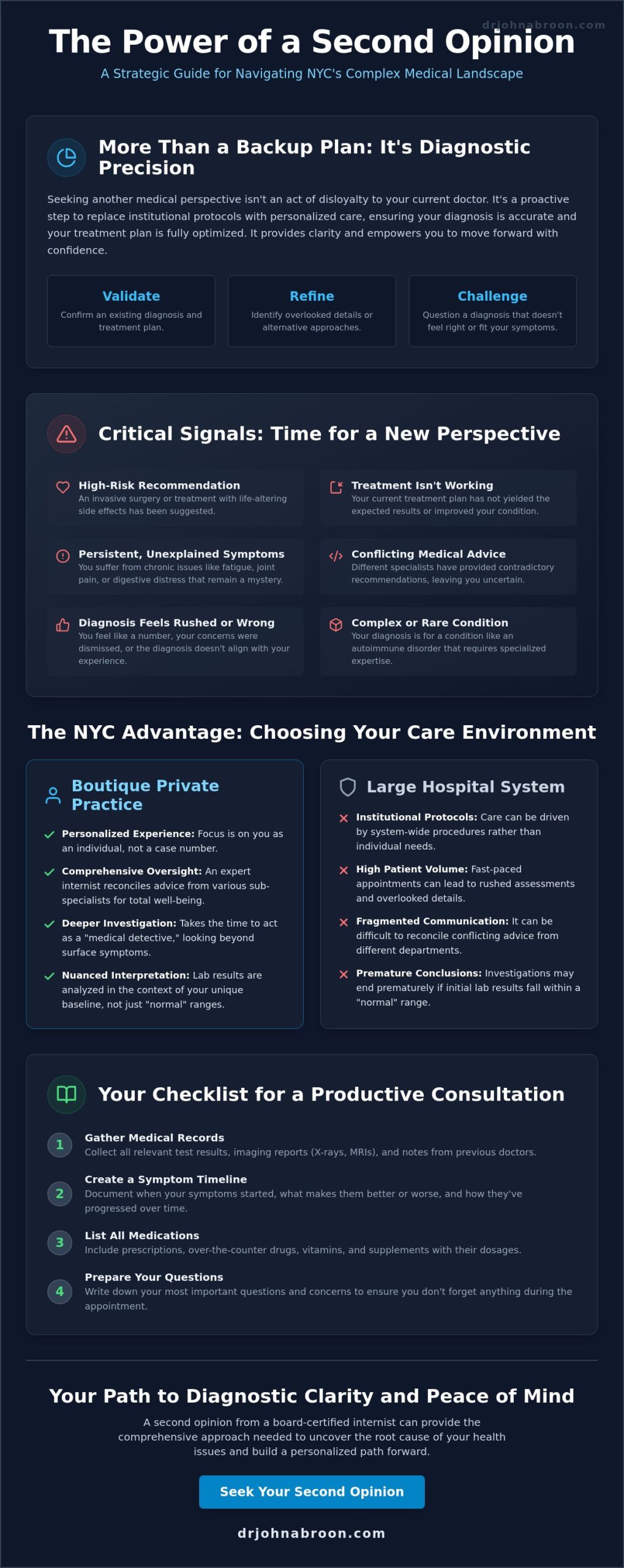
- Learn how getting a second opinion from a nyc doctor at a boutique private practice offers a more personalized experience than navigating a large hospital system.
- Discover the essential medical records and symptom timelines you need to gather to ensure your consultation is as productive as possible.
- Explore how a board-certified internist’s comprehensive approach can provide the diagnostic clarity and peace of mind you deserve.
Why Seek a Second Medical Opinion in New York City?
A second medical opinion is a formal consultation with a different specialist intended to validate, refine, or challenge a previous diagnosis. In a city as fast-paced as New York, medical care can sometimes feel like a series of rapid-fire appointments. Seeking another perspective isn’t an act of “disloyalty” to your primary physician. Instead, it’s a proactive step toward ensuring your health is managed with the highest level of scrutiny. Most experienced doctors actually welcome the collaborative nature of a second look, as it reinforces the accuracy of the care plan and provides the patient with much-needed peace of mind.
The medical landscape in Manhattan is exceptionally complex. Specialized expertise varies significantly between boroughs, and the protocols at a large, high-volume teaching hospital may differ from those in a boutique private practice. Getting a second opinion from a nyc doctor serves as a vital safety net. Diagnostic errors remain a significant concern in dense urban healthcare environments; a second consultation provides the rigorous oversight necessary to catch subtle details that might have been overlooked during a hurried initial assessment.
The Empowerment of Diagnostic Confirmation
Receiving confirmation from a second expert does more than just verify clinical data; it provides profound emotional relief. When two independent specialists align on a diagnosis, patient anxiety naturally decreases. This clarity improves treatment compliance because you can move forward without the weight of “what if” lingering in your mind. A “fresh set of eyes” often identifies overlooked clinical markers, such as specific blood test nuances or imaging details, that were previously dismissed. Many patients specifically seek out specialists on the Upper East Side for this higher tier of personalized attention, where the focus remains on the individual rather than the institution’s throughput.
When “Watch and Wait” Needs a Second Look
Deciding between immediate intervention and a “watch and wait” strategy is one of the most difficult aspects of modern medicine. While conservative management can prevent unnecessary procedures, it also carries the risk of allowing a condition to progress. Different clinical philosophies, ranging from highly aggressive to more traditional, will fundamentally impact your long-term health outcomes. It’s essential to understand the rationale behind these varying approaches before committing to a plan. Dr. Abroon’s clinical philosophy is evidence-based yet patient-centered. Getting a second opinion from a nyc doctor allows you to evaluate these different methodologies, ensuring the path you choose aligns with both medical necessity and your personal wellness goals.
Critical Scenarios for an Internal Medicine Second Opinion
While many patients associate second opinions with oncology or complex neurosurgery, the most profound diagnostic breakthroughs often occur within the field of internal medicine. Chronic, non-specific symptoms like persistent fatigue, migrating joint pain, or unexplained digestive distress are frequently dismissed in high-volume clinical settings. Getting a second opinion from a nyc doctor is a vital step when your current treatment plan hasn’t yielded results or when your symptoms remain a mystery. An expert internist looks beyond the surface, acting as a medical detective to uncover the root cause of your discomfort rather than just managing the immediate symptoms.
A second look is equally essential when a recommended treatment is high-risk or carries life-altering side effects. In the fragmented NYC medical landscape, patients often find themselves receiving conflicting advice from various sub-specialists. A cardiologist might focus on one metric while a rheumatologist emphasizes another. The role of a seasoned internist is to reconcile these disparate perspectives, ensuring that your total well-being remains the priority. If you feel that a surgeon’s assessment was rushed, seeking pre-operative medical clearance nyc from a dedicated private practitioner can provide the comprehensive oversight necessary for a safe procedure.
Navigating Complex Diagnostic Puzzles
Autoimmune disorders and metabolic issues are notorious for mimicking other conditions, leading to years of frustration for many patients. In a crowded hospital system, “normal” lab results often end the investigation prematurely. However, a expert internist understands that labs require a nuanced interpretation that accounts for your unique baseline. By utilizing advanced diagnostic testing nyc in a private Upper East Side setting, we can identify subtle clinical markers that others might miss. This personalized approach ensures no stone is left unturned in your diagnostic journey.
Evaluating Surgical Recommendations
Before committing to the operating room, it’s crucial to determine if every non-invasive alternative has been fully explored. A second opinion can significantly influence the timing and necessity of elective procedures, often revealing more conservative paths to recovery. Establishing a baseline through a thorough annual physical exam nyc provides the clinical data needed to evaluate surgical readiness with confidence. If you’re questioning a recent diagnosis, scheduling a consultation for a second opinion can help you weigh your options with clarity and calm.
The NYC Advantage: Boutique Private Practice vs. Large Hospital Systems
Choosing where to seek a second opinion in Manhattan involves a choice between two distinct worlds: the sprawling hospital system or the boutique private practice. While major institutions boast high industry rankings, they often come with bureaucratic hurdles that can slow down your journey to diagnostic clarity. In contrast, a private Upper East Side office provides the concierge-style attention required for complex cases. Getting a second opinion from a nyc doctor in this setting ensures you aren’t treated as a data point in a high-volume system, but as an individual with unique health needs.
High-volume clinics often impose strict time limits on consultations, which can prevent a physician from conducting a deep diagnostic dive. Opting for nyc concierge medicine allows for an unhurried environment where your concerns are heard in full. This model facilitates a comprehensive review of your medical history and lifestyle factors that institutional protocols simply don’t allow. When you remove the pressure of a ticking clock, the physician can focus on the subtle nuances of your case.
Another significant advantage is the speed of information. In a focused, independent setting, diagnostic results are often processed and communicated with much higher efficiency. You won’t wait weeks for a follow-up call because a department head hasn’t signed off on a report or because a file was buried in an administrative queue. This agility is crucial when you’re dealing with time-sensitive health concerns or when you’re simply anxious to begin a new treatment path with confidence.
Personalized Care on the Upper East Side
The primary benefit of a boutique practice is the unwavering continuity of care. You’ll see the same physician at every visit, fostering a relationship where the doctor knows your full history rather than just your current chart. This setting allows for significantly longer consultation times and more thorough physical examinations. When getting a second opinion from a nyc doctor on the Upper East Side, you also gain direct accessibility. If follow-up questions arise after your consultation, you can reach out to your internist directly rather than navigating a complex phone tree or waiting days for a portal message response.
Cutting Through the Institutional Red Tape
Large medical systems often trap patients in a “referral loop,” where you might be bounced between junior residents or fellows before ever speaking with an attending physician. In an independent practice, direct communication with the attending doctor is the standard, not a luxury. This directness eliminates the risk of information being lost in translation between multiple layers of staff. Because he isn’t bound by the specific administrative agendas or preferred vendor lists of a large hospital network, Dr. Abroon’s independent practice offers more objective diagnostic freedom than hospital-employed doctors. This independence ensures that your treatment recommendations are based solely on clinical evidence and your personal wellness.
How to Prepare for Your Second Opinion Appointment
Preparation is the bridge between medical uncertainty and diagnostic clarity. When you’re getting a second opinion from a nyc doctor, the goal is to maximize every minute of your consultation. Many patients feel a sense of hesitation when requesting records from their current provider, fearing it may seem disloyal. It’s helpful to remember that you have a legal right to your medical data. A professional request to the medical records department of a Manhattan hospital is a routine procedure. You don’t even need to speak with your physician directly; simply state that you’re gathering your files for a personal consultation to ensure your records are transferred efficiently.
A successful consultation requires more than just showing up. You should arrive with a chronological timeline of your symptoms and any treatments you’ve already attempted. This narrative helps the internist understand the progression of your condition without the bias of previous interpretations. Before your visit, verify your insurance coverage. New York State mandates that health insurance plans provide coverage for second opinions in cancer cases, and Medicare Part B typically covers 20% of the approved amount for medically necessary second opinions after you’ve met your deductible. Knowing these details ahead of time allows you to focus entirely on your health during the appointment.
Organizing Your Medical Records
Requesting your records is the first step toward empowerment. While patient portals are convenient, they often provide truncated notes or low-resolution images. It’s superior to bring physical copies of pathology reports and digital discs for imaging like CT scans or MRIs. This ensures the new specialist can view the raw data rather than just reading another radiologist’s summary. Additionally, bring a comprehensive list of all current medications and supplements. This allows the internist to rule out drug interactions or side effects that might be mimicking more serious conditions. If you’re ready to organize your health data for a professional review, you can schedule a second opinion consultation to begin the process.
Questions to Ask Your NYC Second Opinion Doctor
Getting a second opinion from a nyc doctor is your opportunity to ask the targeted questions that may have been glossed over in a high-volume clinic. Consider asking the following to gain a deeper understanding of your situation:
- “What is the specific evidence supporting this diagnosis?” This helps you understand if the conclusion is based on definitive tests or a process of elimination.
- “Are there alternative, less invasive treatments that weren’t previously mentioned?” This opens the door to conservative management options.
- “How does your clinical experience with this specific condition differ from my previous doctor’s approach?” This identifies variations in clinical philosophy.
- “What are the long-term implications of the currently recommended treatment plan?” Understanding the “big picture” helps you make an informed choice for your future well-being.
Your Path to Clarity with Dr. John Abroon
Dr. John Abroon brings decades of elite medical experience to every consultation. As a board-certified internist on the Upper East Side, he’s spent his career solving complex diagnostic puzzles that require both clinical precision and a dedicated bedside manner. Getting a second opinion from a nyc doctor shouldn’t feel like a confrontation with your previous physician. Instead, Dr. Abroon views it as a collaborative effort to reach the truth. He often works alongside a patient’s existing medical team to ensure every clinical angle is explored. This partnership ensures that your treatment path is optimized based on the most current evidence and a deep understanding of your unique physiology.
Taking control of your health starts with seeking the best possible information. When you’re faced with a high-stakes medical decision, the most powerful tool at your disposal is clarity. Dr. Abroon’s approach is rooted in the belief that every patient deserves a customized plan that prioritizes their total well-being over mere symptom management. By choosing an independent practitioner with deep roots in the Manhattan medical community, you gain an advocate who is committed to your long-term health outcomes rather than institutional protocols.
A Dedicated Second Opinion Specialist
The practice is built on a foundation of rigorous diagnostic testing and clinical excellence. We provide a calm, professional environment where you can discuss your concerns without the pressure of a ticking clock. Dr. Abroon’s expertise in internal medicine allows him to see the “big picture” connections that sub-specialists might overlook. Many patients find that the peace of mind gained during this process leads to a lasting partnership. It’s simple to transition from a single consultation into ongoing primary care physician nyc services, ensuring your health remains in expert hands for years to come.
Booking Your Manhattan Consultation
Scheduling your visit is a straightforward process designed with your convenience in mind. When you contact our Upper East Side office, our staff will guide you through the necessary steps to prepare for your appointment. Getting a second opinion from a nyc doctor is the first step toward reclaiming your peace of mind. During your initial 60-minute diagnostic evaluation, Dr. Abroon conducts an exhaustive review of your history, current symptoms, and previous test results. You’ll leave the office with a clear understanding of your diagnostic status and a concrete plan for the future.
Schedule your second opinion consultation with Dr. John Abroon today.
Empowering Your Health Journey with Expert Insight
Seeking a second opinion is a vital step toward reclaiming control over your medical narrative. By choosing to step away from institutional red tape and into a personalized clinical environment, you ensure that every symptom is heard and every test result is scrutinized with care. Whether you’re facing a high-risk surgical recommendation or navigating a complex diagnostic puzzle, the clarity you gain today will shape your wellness for years to come.
Getting a second opinion from a nyc doctor is about more than just verifying a chart; it’s about building a relationship with a physician who prioritizes your total well-being. Dr. John Abroon is a board-certified internist with over 25 years of experience in the heart of Manhattan. His Upper East Side boutique practice specializes in complex diagnostic testing and precise medical clearances, offering the calm, concierge-level attention you deserve.
Schedule Your Expert Second Opinion Consultation with Dr. Abroon
You don’t have to navigate medical uncertainty alone. Trust in a seasoned professional to provide the steady, evidence-based guidance necessary to move forward with peace of mind. Your health is your most valuable asset, and it deserves the highest standard of clinical excellence.
Frequently Asked Questions
Is getting a second opinion from a NYC doctor covered by insurance?
Coverage for getting a second opinion from a nyc doctor is common, though specific terms vary by plan. New York State law mandates that insurance plans provide coverage for second opinions in cancer cases. Additionally, Medicare Part B typically covers 20% of the approved amount for medically necessary second opinions after you meet your deductible. You should always contact your provider to verify out-of-network benefits for private practice consultations.
Will my current doctor be upset if I seek a second opinion?
Most physicians view a second opinion as a standard and positive aspect of high-level medical care. Experienced doctors aren’t offended by a patient’s desire for diagnostic clarity; they actually value the validation or additional perspective another expert provides. Seeking another look ensures that the final treatment plan is as robust as possible. It’s a sign of an engaged and proactive patient.
How do I tell my doctor I want a second opinion?
You can communicate this request directly by stating that you’d like another set of eyes on your case for your own peace of mind. You don’t need to justify your decision or ask for permission. Simply inform your current provider’s office that you’re seeking a consultation and require your complete medical records. A professional medical team will facilitate this process without hesitation to support your health journey.
What is the difference between a second opinion and a referral?
A referral usually involves your primary doctor sending you to a specialist to manage a specific condition or perform a procedure. In contrast, a second opinion is a focused consultation where a new physician reviews your existing diagnosis and treatment plan to confirm its accuracy. It’s an evaluative process rather than a transfer of care. This distinction is crucial for understanding how your insurance might bill the visit.
Can a second opinion change my treatment plan for surgery?
Yes, a second opinion frequently results in significant changes to surgical recommendations. Recent data from 2026 indicates that approximately one-third of patients see their treatment plans modified after a second look, often moving toward less invasive or more targeted options. This process helps you avoid unnecessary procedures and ensures that any surgery you undergo is truly the best path forward for your recovery.
How long does a second opinion consultation usually take in Manhattan?
At a boutique practice like Dr. Abroon’s on the Upper East Side, you should expect the diagnostic evaluation to take approximately 60 minutes. This unhurried timeframe allows for a comprehensive review of your history and a detailed discussion of your options. Large hospital systems may offer shorter appointments, but a private setting prioritizes the depth of the consultation over patient volume.
What if the second opinion contradicts the first diagnosis?
Conflicting opinions are a common reason for seeking further clarity, and Medicare even covers a third opinion if the first two disagree. When diagnoses clash, it often prompts a deeper dive into your diagnostic testing to find the tie-breaking evidence. This situation allows you to weigh different clinical philosophies and choose the path that feels most aligned with your health goals.
Do I need to bring my own medical records to the second opinion appointment?
Yes, you should always bring physical copies of your lab work, pathology reports, and imaging discs to your appointment. While many NYC hospitals use digital portals, these systems don’t always share the full resolution of images or the complete text of physician notes. Providing the raw data directly to your new doctor ensures they can perform a truly independent and accurate assessment of your condition.