


What if the most difficult part of living in Manhattan wasn’t the housing market, but simply securing twenty minutes with a doctor who remembers your name? In a city where larger hospital systems often cite new-patient wait times of four to eight weeks, the search for a medical home can feel daunting. You’ve likely felt the frustration of deciphering insurance networks or the coldness of a sterile waiting room. We agree that your health shouldn’t be treated as a transaction or a line in a spreadsheet. Learning how to establish care with a pcp nyc is about more than just checking a box; it’s about building a foundation for your long-term well-being.
This guide simplifies the complexities of the 2026 healthcare landscape, from managing the latest insurance eligibility shifts to bypassing the impersonal bureaucracy of standard clinics. You’ll learn how to secure a seamless first appointment and gain fast access to diagnostic testing without the typical delays. We’ll walk you through a step-by-step process to find a dedicated partner who prioritizes your unique history and provides the sophisticated, personalized care you deserve.
Key Takeaways
- Identify the distinct advantages of choosing an Internist as your primary care quarterback in the competitive New York medical landscape.
- Master the logistics of how to establish care with a pcp nyc, including direct insurance verification and the efficient transfer of previous medical records.
- Streamline your first appointment by preparing a detailed list of current medications and health concerns to facilitate a productive consultation.
- Learn how comprehensive diagnostic testing during your initial visit creates a vital health baseline for your future preventative care.
- Discover the personalized benefits of a private practice setting, where consistent physician access leads to faster results for specialized needs like pre-operative clearances.
Understanding Primary Care in the NYC Healthcare Landscape
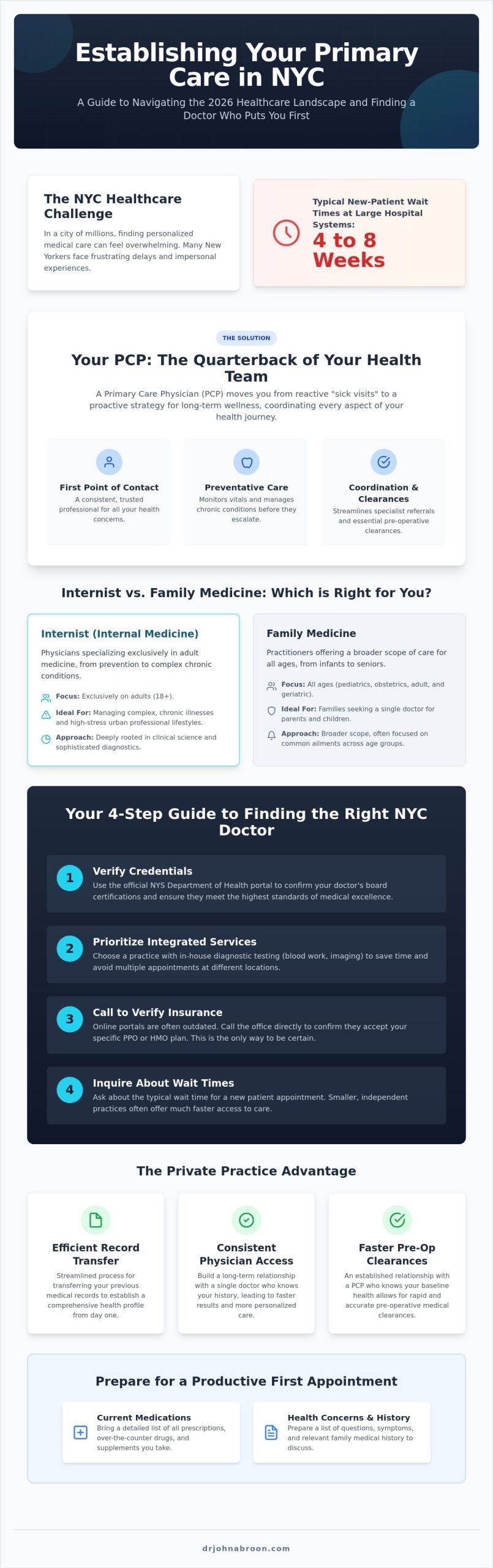
In the high-energy environment of Manhattan, your health requires more than just occasional attention; it demands a dedicated strategist. Think of your Primary Care Physician (PCP) as the quarterback of your medical team. This clinician doesn’t just treat symptoms as they arise. They synthesize your medical history, lifestyle, and diagnostic data to coordinate every aspect of your wellness journey. Understanding Primary Care involves recognizing that a PCP is your first point of contact for nearly all health concerns, providing a steady hand in a city where medical options can feel overwhelming.
Many New Yorkers mistake a visit to a local urgent care clinic for establishing a medical home. While urgent care serves a purpose for minor, immediate needs, it’s ultimately transactional. These facilities rarely track your health trends over years or understand the nuances of your family history. When you learn how to establish care with a pcp nyc, you move away from reactive “sick visits” toward a model of proactive longevity. In 2026, with health insurance premiums in New York seeing an average approved rate increase of 7 percent, having a consistent physician helps mitigate long-term costs by catching potential issues before they require expensive emergency interventions.
Internists vs. Family Medicine: Which is Right for You?
Choosing between an internist and a family medicine practitioner depends on your specific needs. Internal medicine physicians focus exclusively on adult medicine, specializing in the prevention, diagnosis, and management of complex chronic conditions. Their training is deeply rooted in clinical science, making them ideal for urban professionals navigating high-stress lifestyles. Family medicine, by contrast, offers a broader scope that includes pediatrics and obstetrics. For individuals seeking a sophisticated diagnostic focus, an internist provides a level of specialized adult care that family practices may not emphasize.
The Role of a PCP in Preventative Health
A primary care partnership shifts the focus from managing illness to optimizing health. Your doctor monitors vital markers like blood pressure and glucose levels to prevent chronic conditions such as hypertension or diabetes from escalating. Beyond routine screenings, having a “doctor on record” is essential for administrative health needs. Whether you require travel medicine advice or specialized pre-operative medical clearances, a physician who already knows your baseline can provide these services with much greater accuracy and speed. This ongoing relationship ensures that when high-stakes medical decisions arise, you aren’t starting from zero with a stranger.
Step-by-Step Guide to Choosing the Right NYC Doctor
Selecting a physician in a city with over 8 million residents requires a methodical approach. You aren’t just looking for a name on a list; you’re seeking a clinical partner who aligns with your lifestyle and health goals. Start by ensuring your prospective doctor holds elite credentials. You can use the official NYS Department of Health portal to verify your doctor’s credentials and confirm their board certifications. This step ensures the practitioner meets the highest standards of medical excellence before you ever step foot in their office.
Next, look beyond the diploma. A truly effective primary care practice offers integrated services that respect your time. When researching how to establish care with a pcp nyc, prioritize offices with in-house diagnostic testing. This eliminates the need for separate trips to commercial laboratories for blood work or imaging. Finally, analyze patient feedback for mentions of bedside manner and wait times. Statistics show that larger NYC hospital systems often have new-patient wait times of four to eight weeks. In contrast, smaller independent practices can typically see you within one to two weeks, providing the responsive care that busy New Yorkers require.
Navigating Insurance and Networks in Manhattan
The Manhattan insurance landscape is notoriously complex. While online portals offer a starting point, they’re frequently outdated. When determining how to establish care with a pcp nyc, calling the practice directly is the only way to ensure your coverage is active and accepted. Ask specifically about your PPO or HMO plan requirements. If you carry a PPO, inquire about out-of-network benefits. Many high-level private practices operate as out-of-network providers to maintain a concierge-like atmosphere, allowing for longer consultations and more personalized attention than high-volume hospital systems provide.
Location and Accessibility: The Upper East Side Advantage
Accessibility is the silent driver of health compliance. If your doctor’s office is a cross-town trek, you’re less likely to keep routine appointments. An Upper East Side location offers a distinct advantage for those living or working in the area. A local practitioner often has deep roots in the community, providing you with a curated network of neighborhood specialists for referrals. Consider the practice’s office hours as well. A physician who understands the schedule of a busy professional will offer appointment times that don’t disrupt your workday. If you’re seeking this level of dedicated, local care, Dr. John Abroon’s practice offers a sophisticated solution for Upper East Side residents.
Practical Logistics: Preparing for Your First Appointment
Once you’ve identified a physician, the next phase in how to establish care with a pcp nyc involves meticulous preparation. Your first visit serves as the blueprint for your future health. Arriving with organized data ensures that your time with the doctor is spent on clinical analysis rather than administrative catch-up. Start by requesting a formal transfer of your medical records from your previous providers. While many large systems use interconnected digital portals, smaller private practices often require a signed release form to securely transmit your history, including recent immunization records and diagnostic reports.
Beyond historical records, you should arrive with a clear snapshot of your current health status. Bring your government-issued ID, physical insurance cards, and any hard copies of recent lab results you have in your possession. We recommend compiling a comprehensive list of all current medications, including exact dosages and the frequency of use. Don’t overlook over-the-counter supplements or vitamins; these are clinically relevant when assessing potential drug interactions or nutritional baselines. Additionally, take a moment to document your family medical history, focusing on first-degree relatives. This data allows your doctor to customize your preventative screening schedule according to your genetic risk factors.
The Paperwork: Streamlining the Intake Process
Efficiency begins before you enter the waiting room. Most sophisticated practices now utilize secure digital patient portals to handle intake forms. This allows you to complete necessary HIPAA privacy disclosures and medical questionnaires in the comfort of your home. This digital-first approach ensures your information is accurately captured in your electronic health record before the consultation begins. Maintaining a concise list of your primary health concerns ensures that every priority is addressed during the limited time of a clinical encounter.
Setting Your Health Goals
A productive first visit transforms a routine exam into a strategic planning session. Whether you’re aiming for sustainable weight loss, improved sleep hygiene, or simply want to stay current on preventative screenings, sharing these objectives helps your physician tailor their approach. This is also the appropriate time to discuss any specialized administrative needs you may have. For instance, if you require specific documentation for residency or visa purposes, your PCP can coordinate immigration medical exams alongside your standard wellness check. By articulating your long-term goals early, you empower your doctor to provide the most relevant guidance and referrals from day one.
This emphasis on precise documentation is a standard valued by high-level professionals, whether they are organizing complex medical files or managing residential and commercial property compliance through resources like agepc.co.uk.
What to Expect During Your Initial Consultation
Your first encounter with a new physician should feel like a comprehensive clinical audit rather than a rushed interview. While previous sections focused on the administrative preparation, the actual consultation is where your health history transforms into a proactive strategy. A sophisticated physical examination goes far beyond documenting your height and weight. It involves a detailed systemic review, where your doctor assesses everything from cardiovascular health to neurological function. Understanding how to establish care with a pcp nyc involves recognizing that this initial visit is your most significant health investment of the year, setting the trajectory for your 2026 wellness goals.
During this session, your doctor will delve into the nuances of your lifestyle, specifically how the high-energy pace of New York City impacts your physical and mental well-being. We don’t just ask about diet and exercise; we explore stress management, sleep hygiene, and environmental factors unique to urban living. This dialogue allows us to create a personalized health maintenance plan that is both medically rigorous and practically achievable within your busy schedule. By the end of the consultation, you’ll have a clear roadmap for preventative screenings and any necessary lifestyle adjustments.
Comprehensive Diagnostic Testing In-Office
A premium medical experience prioritizes both accuracy and your time. Establishing a clinical baseline requires data, which is why we emphasize the importance of immediate, in-office diagnostic testing. Unlike high-volume hospital systems that may send you to external facilities, a private practice often provides EKGs, pulmonary function tests, and blood work processing on-site. This integrated approach is the clinical standard for annual physical exams in NYC, ensuring faster results and a more cohesive diagnostic narrative. When your physician oversees the testing process directly, they can interpret findings within the context of your specific history immediately.
Building the Doctor-Patient Relationship
Trust is the catalyst for clinical accuracy. In a private practice setting, you aren’t a number in a database; you’re a partner in care. We dedicate significant time to face-to-face discussion because open communication allows us to predict future health risks that data alone might miss. This relationship-centered model ensures that when you have questions about how to establish care with a pcp nyc, you receive direct, thoughtful answers from the doctor who knows you best. If you’re ready to move beyond transactional medicine and secure a dedicated health advocate, schedule your initial consultation with Dr. John Abroon today.
The Benefits of a Private UES Practice for Long-Term Care
Choosing a private practice on the Upper East Side offers a level of continuity that massive hospital networks simply can’t replicate. When you learn how to establish care with a pcp nyc in a private setting, you ensure that the physician who performs your initial exam is the same one who manages your health for years to come. This consistency eliminates the “revolving door” experience common in larger institutions, where patients often see a different resident or provider at every visit. A private environment fosters a deep clinical understanding of your unique physiology, allowing for more nuanced diagnostic decisions and a truly personalized wellness journey.
Efficiency is a hallmark of premium medical care. For those requiring pre-operative medical clearances, a private practice provides a significantly faster turnaround than institutional clinics. Because your records and diagnostic history are already on file, we can process these critical clearances with the precision and speed that surgical schedules demand. Additionally, our deep roots in the Manhattan medical community allow us to provide curated referrals to the city’s top specialists, ensuring you receive elite care at every stage of your treatment without the typical institutional red tape.
Specialized Medical Evaluations
Beyond standard check-ups, a private primary care physician in NYC serves as a single destination for diverse health needs. From handling immigration medical exams and travel medicine to conducting comprehensive executive physicals, our office streamlines complex requirements into manageable, high-level visits. Established patients also benefit from prioritized urgent care, providing a reliable safety net when unexpected health issues arise. This concierge-like feel ensures that your total well-being is prioritized over mere symptom management.
Making Dr. John Abroon Your Medical Home
Dr. John Abroon has served the Upper East Side community since 1997, combining elite board certification with a warm, patient-centered bedside manner. Our practice is designed for individuals who value clinical excellence and a sophisticated, inviting atmosphere. By choosing a seasoned expert with decades of experience in the Manhattan medical landscape, you secure a trusted advocate for your long-term health. We take pride in our high industry rankings and our ability to make complex medical decisions feel manageable through rigorous science and a supportive narrative. Schedule your appointment to establish care with Dr. Abroon today and experience a more personalized approach to primary care.
Secure Your Health Foundation in New York City
Mastering the process of how to establish care with a pcp nyc is the first step toward a life of optimized wellness in Manhattan. You’ve learned that a primary care partnership is about more than just a check-up; it’s a strategic alliance for your long-term health. By choosing a physician who offers clinical expertise and a personalized touch, you bypass the impersonal delays of larger systems. You deserve a medical home where your history is respected and your time is valued through efficient, on-site diagnostic testing.
Dr. John Abroon has served as a board-certified Internist on the Upper East Side since 1997, providing the concierge-level attention that New Yorkers expect. With on-site EKG and lab work, our practice ensures that your diagnostic baseline is established with precision and ease. We invite you to move beyond reactive care and experience a clinical environment where your total well-being is the priority. Book Your Initial Consultation with Dr. John Abroon on the Upper East Side today. Your journey toward a healthier, more proactive future starts with a single, decisive step.
Frequently Asked Questions
How long does it typically take to establish care with a new PCP in NYC?
Most patients can secure an initial consultation within one to two weeks at a private practice. The process of learning how to establish care with a pcp nyc involves an initial 40 to 60 minute session to review your history and perform baseline diagnostics. Scheduling during off-peak months, such as mid-summer or early January, often results in even faster availability for new patient intakes.
What is the difference between a new patient visit and an annual physical?
A new patient visit serves as a foundational interview where the doctor reviews your entire medical history and current health status. In contrast, an annual physical is a specific preventative screening covered by most insurance plans once per calendar year. Often, these two objectives are combined into a single, comprehensive appointment to streamline your health management from day one.
Can I establish care with a PCP if I am currently healthy and have no symptoms?
Establishing a medical home while you’re healthy is the most effective way to maintain long-term wellness. This baseline visit allows your physician to understand what is normal for your body before an acute illness occurs. Having a doctor who knows your healthy state makes it much easier to identify and treat subtle changes in your health during future consultations.
Will my new NYC doctor have access to my old records automatically?
Your new physician won’t have automatic access to records from outside hospital systems or previous private practices. You must sign a HIPAA compliant release form to authorize the secure transfer of your data. We recommend initiating this request at least two weeks before your appointment to ensure your doctor can review your history during your actual consultation.
What should I do if my insurance changes after I establish care?
Notify your doctor’s office immediately if your insurance provider or plan details change. Our administrative team will verify your new coverage to ensure continued compatibility with the practice. If your new plan is out-of-network, you can often still receive care by utilizing PPO out-of-network benefits, which many private Manhattan practices accept to maintain a high standard of personalized service.
Is it better to see an Internist or a Family Doctor in Manhattan?
For adults living in a fast-paced urban environment, an Internist is often the preferred choice due to their exclusive focus on adult medicine and complex diagnostic training. While family doctors treat all ages, internists specialize in the prevention and management of adult-onset chronic conditions. This specialized focus is particularly beneficial for professionals navigating high-stress lifestyles and complex medical histories.
How often should I see my PCP after the initial visit?
Most healthy adults should visit their primary care physician at least once a year for a comprehensive physical exam. If you’re managing chronic conditions like hypertension or seeking weight loss management, your doctor may recommend quarterly or bi-annual follow-ups. These regular touchpoints ensure that your personalized health maintenance plan remains effective and responsive to your changing needs.
Does establishing care help me get faster appointments when I am sick?
Established patients almost always receive priority scheduling for urgent care needs compared to new patients. When you have already completed the process of how to establish care with a pcp nyc, the office has your insurance and medical history on file. This allows for immediate clinical action and faster appointment availability when you face an acute illness or injury.