


A child’s immigration medical exam shouldn’t feel like a high-stakes interrogation or a painful ordeal. You’ve likely spent hours worrying about how your little one will handle a blood draw or whether those international immunization records will be accepted by USCIS. It’s completely natural to feel anxious about potential delays caused by missing shots or technical paperwork errors. Knowing exactly what to bring to i-693 exam for child appointments is the first step in turning a complex requirement into a smooth, manageable milestone.
This definitive 2026 guide ensures your child’s Green Card application remains on track with a clear breakdown of pediatric I-693 requirements and age-specific protocols. You’ll learn about the latest USCIS technical instructions, including the mandatory blood-based TB screening for children aged two and older and the current status of seasonal flu requirements. We’ll walk through the essential documentation needed to secure a completed, sealed I-693 envelope while prioritizing your child’s comfort every step of the way.
Key Takeaways
- Identify exactly what to bring to i-693 exam for child appointments, including government-issued identification and certified English translations of all international vaccination records.
- Understand the 2026 USCIS mandate for blood-based IGRA tuberculosis testing for all children aged two and older to ensure application compliance.
- Learn how age-appropriate CDC vaccination schedules are applied to minors and which seasonal requirements, such as the influenza vaccine, may be necessary for your visit.
- Discover why a designated Civil Surgeon is required for this legal medical evaluation and how a concierge-style practice can mitigate pediatric anxiety during blood draws.
- Ensure your child’s Green Card process remains seamless by securing a properly completed and sealed I-693 envelope that meets all current technical instructions.
Understanding the I-693 Requirements for Children in 2026
The Form I-693 serves as a vital bridge between your child’s medical history and their future as a permanent resident. It isn’t just a summary of health; it’s a legal certification that your child meets the specific medical standards set by the U.S. government. For parents, understanding what to bring to i-693 exam for child visits is essential to avoid the “Request for Evidence” (RFE) that can stall an application for months. In 2026, USCIS protocols remain strict regarding how these exams are documented, requiring a level of precision that goes far beyond a typical school physical.
The primary goal of this evaluation is to ensure the applicant doesn’t fall under the health-related grounds of inadmissibility. For minors, this focus shifts away from the drug screening or psychiatric evaluations required for adults. Instead, the focus settles on communicable diseases, particularly tuberculosis, and a rigorous review of the 2026 CDC immunization schedule. Once Dr. Abroon signs the form, the sealed envelope typically remains valid for the duration of the green card process, provided it’s filed within the required timeframe after the doctor’s signature.
Does Every Child Need an I-693?
Nearly every applicant seeking to adjust their status to a permanent resident must submit a medical report, regardless of age. This includes infants only a few months old and teenagers approaching adulthood. There’s a common misconception that very young children are exempt, but they must still undergo an evaluation tailored to their age bracket. One notable exception exists for K-visa holders who received a medical exam overseas within the last year. If the original exam didn’t reveal any medical issues and the vaccination record was completed, a new I-693 might not be necessary. However, many parents still choose a local exam to ensure their records align perfectly with current 2026 requirements.
The Role of the USCIS Civil Surgeon
Your family pediatrician is an excellent resource for developmental milestones, but they cannot legally sign your child’s immigration paperwork. Only a USCIS-designated Civil Surgeon, such as Dr. Abroon, possesses the authority to complete Form I-693. The difference lies in the nature of the exam. A standard physical focuses on the child’s individual growth; an immigration exam is a public health screening. Dr. Abroon acts as a specialized primary care physician nyc families trust to balance technical USCIS accuracy with a gentle, patient-centered approach. He evaluates specific markers of health that protect the community, ensuring your child’s documentation is beyond reproach.
Age-Specific Vaccination and Testing Protocols for Minors
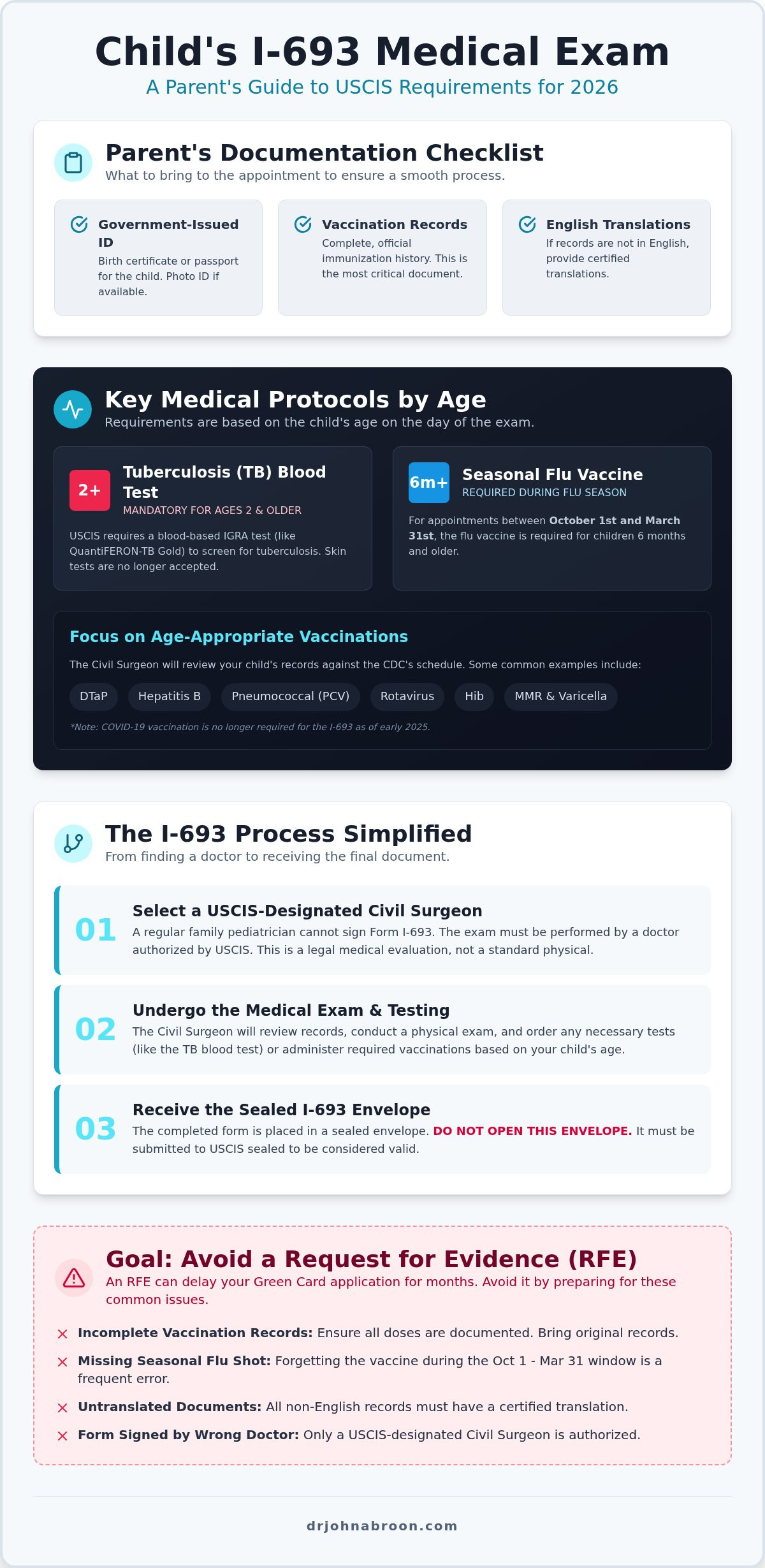
Navigating the immunization requirements for Form I-693 often feels like moving through a maze of varying age brackets and clinical abbreviations. The CDC Technical Instructions for 2026 categorize requirements based on what’s “medically appropriate” for your child’s specific age on the date of the exam. This means an infant will have a vastly different checklist than a high school senior. When considering what to bring to i-693 exam for child appointments, your child’s comprehensive immunization history is the most critical piece of the puzzle.
Dr. Abroon carefully cross-references your child’s existing records against the current CDC schedule. If your child’s missing a dose, he determines if it’s clinically indicated or if an age-based waiver applies. While the COVID-19 vaccine is no longer a requirement for the I-693 as of early 2025, the seasonal influenza vaccine remains mandatory for all children six months and older if the appointment falls between October 1st and March 31st. This seasonal requirement is a frequent cause of delays for families who aren’t prepared for the winter schedule.
Requirements for Infants and Toddlers (Ages 0-4)
For the youngest applicants, the focus remains on foundational series that protect against early childhood illnesses. This typically includes the Rotavirus and Haemophilus influenzae type b (Hib) series, along with Diphtheria, Tetanus, and Acellular Pertussis (DTaP). Hepatitis B and Pneumococcal (PCV) vaccines are also strictly required for this age group. Many adult requirements, such as certain screenings, are automatically waived because they aren’t medically indicated for toddlers. Dr. Abroon’s expertise ensures these waivers are correctly coded so the application proceeds without unnecessary administrative hurdles.
Requirements for School-Aged Children (Ages 5-17)
As children enter school and adolescence, the requirements shift toward community-based immunity. Compliance with Measles, Mumps, and Rubella (MMR) and Varicella (Chickenpox) is non-negotiable. If your child had chickenpox but lacks a medical record of it, a varicella titer (blood test) can often prove immunity. For older children and teens, the Polio (IPV) series must be complete, and a Tdap booster is generally required once they reach age 11 or 12. Meningococcal vaccines are also a priority for the teenage cohort, reflecting the high-density environments of middle and high schools.
If records are lost or incomplete, titers offer a sophisticated way to prove immunity without unnecessary re-vaccination. However, titers aren’t available for every disease. In cases where blood tests aren’t an option, Dr. Abroon provides the necessary immigration medical exams in a supportive environment that minimizes stress for both parent and child.
Pediatric Tuberculosis (TB) and Blood Test Protocols
Protecting your child’s health while meeting federal mandates requires a precise approach to diagnostic testing. As of 2026, USCIS has solidified the Interferon-Gamma Release Assay (IGRA) as the mandatory gold standard for tuberculosis screening in all applicants aged two and older. This blood-based test has largely replaced the older TST skin test because it provides a definitive result in a single visit. When you’re determining what to bring to i-693 exam for child appointments, any previous history of TB treatment or positive screenings must be documented to help Dr. Abroon interpret current results accurately.
For infants and toddlers under the age of two, the protocol is generally less invasive. USCIS typically doesn’t require TB testing for this youngest age group unless there’s a known exposure to someone with active TB or the child exhibits clinical symptoms. This distinction is crucial for parents of infants to understand, as it often alleviates the stress of unnecessary blood draws for the very young. However, all children must still meet the age-specific vaccination requirements to ensure their health profile is complete and compliant.
If a child’s IGRA result returns positive, it doesn’t mean the Green Card process stops. It simply moves to the next diagnostic step: a chest X-ray. Dr. Abroon manages this process with a calm, steady hand, coordinating the necessary imaging and NYC health referrals if required. A positive TB test in a child is often a sign of latent infection rather than active disease. Our office provides the clear communication you need to navigate these findings without panic, ensuring your child receives the appropriate follow-up care while your paperwork remains accurate.
The IGRA Blood Test: QuantiFERON vs. T-SPOT for Kids
We utilize advanced IGRA technologies, such as QuantiFERON-TB Gold Plus or T-SPOT.TB, because they aren’t affected by the BCG vaccine. Many children born outside the U.S. received the BCG shot, which frequently causes false positives on traditional skin tests. By using blood-based screening, we avoid the confusion of a false alarm. Our Upper East Side office is designed for efficiency, with an in-office lab that understands how to manage pediatric anxiety. Results for these tests are typically available within a few business days, keeping your application timeline on track.
Communicable Disease Screening for Teenagers
Once a child reaches the age of 15, USCIS requirements expand to include screenings for syphilis and gonorrhea. These tests are mandatory for all applicants 15 and older, regardless of their medical history. Dr. Abroon prioritizes a respectful and private environment for adolescent patients, ensuring they feel comfortable during the blood draw and urine collection. If a condition is identified, we provide the necessary clinical guidance and reporting required by law, treating every teen with the same personalized care we provide to our adult concierge medicine patients.
Preparing for the Appointment: The Parent’s Documentation Checklist
Preparation is the ultimate antidote to the anxiety that often surrounds a child’s immigration physical. Collecting the right paperwork before you arrive at our Upper East Side office ensures the appointment remains a positive milestone rather than a source of stress. Knowing exactly what to bring to i-693 exam for child appointments allows our clinical team to focus on your child’s well-being while we handle the technical USCIS requirements. Missing a single certified translation or identification document can delay your entire Green Card application, so a methodical approach to your folder is essential.
The first priority is establishing your child’s identity with valid, government-issued documents. A current passport is the primary requirement for all applicants. For children under the age of 14, you should also bring a birth certificate that clearly lists both parents’ names. Additionally, if your child has a history of chronic pediatric illnesses, such as asthma or heart conditions, or has undergone previous surgeries, please bring those medical summaries. This comprehensive history allows Dr. Abroon to provide a thorough evaluation that satisfies federal standards while respecting your child’s unique health journey.
To help reduce pediatric anxiety, we recommend explaining the exam to your child a few days in advance. Frame the visit as a “wellness check” to help them get ready for their new home. Avoid focusing on blood draws; instead, emphasize that the doctor will check how tall they’ve grown and how strong their heart is beating. Our office maintains a calm, personalized environment designed to make these high-stakes decisions feel manageable for the whole family.
Documentation for Foreign Vaccination Records
International records are the most complex part of the I-693 process. If your child’s records are in a language other than English, USCIS requires a certified translation. This translation must be performed by someone competent to translate and must include their certification statement. If records are lost or incomplete, don’t worry. We can often use blood titers to prove immunity or provide the necessary shots during the visit. For a deeper dive into these requirements, see our Immigration Medical Exam in NYC: Your Complete Guide to the I-693 Process.
What to Expect During the Pediatric Physical Exam
The physical exam itself is a gentle, head-to-toe clinical assessment. We perform standard checks of height, weight, and blood pressure, followed by an evaluation of the child’s heart, lungs, and general physical development. Dr. Abroon conducts these exams with the approachable bedside manner of a seasoned healer, ensuring your child feels safe and respected. Once the evaluation is complete, we’ll review the findings with you before the I-693 form is finalized and the envelope is sealed for your submission.
If you’re ready to secure your child’s immigration medical clearance with a trusted expert, schedule your appointment with Dr. Abroon today to experience our concierge-level care.
Why Choose Dr. John Abroon for Your Child’s NYC I-693
Choosing a civil surgeon for your child is a decision that impacts your family’s future and your child’s immediate comfort. In a city as fast-paced as New York, finding a medical home that balances technical expertise with a gentle touch is rare. John Abroon M.D. has served as a trusted primary care physician nyc families have relied on for nearly 30 years. Since becoming a USCIS-designated Civil Surgeon in 1997, John Abroon M.D. has guided thousands of applicants through the complexities of the immigration process. His deep roots in the Upper East Side medical community provide a sense of stability and reliability that’s essential when handling high-stakes legal documentation.
Beyond his clinical credentials, John Abroon M.D. understands the nuances of complex family cases. He knows that an RFE (Request for Evidence) can be devastating for a family’s timeline. By meticulously reviewing what to bring to i-693 exam for child appointments during your initial consultation, he ensures that every vaccine record and lab result meets the 2026 USCIS technical instructions. Our office specializes in RFE prevention strategies, catching potential discrepancies before they ever reach a government desk. This proactive approach is part of our commitment to your family’s total well-being.
A Personalized Approach to Immigration Health
We believe medical care should feel like a concierge experience, not a sterile transaction. The John Abroon M.D. Upper East Side clinic offers a calm, child-friendly atmosphere where wait times are kept to a minimum. We understand that pediatric anxiety is real, especially during blood draws or physical assessments. Our team provides the Red Dot-style precision of diagnostic testing nyc patients expect from a premium practice, ensuring results are both accurate and fast. This personalized attention ensures your child feels like an individual, not just another file in a stack of paperwork.
Booking Your Family’s Appointment
Scheduling is designed to be as efficient as possible for busy Manhattan and Tri-State families. John Abroon M.D. often accommodates multiple family members in a single visit, streamlining the process for parents. After the exam and lab work are complete, our team will notify you as soon as the sealed I-693 envelope is ready for pickup. This typically happens within a few business days, allowing you to move forward with your adjustment of status application without delay. Schedule your child’s I-693 exam with John Abroon M.D. today and let our expertise pave the way for your family’s new chapter.
Secure Your Child’s Future with Confidence
Your journey toward permanent residency is a significant milestone for your entire family. By understanding exactly what to bring to i-693 exam for child appointments, you eliminate the guesswork and technical hurdles that often cause application delays. Remember that for children aged two and older, the blood-based IGRA test is now the required standard for tuberculosis screening. Additionally, all international vaccination records must be accompanied by certified English translations to meet 2026 USCIS standards. These steps ensure your child’s medical folder is both compliant and comprehensive.
Dr. John Abroon has served as a USCIS-Designated Civil Surgeon since 1997, offering a unique blend of board-certified clinical expertise and patient-centered care. Our Upper East Side Manhattan practice provides a calm, concierge-style environment where your child’s well-being is the primary focus. We handle the complex medical protocols so you don’t have to manage the stress alone. Book Your Child’s USCIS Medical Exam in NYC today to ensure a seamless experience. We’re honored to support your family as you take this final step toward your new life together.
Frequently Asked Questions
At what age does a child need a TB test for the I-693?
Children aged two and older must undergo a blood-based TB screening, known as an IGRA test, as part of their medical evaluation. For infants and toddlers under the age of two, this screening is typically not required unless the child has been exposed to tuberculosis or shows active symptoms. This distinction helps parents understand the specific diagnostic steps necessary for their child’s age group during the immigration process.
Can my child’s regular pediatrician sign the I-693 form?
Your family pediatrician cannot sign the I-693 form because they lack the specific federal designation required by USCIS. Only a USCIS-designated Civil Surgeon is authorized to perform these exams and certify the results in a sealed envelope. Dr. Abroon has held this designation since 1997, ensuring your child’s exam meets all legal standards while maintaining the approachable bedside manner of a dedicated healer.
What if my child is missing a required vaccine for immigration?
If your child is missing a mandatory dose, Dr. Abroon can administer the required age-appropriate vaccines directly at our Upper East Side office. Alternatively, we can perform blood titers to check for existing immunity if you believe your child was previously vaccinated but lacks the paperwork. This flexibility ensures your child receives only the medical interventions they truly need to satisfy federal requirements.
Is the COVID-19 vaccine mandatory for children in 2026?
The COVID-19 vaccine is no longer a mandatory requirement for the I-693 medical exam as of early 2025. However, parents should stay aware of seasonal requirements, such as the influenza vaccine, which is mandatory for children six months and older if the exam occurs between October 1st and March 31st. We always cross-reference the most current 2026 CDC schedules to ensure total compliance.
How long does it take to get the sealed I-693 envelope for a child?
Most families can pick up their completed, sealed I-693 envelope within a few business days of the initial appointment. The exact timing depends primarily on the processing speed of the mandatory TB blood test results from our lab. We prioritize efficiency to help you meet your filing deadlines, providing a steady and reliable timeline that keeps your Green Card application moving forward.
Are blood tests required for infants under 2 years old?
Infants under the age of two do not typically require blood draws for the I-693 exam. USCIS protocols reserve blood-based screenings for tuberculosis and other communicable diseases for older children and adolescents. This age-specific approach minimizes discomfort for the youngest applicants while still ensuring they meet all necessary public health standards for their adjustment of status application in New York City.
What should I do if my child’s vaccination records are in another language?
You must obtain a certified English translation for any vaccination records that are not in English. This is an essential part of what to bring to i-693 exam for child appointments because the civil surgeon must be able to verify every dose against U.S. standards. Bringing these translations ensures we can accurately document your child’s history and avoid the risk of unnecessary re-vaccination.
Does the I-693 exam for children include a drug test?
The I-693 medical exam for children does not include a drug test. For minors, the evaluation is strictly focused on identifying communicable diseases, reviewing immunization history, and assessing general physical health. While adolescents aged 15 and older require screenings for syphilis and gonorrhea, drug testing is generally reserved for adult applicants or cases where a specific clinical concern is identified by the doctor.