


In the high-stakes world of U.S. immigration, the lowest quote you receive for your medical paperwork is often the most expensive mistake you’ll ever make. When you’re searching for the cost of i-693 medical exam nyc, it’s easy to get caught up in base prices while overlooking the hidden fees for mandatory lab tests or the devastating cost of a Request for Evidence (RFE) due to a clerical error. You’ve worked too hard on your residency application to let a rushed, cut-rate exam stall your progress. It’s natural to feel anxious about whether your insurance will help with lab costs or if a simple oversight will lead to a rejection.
We believe your path to permanent residency should be defined by clinical excellence and personal care rather than administrative hurdles. This guide provides a clear breakdown of New York City pricing trends in 2026, explains which vaccines are truly mandatory this year, and shows you how to secure a perfectly sealed I-693 envelope that USCIS will accept without question. We’ll explore how to handle your appointment on the Upper East Side with complete confidence, ensuring your medical clearance is a seamless, stress-free bridge to your future in the United States.
Key Takeaways
- Navigate the transparent components of the cost of i-693 medical exam nyc, distinguishing between the civil surgeon’s professional evaluation and essential laboratory diagnostic fees.
- Understand how to utilize your current health insurance to cover required vaccinations and labs, helping you effectively manage the total investment of your immigration journey.
- Learn the importance of a meticulous, error-free “sealed envelope” process to prevent common USCIS delays and the anxiety of receiving a Request for Evidence (RFE).
- Identify the latest 2026 vaccine mandates and why seasonal requirements like the flu shot can impact your final medical clearance timeline.
- Discover the convenience of a concierge-style medical experience on the Upper East Side that prioritizes your comfort and provides on-site diagnostic testing in a single visit.
Understanding the Components of I-693 Medical Exam Costs
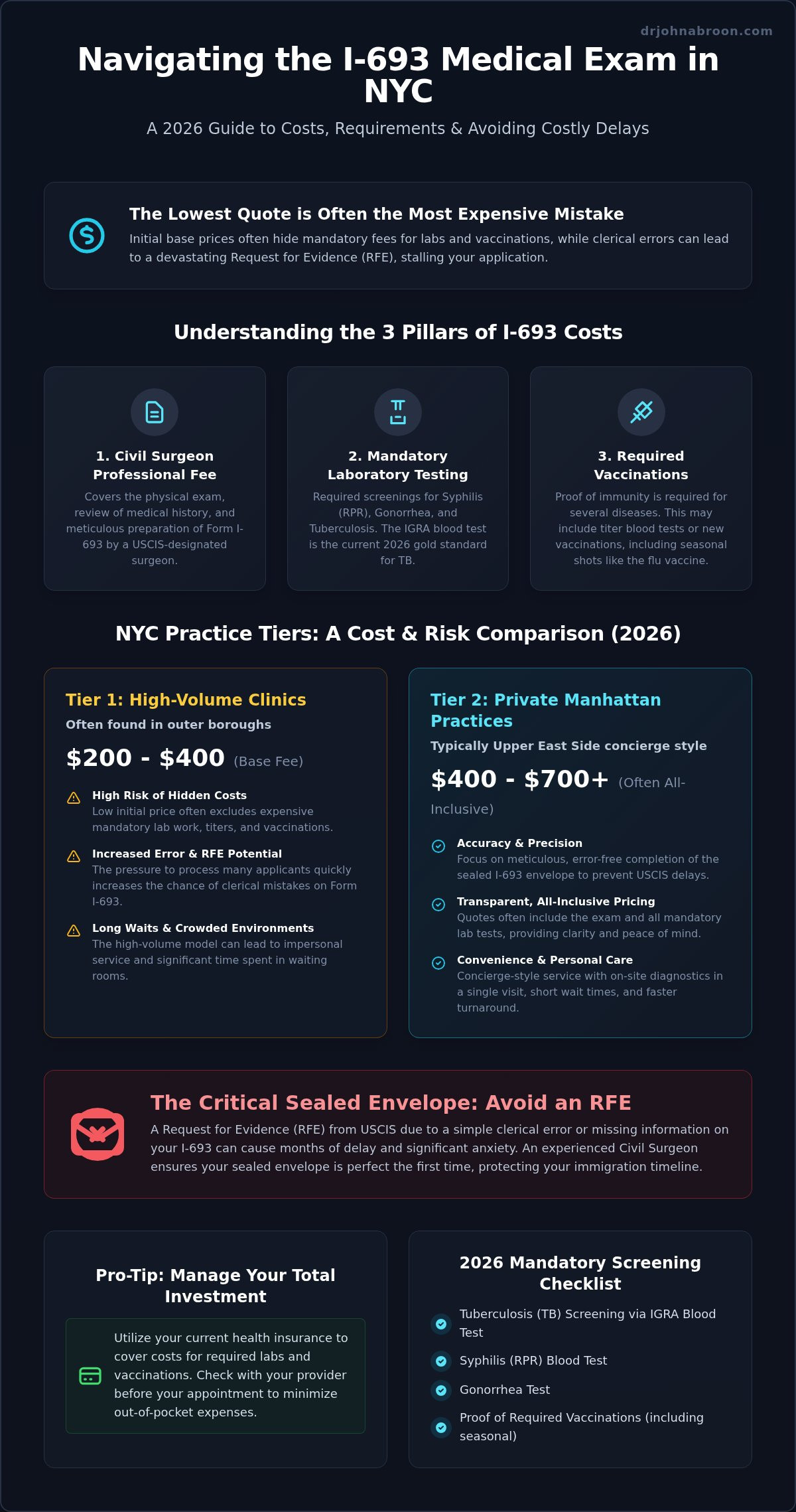
Completing the I-693 medical exam is a non-negotiable requirement for anyone seeking to adjust their status to permanent resident in the United States. While the history of the immigration medical exam is rooted in public health safety, the modern process is a detailed administrative and clinical review. It’s crucial to understand that USCIS doesn’t regulate the fees charged for this service. Instead, each designated civil surgeon establishes their own rates based on their practice’s overhead and service level. When calculating the total cost of i-693 medical exam nyc, you must look beyond a single number and consider three distinct pillars: the professional physical evaluation, mandatory laboratory screenings, and any required vaccinations.
In a major metropolitan hub like New York, operational costs for medical facilities are significantly higher than the national average. This reality often reflects in the pricing tiers you’ll encounter across the boroughs. Manhattan practices, for instance, often face higher rent and administrative costs, which can influence the final bill. However, these costs often translate to a higher standard of service and more efficient processing of your sensitive documents.
The Civil Surgeon Professional Fee
The professional fee represents the time and expertise of a USCIS Designated Civil Surgeon. This cost covers the comprehensive review of your medical history, the physical examination, and the meticulous preparation of the Form I-693. In Manhattan, particularly within concierge-style practices, this fee may be higher to account for a more personalized experience. Patients often find that paying a premium ensures shorter wait times and a faster document turnaround. Choosing an experienced internist ensures that your paperwork is handled with the precision necessary to avoid costly delays or government rejections.
Mandatory USCIS Laboratory Testing
USCIS requires specific diagnostic screenings to identify communicable diseases of public health significance. These typically include blood tests for Syphilis (RPR) and Gonorrhea, along with essential Tuberculosis screening. Many clinics bill these tests separately from the base exam fee because the cost depends on the specific diagnostic panels required for your age and health profile. The IGRA blood test is the current USCIS gold standard for Tuberculosis screening in 2026, offering a more accurate result than older skin tests. Having these labs conducted in-office provides a one-stop-shop convenience that simplifies your path to a completed, sealed envelope.
Average Cost Ranges for Immigration Physicals in NYC
Identifying the total cost of i-693 medical exam nyc requires a discerning look at the different practice models operating across the city. The landscape of healthcare pricing in 2026 is heavily influenced by the rising costs of specialized medical supplies and Manhattan real estate. While you’ll see a wide range of quotes, it’s vital to remember that USCIS does not regulate the fees that a civil surgeon may charge for their time and expertise. This lack of standardization means you’ll encounter two primary tiers of service, each offering a distinct balance of price, speed, and clinical reliability. Choosing between an all-inclusive quote and a pay-as-you-go model often determines whether you’ll face surprise bills later.
Tier 1: High-Volume Clinics ($200 – $400)
High-volume clinics, often found in the outer boroughs, prioritize patient turnover to maintain their lower price points. While the initial teaser fee seems attractive, it frequently excludes the most expensive components like mandatory lab work or titer tests. These facilities often operate on a pay-as-you-go model, leading to unexpected charges as the appointment progresses. The high-volume nature of these clinics can also lead to long wait times in crowded environments. More significantly, the pressure to process numerous applicants increases the risk of clerical errors on your Form I-693. A single missed signature or a skipped section can trigger a Request for Evidence (RFE). It’s a high price for a small mistake.
Tier 2: Private Manhattan Practices ($400 – $700+)
Private internal medicine practices on the Upper East Side offer a more sophisticated, concierge-like approach for those who value precision. These clinics focus on accuracy and personalized care, ensuring your sealed envelope is prepared correctly the first time. You’re investing in the clinical expertise of a board-certified internist who can navigate complex medical histories within the USCIS framework. Busy professionals often prefer this model because it provides a calm, steady environment and a predictable pricing structure. If you’re looking for a one-stop-shop where your diagnostic testing and physical are handled with meticulous attention to detail, consider scheduling your immigration medical exam with a dedicated specialist who prioritizes your total well-being and long-term success.
The “Hidden” Costs: Vaccines, Titers, and RFEs
Applicants often feel a sense of sticker shock when their final invoice arrives at a clinic. It’s a common concern: why did the base quote not cover everything? The reality is that the total cost of i-693 medical exam nyc is highly individualized. While the doctor’s professional fee is usually fixed, the clinical requirements fluctuate based on your age and previous immunization records. Reviewing the Official I-693 Form Information clarifies that civil surgeons must ensure every applicant meets specific health criteria before signing off on the “sealed envelope” process. These variable costs aren’t hidden fees; they’re essential medical requirements that vary from person to person.
Vaccination Requirements in 2026
USCIS mandates a specific series of immunizations to protect public health. While the COVID-19 vaccine is no longer a mandatory requirement as of early 2025, several other shots remain essential for most adult applicants in 2026:
- Measles, Mumps, and Rubella (MMR)
- Polio and Hepatitis B
- Tetanus and Diphtheria (Tdap)
- Varicella (Chickenpox)
If your appointment falls between October 1 and March 31, you’ll also need a seasonal influenza vaccine. One way to manage your expenses is to check your health insurance coverage before receiving shots at a medical office. Most personal plans cover these at local pharmacies at no cost to you. If you believe you’ve already had these diseases but lack the documentation, we can perform titer tests. These blood draws prove immunity and can be more cost-effective than repeating a full series of injections. For a detailed roadmap of what to bring to your visit, consult our Green Card Medical Exam NYC guide.
The Financial Impact of a USCIS RFE
The most significant “hidden” cost isn’t found on a medical bill; it’s the financial fallout from a Request for Evidence (RFE). An RFE occurs when USCIS identifies an error, such as a missing lab result, an unsigned page, or the use of an outdated form edition. As of late 2026, the 01/20/25 edition of Form I-693 is the required standard. When assessing the true cost of i-693 medical exam nyc, you must weigh the savings of a budget clinic against the risk of an expensive administrative setback. These delays can stall your work authorization for months and may require you to pay for a second medical exam entirely. Choosing a civil surgeon who prioritizes meticulous, double-checked accuracy is a strategic investment that prevents these expensive hurdles.
How to Save Money on Your NYC Immigration Medical Exam
Reducing the total cost of i-693 medical exam nyc requires strategic planning rather than simply searching for the lowest base price. While you cannot avoid the mandatory clinical requirements, you can significantly lower your out-of-pocket burden by arriving prepared. Strategic timing is also essential. Since a completed Form I-693 is valid for two years from the date of the civil surgeon’s signature, you should coordinate your appointment to align with your I-485 filing. Applicants should request a copy of their lab results for their own records. This simple step ensures you have a personal medical history for future healthcare needs without paying for duplicate testing later.
Step 1: Gather and Translate Records
The most effective way to lower your final bill is to prove you are already compliant with USCIS vaccination mandates. Obtain official immunization records from your home country or previous schools as early as possible. If these documents are not in English, you must provide certified translations. This preparation saves the medical team significant time and prevents you from paying for unnecessary “catch-up” vaccines or titer blood tests. Providing a clear, summarized medical history allows the civil surgeon to move efficiently through the professional evaluation, ensuring your “sealed envelope” process remains streamlined and accurate.
Step 2: Use Insurance for Labs and Vaccines
It is a common misconception that health insurance covers the entire immigration medical process. While most plans do not cover the administrative I-693 exam fee itself, they often cover the required laboratory screenings and vaccinations. When you visit a Primary Care Physician NYC who is also a civil surgeon, they can provide you with a lab requisition. You can then take this requisition to an in-network facility like LabCorp or Quest, where your insurance typically pays for the Syphilis, Gonorrhea, and TB screenings. This coordination can save you hundreds of dollars in diagnostic fees. If you are ready to navigate this process with a practice that prioritizes both your health and your financial clarity, book your one-stop immigration physical on the Upper East Side today.
Why Choose Dr. John Abroon for Your I-693 in Manhattan?
When evaluating the true cost of i-693 medical exam nyc, the value of clinical precision and personalized attention cannot be overstated. Choosing a premium practice is an investment in your future, ensuring that your residency path isn’t derailed by simple administrative oversights. Dr. John Abroon provides a sophisticated blend of elite credentials and an approachable bedside manner, creating an environment where high-stakes medical care feels both accessible and reliable. We offer a concierge-like experience that stands in stark contrast to the crowded, impersonal waiting rooms of high-volume facilities.
Convenience and reliability are the cornerstones of our practice. By conducting necessary diagnostic testing in-office, including required blood draws and EKGs, we maintain strict quality control over every component of your exam. This integrated approach ensures that your sealed envelope is prepared with the meticulous attention to detail required for a successful USCIS submission. You’ll find that our office provides a calm, steady atmosphere where your total well-being is the priority, allowing you to move through the immigration process with confidence.
Expertise You Can Trust
Dr. Abroon has served the NYC community as a board-certified internist since 1997. This extensive experience allows him to navigate the complexities of the I-693 process with a steady, practiced hand. We prioritize a personalized approach, treating every patient as an individual rather than just a set of forms. Our commitment to accuracy means we focus on getting your paperwork right the first time, providing the peace of mind that comes from knowing a seasoned professional is overseeing your case. When you choose our practice, you’re securing a partner dedicated to your long-term health and legal success.
Convenient Upper East Side Location
Located on the Upper East Side near major transit hubs, our practice is easily accessible for residents across Manhattan, Brooklyn, and Queens. We recognize that our patients are often balancing careers and families, so we provide flexible scheduling to ensure your medical clearance is a manageable part of your journey. You don’t have to face the complexities of the immigration process alone. A productive doctor-patient consultation is just the first step toward your new future. Schedule your I-693 medical exam with Dr. Abroon today.
Secure Your Future with Clinical Precision
Your journey toward permanent residency in the United States is a significant milestone that deserves the highest level of care and administrative accuracy. The true cost of i-693 medical exam nyc encompasses far more than a simple office visit; it’s an investment in a seamless transition to your new life. By arriving with translated records and utilizing your insurance for diagnostic labs, you can effectively manage your expenses while ensuring every USCIS requirement is met. These proactive steps, combined with professional oversight, protect you from the hidden financial risks of application delays.
Dr. John Abroon, a board-certified internist and USCIS Civil Surgeon since 1997, provides the meticulous attention to detail necessary to ensure your “sealed envelope” is perfect. At our Upper East Side Manhattan location, we prioritize your peace of mind through a concierge-style experience that handles your diagnostic testing and paperwork with unwavering reliability. You’ve worked hard to reach this point, and we’re here to ensure the final medical phase is handled with the expertise you deserve.
Book Your USCIS Medical Exam with Dr. Abroon and take the final step in your residency application with a partner you can trust. We look forward to supporting your success and welcoming you to our practice.
Frequently Asked Questions
Does health insurance cover the cost of an I-693 medical exam in NYC?
Most health insurance plans don’t cover the professional administrative fee for an immigration physical because it’s considered a legal requirement rather than a medical necessity. However, you can often use your insurance to cover the required blood work and vaccinations at in-network laboratories or pharmacies. This strategy significantly reduces your total out-of-pocket cost of i-693 medical exam nyc. We recommend checking with your provider to confirm which diagnostic screenings are included in your specific plan.
Why do different doctors in NYC charge different prices for the same USCIS exam?
USCIS doesn’t regulate the fees civil surgeons charge, allowing each private practice to set rates based on their operational costs and service levels. In Manhattan, prices often reflect the quality of care, administrative precision, and the convenience of in-office testing. Premium practices focus on preventing costly Request for Evidence (RFE) delays through meticulous paperwork review. While budget clinics might offer lower base rates, they frequently exclude essential lab fees that appear later on your final bill.
What is the average price for the TB (IGRA) test in New York City?
The IGRA blood test is the current USCIS standard for tuberculosis screening in 2026, replacing older skin tests for greater accuracy. Prices for this specific diagnostic panel vary across New York City depending on whether the laboratory is private or part of a larger clinical network. Many applicants choose to have this test performed at an in-network facility to leverage their health insurance coverage. Our office provides the necessary requisitions to ensure your testing meets all current federal requirements.
Can I bring my own vaccination records to reduce the cost?
Bringing your official, translated vaccination records is one of the most effective ways to lower your total expenses. When you provide documented proof of immunity for required shots like MMR or Hepatitis B, you avoid the cost of receiving new immunizations or undergoing titer blood tests. We meticulously review your history to ensure every requirement is met without unnecessary duplications. This personalized approach streamlines your appointment and ensures your “sealed envelope” is completed with clinical accuracy.
Are there additional fees for the sealed envelope or form copies?
Fee structures for administrative tasks like preparing the “sealed envelope” or providing personal copies of Form I-693 vary between New York medical practices. Some high-volume clinics might bill these as separate line items, while concierge-style practices often include these essential documents in their professional service fee. We believe in transparency throughout the process, ensuring you receive a complete copy of your medical results for your personal records. This documentation is vital for your future healthcare needs and residency records.
What happens if I test positive for a condition during the exam?
Testing positive for a condition like latent tuberculosis or syphilis doesn’t mean your residency application will be rejected. As a board-certified internist, Dr. Abroon provides the necessary follow-up care or referrals to ensure you receive proper treatment according to USCIS public health guidelines. Once you complete the required medical protocols, we can finalize your paperwork. Our goal is to manage these complex medical situations with a supportive narrative that helps you move forward in your immigration journey.
How long is the I-693 medical exam valid in 2026?
In 2026, a completed and signed Form I-693 remains valid for two years from the date the civil surgeon signs the document. It’s essential to coordinate your medical appointment with your I-485 filing to ensure your results don’t expire before USCIS adjudicates your case. If you’re searching for the cost of i-693 medical exam nyc, remember that a correctly filed form prevents the significant expense of having to repeat the entire medical evaluation due to timing errors or expiration.
Is there a “rush fee” for getting my results faster in Manhattan?
While some facilities charge additional “rush fees” for expedited processing, premium Manhattan practices often prioritize efficiency as a standard part of their concierge service. The timeline for your results is largely determined by the laboratory turnaround for mandatory screenings like the IGRA blood test. We focus on a streamlined workflow that delivers your completed documents as quickly as clinical safety allows. This proactive approach ensures you meet your filing deadlines without the stress of unnecessary administrative delays or hidden surcharges.