


Why do we treat a blood test report like a final grade when it’s actually just the opening chapter of your health story? It’s natural to feel a spike of anxiety while waiting for that notification to pop up in your patient portal. When you finally open the file, seeing “out of range” flags or complex medical jargon often feels more overwhelming than helpful. You want clear answers, but instead, you’re left wondering what those bolded numbers actually mean for your long-term vitality. A proper follow up after annual physical blood work shouldn’t feel like a rushed checklist. It should be a calm, insightful conversation that puts you back in control of your well-being.
We understand that true health isn’t found in a single data point, but in the clinical expertise used to interpret it. This article will teach you exactly how to navigate your lab timeline, understand your results without the stress, and maximize your follow-up consultation with a leading NYC internist. We’ll explore how to transform a page of statistics into an actionable health plan that prioritizes your unique needs and provides lasting peace of mind. From decoding “abnormal” markers to building a proactive strategy with Dr. Abroon, you’ll gain the clarity you deserve.
Key Takeaways
- Understand the journey your specimen takes from our Upper East Side office to the laboratory and what typically determines the turnaround time for standard panels.
- Learn how to maximize your follow up after annual physical blood work by identifying key markers in your CBC and CMP reports before your appointment.
- Gain clarity on the difference between “normal” statistical averages and the “optimal” ranges required for peak physical performance.
- Prepare for a more productive consultation by documenting any recent lifestyle changes or symptoms that provide essential context for your results.
- Discover how a personalized approach to diagnostic interpretation helps you build a long-term strategy for your total well-being.
The Lab Results Timeline: What Happens After Your Blood Draw?
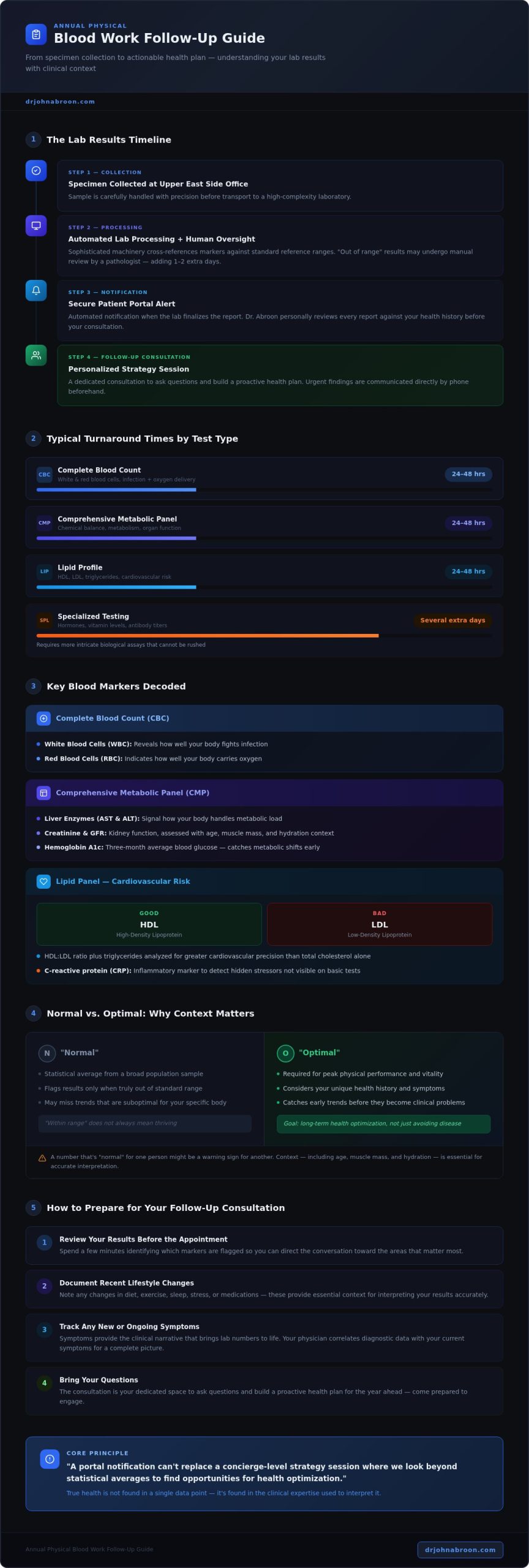
Understanding the timeline for your follow up after annual physical blood work helps alleviate the common anxiety associated with waiting for news. Once your specimen is collected at our Upper East Side office, it begins a carefully monitored journey. We prioritize diagnostic excellence, so each sample is handled with precision before being transported to a high-complexity laboratory. For standard panels like a Complete Blood Count (CBC) or a Comprehensive Metabolic Panel (CMP), you’ll typically see results within 24 to 48 hours. Lipid profiles usually follow a similar timeline. Specialized testing for hormones, vitamin levels, or antibody titers may require several additional days because these tests often involve more intricate biological assays that can’t be rushed.
Understanding the Lab Processing Phase
The path from collection to data entry is highly automated, yet human oversight remains vital for clinical accuracy. Once the laboratory receives your sample, it’s processed through sophisticated machinery that cross-references your markers against a standard laboratory reference range. If a result is flagged as “out of range,” it may undergo a manual review by a pathologist to verify the findings. This verification process acts as a safeguard to ensure the data is reliable, though it can occasionally extend the processing window by a day or two.
Notification Methods in a Modern NYC Practice
Most patients today receive an automated alert via a secure patient portal as soon as the lab finalizes the report. While it’s tempting to scan these numbers immediately, remember that raw data without clinical context can lead to unnecessary stress. Dr. Abroon reviews every report personally to ensure the findings correlate with your specific health history and physical exam. The review period is the essential time a physician takes to correlate diagnostic data with a patient’s unique medical history and current symptoms.
Even if your numbers appear within the expected limits on the screen, the follow up after annual physical blood work is the most critical step in your preventive care journey. A portal notification can’t replace a concierge-level strategy session where we look beyond statistical averages to find opportunities for health optimization. If there are urgent findings, our office will contact you directly via phone to discuss the next steps immediately. For all other results, your scheduled consultation provides the dedicated space to ask questions and build a proactive plan for the year ahead.
Decoding Your Blood Work: Understanding Key Health Markers
Your lab report acts as a physiological map of your current health status. While the rows of data might seem intimidating at first, each marker provides a specific clue about your internal environment. A successful follow up after annual physical blood work relies on moving beyond simple “high” or “low” flags. We look at how these markers interact to form a complete picture of your vitality. For instance, the Complete Blood Count (CBC) measures your white and red blood cells, revealing how well your body fights infection and carries oxygen. Meanwhile, the Comprehensive Metabolic Panel (CMP) serves as a vital check on your body’s chemical balance and metabolism.
It’s beneficial to spend a few minutes understanding your lab results before your consultation. This preparation allows you to identify which areas require deeper discussion. We also examine your lipid panel with a focus on heart health. Rather than just looking at total cholesterol, we analyze the ratio of “good” HDL to “bad” LDL and triglycerides. This nuanced view helps us assess cardiovascular risk with much greater precision than a standard screening. We often include inflammatory markers like C-reactive protein to detect hidden stressors that might not show up on basic tests.
Metabolic and Organ Function Indicators
We prioritize long-term trends over single snapshots. When assessing blood glucose, we look closely at your Hemoglobin A1c levels to see your three-month average sugar levels. This helps us catch metabolic shifts early. We also monitor liver enzymes like AST and ALT, which can signal how your body is handling its metabolic load. Kidney function is another priority. We evaluate Creatinine and GFR while considering your age, muscle mass, and hydration levels. This context is essential because a number that’s “normal” for one person might be a warning sign for another.
Nutrient and Hormonal Balance
New York lifestyle factors often influence specific blood markers. We frequently see deficiencies in Vitamin D and B12 among our busy Upper East Side patients. These nutrients are critical for energy, mood, and bone health. We also track Thyroid Stimulating Hormone (TSH) to ensure your metabolism is running at its ideal pace. These markers are especially important during the executive physicals nyc leaders use to maintain a competitive edge. If you’re ready for a deeper look at your health, discussing these markers with Dr. Abroon can provide the clarity you need to thrive.
Normal vs. Optimal: Why Context Matters for Your Lab Results
When you receive your lab report, the first thing you likely look for is the “reference range” column. Seeing your numbers fall within these boundaries often brings a sigh of relief. However, a value that’s technically normal isn’t necessarily optimal for your specific lifestyle and health goals. During a follow up after annual physical blood work, we look beyond these statistical averages to determine what your results say about your individual vitality. A number at the very edge of a range might be normal on paper, but it could signal a shifting trend that requires proactive intervention.
The Statistical Reality of Lab Ranges
Laboratories establish their reference intervals based on a bell curve of the population they test. This means normal is essentially the average of a large group of people, many of whom may already be managing various health conditions. Different laboratories might even use slightly different equipment or methodologies, leading to variations in what they consider a standard range. This is why understanding your lab results requires a clinical eye. An experienced internist identifies borderline trends that a computer-generated report might overlook. We don’t just wait for a marker to cross into the abnormal zone; we act when we see a trajectory moving away from your personal peak performance.
Personalized Interpretation in NYC Primary Care
The data from your blood draw is most powerful when correlated with the findings from your annual physical exam nyc. Your age, gender, and unique medical history act as essential filters for this interpretation. For example, a specific kidney function marker might be perfectly acceptable for a patient in their 60s but could indicate a need for further investigation in a 25-year-old athlete. We also prioritize your historical data. By tracking your unique health trajectory over several years, we can distinguish between a one-time fluctuation and a meaningful change in your physiology. This personalized approach ensures that your follow up after annual physical blood work is a strategic session focused on longevity rather than just a confirmation that you aren’t currently ill.
Context is everything in modern medicine. A slightly out of range result isn’t always a cause for alarm. It might be due to recent intense exercise, a minor cold, or even the time of day the sample was taken. By looking at the big picture, we provide the reassurance and clarity you need to move forward with confidence.
How to Prepare for Your Follow-Up Consultation
Preparing for your follow up after annual physical blood work transforms a standard check-in into a high-level health strategy session. Start by reviewing your laboratory report in your patient portal before you arrive. You don’t need to be a medical expert to identify areas that look unfamiliar or concerning. Highlight these markers so we can discuss them in detail. Your blood work provides a biological snapshot, but your personal experiences provide the necessary context. Document any shifts in your sleep patterns, energy levels, or dietary habits since your blood draw. We also need an updated list of all medications and supplements. Even common over-the-counter vitamins can influence how we interpret your data.
Set specific goals for the consultation. Are you looking to optimize your heart health, manage stress more effectively, or perhaps start a weight loss journey? Having a clear objective allows us to tailor our analysis to your unique needs. This focused approach ensures that every minute of your appointment is dedicated to your long-term vitality.
Questions to Ask Your NYC Internist
A productive dialogue is the foundation of personalized care. During your visit, consider asking these high-value questions to gain deeper insight into your physiology:
- How do these results compare to my blood work from last year? Tracking year-over-year changes is more important than any single data point.
- Are there any ‘normal’ results that are actually trending in the wrong direction? Catching a shift while it’s still within the normal range allows for early prevention.
- What lifestyle changes will have the biggest impact on these specific markers? We want to focus on actionable steps tailored to your specific results.
Maximizing Your Time on the Upper East Side
Our office is designed to provide a seamless, efficient experience for busy professionals. This consultation is an ideal time to discuss the benefits of concierge medicine nyc patients use for year-round access and highly specific health tracking. Whether you prefer digital notes or a traditional paper journal, recording our discussion helps you stay accountable to your health plan. We’ll conclude the session by confirming your next steps, whether that involves specialized referrals, scheduled re-testing, or specific lifestyle prescriptions. If you’re ready to take the next step in your health journey, schedule your follow-up consultation with Dr. Abroon today to gain total clarity on your results.
Personalized Internal Medicine: Post-Physical Care with Dr. Abroon
The value of your diagnostic data depends entirely on the clinical context provided by a trusted medical partner. When you schedule a follow up after annual physical blood work with Dr. Abroon, you aren’t just reviewing numbers; you’re refining your personal health strategy. Having a dedicated primary care physician nyc professionals rely on ensures that your health data isn’t viewed in isolation. We look at your results through the lens of your unique medical history, established over years of consistent care. This multi-year narrative allows us to detect subtle shifts in your physiology that a generic lab report would simply categorize as “within range.”
Beyond the Lab Report: A Holistic View
True health management goes beyond the laboratory. We correlate your blood markers with NYC-specific lifestyle factors such as high-stress environments, irregular sleep cycles, and the physical demands of urban life. As a board-certified internist, Dr. Abroon integrates these complex data points into a cohesive wellness strategy. For example, a slight elevation in certain markers might be linked to recent travel or a period of intense work deadlines. By understanding the person behind the patient portal, we provide a level of individualized diagnostic interpretation that large hospital systems often lack. This personalized approach transforms a sterile medical report into a meaningful conversation about your total well-being.
Next Steps for Your Health Journey
Your follow up after annual physical blood work concludes with a clear, actionable roadmap. This roadmap might include immediate lifestyle adjustments, specific supplement protocols, or personalized nutritional guidance designed to optimize your markers. We don’t believe in a “wait and see” approach. Instead, we favor proactive interventions that prevent minor trends from becoming chronic issues. Our goal is to empower you with the knowledge needed to make informed decisions about your daily habits.
Long-term monitoring is equally essential. Depending on your results, we’ll determine the ideal frequency for your next check-up to ensure your health trajectory remains on track. Our Upper East Side office provides the steady, reliable care needed to navigate complex medical decisions with confidence. Your wellness is a continuous journey, and we’re here to provide the clinical excellence and personal connection you deserve. We invite you to take the next step in your preventative care with a practitioner who values your long-term vitality as much as you do.
Ready to review your results? Schedule your follow-up consultation with Dr. Abroon today.
Take Charge of Your Health Narrative
Your health isn’t a static number on a page; it’s a dynamic story that deserves expert interpretation. We’ve explored how understanding the lab timeline and decoding key markers like your CBC and lipid panel can replace anxiety with actionable insight. By focusing on optimal performance rather than just statistical averages, you move from reactive care to a proactive wellness strategy. A thorough follow up after annual physical blood work is the essential bridge between raw data and a personalized plan for your long-term vitality.
Dr. John Abroon, a board-certified internal medicine expert, combines clinical excellence with a warm, patient-centered approach to help you navigate these complex findings. Our Upper East Side practice is dedicated to providing the high-level medical care and top-rated patient satisfaction that busy New Yorkers expect. Don’t let your results sit unread in a portal. Instead, transform them into a roadmap for a healthier future.
Book Your Follow-Up Consultation with Dr. Abroon to begin your journey toward optimized health today. We look forward to supporting your wellness goals with the steady, personalized care you deserve.
Frequently Asked Questions
How long does it typically take to get blood work results back?
Results for standard panels like a CBC or CMP typically return within 24 to 48 hours. Specialized markers, such as specific hormones or vitamin levels, often require additional processing time at the laboratory. Our Upper East Side office monitors these timelines closely to ensure your data is ready for review. We recommend waiting for the physician’s clinical interpretation before drawing conclusions from raw data seen in a patient portal.
What should I do if I see a ‘high’ or ‘low’ flag on my lab portal?
Don’t let an “out of range” flag cause immediate alarm. These flags are based on statistical averages and don’t account for your unique medical history, recent activity, or hydration levels. The best course of action is to document your questions and wait for your follow up after annual physical blood work. Dr. Abroon will correlate these findings with your physical exam to determine if a value is clinically significant for your health.
Do I really need a follow-up appointment if all my results are normal?
Yes, a consultation is essential even when results fall within the “normal” range. A statistical average isn’t the same as an optimal level for your specific lifestyle and age. This appointment serves as a concierge-level strategy session where we look for subtle trends and build a proactive plan for the coming year. We use this time to ensure you aren’t just “not sick,” but actually thriving and meeting your personal wellness goals.
Can I eat or drink before my follow-up blood work consultation?
You can typically eat and drink normally before your follow-up consultation, as this visit focuses on discussing existing results rather than collecting new samples. If your physician has requested repeat testing or additional diagnostic procedures during the visit, we’ll notify you in advance if fasting is required. For most strategy sessions at our New York office, your focus should be on preparing your questions rather than dietary restrictions.
What is the difference between a CBC and a CMP test?
A Complete Blood Count (CBC) focuses on the cellular components of your blood, such as white cells for immunity and red cells for oxygen transport. In contrast, a Comprehensive Metabolic Panel (CMP) measures chemical markers to assess kidney function, liver health, and electrolyte balance. Both are standard components of your follow up after annual physical blood work, providing a broad overview of your internal environment and organ performance.
Why did my doctor order additional tests after my initial physical?
Additional tests are often ordered to gain a more granular view of a specific health marker or to clarify a borderline finding. Dr. Abroon prioritizes diagnostic excellence, which sometimes requires looking deeper into inflammatory markers or hormonal balances that aren’t part of a standard screening. This targeted approach ensures that your health plan is based on precise data rather than general assumptions, allowing for a more customized medical experience.
How often should I have blood work done if I have a chronic condition?
The frequency of your laboratory testing depends on the specific condition being managed and the stability of your current markers. Many patients with chronic concerns benefit from monitoring every three to six months to ensure their treatment plan remains effective. We’ll establish a customized testing schedule during your consultation that balances clinical necessity with your busy NYC schedule, ensuring your health remains steady throughout the year.
Will my insurance cover the follow-up consultation for my blood work?
Most insurance plans cover follow-up consultations as part of your preventative care or for the management of specific health concerns. We recommend contacting your provider to confirm the details of your specific coverage for office visits and diagnostic reviews. Our practice has served the Upper East Side community since 1997, and we’re happy to provide the necessary documentation to help you maximize your available healthcare benefits.