


The sprawling medical centers dominating Manhattan often treat primary care like an assembly line, leaving genuine connection behind. For patients seeking high-level medical care, finding a doctor you can trust in nyc has become an exhausting gauntlet of administrative red tape. You schedule an appointment weeks in advance, only to endure a rushed seven-minute consultation with a rotating resident who barely glances up from a screen.
It’s entirely reasonable to expect more from your healthcare. You shouldn’t have to navigate fragmented records, delayed test results, or the lingering worry that a subtle symptom might slip through the cracks. This guide shows you how to bypass impersonal hospital bureaucracy and secure a lasting relationship with an experienced, board-certified internist who truly listens. We’ll explore the clinical advantages of dedicated private practice, examine the value of comprehensive on-site diagnostics, and provide a clear framework to help you choose the right physician for your long-term well-being.
Key Takeaways
- Understand the systemic factors driving rushed consultations in corporate hospital networks, and discover why physician continuity remains the foundation of safe care.
- Discover the five core clinical pillars for finding a doctor you can trust in nyc, including internal medicine board certification and decades of diagnostic experience.
- Compare private medical practices directly against large hospital clinics across critical metrics like provider consistency, direct communication, and unhurried appointment times.
- Use an actionable vetting checklist to verify state licenses, disciplinary records, and active board credentials through official New York medical databases.
- Learn how partnering with an established independent internist gives you direct access to thorough examinations and immediate on-site diagnostic testing.
The NYC Healthcare Maze: Why Finding Trustworthy Primary Care Feels Difficult
True medical trust rests on a straightforward foundation: clinical precision paired with physician continuity and attentive, unhurried dialogue. In Manhattan, however, private equity groups and corporate healthcare conglomerates increasingly buy up independent clinics. These organizations turn medical encounters into rapid transactions. For busy professionals balancing intense work schedules with personal commitments, finding a doctor you can trust in nyc often feels like trying to beat an algorithmic system designed around volume rather than personal well-being.
Ten-minute appointment quotas have become standard practice across many ambulatory networks. When an encounter is compressed into minutes, clinical rapport dissolves. Doctors spend more time checking required electronic billing boxes than performing thorough physical exams or listening to nuanced changes in your baseline health. Clinical history becomes fragmented across disparate corporate portals, increasing the risk that subtle, early warning signs get overlooked.
The Reality of Corporate Medicine vs. Individual Patient Attention
Assembly-line clinics foster diagnostic fatigue. When clinicians must churn through dozens of patients each day, they inevitably default to reactive symptom treatment instead of thoughtful root-cause analysis. Seeing a different physician assistant or rotating resident at every visit erodes longitudinal context. As medical researchers emphasize, the doctor-patient relationship serves as the bedrock of accurate diagnostic reasoning and effective chronic condition management. Preventative medicine demands time to examine patterns, review lab trends, and understand lifestyle factors.
Why Established Manhattan Residents Seek Personalized Internal Medicine
Decades of living in New York bring unique stressors and complex medical timelines that cannot be summarized in an intake questionnaire. Discerning patients actively seek independent, board-certified internists who maintain autonomous practices. A physician who knows your history directly provides critical advantages:
- Diagnostic accuracy: A familiar physician immediately notices slight deviations in your vital signs, weight, or energy levels.
- Responsive acute care: Sudden illnesses or urgent health concerns are evaluated by someone who already knows your baseline, not a stranger.
- Longitudinal focus: Continuity across annual exams ensures proactive screening rather than delayed interventions.
Ultimately, finding a doctor you can trust in nyc is not just about booking an open calendar slot. It is an intentional investment in your long-term health, ensuring that an experienced clinician stands by your side year after year.
5 Essential Pillars of a Truly Trustworthy NYC Doctor
High-profile hospital marketing can easily obscure what matters most: individualized, rigorous patient care. When vetting a new physician, five structural pillars help separate superficial clinic chains from dependable clinical partners. Assessing credentials, diagnostic equipment, and direct communication ensures your healthcare remains safe and proactive.
Board Certification and Clinical Longevity in Manhattan
Active board certification through the American Board of Internal Medicine (ABIM) demonstrates dedication to rigorous, peer-reviewed clinical standards. Clinical longevity matters just as much in a fast-paced urban environment. An established internist with decades of continuous local experience understands how to steer patients through complex specialty care and maintains strong hospital affiliations. Choosing a dedicated primary care physician nyc ensures that your medical history remains in steady, capable hands rather than resetting with rotating trainees.
Comprehensive Diagnostic Capabilities Under One Roof
Slogging through cross-town traffic to third-party commercial labs for standard tests creates unnecessary friction. Modern private practices integrate essential diagnostics directly into the clinical space. On-site electrocardiograms (EKGs), pulmonary function testing (spirometry), and laboratory evaluations deliver several distinct benefits:
- Accelerated diagnosis: Immediate findings allow your doctor to initiate targeted therapies without waiting days for outside lab transmissions.
- Reduced health anxiety: Completing evaluations during a single visit eliminates stressful periods of uncertainty.
- Streamlined assessments: Integrated testing accelerates comprehensive evaluations like annual physicals, pre-operative clearances, and executive exams.
Communication Style and Patient-Centered Empathy
Diagnostic precision depends on attentive dialogue. Green flags include a doctor who sits face-to-face, makes direct eye contact, and asks detailed questions about your work demands, nutrition, and stress levels. Providers who type continuously into a laptop often miss subtle nonverbal cues. Attentive, empathetic communication directly improves patient outcomes because you feel comfortable sharing sensitive symptoms early.
Evaluating these core pillars simplifies the process of finding a doctor you can trust in nyc. If you value attentive examinations paired with on-site diagnostics, connecting with an established clinician like Dr. John Abroon offers a grounded path to personalized, unhurried care.
Hospital Network Clinics vs. Private Medical Practices: Which Is Right for You?
Choosing where to receive primary care shapes your entire medical journey. While major hospital systems dominate billboards across the boroughs, their high volume often clashes with personalized clinical oversight. Finding a doctor you can trust in nyc means weighing the structural realities of institutional clinics against the steady focus of an independent private practice.
| Care Metric | Large Hospital Network Clinic | Independent Private Practice |
|---|---|---|
| Provider Consistency | Frequent turnover; care handled by rotating residents or mid-level staff. | Direct, continuous care from the same board-certified internist every visit. |
| Communication | Centralized phone trees and impersonal, third-party triage desks. | Direct access to familiar clinical staff who know your medical history. |
| Diagnostic Access | Off-site referrals to institutional lab centers, requiring extra appointments. | Integrated on-site diagnostic testing during your regular visit. |
| Consultation Depth | Rushed appointments bound by rigid administrative quotas. | Unhurried time dedicated to lifestyle, prevention, and detailed physical exams. |
The Trade-Offs of Mega Health Systems in New York
Mega networks offer broad technical infrastructure, but their bureaucratic scale introduces major daily friction. Booking a simple follow-up often requires waiting through robotic call menus. Outpatient visits at hospital-owned clinics may also trigger separate “facility fees” on top of the doctor’s professional charges, adding unexpected costs to basic preventative visits. Institutional quotas inevitably push providers toward volume over relationship-building.
The Enduring Benefits of Independent Private Internal Medicine
Independent practices offer administrative agility and deeply personal medical attention. When you call the office, you speak directly with clinical staff who know your name and ongoing treatment plan. If hospitalization or complex subspecialty care ever becomes necessary, seasoned private physicians coordinate smoothly with top regional specialists without being confined to a single hospital network’s preferred roster.
This autonomy allows independent internists to structure appointments around comprehensive evaluations, such as a meticulous annual physical exam nyc residents rely on to catch silent health risks early. For busy professionals requiring efficient scheduling, independent practices provide the focused, unhurried care essential to finding a doctor you can trust in nyc.
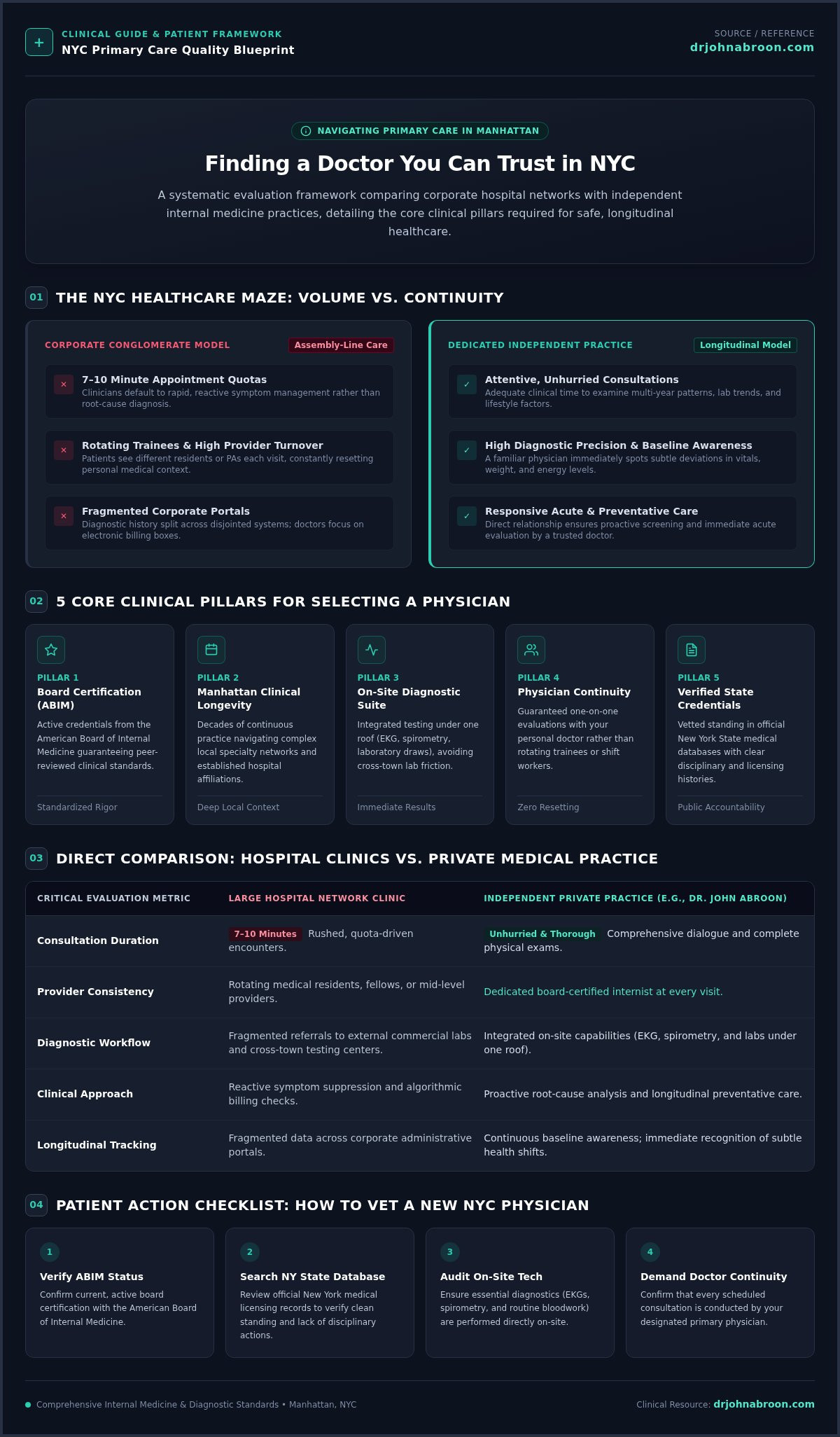
How to Vet a New Physician in NYC: A Step-by-Step Checklist
Relying solely on digital booking apps or online star ratings leaves critical questions unanswered. A systematic vetting process lets you evaluate a doctor’s true clinical integrity, legal standing, and daily bedside manner before scheduling an initial visit. Work through this sequential checklist to make finding a doctor you can trust in nyc an evidence-based decision rather than a gamble.
- Verify state medical licensure and conduct history: Search the New York State Office of Professional Medical Conduct (OPMC) database to ensure the physician holds an active, unrestricted license without disciplinary actions or malpractice revocations.
- Confirm specialty board certification: Check the American Board of Medical Specialties (ABMS) public portal to verify active certification in internal medicine, confirming the doctor participates in ongoing clinical education.
- Audit patient review patterns: Look beyond overall star counts on independent forums. Focus specifically on patient remarks concerning diagnostic thoroughness, transparent billing practices, and whether the physician actively listens.
- Conduct a preliminary inquiry: Call the office directly. Take note of how quickly the staff answers, their willingness to answer basic logistical questions, and the overall professionalism of the practice environment.
Researching Credentials and Professional History
Every practicing physician in New York must register with the state, but basic licensure represents only the baseline legal requirement. True clinical distinction requires ongoing specialty certification. Board-certified internists submit their diagnostic knowledge to regular peer assessment through rigorous examinations. Additionally, confirm whether the physician maintains active admitting privileges at reputable local medical institutions, which signals that independent hospital committees continually review their clinical outcomes.
Assessing Patient Feedback and Front-Desk Professionalism
The administrative tone of an office provides an accurate window into how the practice operates clinically. Front-desk staff who handle inquiries with courtesy, clear pricing policies, and prompt follow-through reflect a physician who values structured patient care. Consistent complaints about lost paperwork or billing surprises often indicate chronic operational disorganization.
Discerning patients who require direct access and tailored attention often select individualized care models, such as concierge medicine nyc professionals depend on for round-the-clock peace of mind. Taking the time to audit credentials and assess office responsiveness ensures you partner with a clinician committed to medical excellence. To experience a practice built on decades of proven clinical rigor and personalized patient care, schedule a consultation with Dr. John Abroon today.
Establishing Care on the Upper East Side: Partnering with Dr. John Abroon
For patients exhausted by administrative runarounds, Dr. John Abroon offers a dependable alternative rooted in clinical excellence. Operating his private internal medicine practice on the Upper East Side since 1997, Dr. Abroon has spent over 25 years caring for Manhattan residents across every stage of adulthood. His practice provides an enduring sanctuary from high-volume hospital clinics, ensuring that finding a doctor you can trust in nyc leads to a stable, long-term medical home.
Establishing care begins with a comprehensive, unhurried intake visit. Rather than rushing through a checklist, Dr. Abroon conducts an in-depth review of your medical history, family risk factors, and day-to-day wellness goals. This rigorous clinical baseline ensures your preventative strategy is tailored directly to your physiology and daily demands.
A Personalized Approach Rooted in Decades of NYC Experience
Dr. Abroon pairs old-school bedside attentiveness with modern clinical precision. As an independent, board-certified internist, he acts as your dedicated medical advocate. Having practiced continuously in Manhattan for decades, his clinical judgment is honed by years of diagnosing complex presentations. You see the same trusted physician at every visit, fostering the continuity required to manage chronic conditions or navigate sudden health concerns safely.
Comprehensive Preventative and Diagnostic Services Under One Roof
The Upper East Side office is fully equipped with advanced on-site diagnostic technology. Patients complete essential evaluations during a single appointment, eliminating inconvenient trips across the city:
- Cardiopulmonary testing: In-office electrocardiograms (EKGs) and spirometry provide prompt data on cardiac and respiratory function.
- Point-of-care specimen collection: Routine and specialized diagnostic testing occurs directly within the clinic.
- Specialized evaluations: Streamlined protocols facilitate executive physicals, pre-operative medical clearances, and immigration medical exams without unnecessary delays.
Taking control of your healthcare starts with a direct conversation. Prospective patients can schedule an initial consultation by contacting the office directly by phone or submitting an online appointment request through the practice portal. Partnering with an experienced, independent physician brings confidence and clinical clarity back to finding a doctor you can trust in nyc.
Take Control of Your Healthcare with an Attentive Manhattan Internist
Navigating metropolitan healthcare shouldn’t require compromising on clinical continuity or personal dignity. By focusing on board certification, unhurried consultations, and direct communication, finding a doctor you can trust in nyc becomes a clear, deliberate path rather than an exercise in frustration. When you partner with a dedicated internist, your care shifts from rushed symptom management to proactive, lifelong health preservation.
Since 1997, Dr. John Abroon has delivered personalized, unhurried care from his Upper East Side practice. With over 25 years serving Manhattan patients as a board-certified internist, he offers a steady hand and extensive clinical expertise. In-office diagnostic testing, including EKGs and laboratory blood collection, ensures immediate answers without the friction of outside commercial facilities.
Take the definitive step toward steady, attentive medical guidance. Schedule a Comprehensive Consultation with Dr. John Abroon today and gain complete confidence in your everyday well-being.
Frequently Asked Questions
How do I verify if a doctor in New York City is board-certified?
Verify certification directly through the American Board of Medical Specialties (ABMS) public database. You can also search the New York State Office of Professional Medical Conduct (OPMC) to confirm an active medical license and check for disciplinary actions. Board certification confirms the physician completed an accredited residency and participates in ongoing peer examinations, ensuring they uphold rigorous clinical standards.
What is the difference between an internist and a family medicine doctor?
Internists focus exclusively on adult medicine, specializing in complex physiology, chronic disease management, and preventative screening. Family medicine physicians care for patients of all ages, from infants to seniors, often balancing pediatrics and minor office procedures. For adult New Yorkers seeking comprehensive diagnostic depth, partnering with an internal medicine specialist provides targeted clinical expertise tailored to adult health needs.
Can I find an attentive private doctor in NYC who handles diagnostics on-site?
Yes, established independent practices often integrate comprehensive diagnostic testing directly into their clinical space. This convenience is a major advantage when finding a doctor you can trust in nyc. At his Upper East Side practice, Dr. John Abroon provides on-site electrocardiograms (EKGs), pulmonary function tests, and blood specimen collection, sparing patients unnecessary trips across town to outside commercial laboratories.
What questions should I ask during my first appointment with a new doctor?
Ask direct questions about appointment structure, communication protocols, and diagnostic practices. Inquire whether you will see the same doctor at every visit, how routine questions get answered between checkups, and which hospital centers they affiliate with. Pay close attention to whether the doctor listens patiently or rushes your answers, as unhurried dialogue is essential for safe preventative care.
Is it better to choose an independent private practice or a hospital health system?
It depends on your priorities, but private practices generally offer superior continuity, unhurried consultations, and direct communication. Hospital ambulatory networks provide large institutional networks but frequently rotate junior staff and impose unexpected facility fees. An independent practice ensures you see the same board-certified clinician every visit, establishing a familiar relationship that supports long-term wellness.
How far in advance do I need to book a physical exam with an Upper East Side internist?
Booking timelines vary depending on whether you are an established patient or scheduling a new patient intake. While large hospital centers often make patients wait months for routine checkups, independent private offices maintain more agile calendars. It’s wise to contact the clinic directly to check their current availability for annual physical exams, executive health evaluations, or timely consultations.
What happens if I need specialist referrals or hospital admission through a private doctor?
An experienced private internist coordinates directly with top regional specialists and admitting facilities across New York. Because independent physicians aren’t locked into a single hospital conglomerate’s narrow referral network, they recommend leading specialists based strictly on your individual medical needs. This freedom ensures seamless care coordination when finding a doctor you can trust in nyc to manage complex health conditions.