


What if the difference between an actionable longevity roadmap and a collection of skewed lab results comes down to your routine the morning before your appointment? Properly preparing for your executive physical ensures that every cardiovascular marker, metabolic panel, and diagnostic reading reflects your true physiological baseline rather than an artificial spike from a rushed schedule or mistimed medication.
We understand the frustration of fragmented medical visits that drain valuable work hours while offering little clarity on which tests are genuinely necessary. You deserve an efficient, thorough clinical evaluation that respects your time and delivers unambiguous answers about your systemic health without redundant procedures.
This definitive guide provides the exact protocols you need to optimize your biometric data, manage fasting requirements, and streamline your comprehensive evaluation into a single, consolidated visit. We’ll outline your pre-exam checklist, clarify high-yield diagnostic screenings, and show you how to translate your clinical results into an actionable, personalized preventative longevity plan.
Key Takeaways
- Understand the precise clinical distinction between a standard annual exam and an advanced, single-visit executive evaluation.
- Master the 48-hour timeline for fasting, hydration, and supplement pauses when preparing for your executive physical to safeguard biomarker accuracy.
- Discover what to expect during in-office diagnostic evaluations, including resting EKGs, pulmonary function testing, and targeted blood panels.
- Learn practical strategies to mitigate situational stress and white-coat hypertension so your baseline vital readings remain authentic.
- Turn your comprehensive biometric findings into a dynamic, physician-guided roadmap for cardiovascular protection and sustained longevity.
What Is an Executive Physical and Why Does It Require Strategic Preparation?
Maintaining peak cognitive and physical performance demands proactive health oversight. An executive physical delivers an advanced evaluation of your cardiovascular, metabolic, and systemic organ function within a focused, discrete clinical setting. Rather than spending weeks navigating disjointed specialist appointments across impersonal hospital systems, strategic planning allows you to consolidate an entire battery of screenings into a single morning. Comprehensive physical exams of this caliber evaluate the body at a cellular and functional level. Consequently, diligently preparing for your executive physical ensures your diagnostic readings reflect your authentic baseline rather than transient workplace stress or dietary fluctuations.
Executive Physical vs. Routine Annual Checkup: Key Differences
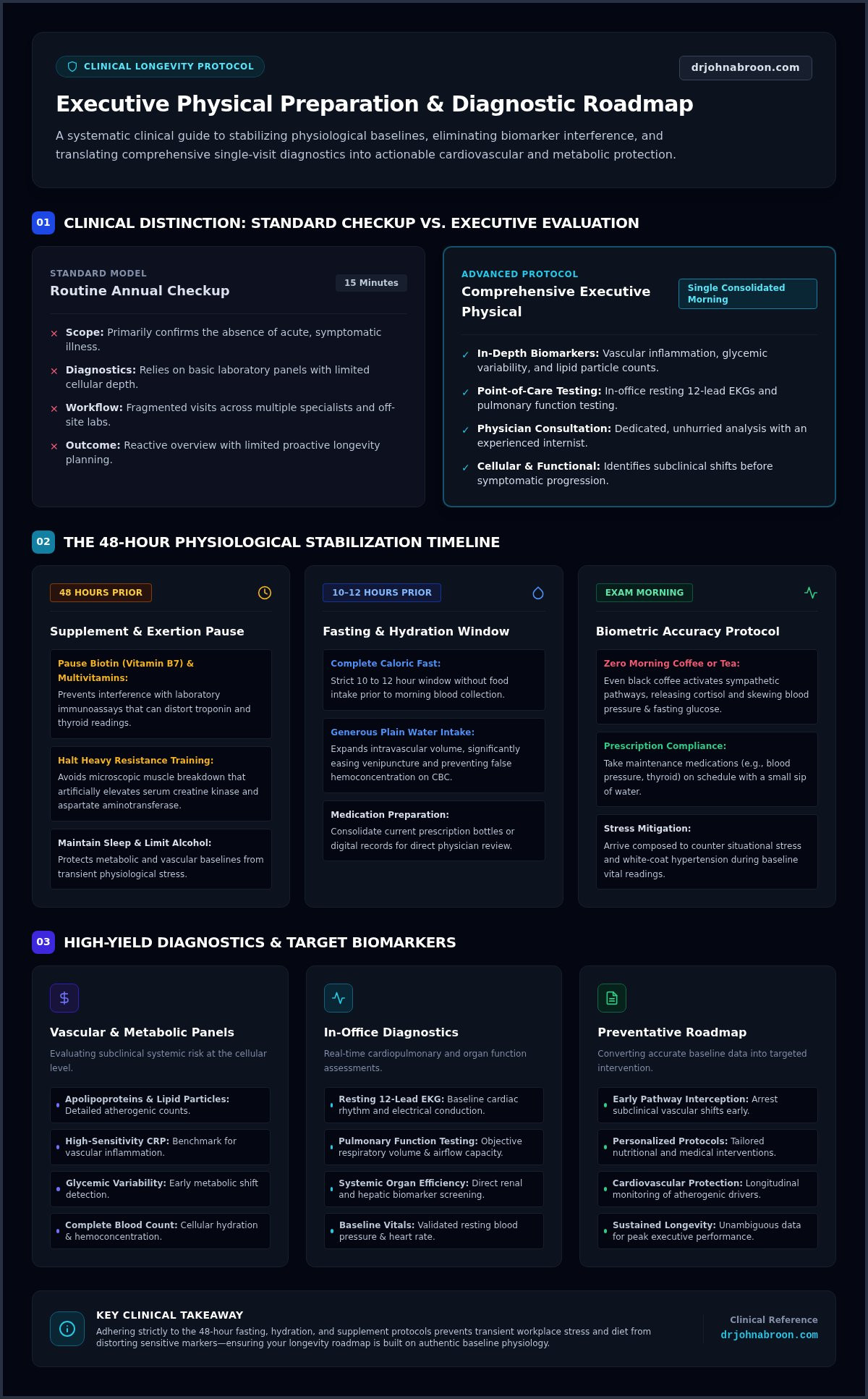
While a standard wellness checkup simply confirms the absence of acute illness, an executive physical proactively investigates cardiovascular resilience and metabolic efficiency. Standard medical visits often last just fifteen minutes and rely on basic panels. In contrast, an executive evaluation pairs dedicated physician time with deep diagnostic precision.
- Advanced Biomarker Panels: Replaces standard testing with in-depth assessments of vascular inflammation, glycemic variability, and lipid particle counts.
- In-Office Diagnostics: Integrates specialized point-of-care diagnostics, such as resting 12-lead electrocardiograms (EKGs) and pulmonary function tests.
- Personalized Clinical Consultation: Provides an unhurried environment with an experienced internist to analyze long-term health risks and design customized protocols.
Why Accurate Baseline Data Matters for Long-Term Longevity
Early detection is the bedrock of longevity. Subclinical vascular changes and subtle metabolic shifts rarely present noticeable symptoms in their early stages. Establishing verified benchmarks for apolipoproteins, high-sensitivity C-reactive protein, and organ efficiency gives your physician the data required to intercept disease pathways early.
Carefully preparing for your executive physical prevents everyday variables, like an extra morning espresso or a late-night meal, from distorting these sensitive biomarkers. When your baseline data is uncompromised, your physician can prescribe targeted lifestyle, nutritional, and medical interventions with absolute clinical accuracy.
The 48-Hour Preparation Checklist: Fasting, Medications, and Biometric Accuracy
Precision diagnostic testing requires strict physiological stabilization. When preparing for your executive physical, adhering to a structured 48-hour timeline prevents ordinary daily habits from skewing critical laboratory findings. Following a definitive checklist ensures seamless venipuncture, accurate cardiovascular metrics, and reliable metabolic baselines.
Navigating Fasting Windows and Beverage Restrictions
Most advanced panels require a 10 to 12 hour fasting window without caloric intake prior to morning blood collection. While water is essential, eliminate morning coffee and tea entirely. Even plain black coffee activates sympathetic nervous pathways, triggering cortisol release and transiently elevating resting blood pressure and fasting glucose. Drink generous amounts of plain water instead. Ample hydration expands intravascular volume, which simplifies venipuncture and prevents artificial hemoconcentration across your complete blood count.
Managing Daily Medications, Supplements, and Biotin
Never adjust essential prescription regimens without explicit clinical guidance. Most maintenance medications for blood pressure or thyroid regulation should be taken on schedule with a small sip of water. However, pause over-the-counter wellness supplements, particularly multivitamins and high-dose biotin (vitamin B7), 48 hours in advance. Biotin interferes directly with laboratory immunoassays, often producing falsely abnormal thyroid panels or distorted troponin readings. Consolidate your prescription bottles or an updated digital record to review during your visit.
Sleep Hygiene, Alcohol, and Physical Exertion Protocols
Intense physical exertion significantly alters blood chemistry. Heavy resistance training causes microscopic muscle breakdown, temporarily driving up serum creatine kinase, aspartate aminotransferase (AST), and blood urea nitrogen. Abstain from strenuous workouts for 24 hours before your evaluation to protect biomarker integrity. You should also follow these foundational rules:
- Eliminate Alcohol: Refrain from wine, beer, and spirits for at least 48 hours to preserve true baseline liver transaminases and serum triglycerides.
- Prioritize Sleep: Aim for seven to eight hours of restful sleep to ensure baseline autonomic tone and stable cardiovascular vitals.
- Organize Medical Records: Compile recent immunization records, past surgical details, and specialist notes to ensure comprehensive clinical context.
Partnering with a seasoned private internist for executive physicals in Manhattan ensures you receive clear, individualized preparation instructions well before you step through the clinic doors.
Advanced In-Office Diagnostic Testing: What to Expect During Your Evaluation
Arriving at your appointment means moving straight from preparation into targeted clinical discovery. Rather than sending you to disjointed hospital annexes, an elite evaluation performs comprehensive diagnostic testing directly on-site. Knowing what happens during each diagnostic phase ensures that preparing for your executive physical translates into a smooth, stress-free clinical experience.
Cardiovascular and Pulmonary Screenings Explained
Cardiopulmonary health forms the core of your physiological assessment. A resting 12-lead electrocardiogram records cardiac electrical activity to detect conduction delays, subtle arrhythmias, or past ischemic changes. Alongside the EKG, spirometry and pulmonary function tests measure forced vital capacity and airway resistance to identify early respiratory limitations. Wear comfortable, loose clothing to your appointment so our clinical team can easily position chest electrodes and blood pressure cuffs without causing unnecessary delays.
Comprehensive Blood Chemistry, Hormone, and Biomarker Panels
Venipuncture performed during an executive checkup goes far beyond the basic metabolic panels of a routine screening. Advanced blood diagnostics evaluate systemic health across multiple physiological domains:
- Advanced Lipid Subfractions: Measuring apolipoprotein B (ApoB) and lipoprotein(a) alongside particle numbers delivers accurate vascular risk stratification.
- Vascular Inflammatory Markers: High-sensitivity C-reactive protein (hs-CRP) identifies silent endothelial inflammation long before plaque calcifies.
- Organ Health and Metabolic Stability: Detailed chemistry panels calculate glomerular filtration rates, liver enzyme ratios, and fasting insulin levels to catch early metabolic resistance.
Personalized Clinical Examination on the Upper East Side
The centerpiece of the evaluation remains the physical exam itself. Dr. John Abroon conducts a detailed, head-to-toe clinical assessment evaluating cranial nerve responses, deep tendon reflexes, peripheral arterial pulses, and abdominal architecture. With private practice roots established in 1997, Dr. Abroon interprets your findings directly during your appointment rather than leaving you to decipher complex lab portals on your own. Partnering with an experienced primary care physician in NYC transforms your baseline diagnostic panels into an enduring doctor-patient relationship built on steady clinical oversight and preventative longevity.
Managing Clinical Anxiety and Executive Schedule Pressures
Leading organizations involves relentless operational demands. When professional stress follows you into the clinic, it can distort fundamental biometric measurements. Preparing for your executive physical requires managing both psychological tension and calendar commitments so your physical state reflects authentic daily living, not transient anxiety.
Mitigating White-Coat Hypertension and Stress-Induced Spikes
White-coat hypertension occurs when anticipation of an exam activates the sympathetic nervous system, causing sudden spikes in arterial blood pressure and resting pulse. A few intentional techniques help stabilize your vascular tone:
- Arrive Early: Arrive 15 minutes before your scheduled appointment. Giving yourself time to decompress in a quiet office environment allows your heart rate to normalize naturally.
- Practice Box Breathing: Spend five minutes in the examination suite engaging in slow, diaphragmatic breathing: inhale for four seconds, hold for four, exhale for four, and pause for four.
- Request Late-Visit Rechecks: Inform your clinician if you feel stressed upon arrival. Taking a second reading toward the end of your visit often captures a dramatically truer reading.
- Bring Home Readings: Sharing a simple log of resting morning readings recorded over the preceding two weeks gives your internist valuable real-world context.
Structuring Your Business Calendar Around the Appointment
Time management should work in service of clinical precision. Book your assessment early in the morning. Completing fasting requirements during sleeping hours eliminates daytime energy crashes and prevents extended cognitive fatigue. Leave the hour following your evaluation free to break your fast with a balanced meal and reflect on initial insights without answering urgent calls.
Large hospital systems often subject executives to chaotic waiting rooms, multiple departmental check-ins, and fragmented schedules spread across multiple days. In contrast, an established private practice respects demanding schedules by coordinating diagnostic testing efficiently in a single, calm Manhattan clinic. If you value discretion and efficiency, schedule your executive physical with Dr. Abroon to protect your professional focus while securing an exhaustive evaluation of your health.
Beyond the Exam: Transforming Diagnostic Data into a Preventative Roadmap
Diligently preparing for your executive physical yields pristine biometric data, but raw metrics are only as valuable as the clinical strategy they inform. Once your blood panels, electrocardiogram, and pulmonary evaluations are complete, your physician translates these numbers into a tailored action plan. This roadmap bridges the gap between diagnostic discovery and sustained, long-term vitality.
Interpreting Advanced Lab Biomarkers and Follow-Up Protocols
During your follow-up consultation, you and your internist review your diagnostic findings side by side. Rather than assessing isolated lab ranges, this collaborative review evaluates how metabolic markers, vascular inflammation, and organ efficiency interact across your biological profile. Identifying subtle physiological shifts early allows you to implement targeted nutritional adjustments and lifestyle refinements before pharmaceutical interventions become necessary. If your findings suggest specific risk factors, your physician determines whether targeted follow-up diagnostics or specialized imaging are clinically warranted.
Partnering with Dr. John Abroon for Ongoing Longevity
A comprehensive evaluation should never end as an isolated, transactional event. Board-certified in Internal Medicine and treating patients in Manhattan since 1997, Dr. Abroon offers continuous personal oversight that fragmented corporate healthcare networks cannot provide. Your diagnostic evaluation establishes a definitive clinical baseline for future annual physical exams in NYC, allowing for precise year-over-year tracking.
To preserve this high standard of care year-round, many patients transition seamlessly into concierge medicine on the Upper East Side. This membership model provides direct physician access, ongoing preventative oversight, and prompt clinical attention whenever health needs arise. When you commit to thoughtfully preparing for your executive physical, you create a solid foundation for active longevity. Connect with Dr. John Abroon M.D. to schedule your comprehensive evaluation and safeguard your future health today.
Build Your Long-Term Preventative Health Blueprint Today
Strategic foresight is the foundation of high-performance living. Properly preparing for your executive physical ensures that every resting EKG reading, metabolic marker, and pulmonary assessment reflects your true physiological baseline. Following simple hydration protocols, pausing interfering supplements, and managing situational stress replaces diagnostic guesswork with clinical certainty.
Your systemic well-being demands more than hurried visits or fragmented hospital networks. Board-certified in Internal Medicine and practicing on Manhattan’s Upper East Side since 1997, Dr. John Abroon pairs advanced in-office diagnostics, including spirometry and cardiac testing, with attentive, compassionate bedside care. You don’t have to navigate complex longevity decisions alone. Schedule your comprehensive executive physical with Dr. John Abroon today and take the first decisive step toward sustained, active vitality.
Frequently Asked Questions
How many hours do I need to fast before an executive physical?
You should fast for 10 to 12 hours prior to your morning blood draw. This window guarantees precise readings for fasting blood glucose, lipid subfractions, and insulin sensitivity. You may drink plenty of plain water during this period, which keeps your veins hydrated for easy collection, but you must avoid coffee, tea, juices, and all morning snacks.
Can I take my morning prescription medications on the day of my exam?
Yes, you can take essential prescription medications for blood pressure or thyroid health with a small sip of water. However, pause over-the-counter supplements, particularly multivitamins and biotin, for 48 hours to avoid laboratory testing interference. If you take insulin or oral diabetic medications, always consult our office beforehand to adjust your dosing schedule safely around your fasting hours.
What should I wear to my executive physical appointment?
Wear loose-fitting, comfortable two-piece clothing that allows quick access to your chest, arms, and lower legs. This makes placing electrocardiogram leads, applying blood pressure cuffs, and performing pulmonary evaluations effortless. Avoid tight compression garments, one-piece outfits, or heavy jewelry that might interfere with diagnostic equipment or require unnecessary changes during your evaluation.
How long does a comprehensive executive physical take to complete?
A comprehensive executive evaluation in our private Upper East Side clinic typically takes two to three hours. Unlike crowded hospital networks that stretch assessments across multiple days, Dr. Abroon consolidates your clinical examination, resting EKG, spirometry, and laboratory collection into a single, efficient morning. This structure respects demanding executive schedules while ensuring unhurried, attentive physician care.
What is the difference between an executive physical and an annual checkup?
An executive physical delivers an in-depth diagnostic assessment, whereas a routine annual checkup provides basic screening for acute symptoms. Executive evaluations incorporate advanced vascular biomarkers, pulmonary function testing, and resting electrocardiograms alongside dedicated time with an experienced internist. Diligently preparing for your executive physical allows us to build an extensive baseline that guides long-term preventative health rather than offering just a surface-level overview.
Can I exercise or work out the morning before my physical?
No, you should abstain from both heavy resistance training and intense cardio for 24 hours prior to your exam. Strenuous exercise induces temporary skeletal muscle breakdown, causing artificial elevations in serum creatine kinase, liver transaminases, and blood urea nitrogen. Gentle walking is fine, but resting ensures your metabolic and cardiac panels accurately reflect your authentic baseline state.
What medical records or documents should I bring with me?
Bring a comprehensive list of your current prescriptions, including exact dosages, along with prior surgical summaries and recent immunization records. If you monitor your blood pressure at home, bring your recent measurement log to compare against in-office vitals. Having these records organized when preparing for your executive physical enables Dr. Abroon to contextualize your diagnostic data with complete clinical accuracy.