


The closest clinic isn’t automatically the best fit for a strep test NYC residents are seeking. Choose based on your symptoms, how soon you need an evaluation, and whether the provider can explain what happens if your result is negative.
A sore throat doesn’t always mean strep, and symptoms alone can’t confirm the infection. A sudden sore throat with fever and no cough may make testing worth discussing, but a clinician can help determine whether it’s appropriate for you or your child. Before deciding where to go, compare primary care, urgent care, and pharmacy clinic options, including the follow-up each can provide.
This guide explains how those care settings may differ, what to expect from a rapid antigen test versus a throat culture, and what to ask about result timing, age eligibility, and follow-up. Dr. John Abroon is a board-certified internist and primary care physician on Manhattan’s Upper East Side. His practice offers diagnostic testing, but call to confirm whether it currently performs or arranges strep testing before planning a visit. Asking a few practical questions can help you choose an appropriate setting and understand what may happen after testing.
Key Takeaways
- Choose a care setting based on clinical follow-up and the services it confirms, not location alone.
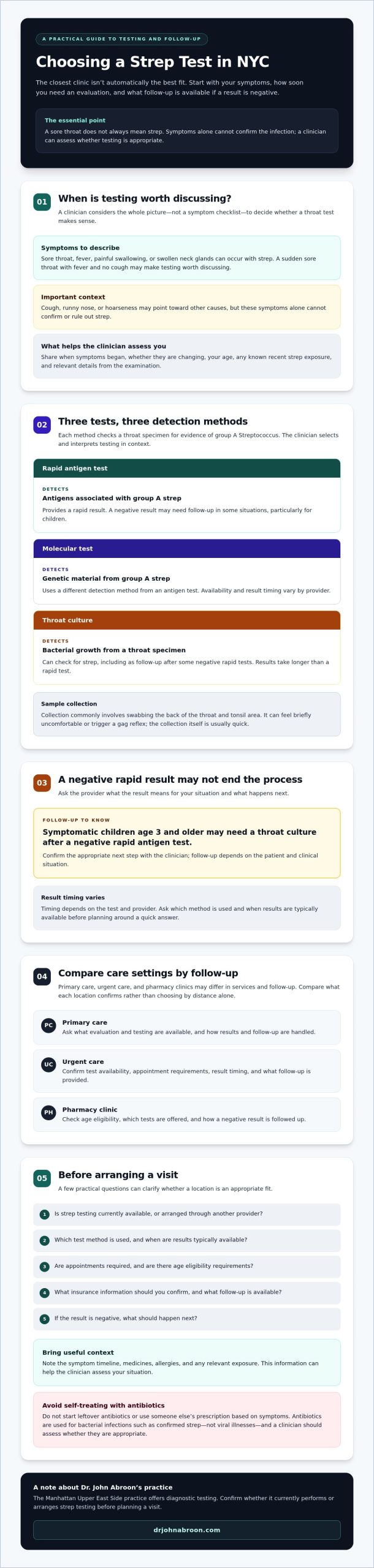
- Rapid antigen tests, molecular tests, and throat cultures detect group A strep in different ways and may involve different result processes.
- Before arranging a strep test NYC visit, ask about test availability, appointment requirements, age eligibility, insurance, and follow-up.
- Bring a clear timeline of symptoms and note any medicines, allergies, or relevant exposure to help the clinician assess your situation.
- Ask what a negative result means for your next steps. Symptomatic children age 3 and older may need a throat culture after a negative rapid antigen test.
Strep Test in NYC: When Is Testing Worth Asking About?
A sore throat can have several causes, including viral infections and group A Streptococcus. A clinician may consider a strep test when your symptoms and other details make testing appropriate, but not every sore throat needs one. If you’re looking for a strep test nyc, start by describing what you’re experiencing rather than trying to diagnose yourself from a symptom list.
A strep test checks a throat specimen for group A Streptococcus. It contributes to diagnosis but doesn’t replace a clinician’s assessment. The infection is also called streptococcal pharyngitis. Because symptoms can overlap with other illnesses, a clinician may consider your symptoms, age, possible exposure, and examination when deciding whether to test.
What symptoms should prompt a strep-test conversation?
A sore throat, fever, painful swallowing, or swollen neck glands can occur with strep. Cough, a runny nose, or hoarseness may point toward other causes, but those symptoms alone can’t confirm or rule out strep. Share these signs as context for the clinician, rather than treating them as a checklist that provides a diagnosis.
Contact a clinician if your symptoms feel significant, persist, or concern you. When arranging an evaluation, mention when they began, whether they’re changing, and whether you know of a recent strep exposure. This information can help the clinician decide what assessment or testing, if any, makes sense.
Can symptoms alone tell you whether you have strep?
No. Different infections can cause similar throat symptoms, and looking at symptoms online can’t reliably establish the cause. A clinician can assess the overall picture and decide whether a throat test is appropriate. Depending on the situation, testing may help distinguish group A strep from an illness that needs a different approach.
Don’t start leftover antibiotics or use someone else’s prescription based on symptoms. Antibiotics are used for bacterial infections such as confirmed strep, not viral illnesses, and a clinician should assess whether they’re appropriate. When choosing a strep test nyc provider, ask what evaluation is available and how results guide follow-up. Dr. John Abroon’s Upper East Side practice offers diagnostic testing. Call to confirm whether it performs or arranges strep testing before planning a visit.
How NYC Strep Tests Work: Rapid Tests, Molecular Tests, and Cultures
A strep test typically uses a throat specimen to check for group A Streptococcus, but different methods look for different evidence of the bacteria. How strep tests work can depend on the test selected, the patient’s age, and the clinical situation. A clinician chooses a method based on those factors and interprets the result in context.
Rapid antigen tests detect bacterial antigens, molecular tests detect bacterial genetic material, and cultures look for bacterial growth from a throat sample. The clinician considers the result alongside the clinical assessment.
| Test type | What it detects | What to know |
|---|---|---|
| Rapid antigen detection test | Antigens associated with group A strep | Provides a rapid result, but a negative result may need follow-up in some situations, particularly for children. |
| Molecular test | Genetic material from group A strep | Uses a different detection method from an antigen test. Availability and result timing vary by provider. |
| Throat culture | Bacterial growth from a throat specimen | Can be used to check for strep, including as follow-up after some negative rapid tests. Results take longer than a rapid test. |
What happens during a rapid strep test?
Collection commonly involves a clinician swabbing the back of the throat and tonsil area. The swab can feel briefly uncomfortable or trigger a gag reflex, but collection itself is usually quick. Ask the clinic what to expect, since testing processes can differ by location.
Turnaround depends on the test and provider. Before making plans around a quick answer, call the clinic to ask which method it uses and when results are typically available. A rapid result helps inform the clinician’s decision, but it doesn’t replace an assessment or determine every next step by itself.
When might a throat culture or molecular test be used?
A clinician may choose a molecular test or culture based on symptoms, age, and an initial result. CDC guidance recommends confirming a negative rapid antigen test with a throat culture for symptomatic children age 3 and older. A follow-up culture isn’t routinely needed after a negative rapid antigen test in adults, though a clinician can advise based on the individual situation.
If you’re arranging a strep test nyc visit, ask whether the site offers the test method your clinician recommends and how it handles a negative result. Dr. John Abroon’s practice offers diagnostic testing. Call to confirm whether it performs or arranges strep testing before planning a visit. You can contact the Upper East Side primary care practice with questions about availability.
Where to Get a Strep Test in NYC: Compare Care Settings
The right place to seek a strep evaluation depends on more than distance. Consider whether you want follow-up with a clinician who knows your health history, need an assessment from another care setting, or are considering a pharmacy clinic. Services and testing availability vary by location, so confirm directly before traveling. A general listing for illness care or diagnostic testing doesn’t necessarily mean a clinic currently offers strep testing.
Primary care or urgent care: which fits your situation?
Primary care can be a good fit if you have an established clinician who can assess your symptoms and help coordinate follow-up. Urgent care may be an option when you need a timely evaluation and the location confirms it can assess your symptoms and perform or arrange testing. Pharmacy clinics may offer another point of care, but their services and age eligibility can differ. Compare continuity, access, and confirmed services rather than assuming one setting is always faster or better.
Dr. John Abroon is a board-certified internist and primary care physician with a practice on Manhattan’s Upper East Side. The practice offers diagnostic testing, but call to confirm whether it currently performs or arranges strep testing. Ask about appointment availability before making plans.
What should you confirm before choosing a NYC clinic?
A brief call can help you avoid traveling to a location that can’t meet your needs. For a strep test nyc visit, ask:
- Does this location currently perform or arrange strep testing?
- Do I need an appointment, and does the provider see patients of my age?
- Which insurance plans are accepted, and how should I confirm my coverage?
- What test methods are available, and when should I expect results?
- How will the clinician share results and arrange follow-up, especially if a rapid test is negative?
Verify the address and current availability directly with the provider, since listings may not reflect changes in services or scheduling. If symptoms are severe or rapidly worsening, don’t rely on a routine clinic comparison. Seek urgent medical assessment. For an emergency, contact emergency services.
Before and After a Strep Test: Results, Follow-Up, and Safety
A little preparation can make your visit more focused. Before a strep test, note when your symptoms began and how they’ve changed. Bring a current list of medicines, note any allergies, and mention relevant exposure to someone with strep. These details help the clinician assess your symptoms and interpret the result.
Test results should be interpreted alongside symptoms and the clinical examination, not in isolation. A positive result may support a diagnosis, while a negative result doesn’t always end the evaluation. The next step depends on the test used, the patient’s age, symptoms, and the clinician’s assessment.
What questions should you ask when you receive results?
Make sure you understand what was tested and what the result means for your situation. Ask which test was performed, whether your age or symptoms affect the interpretation, and whether additional testing or follow-up is recommended. If you’re unsure how or when to check back, clarify whom to contact if symptoms persist or worsen.
What should you do if the result is positive or negative?
If the result is positive, ask the clinician what it means and whether treatment is appropriate. Don’t take leftover antibiotics or start medication without a clinician-directed plan. If the result is negative, follow the clinician’s guidance about whether further testing is needed. For example, current CDC guidance recommends a throat culture to confirm a negative rapid antigen test in symptomatic children age 3 and older. Recommendations may differ for other patients and test methods.
Symptoms still matter after testing. If they don’t improve or begin to worsen, contact a clinician for advice even if the result was negative. Seek urgent medical evaluation for difficulty breathing, inability to swallow, or symptoms that are rapidly worsening. For an emergency, contact emergency services.
If you’re arranging a strep test nyc visit, ask the provider in advance how results are shared and who will explain any recommended next steps. Dr. John Abroon’s practice offers diagnostic testing, but call to confirm whether it performs or arranges strep testing and how follow-up works. Contact the Upper East Side practice to ask about evaluation and availability before planning a visit.
Getting a Strep Test in NYC: How to Arrange the Right Visit
Before heading to a clinic, confirm that it can assess your symptoms and currently performs or arranges strep testing. A provider may offer general diagnostic testing without offering this specific test. Appointment requirements, age eligibility, and follow-up processes can also differ. A quick call helps you choose a suitable setting without assuming walk-in access or test availability.
How to prepare for a strep-test appointment
Make a brief note of when your symptoms began and whether they’ve changed. Bring a current medication list, note any allergies, and be ready to share relevant medical history or known exposure to someone with strep. Call ahead to confirm appointment arrangements rather than assuming the clinic accepts walk-ins.
How to contact an Upper East Side primary care practice
Dr. John Abroon is a board-certified internist and primary care physician with a practice on Manhattan’s Upper East Side. The practice offers diagnostic testing, but call to confirm whether it currently performs or arranges strep testing and whether you need an appointment. You can also ask whether the practice sees patients in your age group and how results and follow-up are handled.
As you compare care options, consider whether continuity with a primary care clinician matters to you. Learn more about primary care in NYC, then confirm directly that the practice’s current services fit your needs. For an acute sore throat, ask specifically about strep-test availability, appointment options, accepted insurance, expected result timing, and who will explain the result or recommend next steps.
- Does the practice currently perform or arrange strep testing?
- Do I need an appointment, and are there age limits?
- What insurance plans are accepted, and how can I confirm my coverage?
- Which test methods are available, when should I expect results, and how will follow-up work?
If you’re looking for a strep test nyc provider, Dr. Abroon’s practice is one office you can contact to ask about evaluation and current services. Contact the practice to verify availability before planning your visit.
Take the Next Step Toward the Right Evaluation
Choosing a strep test nyc option starts with a clinician’s assessment, not symptoms alone. Rapid antigen tests, molecular tests, and throat cultures detect strep in different ways, and the right follow-up depends on the test result and your situation. Before traveling, confirm that the provider offers or arranges testing, and ask about appointments, age eligibility, result timing, and follow-up.
Dr. The practice offers diagnostic testing. Call to confirm whether strep testing is currently available and whether an evaluation is appropriate for your situation.
Contact Dr. Abroon’s office to ask about evaluation and current testing availability. Clear information and personalized clinical guidance can help you decide on your next step.
Frequently Asked Questions
Where can I get a strep test in NYC?
Ask a primary care office, urgent care center, or pharmacy clinic whether it currently performs or arranges strep testing. Availability, age eligibility, appointment requirements, and test methods vary by location, so call before traveling. Dr. John Abroon is a board-certified internist with an Upper East Side practice that offers diagnostic testing. Contact the office to confirm whether strep testing is available.
Can I get a strep test at a pharmacy in NYC?
Some pharmacy clinics may offer strep testing, but services can differ between locations and may change. Call the specific NYC pharmacy clinic to confirm that it currently tests for strep, whether it sees patients of your age, and whether you need an appointment. Ask how results are shared and what follow-up is available. Don’t assume that a pharmacy carrying at-home test kits also provides in-person testing.
How accurate is a rapid strep test?
A rapid antigen test can provide a useful result, and a positive result is generally reliable. However, a negative result can miss an infection, so its meaning depends on the test and clinical context. The clinician considers your symptoms and examination alongside the result and may recommend follow-up testing in some cases. Ask which test was performed and how its result should guide your next steps.
What happens if a rapid strep test is negative?
A negative rapid result doesn’t always rule out strep. For symptomatic children age 3 and older, CDC guidance recommends confirming a negative rapid antigen test with a throat culture. Adults generally don’t need routine culture confirmation after a negative rapid antigen test, but a clinician may advise based on the individual situation. Ask whether additional testing is appropriate, and seek advice again if symptoms persist or worsen.
How long does a strep test take in NYC?
Timing depends on the test method and the provider. A rapid test is designed to provide an answer sooner than a throat culture, while culture results take longer. Molecular test turnaround can also vary by location and process. Before visiting, call the NYC provider to ask which methods it offers and when results are typically available. Confirm how the office will contact you and explain the result.
Do I need an appointment for a strep test in NYC?
Appointment rules vary across NYC primary care practices, urgent care centers, and pharmacy clinics. Some locations may require a scheduled visit, while others may have different arrangements. Call the specific site before traveling to confirm whether it offers testing, whether an appointment is needed, and whether it sees patients in your age group. Also ask about current availability, insurance, and how results and follow-up are handled.
Can a doctor prescribe antibiotics based on a strep test?
A clinician may prescribe antibiotics when an evaluation supports treatment for strep. The decision should consider the test result and your symptoms, medical history, and examination. Don’t take leftover antibiotics or medication prescribed for someone else. If your result is positive, ask the ordering clinician whether treatment is appropriate and how to take it. If symptoms worsen or don’t improve, contact a clinician for further guidance.