


What if the most important travel-health decision isn’t just where you’re going, but how the trip fits your health? If you’re searching for a travel clinic for business travelers nyc, you may be balancing meetings, flights, and a departure date that’s coming up fast. Destination guidance can feel less straightforward when a chronic condition, medication schedule, or long journey adds personal considerations.
A focused consultation connects your itinerary with your health history, so your preparation reflects the trip you’re actually taking. The CDC recommends arranging a pre-travel visit 4 to 6 weeks before departure when possible. If your schedule is tight, a clinician can still discuss your plans and health questions. Dr. John Abroon, a board-certified internist and primary care physician on Manhattan’s Upper East Side, offers a personalized approach to travel medicine.
This guide explains what to consider when arranging a NYC travel medicine consultation and how to prepare details about your destination, activities, immunization history, and health. Use it to plan a more focused conversation before your next business trip.
Key Takeaways
- A travel medicine consultation connects your destination and itinerary with your health history, making pre-trip planning more relevant to you.
- Learn what a clinician may discuss, from trip timing and activities to health considerations that shape vaccine and prevention guidance.
- Use online travel-health resources to prepare questions, then discuss your individual circumstances with a clinician.
- Before your appointment, gather your itinerary, departure date, health history, medication list, and available immunization records.
- When choosing a travel clinic for business travelers nyc, consider whether the consultation makes room for both your itinerary and your broader health needs.
Why business travelers in NYC may need a travel medicine consultation
A travel medicine consultation is a clinical discussion shaped by where you’re going, how you’ll get there, what you plan to do, when you leave, and your health history. Travel medicine brings prevention and health planning together for a particular trip. The overview of travel medicine offers background, while a clinician can discuss how general guidance relates to your circumstances.
Business trips often leave little room for medical planning. Fixed departure dates, frequent travel, packed meeting schedules, long flights, and responsibilities abroad can all affect what you want to discuss before leaving. A consultation connects those details with your health needs instead of treating the destination as the only factor. Recommendations vary by traveler and destination, so review current CDC destination guidance and bring relevant questions to your physician.
What makes business travel different from a typical vacation?
Work trips often have fixed dates and limited flexibility. A delayed departure or an extra day for planning may not be practical, and back-to-back meetings can leave little time to manage health needs once you arrive. If your schedule includes multiple destinations or changes along the way, share the full itinerary so the discussion covers more than your first stop.
Your work duties matter, too. A trip centered on meetings may differ from one that includes field visits, outdoor activities, or extended transit. There is no single preparation plan for every business traveler. A clinician can consider your activities, travel timing, and responsibilities alongside current destination recommendations.
Which personal details can shape travel health planning?
Tell the clinician about health conditions, allergies, medications, and concerns from previous trips. Age, pregnancy, and immune status may also affect an individual assessment. Be ready to describe your medication schedule, especially if a long flight or time-zone change could make your usual routine harder to follow.
These details help frame the conversation, but they do not produce a one-size-fits-all answer. A physician’s recommendations depend on clinical evaluation and current guidance for the places you’ll visit. If you’re searching for a travel clinic for business travelers NYC, look for a clinician-led discussion that considers both your itinerary and health history.
Key takeaway: A travel consultation connects trip details with your individual health needs.
What to expect from a NYC business travel medicine consultation
A travel medicine consultation brings your trip and personal health into the same conversation. The clinician can review your destinations, travel dates, transit points, planned activities, and health history, then discuss prevention and vaccine considerations in light of current destination recommendations. The CDC guidance for business travelers is a useful reference, but your discussion should account for your own itinerary and circumstances.
How itinerary details guide the conversation
Bring the details you have: country and city names, departure and return dates, stopovers, and the purpose of each visit. A brief stay in a city for meetings may involve different considerations from rural travel or activities with greater potential exposure. If plans change, tell the clinician. A new stop or altered schedule may affect which destination guidance is relevant and what prevention topics to discuss.
If you have a series of work trips planned, include each destination rather than focusing only on the next flight. The complete picture helps the clinician understand your travel pattern and identify questions to address before departure.
How health history personalizes preparation
Share your current medications, allergies, chronic conditions, and any vaccination records you have. Mention relevant concerns from previous trips, too. A clinician can consider how your health needs intersect with the places you’ll visit and the activities you’ve planned. Recommendations are individualized, so do not assume a colleague’s preparation will be right for you.
Medication routines deserve particular attention when planning for long flights and time-zone changes. Discuss how your schedule may shift and whether you anticipate difficulty accessing routine care while abroad. These details support a practical conversation without assuming that a particular vaccine, prescription, test, or outcome is right for every traveler.
For a travel clinic for business travelers NYC, the value lies in bringing your work itinerary and personal health context into one clinical discussion. Before your visit, organize the details you want to cover and review travel medicine guidance for NYC travelers to prepare questions.
How to compare a travel clinic with general or online health guidance
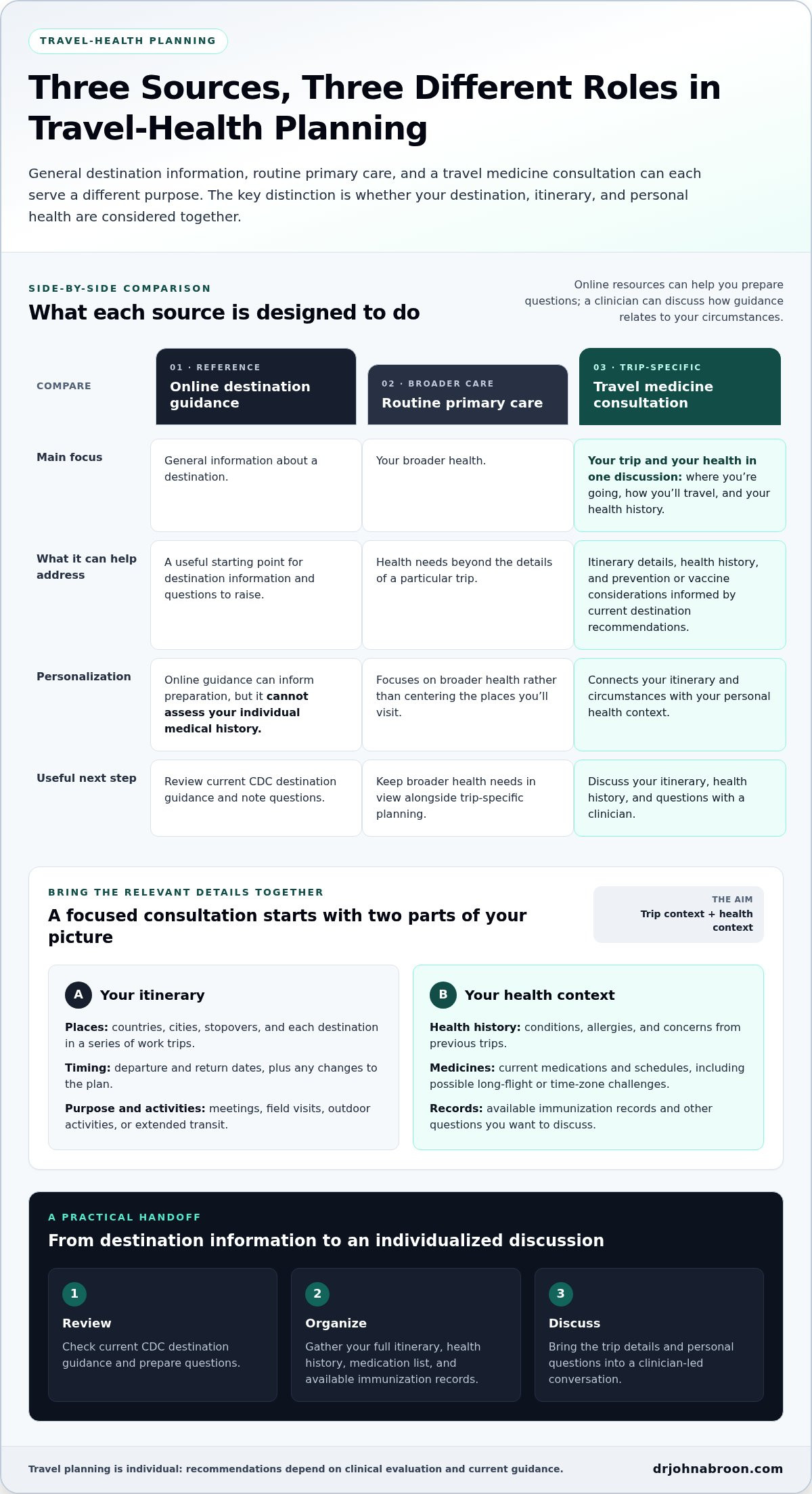
Different sources serve different purposes. General destination information provides a useful starting point, and online resources can help you identify questions to raise. Routine primary care focuses on your broader health, while a travel medicine consultation centers on the places you’ll visit and how your health may affect the trip. Online guidance can inform your preparation, but it cannot assess your individual medical history.
| Use case | Personalization | Appropriate next step |
|---|---|---|
| General online destination information | Broad overview, not based on your health history | Use it to prepare questions and review current destination guidance |
| Routine primary care discussion | Grounded in your health, with travel needs considered as part of broader care | Raise travel plans and personal health concerns with your physician |
| Travel medicine consultation | Focused on your itinerary, health history, and destination-specific considerations | Discuss individualized prevention and vaccine questions with a clinician |
When general travel information may be enough, and when it may not
Destination resources can help you get an initial overview and decide what topics to explore. A complex itinerary, chronic health condition, or question about medication during a long trip may call for a personal discussion. The CDC guidance for business travelers provides a helpful reference for work-related travel health considerations. Whether you need a clinician’s input depends on you and your trip, not a one-size-fits-all rule.
Questions that help assess whether care fits your needs
Consider whether your destinations or activities raise questions that general information cannot answer for you. Do you have a health condition, medication routine, or other personal consideration that could affect travel? Would it help to discuss those details alongside your itinerary? A clinician can consider both in the same conversation.
Dr. John Abroon is a board-certified internist and primary care physician who takes a personalized approach to care, connecting travel planning with a broader understanding of your health. Learn more about personalized primary care on Manhattan’s Upper East Side. For business travelers considering a travel clinic for business travelers nyc, look for a discussion that makes space for both the journey and the person taking it.
How NYC business travelers can prepare and plan appointment timing
Preparing a few details in advance can make a travel medicine appointment more focused, even between work commitments. Gather the information below, then use current CDC destination guidance to identify questions for your clinician.
What to bring to a travel medicine appointment
- 1. Itinerary: List each country and city, travel dates, layovers, and planned activities. Include work-related stops and personal travel added to the trip.
- 2. Departure date: Note when you leave and whether your plans are flexible. This helps the clinician consider the time available for preventive steps that may require advance planning.
- 3. Health history: Be ready to discuss relevant medical conditions, allergies, and health concerns from previous trips. Bring related medical records if they help explain your needs.
- 4. Medication list: Write down medication names and doses, including anything you take on a regular schedule.
- 5. Immunization records: Bring available vaccine documentation so your clinician can consider it as part of the discussion.
Write down questions that could affect your comfort or routine abroad, too. These might include sleep during time-zone changes, food and water, or access to routine care at your destination. A short list helps you use appointment time well when your calendar is tight.
How early should a business traveler book?
Plan as early as practical after your trip is scheduled. The right timing depends on your destination, health needs, itinerary, and which preventive measures may be relevant. The CDC recommends a pre-travel consultation 4 to 6 weeks before departure when possible. That window can be especially helpful for multi-country trips or plans involving several stops, but recommendations are specific to each traveler.
If departure is approaching, you can still discuss your plans with a clinician. They can review your itinerary and health history and talk through appropriate next steps. Not every preventive measure can necessarily be completed before departure, so do not rely on a particular intervention or outcome before an individualized discussion.
Preparing these details can make a travel clinic for business travelers nyc visit more productive. For travel medicine care grounded in your individual health needs, schedule a travel medicine consultation with Dr. Abroon.
Plan your NYC business trip with Dr. John Abroon, M.D.
Travel planning is more useful when it accounts for the traveler, not only the destination. Dr. John Abroon is a board-certified internist and primary care physician with a practice on Manhattan’s Upper East Side. His personalized approach to travel medicine brings your itinerary into the conversation alongside your broader health history, helping keep the discussion relevant to your plans and needs.
The practice was established in 1997. For professionals looking for a travel clinic for business travelers nyc, an internal medicine perspective can be valuable when travel questions overlap with ongoing health concerns, medication routines, or other aspects of personal care.
Why an internist’s perspective can matter before travel
A pre-travel conversation may cover more than where you’re going. Your health conditions, medications, allergies, and previous medical concerns can all help shape an individualized assessment. An internist can consider those details alongside your destinations, timing, and planned activities. The aim is a thoughtful discussion of your needs, not a promise of a particular vaccine, prescription, or outcome.
This broader view can be helpful if you’re managing a chronic condition or planning around a demanding work calendar. You do not need to resolve every question before your appointment. A clear itinerary and an honest account of your health concerns give the clinician a useful starting point.
Take the next step before your departure date
Before your visit, gather your destination list, travel dates, planned activities, medication information, and any health or immunization records you have available. This preparation helps focus the conversation on what matters to you, whether that’s a multi-country itinerary, a long journey, or managing your usual care while away.
Dr. Abroon offers travel medicine consultations where you can discuss your plans and personal health questions with a physician. If your schedule is full, taking one practical step now can make planning feel more manageable. Schedule a travel medicine consultation with Dr. Abroon to discuss your upcoming trip.
Make your next business trip a healthier one
Useful travel preparation connects your destination and schedule with your individual health needs. Review current destination guidance, gather your itinerary and health records, and bring questions about medications, activities, or timing to a clinician. For a travel clinic for business travelers nyc, an individualized conversation can make medical planning clearer, even alongside a demanding work calendar.
Dr. John Abroon is a board-certified internist and primary care physician on Manhattan’s Upper East Side. His practice takes a personalized approach to care and offers travel medicine. A clinician-led discussion can consider your trip alongside your broader health history, helping you plan with greater confidence.
Take a practical next step before departure: schedule a travel medicine consultation with Dr. Abroon. Bring your itinerary and health questions so you can approach the conversation prepared and move toward your trip feeling more informed.
Frequently Asked Questions
When should a business traveler visit a travel clinic before an international trip?
Arrange a travel medicine consultation as early as practical, ideally 4 to 6 weeks before departure, as recommended by the CDC. This gives you time to discuss destination-specific guidance and preventive steps that may need advance planning. The right timing depends on your itinerary and health needs. If your trip is sooner, a clinician can still discuss your plans and appropriate next steps, though every intervention may not be completed before you leave.
What should I bring to a travel medicine appointment?
Bring your itinerary, departure date, medication list, health history, and any immunization records you have available. Include destinations, stopovers, planned activities, and travel dates, even if some details may change. Note allergies and relevant health conditions, along with questions about managing medications, sleep, food, water, or access to routine care abroad. Current CDC destination guidance can help you prepare questions for the clinician.
Can a travel clinic help if I have a chronic condition?
Yes. A travel medicine consultation can consider a chronic condition alongside your destination, activities, travel dates, and usual care needs. Share your diagnosis, current medications and doses, allergies, and any concerns about a long flight or time-zone changes. A physician can assess how these factors relate to your planned trip and discuss relevant considerations. Recommendations are individualized and depend on your clinical history and current destination guidance.
Do business travelers need travel vaccines for every international trip?
No single vaccine plan applies to every international trip. Whether a vaccine is recommended depends on factors such as your destination, itinerary, activities, health history, and existing immunization records. Review current CDC destination guidance, then discuss questions with a clinician who can consider your circumstances. A trip to one city for meetings may raise different considerations from a multi-country itinerary or travel that includes outdoor activities.
Is an online travel health tool enough before a business trip?
Online resources can provide a useful overview and help you prepare questions, but they cannot evaluate your personal health history or tailor medical guidance to your full itinerary. A clinician-led consultation can consider your destinations, activities, medications, and health concerns together. For a travel clinic for business travelers nyc, an individualized assessment can help clarify which general recommendations may apply to your trip.
Can I get travel health advice if I am leaving soon?
Yes, you can still seek a medical discussion if departure is approaching. Share your travel dates and itinerary so a clinician can consider the time available and discuss appropriate next steps. Some preventive measures may require advance planning, and not every option can necessarily be completed before departure. It is still worth raising your questions so you can prepare for the journey.
Where can business travelers find a travel medicine consultation in NYC?
Business travelers can find travel medicine care with Dr. John Abroon, a board-certified internist and primary care physician with a practice on Manhattan’s Upper East Side. His practice offers a personalized approach to care and travel medicine. A consultation can connect your destination and itinerary with your health history, helping you discuss travel-related questions as part of a broader view of your health.