


What if a result flagged “high” or “low” isn’t a diagnosis, but a clue that needs context? It’s understandable to feel concerned when medical terms and reference ranges aren’t clear. If you’re wondering how to read your physical exam results nyc, start with this: one number rarely tells the whole story. Your symptoms, medical history, medications, and previous results can all affect what a finding means.
This guide explains common physical exam results, including vital signs and routine blood tests, in plain language. You’ll learn what a reference range can and can’t tell you, why an out-of-range result may not signal a serious problem, and which questions can help you understand the next steps. Dr. John Abroon, a board-certified internist on Manhattan’s Upper East Side, interprets findings as part of a personalized medical evaluation, rather than viewing a result in isolation. Use this overview to prepare for a focused conversation with your doctor about your health.
Key Takeaways
- Learn how to read your physical exam results nyc by checking each test’s name, result, units, reference interval, and clinician comments.
- Understand why a result outside the reference interval may need follow-up without automatically indicating a health condition.
- Review your report for pending results and note any symptoms, medications, or past results that could help explain the findings.
- Prepare focused questions to clarify unfamiliar terms, recommendations, and possible next steps with your doctor.
- See how an internist brings your history, examination, measurements, and test results together for a personalized discussion.
What Your Physical Exam Results in NYC Actually Include
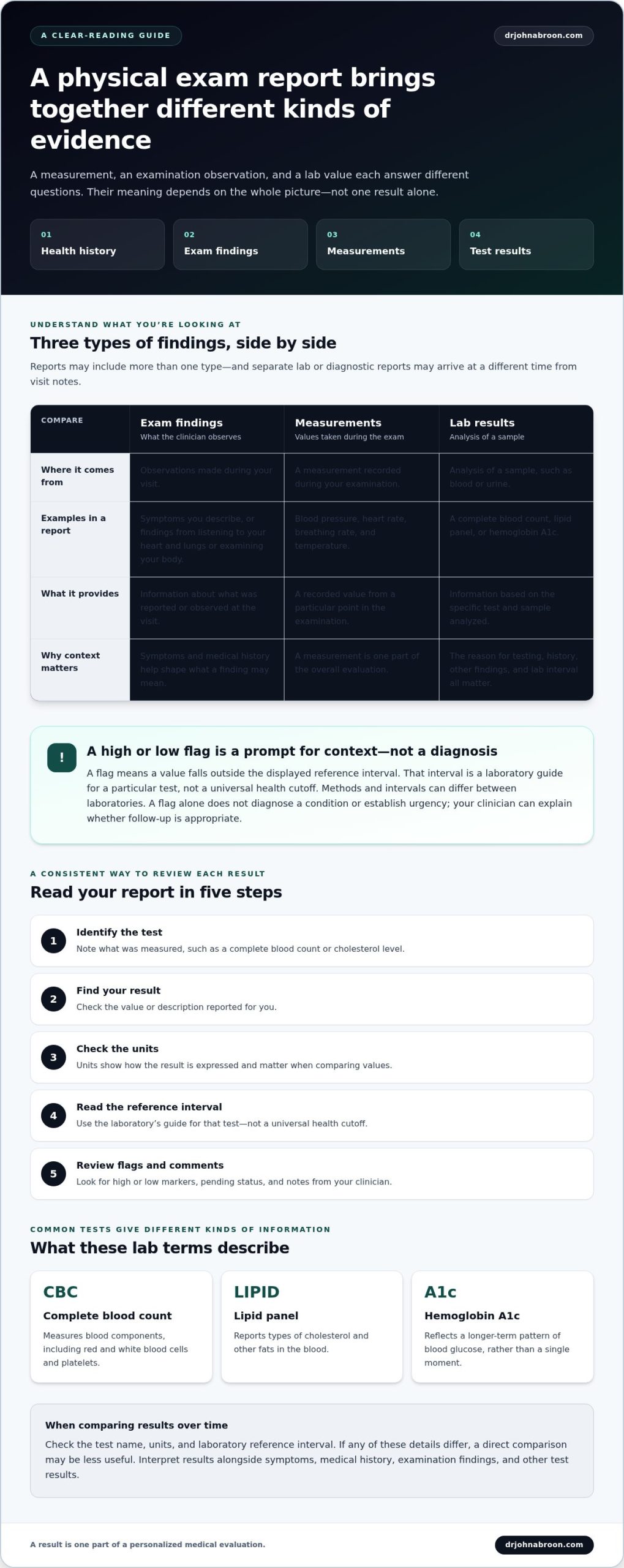
A result marked outside its reference range can be unsettling, but a flag isn’t a diagnosis by itself. To understand how to read your physical exam results nyc, first look at what the report brings together: your health history, the clinician’s examination findings, measurements, and any laboratory or diagnostic tests ordered for you. Each provides information, and its meaning depends on the whole picture.
Physical exam results are the documented history, observations, measurements, and test findings gathered during an individual evaluation. Clinicians interpret them together to guide whether further assessment or follow-up may be appropriate. A physical examination can include different components depending on the person and purpose of the visit. A report may also include screening measures or clinician comments that explain what was assessed.
Which findings may appear in a physical exam report?
Your report may record symptoms you described, such as fatigue or pain, alongside observations from the examination. Measurements can include blood pressure, heart rate, breathing rate, and temperature. The clinician may also document findings from listening to your heart and lungs or examining other parts of your body.
Some observations are routine parts of assessing your health. Others may prompt a closer look, especially if they relate to symptoms or your medical history. A finding that needs additional assessment doesn’t, on its own, establish a diagnosis. Depending on your individual needs, your clinician may recommend monitoring, another examination, or a test.
How are exam findings different from lab results?
Examination findings are observations made during your visit. Laboratory results come from analyzing a sample, such as blood or urine, while diagnostic testing can provide other types of information. These reports may arrive separately from the visit notes, so identify which document you’re reviewing and whether it includes all expected results.
Not every annual physical includes the same tests or screening recommendations. A clinician may order laboratory or diagnostic testing based on your history, symptoms, examination, and preventive care needs. For a broader overview of what an annual visit may involve, see the complete annual physical exam guide for NYC.
That distinction matters when you review results: a measurement, an observed finding, and a lab value each answer different questions. An internist can consider them alongside your overall health rather than interpreting one item in isolation. This context is the starting point for understanding what a result may suggest and what, if anything, to discuss next.
How to Read Physical Exam Results and Common Lab Terms
A report is easier to understand when you review each result in a consistent order. If you’re learning how to read your physical exam results nyc, use this five-step method before drawing conclusions:
- 1. Identify the test. Note what was measured, such as a complete blood count or cholesterol level.
- 2. Find your result. Check the value or description reported for you.
- 3. Check the units. Units show how the result is expressed and matter when comparing values.
- 4. Read the reference interval. This is the laboratory’s guide for that particular test, not a universal health cutoff.
- 5. Review flags and comments. Look for high or low markers, pending status, and notes from your clinician.
When comparing results over time, check the test name, units, and laboratory reference interval. A change in any of these details can make a direct comparison less useful. For plain-language explanations of tests and their results, MedlinePlus Medical Tests, a service of the National Library of Medicine, is a helpful reference. Use it to understand terminology, then rely on your clinician to interpret what your own report means.
What do reference ranges and flagged results mean?
A reference interval is the range a laboratory displays for a particular test. Methods and intervals can differ between laboratories, and factors such as your health history and the reason for testing can affect interpretation. A high or low flag indicates that a value falls outside the displayed interval. It doesn’t diagnose a condition or, by itself, establish urgency. Your clinician can explain whether the result matters in context and whether follow-up is appropriate.
How should you approach common measurements and tests?
A complete blood count (CBC) measures components of blood, including red and white blood cells and platelets. A lipid panel reports types of cholesterol and other fats in the blood. Hemoglobin A1c reflects a longer-term pattern of blood glucose, rather than a single moment. These tests provide different kinds of information; none should be treated as a prediction or diagnosis on its own.
Blood pressure is a measurement taken during an exam, while cholesterol and A1c values come from laboratory analysis. Their significance depends on factors such as your history, other findings, and why the test was ordered. One result should be interpreted alongside a patient’s medical history, symptoms, examination findings, and other test results, not in isolation.
Bring questions about unfamiliar terms or flagged values to your clinician. A personalized results discussion with Dr. John Abroon, a board-certified internist, can help clarify how findings fit together and which recommendations apply to you. Discuss your physical exam results as part of an individualized medical evaluation.
Normal, Abnormal, or Unclear: What Physical Exam Results Can Tell You
A report may show results within range, flag a value as high or low, or mark a test as pending. These labels describe the status of individual findings, not a complete verdict on your health. When learning how to read your physical exam results nyc, keep the key distinction in mind: a single flagged result is not the same as a diagnosis.
Does an out-of-range result always mean something is wrong?
No. Clinicians consider how far a result is outside its reference interval, whether related findings show a pattern, and the context of the person being evaluated. Symptoms, medical history, medications, and the reason a test was ordered can all shape its meaning. An in-range result also isn’t a guarantee that every possible concern has been ruled out. A portal flag is a prompt to understand the finding, not a reason to self-diagnose.
Why might two results need to be considered together?
Related measurements can provide context for one another. A clinician may compare results from the same report or review previous results to see whether a value is new, persistent, or changing. That pattern can guide whether clarification or follow-up is appropriate, but it doesn’t establish a diagnosis by itself. General information can explain terms; individualized interpretation requires review of your complete health picture.
Local requirements also vary by purpose. For example, the NYC Department of Education Health Requirements describe school-related health documentation, which serves a different purpose from interpreting an adult’s routine physical results. Follow your clinician’s guidance for your own report, especially when a result is unclear or you’re experiencing symptoms.
What to Do After Receiving Your Physical Exam Results
A clear review can make your report easier to discuss and help you focus on practical next steps. Before speaking with a clinician, check that you’re looking at the complete report, note any results marked pending, and gather information that may help explain a finding. The goal isn’t to diagnose yourself. It’s to make the discussion more useful.
- Review the report: Note the test or finding, the result, any flag or comment, and whether the result is final or pending.
- Write down questions: Mark unfamiliar terms or results you’d like explained.
- Record relevant context: Note your symptoms and when they began, your medications and supplements, and any previous results you have available.
- Follow the instructions you were given: Keep track of recommended follow-up, including any repeat testing or additional evaluation. Don’t assume every result follows the same timeline.
This preparation can help you get more from a personalized conversation about an annual physical exam in NYC, including how findings relate to your overall health.
Which questions can help you understand your results?
Bring specific questions to your clinician, such as: “What does this finding mean given my health history?” “How does it relate to my symptoms or other results?” “Do you recommend monitoring, repeat testing, or additional evaluation?” If a result is pending, ask which results are still outstanding, who will communicate them, and how you’ll receive follow-up. These questions help clarify both the finding and the plan.
Understanding how to read your physical exam results nyc also means knowing when an online report can’t provide the full answer. A primary care physician or internist can review the results alongside your history, medications, symptoms, and examination, then explain which recommendations are relevant to you.
When should you seek prompt medical advice?
Follow any urgent instructions your clinician has given you. If you develop severe or rapidly worsening symptoms, seek emergency medical care rather than waiting for an online explanation or a routine results discussion. An isolated high or low laboratory flag doesn’t establish urgency by itself; interpretation depends on your situation. If you’re unsure what your report asks you to do, clarify the instructions with your clinician.
For a tailored discussion of your findings and possible next steps, schedule a personalized results discussion with Dr. John Abroon, a board-certified internist on Manhattan’s Upper East Side.
Reviewing Physical Exam Results With a NYC Internist
A report shows individual findings, but a clinician can help explain how they fit together. An internist considers your medical history, symptoms, examination findings, measurements, and test results as a whole. That context can help distinguish what may simply need explanation from what could call for monitoring or further evaluation.
If you’re learning how to read your physical exam results nyc, a personalized discussion can turn unfamiliar terms into a clearer picture of your health. Ask what a finding means for you, whether a recommendation applies to your circumstances, and what follow-up to expect. The goal is to leave with a better understanding, not to make assumptions from a report alone.
What does personalized review add beyond reading a report?
Your symptoms, medical history, medications, and previous results may change how a finding is understood. A clinician can clarify terminology, explain how related results fit together, and discuss whether monitoring or additional evaluation is appropriate. Bring your questions and relevant information so the conversation can focus on what matters to you. Learn more about primary care in NYC on the Upper East Side.
How do physical exam results relate to pre-operative evaluations?
A routine physical and a pre-operative medical evaluation serve different purposes. Pre-operative assessment considers the planned procedure and the individual patient’s health needs. Having routine physical results doesn’t automatically mean you’re cleared for surgery. If you have questions about an upcoming procedure, discuss the evaluation requirements with your clinician and review the pre-operative medical clearance guide for NYC.
Dr. John Abroon is a board-certified internist and primary care physician on Manhattan’s Upper East Side. His practice provides annual physical exams, diagnostic testing, and personalized medical evaluations. A results discussion can help clarify what your findings mean and possible next steps, without assuming a diagnosis from one result.
For a thoughtful review of your health and exam findings, schedule a physical exam with Dr. John Abroon.
Make Your Results a Starting Point for Better Questions
Learning how to read your physical exam results nyc starts with recognizing that a flagged value is a finding to discuss, not a diagnosis by itself. Reference intervals are useful guides, but your symptoms, health history, medications, and related results all help shape what a finding means.
Review your report for pending tests and clinician comments. Bring questions, relevant symptoms, medications, and previous results to your discussion. Ask what each finding means for you, whether follow-up is recommended, and how you’ll learn about outstanding results. A clinician can consider the full picture and help clarify practical next steps.
Dr. John Abroon is a board-certified internist and primary care physician in Manhattan. His practice provides annual physical exams and diagnostic testing, with personalized medical evaluations to put findings in context. Take a thoughtful next step and schedule a personalized physical exam with Dr. John Abroon. Understanding your results can help you feel more prepared to take an active role in your health.
Frequently Asked Questions
How do I read my physical exam results?
Start by identifying each test or finding, then note the result, units, reference interval, and any clinician comments. Check whether a result is final or marked pending. A reference interval is a guide, not a diagnosis, so avoid interpreting a number on its own. To understand how to read your physical exam results nyc, consider the report alongside your symptoms, medical history, medications, and previous results, then ask your clinician what the findings mean for you.
What does it mean if a result is outside the normal range?
An out-of-range result means the value falls above or below the reference interval shown by the laboratory. It doesn’t automatically mean you have a health condition or indicate how urgent the finding is. Interpretation can depend on the test method, your health history, symptoms, medications, and related results. Ask your clinician whether the finding needs explanation, monitoring, repeat testing, or additional evaluation rather than trying to diagnose yourself from a portal flag.
Can physical exam results be normal even if I have symptoms?
Yes. A result within its reference interval doesn’t rule out every possible cause of symptoms. Some concerns may not be reflected in the particular measurements or tests included in your exam, and symptoms can change over time. Tell your clinician what you’re experiencing, when it started, and whether anything makes it better or worse. Your symptoms still deserve attention, even if one or more results appear normal.
How long does it take to receive physical exam lab results in NYC?
There isn’t one turnaround time for every physical exam lab result in NYC. Timing can vary depending on the test and laboratory, and some results may appear separately or remain pending after other findings are available. Check your report or patient portal for status updates, and follow the instructions your clinician gave you about results communication. If you’re unsure whether a result is pending or what to do next, ask the clinician’s office for clarification.
What should I ask my doctor about my physical exam results?
Ask what each important finding means in light of your health history and symptoms, and how it relates to any other results. You can also ask whether monitoring, repeat testing, or additional evaluation is recommended. If something is pending, clarify which result is outstanding, who will communicate it, and how follow-up will happen. Bring a list of medications, relevant symptoms, and previous results so your clinician can review the findings in context.
Do physical exam results include blood work?
They may, if blood tests were ordered as part of your individual evaluation. Common examples include a complete blood count, a metabolic panel, or cholesterol testing, but not every annual physical includes the same tests. The clinician considers your health history, symptoms, and preventive care needs when deciding what testing is appropriate. If you’re reviewing a report, check whether it includes separate laboratory results or shows tests as pending.
When should I call a doctor about an abnormal physical exam result?
Follow any timing or follow-up instructions your clinician provided, and contact the office if you don’t understand what a result means or what action is recommended. A high or low flag alone doesn’t establish urgency, so don’t rely on the label to decide what to do. If you have severe or rapidly worsening symptoms, seek emergency medical care rather than waiting for an online explanation or routine follow-up.