


Could a symptom that began after your trip be more than jet lag or a change in routine? If you’re considering a post-travel medical check up nyc visit, it can be hard to know whether to wait, book an appointment, or seek urgent help. Fever after travel deserves medical attention. Your destination, timing, and possible exposures can help guide the evaluation.
It’s understandable to feel unsure about which details matter, especially when symptoms appear days or weeks after returning. A useful assessment starts with your health history, itinerary, symptoms, and possible exposures. Your physician can then determine whether further evaluation is appropriate.
This guide explains when to seek routine, prompt, or emergency care, what travel and health information to bring, and how a New York City physician can help shape next steps. Dr. John Abroon, a board-certified internist on the Upper East Side, offers personalized medical evaluations, travel medicine, and diagnostic testing. Preparing relevant details can make your appointment more focused and useful.
Key Takeaways
- A post-travel check-up is guided by your symptoms, exposures, and health history. Not every traveler needs testing or a dedicated visit.
- Share your itinerary, travel dates, activities, and possible food, water, or insect exposures so your physician can assess the details that matter.
- Know the difference between symptoms you can monitor and concerns that call for a clinician’s advice or emergency evaluation.
- Prepare for a post-travel medical check up nyc appointment with your medication list, vaccination information, relevant records, and itinerary.
- Dr. John Abroon, a board-certified internist on the Upper East Side, can evaluate post-travel concerns and help guide individualized next steps.
Post-Travel Medical Check-Up in NYC: Who May Need One?
A post-travel medical check-up is a clinician’s assessment of symptoms, possible exposures, and health history after a trip. For a post-travel medical check up nyc visit, your destination and the timing of symptoms help put your experience in context. As an overview, Travel medicine includes care before and after travel, with health guidance tailored to the trip and traveler.
Not every traveler needs a dedicated appointment or testing after returning. If you feel well and have no particular health concern, there may be no reason to arrange a visit solely because you traveled. The decision changes if symptoms develop, persist, worsen, or seem unusual for you. A physician can consider your usual health, medications, trip details, and symptom timeline instead of relying on a standard test list.
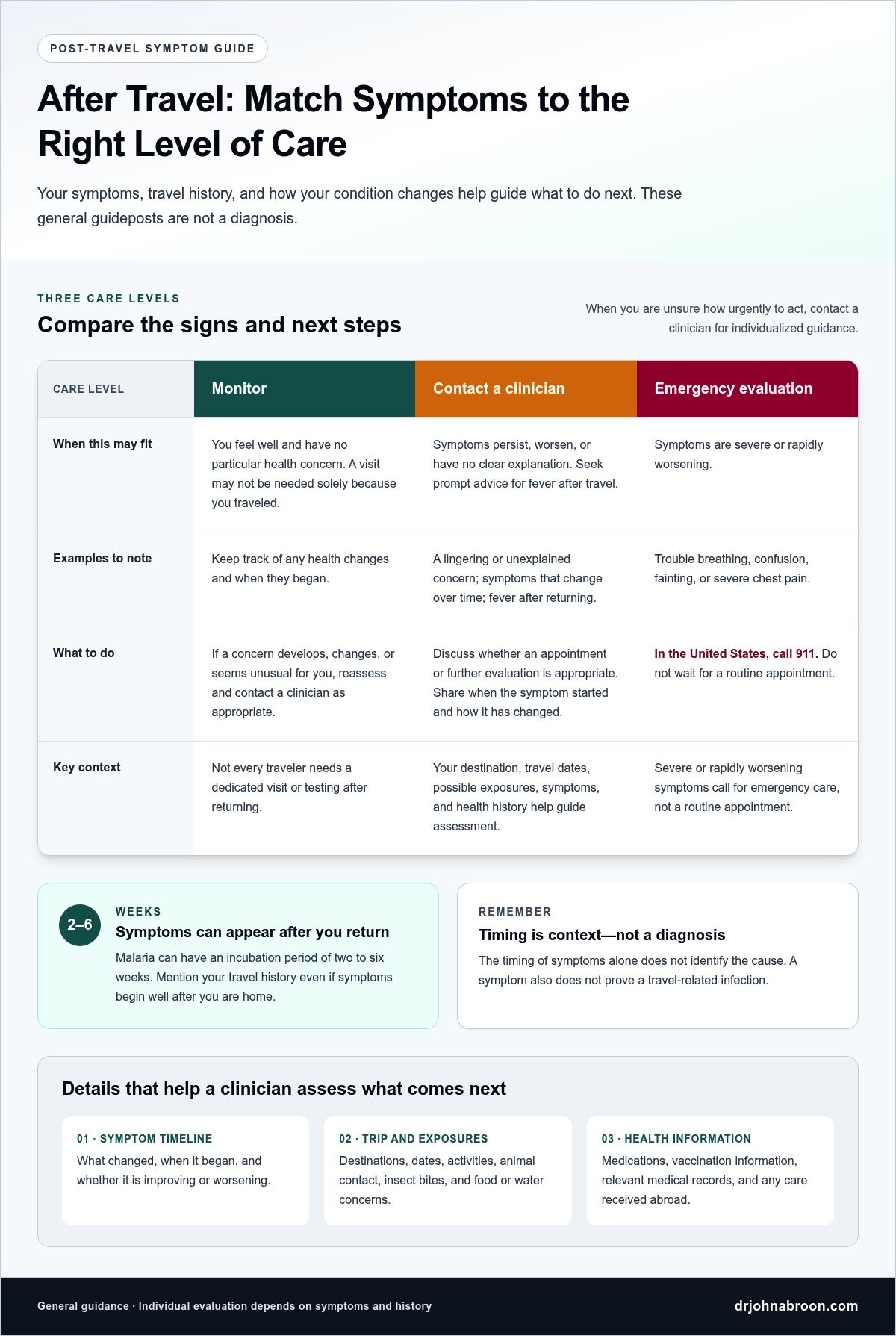
Timing matters, but it doesn’t identify the cause on its own. Some illnesses can appear after a traveler returns. Malaria, for example, can have an incubation period of two to six weeks. Mention your travel history even if symptoms begin well after you’re home or the trip seems unrelated to how you feel now.
For a lingering or unexplained concern, contact a clinician to discuss whether an appointment is appropriate. Seek prompt medical advice if symptoms are worsening, you develop a fever after travel, or you’re unsure how urgently to act. Severe or rapidly worsening symptoms call for emergency evaluation, not a routine appointment. These are general guideposts, not a diagnosis.
When should a returning traveler contact a doctor?
Seek clinical advice for symptoms that persist, worsen, or have no clear explanation, including concerns that begin only after you return. Be ready to describe when the problem started, how it has changed, and whether anyone else on the trip became ill. A symptom alone doesn’t prove a travel-related infection, but your itinerary and exposure history can help a physician decide what evaluation may be appropriate.
Which symptoms need urgent attention?
Get emergency help for severe or rapidly worsening symptoms. Examples include trouble breathing, confusion, fainting, or severe chest pain. In the United States, call 911 rather than waiting for an appointment. If you’re concerned but symptoms aren’t immediately life-threatening, contact a clinician promptly for individualized guidance. Dr. John Abroon, a board-certified internist on Manhattan’s Upper East Side, evaluates post-travel concerns in the context of your health history and symptoms.
How a Doctor Evaluates Symptoms and Exposures After Travel
A post-travel medical check up nyc evaluation begins with a conversation, not a preset battery of tests. The clinician reviews what you’re experiencing and when it began, then asks about your destinations, travel dates, activities, and possible exposures. A physical examination may help clarify the picture. Testing is considered when your symptoms and history make it clinically appropriate.
Exposure history helps a clinician interpret symptoms and choose sensible next steps. Fever, stomach upset, or a rash can have many possible explanations. The places you visited, what you did there, and the interval between a possible exposure and a health change provide important context. No single detail or symptom confirms a diagnosis.
The assessment may include these steps:
- Symptom review: Describe what changed, when it started, whether it’s improving or worsening, and how it affects daily activities.
- Travel history: Discuss where you went, your travel dates and stopovers, and activities or exposures that may be relevant.
- Examination: The clinician considers your symptoms alongside findings from an in-person assessment.
- Next-step planning: Depending on the full picture, the plan may involve observation, diagnostic testing, treatment, or follow-up.
What travel details should you share with the doctor?
A simple timeline can make the conversation more focused. Note each destination and stopover, your travel dates, and the day symptoms began. Include activities such as hiking, swimming, or spending time outdoors; animal contact; insect bites; and any concerns about food or water. Mention healthcare received abroad, including treatment or medication. Bring vaccination information, a current medication list, and relevant medical records when available.
Details that seem minor may still help. Explain whether a symptom began before departure, during a particular leg of the trip, or after returning. If you don’t know the exact date, an approximate timeline is useful. Describe what happened as clearly as you can rather than trying to guess the cause.
Why do symptoms and test timing matter?
Illnesses can differ in how soon symptoms appear and what pattern they follow. The same test may not be suitable for every traveler or every point in a person’s illness. There isn’t a universal post-travel testing panel or fixed schedule for all exposures. A clinician familiar with your history can discuss whether and when testing makes sense.
Based on the findings, a physician may recommend monitoring, testing, treatment, or follow-up. If you’re unsure whether a detail from your trip affects the next step, raise it during an individualized medical evaluation. Dr. John Abroon’s internal medicine practice offers personalized evaluations and diagnostic testing, with decisions guided by your symptoms, destinations, timing, and medical history.
Post-Travel Symptoms: Choosing Between Monitoring, an Appointment, and Urgent Care
After a trip, it can be difficult to judge whether a symptom will settle or needs medical attention. Use the guide below to consider the level of care, not to diagnose an illness. Your medical history and travel exposures may change what’s appropriate. If you’re concerned, seek clinical advice.
| Level of care | When it may fit | What to do |
|---|---|---|
| Monitor at home | A mild concern is improving, and no emergency warning signs are present. | Track symptoms and temperature. Contact a clinician if the concern persists, worsens, or new symptoms appear. |
| Contact a clinician | Symptoms are persistent, worsening, significant, or unexplained, including fever after travel. | Seek prompt medical guidance and describe your symptoms, trip dates, and possible exposures. |
| Emergency evaluation | Symptoms are severe or rapidly worsening, such as difficulty breathing, confusion, fainting, or severe chest pain. | Call 911 in the United States. Don’t wait for a routine appointment. |
This is general guidance, not a substitute for clinical judgment. A symptom that seems mild at first may deserve attention if it doesn’t improve or begins to interfere with eating, drinking, sleeping, or normal activities. Include your trip history when seeking advice, since concerns can emerge after you return.
When is monitoring at home reasonable?
Monitoring may be reasonable for a mild, improving concern when no emergency warning signs are present and you otherwise feel stable. Write down when symptoms began, how they change, and your temperature if you’re checking it. Keep the notes simple. If symptoms persist, worsen, or new concerns develop, contact a clinician instead of extending home monitoring without guidance.
When should you seek same-day or emergency care?
Contact a clinician promptly about significant, worsening, or unexplained symptoms after travel, especially a fever. Explain when symptoms started and where you traveled so the clinician can help determine the appropriate next step. Don’t wait for routine office scheduling if symptoms are urgent. For severe or rapidly worsening symptoms, including breathing difficulty or altered mental status, call 911 in the United States. An office visit isn’t a substitute for emergency services.
If you’re weighing a post-travel medical check up nyc appointment against continued monitoring, a clinician can consider your symptoms and travel history together. When you’re unsure how quickly to act, seek medical guidance rather than relying on a symptom checklist alone.
How to Prepare for a Post-Travel Doctor Visit in NYC
A little preparation can make a post-travel medical check up nyc visit more focused. You don’t need to arrive with a theory about what caused your symptoms. A clear timeline, relevant travel details, and an up-to-date health history help your physician decide what matters and discuss appropriate next steps.
Before the appointment, jot down when each concern began and how it has changed. If symptoms come and go, note when they appear and anything that seems to make them better or worse. Write down your questions, too. This can help you cover the important details, especially when recounting several destinations or health changes.
What should you bring to the appointment?
Gather what you have; don’t delay care because a record is missing. This checklist can help you prepare:
- Trip details: Destinations, travel dates, stopovers, and activities such as hiking, swimming, or time outdoors.
- Possible exposures: Insect bites, animal contact, food or water concerns, and healthcare or treatment received during the trip.
- Health information: Current medications, allergies, existing medical conditions, and available vaccination records.
- Symptom notes: Onset dates, changes over time, temperature readings if taken, and any relevant photographs or documentation of a rash or bite.
- Medical records: Relevant recent records or documents from care received abroad, if available.
Specifics are helpful, but estimates are better than guesswork. If you can’t remember the exact day an exposure occurred, describe the part of the trip when it happened. Keep medication names and doses together if possible, and tell the clinician if you started or stopped anything while away.
What questions can help make the visit useful?
Use your notes to guide a practical conversation. Ask which symptoms should prompt follow-up, what changes would call for urgent care, and whether testing is appropriate based on your history. If testing is recommended, ask about the next steps and how results will be communicated. The answers can clarify what to watch for after you leave and when to seek further advice.
For future trips, a pre-travel medicine discussion can address destination-specific health planning before departure. Keep that separate from the reason for today’s visit, which is to assess your current symptoms and exposures. If you’re also seeking broader preventive care unrelated to the trip, mention it so it can be considered separately.
Dr. John Abroon, a board-certified internist and primary care physician on Manhattan’s Upper East Side, offers personalized medical evaluations informed by symptoms, travel history, and health background. Bring your notes to an appointment to discuss your concerns and possible next steps.
Post-Travel Care on NYC’s Upper East Side: Personalized Next Steps
Travel-related health concerns can be difficult to sort out on your own, especially if a symptom starts after you return or changes over time. An internist can help put those details in context. Dr. John Abroon is a board-certified internist and primary care physician on Manhattan’s Upper East Side. His practice offers personalized medical evaluations, travel medicine, and diagnostic testing.
A thoughtful assessment starts with your individual situation, not an assumed diagnosis or routine set of tests. Your physician can consider what you’re feeling alongside your medical history, itinerary, timing, and possible exposures. That conversation helps identify what questions need attention and what next steps may be appropriate.
What can an internist contribute to post-travel care?
An internist reviews your symptoms and health background, then considers how your destinations, activities, and potential exposures may relate to the timeline. An examination may add useful context. From there, the physician determines whether observation, diagnostic testing, follow-up, or another level of care is appropriate. The right plan depends on the clinical picture, so testing isn’t automatic and a particular outcome can’t be assumed in advance.
If you’re also looking for ongoing primary care beyond a specific travel concern, a relationship with a primary care physician can help keep your broader health history in view. Share continuing health needs during the visit so they can be considered alongside your post-travel questions.
How can you take the next step in NYC?
For non-emergency concerns, an appointment with Dr. Abroon can provide an opportunity to discuss your symptoms and travel history. Bring the notes and records you’ve gathered, including when symptoms began and any changes you’ve noticed. You don’t need to know what caused the problem before speaking with a physician. Clear details can help guide the conversation and an individualized assessment.
Travel medicine and diagnostic testing are part of the practice’s services. Any evaluation or testing plan is guided by your needs and clinical findings. During an appointment at Dr. Abroon’s Upper East Side practice, you can review possible next steps with an internist.
Pay attention to changes in how you feel, and seek medical guidance when a concern persists or worsens. If symptoms become severe or rapidly worsen, use emergency care rather than waiting for a routine visit. Personalized evaluation can help clarify the next step while keeping care focused on your health, history, and trip.
Take the Next Step With Confidence
A health concern after a trip doesn’t need to be solved before you speak with a physician. Start by sharing what changed, when it began, and what you’re still unsure about. That context helps make a post-travel medical check up nyc visit a conversation about your individual needs, rather than a search for a one-size-fits-all answer.
Dr. John Abroon is a board-certified internist and primary care physician on Manhattan’s Upper East Side. His practice offers travel medicine, diagnostic testing, and personalized medical evaluations. For non-emergency concerns, request a personalized medical evaluation with Dr. John Abroon to discuss an appropriate path forward.
If you’re experiencing severe symptoms, seek emergency care rather than waiting for a routine appointment. Otherwise, asking questions is a constructive first step. Individualized guidance can help you make an informed decision about what to do next.
Frequently Asked Questions
Do I need a medical check-up after every international trip?
Not necessarily. If you return feeling well and have no known exposure or health change, an appointment solely because you crossed a border may not be needed. Consider what was different about the trip, such as a remote trek, animal contact, or medical care abroad, and discuss uncertainties with a clinician. A post-travel medical check up nyc assessment is individualized, not an automatic screening requirement.
How soon after travel should I see a doctor if I develop symptoms?
For severe or rapidly worsening symptoms, seek emergency care immediately. For other new, persistent, or unexplained changes, contact a clinician promptly rather than waiting for a routine check-up to pass. When you reach out, share when symptoms began and where you traveled. A delay between travel and feeling unwell doesn’t necessarily mean the two are unrelated. A clinician can advise on appropriate evaluation.
Can travel-related symptoms appear weeks after returning home?
Yes, some health concerns can appear after you’re home, and the interval varies depending on the illness or exposure. A later onset doesn’t establish that travel caused the symptoms. If you develop a new concern weeks after a trip, mention the trip when speaking with your physician. Your destination, dates, and activities can provide useful context for your medical history.
What should I tell a doctor about my recent trip?
Describe the places you visited, when you traveled, and activities that could matter to your health. Include stopovers, animal contact, insect bites, food or water concerns, and any care or medications received abroad. You don’t need to identify the cause yourself. If details are hard to remember, check travel records or photographs for dates and locations, and bring available medication and vaccination information to your appointment.
Will a doctor order tests even if I have no symptoms?
Not automatically. A clinician considers your medical history and any specific exposure or concern before recommending an evaluation. If you feel well but know about a potential exposure, share what happened and ask whether follow-up is appropriate. A generic panel may not address your circumstances, and testing depends on the clinical question. Your physician can explain the reasoning for a recommendation or why testing may not be needed.
Should I go to urgent care or the emergency room after travel?
For severe symptoms such as difficulty breathing, fainting, confusion, or severe chest pain, call 911 in the United States rather than waiting for an appointment. For concerning symptoms that aren’t an immediate emergency, contact a clinician promptly to discuss the appropriate level of evaluation. If your condition worsens while you’re deciding what to do, seek a higher level of care instead of relying on a previously planned routine visit.
Can I book a post-travel check-up in NYC with an internist?
Yes. An internist can consider your trip in the context of your overall health and help determine appropriate next steps. Dr. John Abroon is a board-certified internist and primary care physician with a practice on Manhattan’s Upper East Side. The practice offers travel medicine and diagnostic testing. For non-emergency concerns, request a personalized evaluation. Severe or rapidly worsening symptoms need emergency care.