


A weight fluctuation isn’t proof that you’ve failed. It can be a reason to pause, look for a pattern, and adjust your approach. Maintaining weight loss is an ongoing health process, not a test of willpower or a finish line you have to cross perfectly. If you’re searching for “maintaining weight loss results nyc,” focus on building routines that can adapt to your health, schedule, and changing needs.
In New York City, work, travel, restaurant meals, and disrupted sleep can make consistency difficult. This guide covers practical ways to plan for busy days, track changes without overreacting, and decide when a health or medication change deserves medical attention. Dr. John Abroon, a board-certified internist and primary care physician on the Upper East Side, provides weight loss management as part of personalized, ongoing medical care.
Key Takeaways
- Think of maintenance as an ongoing health practice, not a finish line.
- Build food, movement, and sleep routines that can flex around your New York City schedule.
- Look for patterns in weight changes and adjust one manageable habit at a time.
- Maintaining weight loss results nyc can include tracking progress and reviewing health or medication changes with a physician.
- An internist can consider your health history and personal concerns when discussing weight-loss maintenance.
What Maintaining Weight Loss Results Really Means
After an active period of weight loss, it’s understandable to worry that your progress is fragile. Appetite, energy, and daily routines can change, and a small rise on the scale may feel alarming. But one measurement doesn’t tell the whole story. Body weight can shift temporarily with hydration, meals, digestion, and other day-to-day changes. A single reading doesn’t establish that you’ve regained meaningful weight.
Weight maintenance is the ongoing practice of supporting your health and noticing what works as life changes. It isn’t a finish line, a fixed number, or a demand to keep every weight-loss routine unchanged. A broader view of understanding weight management includes the behaviors and circumstances that shape weight over time. In practical terms, maintaining weight loss results nyc means choosing habits that can hold up through busy weeks and changing health needs, rather than expecting perfect consistency.
How is weight maintenance different from weight loss?
During weight loss, the focus is often on creating change. Maintenance shifts attention to sustaining routines that support your health and fit your daily life. That may mean finding satisfying meals you can return to, choosing regular opportunities for activity, and tracking personal progress in a way that doesn’t become a rigid rule. The right goals depend on your health history, the approach that helped you lose weight, and what feels realistic now. There’s no universal target weight or timeline for everyone.
Why can maintaining progress feel difficult?
Schedules, stress, sleep, health, and access to familiar routines can all change. A demanding workweek or trip, for example, may disrupt meal patterns and movement. That doesn’t mean you’ve lost discipline. It may mean your plan needs to flex. A brief scale increase is different from a sustained upward pattern, so consider the wider context before deciding what to change.
If a measurement surprises you, separate the number from the story you tell yourself about it. Consider what has changed recently: your routine, stress, sleep, health, or the way you track progress. Avoid responding to one data point with abrupt restriction or an all-or-nothing reset. Notice whether the change continues and whether it coincides with other changes in how you feel or function.
It can also help to revisit what “success” means to you. For one person, it may mean keeping weight within a personally appropriate range. For another, it may mean sustaining helpful routines or discussing changes in appetite, medication, or health with a physician. An internist can consider your health history and concerns as part of that conversation. The goal is to understand the pattern and choose a response that supports your overall well-being, not to judge a fluctuation.
What Helps Protect Weight Loss Results Over Time?
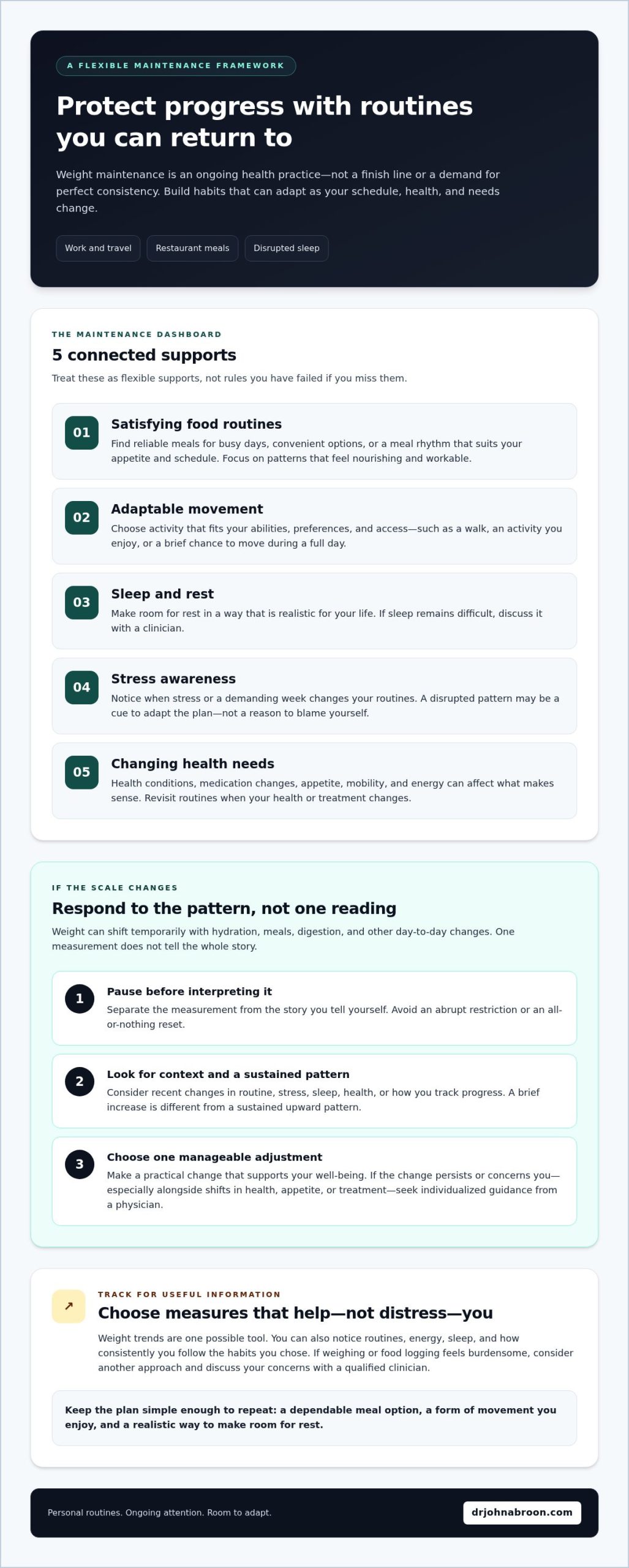
Long-term maintenance depends less on following a perfect plan than on having routines you can return to when life gets busy. Food, movement, sleep, stress, and health interact, so habits may need adjusting as your schedule or circumstances change. Treat these practices as flexible supports, not rules you’ve failed if you occasionally miss them.
Start with eating patterns that feel satisfying and workable. You might choose a few reliable meals for busy days, keep convenient options available, or settle on a meal rhythm that suits your appetite and schedule. The goal isn’t to label foods as forbidden or force yourself into someone else’s routine. Notice which patterns help you feel nourished and steady, then adjust when they stop fitting.
Which routines are realistic to sustain?
Choose movement you can adapt to your abilities, preferences, and access. It could be a walk, an activity you enjoy, or brief opportunities to move during a full day. If your schedule shifts, identify a version that still feels manageable rather than dropping the routine until life gets easier. Pay attention to sleep and stress as part of your overall well-being. If either remains difficult, discuss it with a clinician.
Keep your plan simple enough to repeat. For example, identify a dependable meal option, a form of movement you enjoy, and a realistic way to make room for rest. These are starting points, not a prescription. Health conditions, medication changes, appetite, mobility, and energy can all affect what makes sense. Revisit your plan when your health or treatment changes instead of treating it as a fixed set of instructions.
How can progress tracking stay helpful?
Tracking should give you useful information, not measure your worth. Weight trends are one possible tool. You can also pay attention to routines, energy, sleep, or how consistently you follow the habits you chose. Use measures that help you make decisions without causing distress. If weighing yourself or logging food feels burdensome, consider another approach and discuss your concerns with a qualified clinician.
If you track weight, look at the pattern over time rather than drawing conclusions from one reading. A persistent or concerning change, especially alongside a change in health, appetite, or treatment, is a reason to seek individualized guidance. Avoid drastic restrictions on your own. A physician can review your health history and help you consider appropriate next steps as part of ongoing care.
Sustainable maintenance routines are personal, flexible, and worth revisiting as your life and health change. If you’re focused on maintaining weight loss results nyc, a discussion about your habits and health context can help clarify what support may be useful. Dr. John Abroon provides weight loss management care as part of personalized medical care.
Weight Fluctuations and Setbacks: How to Respond Without Giving Up
A change on the scale can bring back the fear that your progress is slipping away. It doesn’t mean you’ve failed or lack discipline. Weight can shift temporarily, while a sustained change may call for a closer look. Instead of asking, “What did I do wrong?” ask, “What might this change be telling me, and what’s a steady next step?”
What should you do after noticing a change?
Pause before making a major change to your eating or activity. One measurement offers limited context. If you track weight, consider the pattern over time and measure in the same way you usually do, rather than reacting to a single reading. If tracking feels upsetting, focus on changes in your routines or well-being instead.
Review what has been different. A packed work schedule, travel, stress, disrupted sleep, a change in activity, a new health concern, or a treatment adjustment could be relevant. You don’t have to identify one cause immediately. Note what you’ve observed and choose one manageable routine to revisit, such as returning to regular meals or finding a realistic opportunity for movement. Avoid trying to “make up for” a change with extreme restriction or punishing exercise.
Give yourself time to see whether the change continues. There’s no universal number of days or amount of weight that defines meaningful regain for everyone. Your health, starting point, and treatment history matter. If the concern persists or feels confusing, a clinician familiar with your health history can help review the pattern and consider next steps.
When is medical guidance especially important?
Arrange a medical review if a change is persistent, unexplained, or accompanied by changes in appetite, energy, or general health. Share when it began, what else changed, and any medication adjustments. That context helps a physician assess your situation rather than treating the scale as the whole story. For people focused on maintaining weight loss results nyc, primary care can connect maintenance concerns with the rest of their health history.
Medication deserves particular care. If you take a prescription for weight management or another condition, don’t stop, restart, or change the dose on your own because of a scale change or side effect. Contact the prescribing clinician to discuss what you’re experiencing and whether the plan needs review. Treatment decisions should be individualized because changes can affect appetite, routines, or other aspects of health.
Seek urgent medical care for severe or sudden symptoms, or symptoms that feel like an emergency. Don’t explain them away as part of weight maintenance. For other concerns, a review with a primary care physician, such as Dr. John Abroon, a board-certified internist, can help distinguish a temporary disruption from a pattern that merits attention. A setback is information, not a verdict. Responding thoughtfully gives you a chance to adjust without abandoning the progress you’ve made.
A Practical NYC Routine for Maintaining Weight Loss
A maintenance plan needs to work on a real New York week, not just an ideal one. Work hours, travel, social plans, and access to meals and movement vary from person to person. Instead of building a rigid schedule, choose a few reliable habits and decide how to adapt them when the day changes. A simple backup plan can be easier to return to than a routine that depends on everything going perfectly.
How can you make healthy routines fit a New York schedule?
Map the parts of your week that tend to be predictable, then build flexible options around them. Keep a convenient meal or snack available for a long day, and identify restaurant choices that suit your preferences without requiring you to avoid social meals. If work hours shift, choose a movement option that can happen at a different time or in a different setting. No particular food pattern, gym, or commute works for everyone.
A weekly plan might include a few anchors, with alternatives for busy days:
- Meals: Choose a regular meal pattern that fits your appetite and schedule. Keep an easy backup option for days when plans change.
- Movement: Identify an activity you enjoy and an accessible alternative for days when time, weather, or energy limits your choices.
- Travel and social plans: Think ahead about what would help you feel comfortable, such as bringing a snack or choosing a satisfying meal.
- Recovery: Leave room for rest during demanding weeks rather than treating a missed workout as a reason to abandon the plan.
Keep the plan practical. If one routine repeatedly falls apart, that’s useful information about whether it fits your life, not a personal failing. Change one manageable element at a time and notice whether it makes the week easier to navigate.
How often should you revisit your maintenance plan?
There’s no single review schedule that fits everyone. Revisit your approach when your health, treatment, work hours, family responsibilities, or daily routines change, or when a habit no longer feels sustainable. A preventive health review is also an opportunity to discuss broader well-being and questions about weight maintenance. An annual physical exam in NYC may be one setting for that wider conversation.
For ongoing questions, a primary care physician can consider maintenance in the context of your health history, rather than as a stand-alone goal. Learn more about the role of a primary care physician in NYC and how that relationship can support ongoing care.
If you’re focused on maintaining weight loss results nyc, discuss your routines, health changes, and concerns through weight loss management with Dr. John Abroon. Personalized medical care can help you consider practical adjustments that fit your current life.
Personalized Weight-Loss Maintenance Support on NYC’s Upper East Side
Weight maintenance can raise questions that a number on the scale can’t answer. Does a change in appetite matter? Could a new health concern or medication affect your approach? Are your current routines still realistic? A primary care physician can put these questions in context by reviewing your health history, current concerns, and personal goals.
Dr. John Abroon is a board-certified internist and primary care physician in New York City. His practice provides weight loss management as part of comprehensive medical care, with an individualized approach. Maintenance is connected to the rest of your health, so a useful discussion considers what has changed, what’s working, and where you’d like support, rather than assuming the same plan suits everyone.
What can a personalized medical review address?
A medical conversation can cover your weight-management history, health conditions, treatment changes, daily routines, and concerns about maintaining progress. You might discuss a persistent weight change, appetite shifts, difficulty following a routine, or how a new schedule affects your habits. Reviewing these factors helps identify what is relevant to you and what may deserve further attention.
Recommendations depend on clinical history and individual goals. There isn’t one target, treatment, or timeline for everyone, and no specific outcome can be promised. An internist can connect maintenance concerns with broader health needs and discuss appropriate next steps based on your circumstances. Bring up anything that feels unclear. A thoughtful review can make a complex concern easier to approach.
How to take the next step with Dr. Abroon
Before a conversation, write down the questions you most want answered. A brief account of your weight-management history can help: which approaches you’ve tried, which routines felt sustainable, and what has changed recently. If medication or a health condition is part of the picture, note your concerns and relevant changes. You don’t need a perfect record. A clear starting point is enough to guide a meaningful discussion.
If you’re focused on maintaining weight loss results nyc, individualized medical guidance can connect day-to-day concerns with your health history. Dr. Abroon’s Upper East Side practice provides weight loss management as part of ongoing care, with attention to your circumstances rather than a one-size-fits-all formula.
You don’t have to wait until a setback feels overwhelming to seek support. If you’re ready to talk through your maintenance goals and concerns, explore weight loss management with Dr. John Abroon. A personalized conversation can help you identify a practical next step.
Make Your Next Step Personal
The next phase of weight management doesn’t need to follow a perfect script. Choose one question or concern you’d like to address, then use it to guide your next conversation about health and maintenance. A clear, manageable next step can make long-term goals feel more approachable.
If you’re considering maintaining weight loss results nyc, individualized medical guidance can help you discuss how your health history and current circumstances shape your needs. Dr. John Abroon is a board-certified internist and primary care physician whose New York City practice is on the Upper East Side. His weight loss management care gives you an opportunity to discuss your concerns as part of your broader health.
Ready to take the next step? Explore personalized care with Dr. John Abroon and start a conversation about the support that fits your goals. Progress doesn’t have to be perfect to be meaningful. Take a practical next step with individualized medical care.
Frequently Asked Questions
Is it normal for weight to fluctuate after losing weight?
Yes, some variation is common, and one reading by itself can’t show whether your weight is changing over time. If you choose to weigh yourself, using similar conditions each time can make comparisons more useful. Weighing at a consistent time and in similar clothing may reduce some measurement differences. If tracking causes distress, discuss other ways to monitor your health with a clinician.
Can you maintain weight loss without following a strict diet?
Yes. Maintenance doesn’t require a rigid diet, and strict rules can be difficult to fit around changing schedules or social plans. Consider whether your usual food choices are satisfying and support your health, while leaving room for flexibility. If you’re unsure how to make changes without returning to restrictive habits, a clinician can help you discuss your concerns and find an approach that suits your health history.
How long does it take to maintain weight loss?
There isn’t a set period after which maintenance is complete. It’s an ongoing part of caring for your health, and what it looks like may change with age, responsibilities, health conditions, or treatment. Rather than waiting for a particular date to consider yourself “done,” notice whether your approach remains workable. If your needs shift, revisit your goals with a qualified clinician.
What should I do if I start regaining weight?
Note when you first noticed the change and whether anything else changed around that time, such as appetite, health, or prescribed treatment. Avoid skipping meals or adding punishing exercise in response. If the change continues or concerns you, share the timeline and relevant details with a clinician. A clear account can help focus the discussion on possible contributing factors and appropriate support.
Can medications affect weight maintenance?
Yes, medications can affect appetite, weight, or other aspects of health, though effects vary by person and medication. If you notice a change after starting, stopping, or adjusting a prescription, note when it happened and discuss it with the prescriber. Don’t change or discontinue medication on your own. If you take several prescriptions, bring an up-to-date list so your clinician can consider the full picture.
When should I talk with a doctor about maintaining weight loss in NYC?
Consider speaking with a doctor if weight changes persist, you have new symptoms, or a health or medication change makes your current approach difficult. You can also seek guidance when you’re unsure how to adapt your plan to a demanding New York schedule. A primary care physician can review your history and goals, considering maintenance alongside your broader health rather than focusing on the scale alone.
Does an annual physical help with weight maintenance?
An annual physical can provide an opportunity to discuss weight maintenance as part of a broader review of your health. Raise questions about changes in appetite, energy, medical conditions, or medications, and share what has been challenging in daily life. The conversation can help identify topics that deserve attention. Any examination or testing depends on your individual health needs and your clinician’s assessment.