


Turning 50 doesn’t make every preventive test automatically necessary, but it does make a personalized yearly checkup especially useful. An annual physical for adults over 50 in NYC typically includes a review of medical history, vital signs, a physical examination, and a discussion of screenings, vaccines, and health concerns. The right plan depends on your health history and risk factors, not age alone.
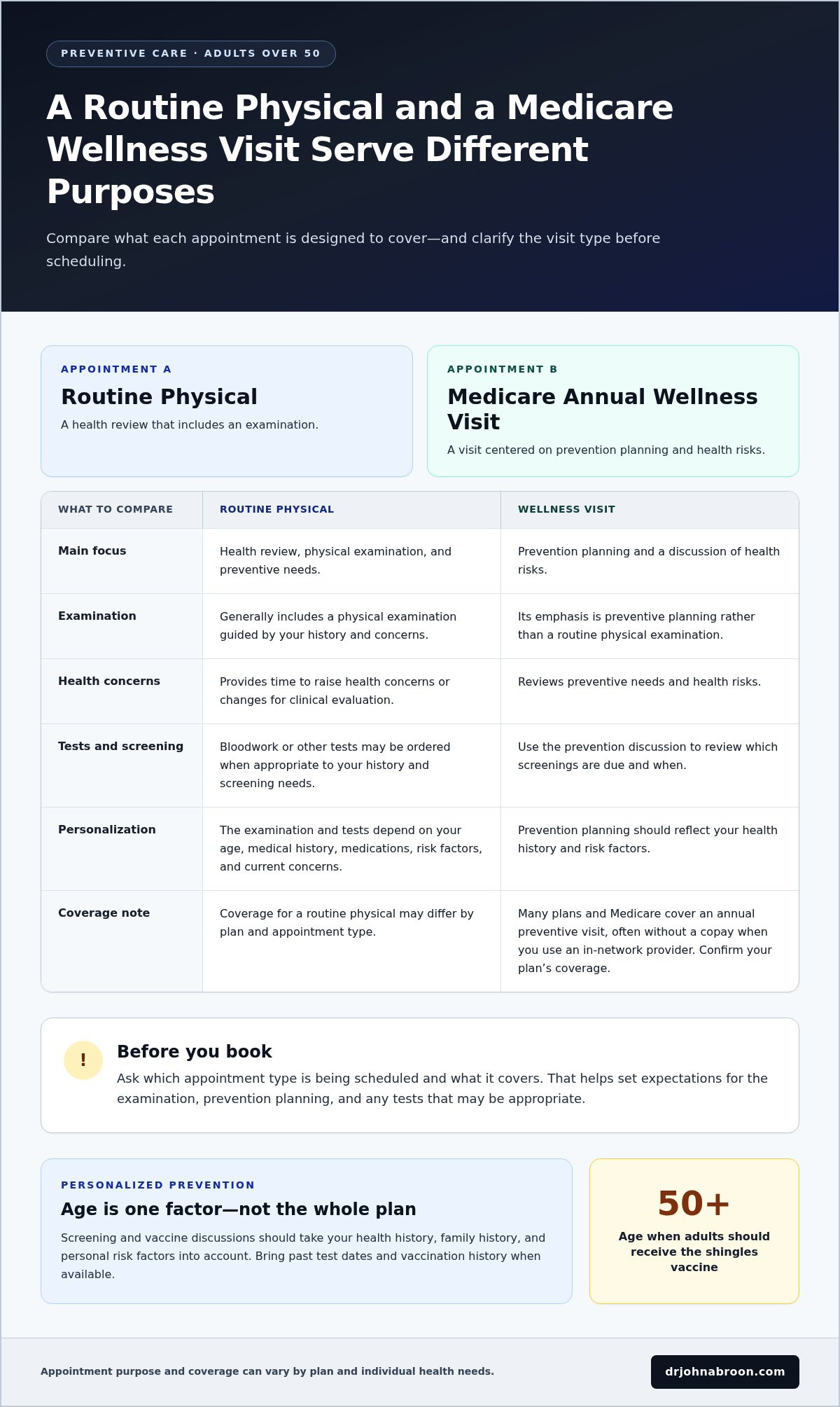
It’s also easy to confuse a routine physical with a Medicare Annual Wellness Visit. They serve different purposes: a physical generally includes an examination, while the wellness visit focuses on prevention planning. In the United States, adults should receive the shingles vaccine starting at age 50.
This guide explains that adults in the United States should receive the shingles vaccine starting at age 50. You’ll also learn how a Medicare wellness visit differs, what to bring, and how to make the conversation with your physician more useful and reassuring.
Key Takeaways
- A yearly physical can bring preventive needs into focus, with screenings and vaccines tailored to your health history and risk factors.
- Adults should receive the shingles vaccine starting at age 50, according to the Centers for Disease Control and Prevention.
- Bring a current medication list, notes about health changes, and questions to help make your appointment more productive.
- Fasting depends on the blood tests planned; follow instructions for tests such as cholesterol or glucose screening.
- A Medicare Annual Wellness Visit and a routine physical have different purposes, so learn what each appointment covers before scheduling.
What Is a Physical Exam?
A physical exam is a routine appointment with primary care focused on prevention, health concerns, and basic screening. In New York City, adults can arrange annual physical exams through primary care and internal medicine clinics.
Preventive Care in Later Adulthood
For adults in their 60s and beyond, preventive care connects current health needs with the next steps. A physical examination may include a review of health concerns, basic measurements, and discussion of screenings or vaccinations. The visit also gives you time to raise changes in energy, mobility, sleep, or daily habits that could shape your care.
Recommendations should reflect your personal and family health history, age, and risk factors. For example, the Centers for Disease Control and Prevention says adults should receive the shingles vaccine starting at age 50. The Centers for Disease Control and Prevention also says adults age 50 and older may be eligible for pneumonia vaccines. Your vaccination history helps guide that discussion.
Insurance coverage depends on your plan and appointment type. Many commercial plans and Medicare cover an annual preventive visit, often without a copay when you see an in-network provider. Coverage for a routine physical may differ, so clarify whether you’re booking a physical or an annual wellness visit.
Regular preventive visits can help identify concerns such as high blood pressure, diabetes, or cholesterol changes before symptoms prompt care. They also give you time to review previous results and set practical health goals for everyday life in NYC.
Recommended Screenings for Adults Over 50
Screening recommendations in the United States depend on age, sex, family history, and personal risk. Average-risk adults should begin colorectal cancer screening at age 45. Adults in their 50s may discuss colonoscopy every 10 years or stool tests more often, based on the screening approach and their history.
Other conversations may include blood pressure, cholesterol, and blood sugar. Women may discuss mammograms every 1 to 2 years through age 74, while bone density screening usually starts at age 65 and may begin sooner with risk factors. Men can discuss prostate cancer screening between ages 50 and 55, or earlier with a family history.
Smoking history can affect recommendations, too. Adults ages 50 to 80 with a significant smoking history qualify for low-dose CT lung cancer screening. Men ages 65 to 75 who have ever smoked should receive a one-time abdominal aortic aneurysm screening ultrasound. These examples are starting points for a personalized preventive discussion, not a checklist for every patient.
Use your appointment to review which screenings are due, which you’ve already completed, and whether your personal risks affect their timing. A record of past test dates and family history can make that discussion more focused and useful.
Annual physical exam components
An annual physical exam combines a health review, basic measurements, a physical examination, and preventive planning. Your primary care physician considers your age, health history, medications, and current concerns to determine which checks or tests are appropriate.
The appointment often begins with a conversation about health changes, family history, and daily habits. Your clinician may check your blood pressure and other vital signs, then perform a physical examination guided by your history and concerns. You can also discuss sleep, nutrition, activity, tobacco use, and alcohol.
Tests aren’t automatically the same at every yearly visit. Based on your health history and screening needs, your clinician may order bloodwork or other tests. Examples include:
- A blood count or urinalysis to assess specific health questions.
- Cholesterol or blood sugar testing when appropriate to your risk factors.
- Imaging, such as an ultrasound or echocardiogram, when a clinical concern calls for it.
- Vaccination updates based on your age and immunization history.
Cholesterol screening can help assess heart disease risk, while blood sugar testing can indicate whether further evaluation is needed. The choice and timing of tests depend on your personal risk, previous results, and health history, not a one-size-fits-all package.
Preparation can make results easier to interpret. For 24 hours before an annual physical, avoid strenuous exercise, excessive caffeine, and alcohol, which can temporarily affect some results. Fasting depends on the planned tests; follow the practice’s instructions if a cholesterol or glucose test requires it. Bring your medication list and note questions you want to cover.
How often you need appointments also depends on your health. Many healthy adults see a doctor yearly, while your clinician may recommend a different schedule for ongoing conditions or follow-up. A yearly preventive visit gives you time to review changes, but it doesn’t replace care for a new or urgent symptom.
A physical exam and a wellness visit have different emphases. A physical includes an examination and may involve tests or evaluation of a health concern. A wellness visit focuses on preventive planning and health risks. Before booking, clarify the appointment type so you know what the visit is designed to cover.
For a visit centered on prevention, annual physical exams can provide a structured opportunity to review health history, vital signs, and screening needs with primary care.
Why Schedule an Annual Physical in NYC?
A preventive appointment gives you time to review blood pressure, testing needs, and health changes in one visit. In NYC, ask how your risk factors shape the examination and which screenings are planned.
Blood Pressure and Physical Examination
Blood pressure should be checked at least once a year. About one in three adults with high blood pressure is unaware of it, so a reading may reveal a concern without obvious symptoms. Your clinician can interpret the result alongside your medical history and discuss whether follow-up measurements or care are appropriate.
The physical examination also gives you time to raise concerns such as dizziness, reduced stamina, or medication effects. Describe when a symptom occurs and what makes it better or worse. These details help your clinician consider the examination in the context of your health history, rather than treating one measurement as the whole picture.
Blood Work and Additional Testing
Bloodwork is selected according to your age, health history, previous results, and risk factors. Cholesterol testing can help assess heart disease risk, while blood sugar testing can indicate whether further evaluation is needed. Your primary care physician may also consider a blood count or urinalysis when your clinical picture supports those tests.
Additional testing isn’t automatically part of every physical. A specific symptom or examination finding may prompt further evaluation, such as imaging or an electrocardiogram. Ask what each test is intended to answer and how its result could affect your care. This clarifies the plan and distinguishes routine screening from testing for a current concern.
Many commercial insurance plans and Medicare cover an annual preventive visit, often without a copay when you see an in-network provider. Coverage varies by plan and appointment type. Clarifying whether your visit is billed as preventive care or includes evaluation of a new concern can help you understand what it covers.
Fasting Before Blood Tests
Whether you need to fast depends on the blood tests planned. Certain tests, including some lipid panels or fasting glucose tests, may require fasting; others don’t. Follow the instructions provided for your appointment rather than fasting automatically, since preparation depends on the specific test.
If fasting is required, the recommended window for some cholesterol or glucose tests is 8 to 12 hours. Ask whether water is allowed and whether you should take your usual medication during that period. Clear instructions help avoid an unnecessary repeat blood draw or a result affected by eating before a fasting test.
Medical history and vital signs during a physical
Your medical history puts current symptoms, examination findings, and preventive decisions in context. Reviewing it helps connect your health concerns with family history, lifestyle, medications, and previous care.
Medical History Review
Before your appointment, make a list of current medications and supplements, recent doctors, and past procedures. Include symptom changes, such as new fatigue or dizziness, and note when they began. These details help your physician understand what has changed since your last visit and which issues need attention.
Family medical history matters because patterns of disease can influence screening discussions. Share known conditions among close relatives, including the condition and which relative had it. If you don’t know a detail, share what you do know. For example, a family history of heart disease provides useful context when reviewing cardiovascular risks.
Your physician may also ask about lifestyle habits, including physical activity, nutrition, sleep, tobacco, and alcohol use. Offer practical examples, such as how often you walk or whether your sleep has changed. Your answers help shape recommendations around your routine instead of relying on general advice.
Mention specialist care, recent test results, and any treatment you’re receiving. If a specialist changed a medication or recommended follow-up, bring that information to the visit. A complete record helps your primary care physician coordinate details across your care and avoid overlooking concerns raised elsewhere.
To keep the conversation focused, organize your notes into three groups: symptoms or changes, medicines and supplements, and personal or family history. Add the questions you want answered. This preparation helps you use appointment time for the concerns that matter most.
Vital Signs During the Exam
Vital signs and basic measurements offer a snapshot of your health during the physical. Blood pressure is one key measurement, and adults should have it checked at least once a year. Tell your clinician about past readings or medication changes, since those details help put the current result in context.
Your medical team may also record other basic measurements during the examination. Share relevant context, such as feeling unwell or having a new symptom, so your clinician can consider it alongside the measurements. A single result is one piece of information, not a complete picture of your health.
Your physician considers vital signs alongside your medical history, current symptoms, and risk factors. For example, a blood pressure reading may prompt a discussion about previous readings, family history, and treatment. If a result or symptom raises concern, ask what follow-up is recommended and how it fits your overall care plan.
Keep a record of recent readings, medications, and health changes between visits. Bringing those notes to your next physical gives your clinician a clearer view of trends and helps make the examination more useful.
Medicare Annual Wellness Visit versus physical
A Medicare Annual Wellness Visit and a routine physical serve different purposes. The wellness visit centers on prevention planning, while a physical typically includes an examination, basic measurements, and discussion of health concerns. Knowing which appointment you’re booking helps you prepare for the care you want and understand what the visit is designed to cover.
Medicare Part B covers only one of these two appointment types: a routine annual physical or a Medicare Annual Wellness Visit. The wellness visit focuses on your health risks and preventive needs, rather than a comprehensive physical examination. It helps organize care priorities, review your health picture, and plan for prevention.
A physical may be more appropriate when you want an examination as part of your preventive care. Your clinician can review your medical history, take basic measurements, and discuss screenings or vaccines suited to your age and risk factors. If you also raise a new concern, such as an unexplained change in weight or a symptom that needs evaluation, that assessment may be billed separately from the preventive visit.
The wellness visit can help you and your doctor set clear health objectives for the next 12 months after reviewing results and creating a personalized health roadmap. Bring a list of current medications, details about recent procedures, and questions about concerns such as cancer screening. Those concrete details can make the prevention plan more relevant to your health history.
Before booking, describe your main goal. If you want a physical examination and discussion of a current symptom, ask for a routine physical. If your priority is preventive planning, screening schedules, and health objectives, a Medicare Annual Wellness Visit may better suit that purpose. Note which appointment you schedule so your expectations match the visit.
Both appointments support prevention, but they aren’t interchangeable. Wellness visits should be performed every year. For generally healthy people, comprehensive physical exams are recommended every three to five years rather than every year. Your existing conditions, screening needs, and reason for the visit help determine an appropriate schedule.
Choose the appointment around the care you need, then bring your medication list and health questions. If a physical examination is your priority, schedule an annual physical exam to discuss preventive needs and concerns with a physician.
John Abroon M.D: Annual Physical Exams
John Abroon M.D. offers Annual Physical Exams for adults seeking preventive primary care and a thoughtful review of their health. Turn to the practice to discuss screening needs, review your medical history, or raise health questions during a physical. As a board-certified internist and primary care physician, Dr. Abroon also offers Diagnostic Testing when evaluation calls for it. For visits tied to specific medical requirements, the practice provides Immigration Medical Exams and Pre-operative Medical Clearances.
Prepare by noting your medications, recent health changes, and questions about recommended screenings. This gives your appointment a clear starting point and helps focus the conversation on your priorities. To discuss an annual physical, contact John Abroon M.D. or contact John Abroon M.D. to schedule.
Make Your Next Health Step Count
In the United States, adults should receive the shingles vaccine starting at age 50. Before your appointment, consider what you want to address, whether that’s a health change, a screening question, or a goal for maintaining your well-being. A focused conversation can help turn those priorities into a practical plan.
John Abroon M.D. offers Annual Physical Exams, Immigration Medical Exams, and Pre-operative Medical Clearances. These services address different needs, from preventive care to medical evaluations connected with specific requirements. The right next step depends on the kind of care you’re seeking.
If you’re ready to discuss a physical exam, contact John Abroon M.D to schedule. Taking time to plan your care is a constructive step toward staying informed and engaged in your health.
Frequently Asked Questions
What your Annual Exam May Include?
An annual exam with John Abroon M.D. may include a review of your health concerns, measurements, a physical examination, and a discussion of preventive needs. Its focus can vary with your health history and what you want to address. For example, bring up a recent change in sleep or energy alongside routine screening questions. If you have a new symptom, mention it when booking so the visit can account for it.
How Often Should You Go to the Doctor?
Many healthy adults see a doctor yearly, while comprehensive physicals may follow a different schedule. For generally healthy people, comprehensive physical exams are recommended every three to five years rather than every year. Ongoing conditions, new symptoms, or follow-up after an abnormal result may call for care between preventive visits. Keep a note of follow-up instructions to help plan your next appointment.
What Does a Yearly Physical Consist Of?
A yearly physical is a preventive appointment to review your health and plan appropriate care. Alongside measurements and an examination, discuss practical goals, such as improving sleep or adding more movement to your routine. Bring a written list of questions to help prioritize concerns during the appointment. Ask what follow-up is recommended for any result or issue you discuss.
What happens after my physical?
After a physical, your provider may review results with you and discuss a care plan. If a test result needs attention, follow-up may involve additional testing or a conversation about next steps. Keep test dates and recommendations with your personal health records. If your clinician suggests a follow-up appointment, note its purpose so you can connect it to the finding or concern being addressed.
At what age should adults in the United States receive the shingles vaccine?
Adults in the United States should begin receiving the shingles vaccine starting at age 50. During your visit with John Abroon M.D., your vaccination history and age- and risk-related preventive needs will be reviewed. The discussion might cover routine immunizations you are due for, health history changes, or medication updates to ensure you stay fully protected.
How often should adults over 50 get a routine physical?
Many healthy adults see a doctor yearly, but comprehensive physical exams for generally healthy people are recommended every three to five years rather than annually. These are different aspects of ongoing care, so discuss a schedule that fits your current needs. A new symptom, chronic condition, or follow-up for a test result may require a visit outside a routine preventive appointment.
Does Medicare cover an annual physical or a Medicare Annual Wellness Visit?
Medicare Part B covers only one of the two appointment types: a routine annual physical or a Medicare Annual Wellness Visit. Preventive visits often have no copay when provided in network, while routine physicals aren’t always covered. If you raise a new concern that needs evaluation during a preventive appointment, that evaluation may be billed separately. Identify the appointment type and purpose when scheduling.
How can I find an in-network NYC primary care doctor for a physical?
Use your health plan’s provider directory to search for primary care in New York City when looking to schedule an annual physical for over 50 nyc. Filter results by your exact plan and the appointment you need, such as a routine physical. Compare the clinician’s listed specialty and office location with your preferences. Keep your insurance card nearby while searching, since the plan name and network shown there can help narrow the directory results.