


Hormones can affect metabolism and how the body stores fat, so an imbalance may make weight loss or maintenance more difficult. A weight loss doctor in Manhattan can assess the wider picture with a health evaluation and physical exam. When progress is difficult, blood or hormone testing may help inform an individualized plan.
It’s understandable to look for one clear cause when your weight changes or your efforts aren’t working as expected. Hormones can be part of the picture, but physician-supervised care also considers nutrition, daily habits, and overall health rather than treating one test result as the whole answer.
Here, you’ll learn how hormone assessment may fit into weight management, what physician supervision can involve, and how supplements, coordination with primary care, and maintenance may support a thoughtful plan. Understanding the process and the factors that shape care can help you make your next health decision with greater confidence.
Key Takeaways
- Hormones can affect metabolism and fat distribution, so a comprehensive evaluation may help identify factors affecting weight changes.
- Supplements are only one possible part of care; nutrition, activity, and everyday habits also matter when shaping a plan.
- Primary care coordination can help connect weight management with your broader health needs and medical history.
- Ongoing monitoring and sustainable routine changes can help you notice weight trends and support maintenance after reaching your goals.
- Physician supervision helps tailor the approach, including whether medication or diagnostic testing may be appropriate.
How do hormone imbalances affect weight gain or loss?
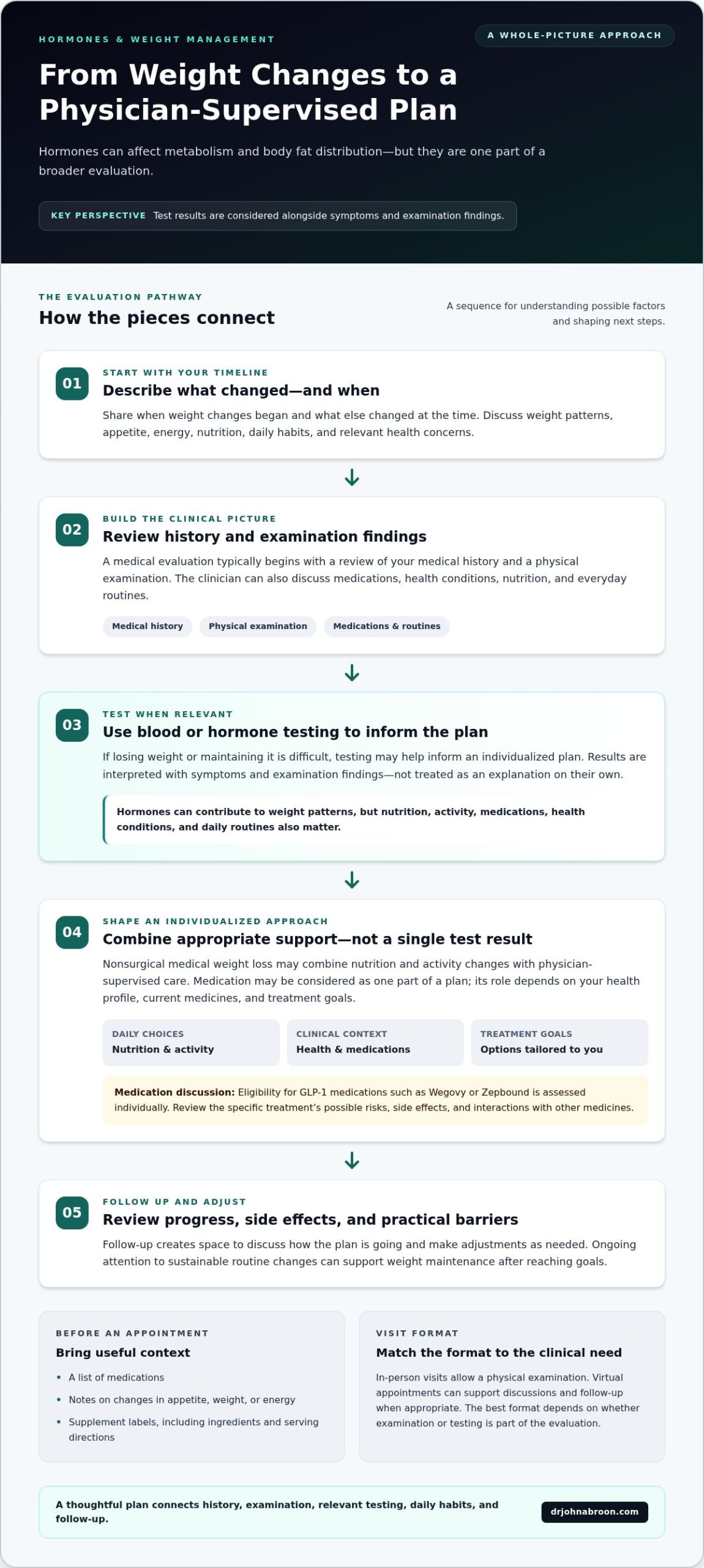
Hormones help regulate metabolism and body fat distribution, both of which can affect weight. An imbalance may contribute to weight gain or make weight loss harder, but hormones don’t explain every plateau. Nutrition, activity, medications, health conditions, and daily routines also shape weight patterns. At an appointment, describe when weight changes began and what else changed at the time. That context can help guide the evaluation.
A medical evaluation can help clarify which factors deserve attention. It typically begins with a review of your medical history and a physical examination. The clinician can discuss weight patterns, nutrition, daily habits, medications, and relevant health concerns. If losing weight or maintaining it is difficult, blood or hormone testing may help inform an individualized plan. Results are considered alongside symptoms and examination findings, not treated as an explanation on their own.
Nonsurgical medical weight loss may combine nutrition and activity changes with physician-supervised care. Medication may be considered as one part of an individualized plan, rather than the sole approach. Its role depends on your health profile, current medicines, and treatment goals. Follow-up also gives you a chance to discuss progress, side effects, and practical barriers. Surgical and nonsurgical care are distinct approaches; this section focuses on nonsurgical evaluation and management.
Eligibility for GLP-1 medications such as Wegovy or Zepbound is assessed individually, using medical history, current medications, and weight-related health concerns. A prescription isn’t determined by the brand name alone. Possible risks and side effects differ by medication; prescription weight-loss treatments can cause adverse effects or interact with other medicines. The specific treatment’s risks should be reviewed as part of a medication discussion.
Appointment formats vary among Manhattan practices. In-person visits allow a clinician to perform a physical examination, while virtual appointments can support discussions and follow-up when appropriate. The best format depends on the clinical needs of the visit, particularly when an examination or testing is part of the evaluation.
Before your appointment, bring a medication list and note changes in appetite, weight, or energy. These details can help connect symptoms with your medical history and examination. Blood or hormone testing may then help shape next steps when clinically relevant. A careful evaluation keeps the focus on possible causes, suitable nonsurgical options, and the support needed to follow a supervised plan.
Are Nutritional Supplements Recommended as Part of My Treatment?
Supplements may be considered as part of a weight-management plan, but they aren’t a substitute for nutrition, activity, or medical assessment. Bring the product labels, including ingredients and serving directions, to your appointment. They give the clinician a practical starting point for discussing how supplements fit with your health history and medications. Don’t use a product marketed for weight loss as a replacement for a balanced meal plan or prescribed care.
Nutrition counseling can turn broad goals into choices that fit your routine. A food diary is one useful tool: record meals, snacks, drinks, hunger, and the situations around eating. For example, noting a skipped lunch followed by evening snacking may reveal a pattern to address. A nutrition professional can use those details to discuss meal planning, portion awareness, and realistic changes that suit your preferences and schedule.
Weight-management physicians and nutrition professionals offer different perspectives. A physician considers your medical history, conditions such as diabetes, medications, and whether further evaluation is appropriate. A nutrition professional can help translate goals into everyday food choices and routines. Sharing the same food diary with both can keep recommendations connected, rather than leaving you to reconcile separate advice on your own.
Exercise is another part of a sustainable lifestyle plan. Start by recording the movement you already do, such as walking to work or taking the stairs, then discuss ways to build a repeatable routine. The right approach depends on your current fitness, mobility, preferences, and medical needs. Behavioral support can help identify obstacles, set practical goals, and adjust habits when a plan doesn’t fit daily life.
Nutrition, exercise, sleep routines, and behavioral strategies work together. For instance, planning a satisfying lunch can make it easier to avoid arriving home extremely hungry. Tracking activity alongside meals may show how workdays differ from weekends. These observations make discussions more specific and support changes that can continue beyond the initial period of weight loss.
When comparing Manhattan programs, consider the care offered, how nutrition and lifestyle support fit into treatment, the review process, and appointment options. Patient reviews may describe communication and visit experience, but they don’t replace a medical assessment. Insurance acceptance depends on the clinician’s network and your plan benefits. Coverage for visits, nutrition support, testing, and medications can differ.
If you’re considering a medically guided approach, physician-supervised weight care can be a starting point for discussing nutrition, habits, and appropriate support together.
Will My Primary Care Provider Be Involved in My Weight Loss Program?
Your primary care provider can contribute important context to weight-management care. A coordinated plan connects your medical history, current treatment, nutrition, and progress.
Personalized Weight-Management Evaluations
A personalized evaluation starts with your health history, current nutrition, and everyday habits. Bring a current medication list and note previous weight changes, health concerns, and approaches you’ve tried. A physical examination and relevant diagnostic testing can add clinical context. If you already see a primary care provider, their knowledge of your health can inform the discussion and keep weight management connected to your broader care.
Coordination is especially useful when weight-related concerns overlap with other health needs. Diabetes treatment, ongoing prescriptions, or changes in energy, for example, can affect the questions raised during an evaluation. Share relevant records and describe recent treatment changes. Clear information helps clinicians consider how a weight-management plan fits alongside existing care, rather than treating weight as a separate issue.
Physician-Supervised Treatment Planning
A physician uses evaluation findings to shape an individualized treatment plan. The discussion can cover nutrition, current habits, goals, and whether medication belongs in the plan. Medication is one possible component, not a replacement for other approaches. When your primary care provider is involved, sharing the treatment outline can help keep recommendations aligned with your broader health needs.
Personalized nonsurgical care can include practical changes to eating patterns and daily routines. A clinician might review a typical day’s meals, work schedule, and barriers to activity before suggesting adjustments. You can track what works and bring specific questions to follow-up discussions. The plan should reflect your real routines so recommendations remain workable beyond the initial appointment.
Medical and surgical weight-management care are different pathways. This section focuses on physician-supervised nonsurgical treatment, including health evaluation, nutrition, habits, and medication discussions. A primary care provider can help clarify the distinction by reviewing existing conditions and treatment priorities. If surgery is part of a separate discussion, coordination helps keep your overall medical picture in view.
To prepare for a coordinated conversation, write down your current medications, nutrition patterns, and treatment questions. Include concerns about losing weight, maintaining progress, or managing conditions such as diabetes. Ask how the weight-management plan relates to care you already receive. These steps give clinicians concrete information and help you understand the reasoning behind each part of your personalized plan.
Weight maintenance after reaching goals
Reaching a weight goal shifts the focus from active loss to sustainable daily habits. In New York City, planning for changing schedules and routines can help make maintenance practical.
Long-Term Maintenance Planning
Build a maintenance plan around eating patterns and daily habits you can continue. Identify routines that supported your progress, such as planning meals before busy workdays or making regular time for movement. A consultation can help turn those routines into clear next steps. Weight management is a long-term commitment to sustainable changes, not a short phase that ends when you reach a target.
Monitoring your progress can help you recognize weight trends early and make practical adjustments. Track changes in eating, activity, and routine to spot patterns, such as eating more meals away from home during a demanding week. Bring those observations to follow-up discussions. Reviewing patterns early can help you respond before a temporary disruption becomes a return to previous habits.
Addressing Weight Regain
Returning to previous eating habits after weight loss can lead to weight regain and the return of related health problems. Notice what has changed instead of treating a fluctuation as a personal failure. For example, a new work schedule might disrupt meal planning or movement. Identifying that shift gives you a specific routine to revisit and discuss during a consultation.
A useful maintenance review connects your current habits with the plan that helped you lose weight. Compare your present eating routine with the one you intended to sustain, then note where they differ. Consider work demands, meal timing, activity, and other changes in daily life. This step-by-step review can guide realistic adjustments without assuming one method suits every stage.
Health changes also deserve attention. If your appetite, energy, or weight patterns shift, record when the changes began and what else changed around that time. Hormones can influence metabolism and body fat distribution, so a clinician may consider them when evaluating persistent difficulty maintaining weight. A clear timeline makes that conversation more useful than relying on memory alone.
Maintenance is not simply repeating a weight-loss phase. It involves preserving sustainable eating and daily habits while responding to changes as they arise. Keep a record of routines that support you, note emerging weight trends, and bring specific questions to a consultation. These steps provide a practical basis for continued weight management after you reach your goals.
Physician-supervised weight loss
Physician supervision connects weight goals with your broader health needs. An evaluation can review nutrition, daily habits, medical history, and current medications before treatment options are discussed. This matters because a plan should reflect more than a number on the scale. For example, a patient managing type 2 diabetes may have different priorities from someone focused on weight loss without another health concern.
During an appointment, discuss eating patterns, activity, previous weight-loss efforts, and barriers to consistency. These details help shape practical treatment guidelines. Follow-up can review how the plan fits your routine and whether adjustments are needed. Patients may generally lose a few pounds each week when they follow their treatment guidelines, though progress depends on following the individualized plan.
Medication may be considered as one part of care, rather than relied on as the main approach. Prescription appetite suppressants are available only through a doctor and may be included in personalized weight-management recommendations. A physician can discuss how medication fits with your health history and other medicines. Bring an up-to-date medication list and raise any concerns about side effects or changes in appetite.
Supervision also helps keep attention on health outcomes beyond weight. Weight management can help control or prevent type 2 diabetes, certain cancers, and osteoarthritis. That doesn’t make weight loss a substitute for treating an existing condition. Instead, it gives a physician a reason to consider how nutrition, activity, and treatment choices relate to your overall care.
A medically supervised plan is distinct from surgery. Nonsurgical care may focus on nutrition, habits, follow-up, and medication when appropriate. Surgical treatment is a different pathway, with separate considerations and evaluation. Clarifying which approach is being discussed helps you understand the plan, its purpose, and the support involved before making decisions.
To make an appointment more useful, bring questions about your healthy-weight goals, current medications, and the parts of your routine that are hardest to change. Ask how progress will be reviewed and how the plan may adapt if your health or circumstances change. This makes physician assistance an ongoing process rather than a single recommendation, with clear points to discuss at follow-up.
Discuss physician-supervised weight management as a next step in building a medically guided plan.
John Abroon M.D.: Annual Physical Exams
John Abroon M.D. is a board-certified internist and primary care physician offering Annual Physical Exams. If weight changes or related health concerns prompt questions about your overall well-being, an exam gives you an opportunity to discuss them in the context of your health history. Diagnostic Testing is also available when further assessment is appropriate. These services can support a broader conversation about your health alongside weight-management care.
Consider an annual physical when you want to review your health or discuss changes you’ve noticed. Contact John Abroon M.D. to talk about your health needs and possible next steps.
Make Your Next Health Decision With Clarity
Choosing a weight loss doctor in Manhattan is an opportunity to make weight goals part of a broader conversation about your health. Before your next appointment, write down the changes you want to make and the questions you’d like answered. A clear starting point can help you discuss priorities and decide what kind of medical support fits your needs.
John Abroon M.D. offers Annual Physical Exams, Immigration Medical Exams, and Pre-operative Medical Clearances. These services support distinct health needs, from routine preventive care to medical evaluation before surgery. Consider which concern is most pressing, then bring that question to your next conversation with a physician.
Contact John Abroon M.D. to discuss your health needs and next steps. A thoughtful conversation can help you move forward with greater confidence.
Frequently Asked Questions
How Do You Address Emotional Eating, Stress, and Lifestyle Factors in Weight Loss?
A weight loss doctor in Manhattan can discuss emotional eating, stress, and daily routines as part of weight management. Describe when emotional eating tends to happen, such as after a demanding workday or during disrupted sleep. A short log of meals, mood, and circumstances can help identify patterns. The physician can use this context alongside your health concerns and nutrition habits when discussing practical changes to your routine.
How Long Does the Program Last?
Program duration depends on treatment goals, progress, health needs, and the transition to maintenance. There isn’t one timeline that fits everyone. At a consultation, discuss how progress will be reviewed and what follow-up looks like at different stages. Someone still adjusting meal routines, for example, may need a different care plan from someone focused on maintaining established habits.
How Much Weight Can I Expect to Lose as Part of Your Program?
Treatment guidance describes a general pace of a few pounds each week for patients following their treatment guidelines. Nutrition, activity, health needs, and consistency all shape progress. Track changes over time rather than judging the plan by one weigh-in. Bring your progress notes to follow-up discussions so the physician can consider the trend alongside your health and treatment goals.
What Types of Weight Loss Doctors and Specialists Practice in Manhattan, NYC?
New York City weight-management care may involve primary care physicians, obesity medicine physicians, endocrinologists, and bariatric surgeons. Their roles differ: a primary care physician considers overall health, while an endocrinologist focuses on hormone-related conditions. Registered dietitians can contribute nutrition expertise as part of care, though they aren’t physicians. The right professional depends on your health concerns and the kind of support you’re seeking.
How Can I Find a Board-Certified Obesity Medicine Doctor in Manhattan?
Look for physician biographies that explicitly identify board certification in obesity medicine, and distinguish that credential from certification in another specialty. John Abroon M.D. is a board-certified internist and primary care physician. His internal medicine credentials describe his specialty; they don’t establish a separate obesity medicine certification. When comparing care, consider the physician’s stated training and how their clinical scope matches your needs.
Which Manhattan Clinics Offer Medical Weight Loss, Nutrition Counseling, or Weight Loss Medications?
New York practices differ in how they combine physician-led weight management, nutrition support, and prescription medication. John Abroon M.D. offers Weight Loss Management. A service name alone doesn’t describe every component of care, so consider which support you’re seeking and discuss relevant treatment questions during a medical appointment. That can help clarify how a program addresses your priorities.
What Should I Expect at a First Appointment With a Weight Loss Doctor?
A first appointment with a weight loss doctor in Manhattan typically includes discussion of your health history, medications, weight changes, and goals. A physical examination may be part of the evaluation, with diagnostic testing considered in context. Bring a medication list and relevant recent test results. Writing down questions beforehand can help you discuss concerns and understand possible next steps.
How do Manhattan weight loss doctors compare on services, reviews, and appointment availability?
Compare the care offered, nutrition and lifestyle support, review process, and appointment options. Patient reviews may describe communication and visit experience. Appointment formats vary: in-person visits allow a physical exam, while virtual visits may suit discussions and follow-up when appropriate.