


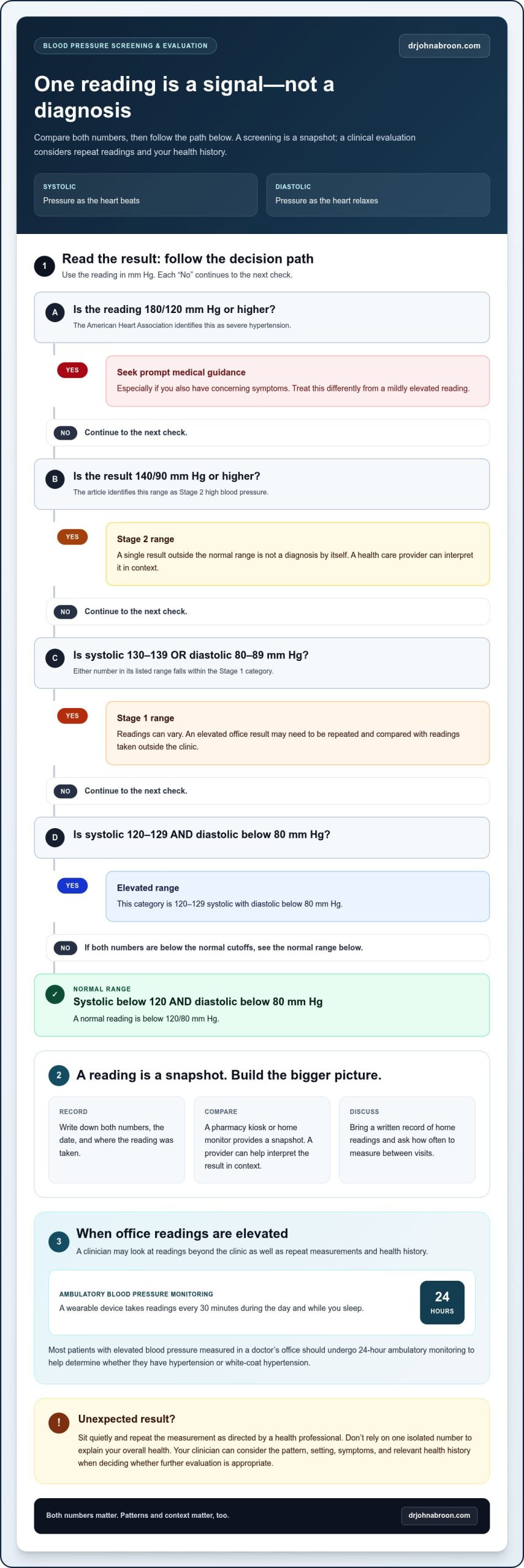
A high blood pressure reading deserves attention, but one result alone doesn’t tell the whole story. For a blood pressure check in NYC, compare both numbers: according to the National Heart, Lung, and Blood Institute, a normal reading is below 120/80 mm Hg; an elevated reading is 120-129 systolic with diastolic below 80, and stage 1 hypertension begins at 130-139 systolic or 80-89 diastolic.
It’s natural to wonder what your blood pressure numbers mean, whether you need another reading, and where to get checked. This guide explains how to interpret a result, when follow-up may be helpful, and how office visits, pharmacy screenings, kiosks, and home monitoring differ. You’ll also learn what can affect screening costs and insurance coverage, and where to find a blood pressure check in Manhattan. Understanding your options can help you decide what to do next and discuss your reading as part of your overall care.
Key Takeaways
- Learn how a reading is interpreted and why an elevated result may need follow-up rather than an immediate conclusion.
- Understand which factors can affect screening costs and how insurance coverage may depend on the type of visit and your plan.
- Compare options for getting checked in Manhattan, including health care visits, pharmacy screenings, kiosks, and home monitoring.
- Find out when an appointment is useful and how to prepare so your reading is as reliable as possible.
- See how an annual physical exam can put blood pressure results in context with your broader health.
Blood pressure screening and evaluation
A screening gives you a reading to compare with established U.S. blood pressure categories. A clinical evaluation considers the result alongside repeat measurements and your health history.
Blood Pressure Screening
A blood pressure test measures the force of blood against artery walls. It records systolic pressure as the heart beats and diastolic pressure as it relaxes. Both numbers matter when interpreting a result.
According to the National Heart, Lung, and Blood Institute, a normal U.S. blood pressure reading has systolic pressure below 120 mm Hg and diastolic pressure below 80 mm Hg. An elevated reading is 120-129 mm Hg systolic and below 80 mm Hg diastolic, according to the National Heart, Lung, and Blood Institute.
According to the National Heart, Lung, and Blood Institute, hypertension stage 1 includes systolic pressure of 130-139 mm Hg or diastolic pressure of 80-89 mm Hg. The page identifies blood pressure of 140/90 or higher as Stage 2 high blood pressure, according to the National Heart, Lung, and Blood Institute. These categories help organize results, but one number outside the normal range isn’t a diagnosis by itself.
High blood pressure often has no symptoms, so a screening can reveal a concern that might otherwise go unnoticed. Record both numbers, the date, and where the reading was taken. A pharmacy kiosk or home monitor provides a snapshot, while a health care provider can help interpret the result in context.
Blood Pressure Evaluation
Evaluation looks beyond a single result. Readings can vary, and some people have higher numbers in a medical setting than at home. An elevated office reading may need to be repeated and compared with readings taken outside the clinic.
For a closer picture, ambulatory blood pressure monitoring uses a wearable device that takes readings every 30 minutes during the day and while you sleep. Most patients with elevated blood pressure measured in a doctor’s office should undergo 24-hour ambulatory blood pressure monitoring to determine whether they have hypertension or white-coat hypertension.
Bring a written record of home readings to your appointment, and ask how often to measure between visits. Taking readings consistently and keeping a clear log makes it easier to compare results over time. Your clinician can consider the pattern, setting, symptoms, and relevant health history when deciding whether further evaluation is appropriate.
The American Heart Association identifies a reading of 180 / 120 mm Hg or higher as severe hypertension. Treat that result differently from a mildly elevated reading: seek prompt medical guidance, especially if you also have concerning symptoms. For any unexpected result, sit quietly and repeat the measurement as directed by a health professional; don’t rely on one isolated number to explain your overall health.
Insurance coverage and visit costs
The cost of a blood pressure visit depends on where you’re screened and whether you need more than a reading. Insurance coverage also varies by plan and appointment type.
Insurance Coverage
Review your health plan’s benefits for preventive visits, office appointments, and diagnostic testing. A pharmacy screening may be handled differently from a clinician visit that includes an evaluation. The service provided and how the visit is billed can affect your out-of-pocket costs.
Before scheduling, review your plan documents or member portal. Check coverage details, deductible requirements, copayments, and whether the appointment must be with an in-network clinician. If your reading is part of a broader visit, the plan’s rules for that visit may apply instead of those for a standalone screening.
Have your insurance card and plan details available when arranging care. If you have a hypertension diagnosis, review whether your plan covers follow-up visits or related testing. Coverage terms can differ even when two people receive the same type of blood pressure measurement.
Visit Costs
Many pharmacies offer free blood pressure checks, making them a practical option for a basic screening. A clinician’s appointment may include a broader assessment, particularly if you’re discussing a previous elevated result, symptoms, or hypertension treatment. These are different services, so their costs may differ.
For a clinical visit, the cost depends on the type of appointment and care provided. Key factors include whether the visit is only for a reading or includes a broader evaluation, and whether diagnostic testing is involved. Insurance benefits, deductible status, and copayments can also affect what you pay.
To understand your likely responsibility, take these steps:
- Identify whether you need a pharmacy screening or a clinician’s assessment.
- Review your plan’s benefits and cost-sharing details for that type of visit.
- Ask how the appointment will be billed and whether additional evaluation or testing is planned.
- Bring your insurance information and any previous readings to the visit.
A kiosk reading can be useful for tracking, but it doesn’t include the same discussion as a clinical evaluation. If a result concerns you or you need help understanding coverage for follow-up, consider preventive care planning as part of a broader conversation about your health.
Manhattan locations for blood pressure checks
In Manhattan, you can get a blood pressure reading from a health care provider, at a pharmacy or kiosk, or with a home monitor. The right option depends on whether you want a quick screening, help understanding a result, or regular tracking for a diagnosed condition.
For a nearby pharmacy kiosk, New York City residents can use NYC Health’s map of participating pharmacies. You can also call 311 to request a map of blood pressure kiosk locations. These options help narrow down places by neighborhood before you set out, rather than relying on a kiosk you happen to pass.
Some pharmacy kiosks provide free checks for people diagnosed with high blood pressure, and pharmacies may also offer free screenings. A kiosk reading can support routine tracking, but it doesn’t replace a health care provider’s evaluation when you need help interpreting a result or managing hypertension.
- Pharmacy or kiosk: Use NYC Health’s participating-pharmacy map or call 311 for kiosk locations.
- Health care provider: Choose a clinical visit when you want a professional to consider your reading and health history.
- Home monitor: Ask your provider whether home monitoring fits your needs, and how often to take readings.
Before visiting a kiosk, use the map or 311 information to identify a location that suits your route. A pharmacy check can be convenient while running errands, while a provider visit offers a chance to discuss the result. If you’re tracking readings over time, keep the numbers together and share the record at your next appointment.
For a Manhattan screening, consider what you need from the visit. If you want a quick reading, a participating pharmacy kiosk may be a practical starting point. If previous readings have been elevated, or you have questions about symptoms or treatment, a health care provider can put the numbers into context.
One option may not meet every need. A kiosk provides a screening, while a provider can assess readings as part of your care. Home monitoring can add information between visits, especially when you follow your provider’s guidance on timing and record each result. These approaches can complement one another, combining convenient checks with a clearer record of your blood pressure over time.
Use the option that matches your next step: locate a participating pharmacy through NYC Health’s map, call 311 for kiosk locations, or bring your questions and recorded readings to a health care provider. If you’ve been diagnosed with high blood pressure, ask about a free pharmacy kiosk near you and keep sharing your readings with your care team.
Do I need an appointment for a blood pressure check in NYC?
A blood pressure check in NYC doesn’t always require a clinician visit. You can use a home monitor or get screened at a pharmacy or kiosk. Schedule a health care appointment when you want a clinician to assess your reading and discuss next steps.
The setting determines how you arrange the check. With a home monitor, you take readings yourself. A pharmacy or kiosk provides a screening, while a clinician visit gives you time to discuss the result and your health history. If you only need to record a number, a self-directed option may suit your needs. If you want an explanation or ongoing guidance, schedule a clinical visit.
For a pharmacy kiosk in New York City, use the city’s participating-pharmacy map or call 311 to request kiosk locations. Many pharmacies offer free blood pressure checks, and people diagnosed with high blood pressure can find free pharmacy kiosks near them. These options can help you identify a screening location before you travel.
A clinician appointment is useful when a reading needs context. Bring previous results, a list of current medications, and questions about changes you’ve noticed. If your home monitor gives different results on different days, for example, a written record can help guide the conversation. Ask how often to measure between visits and which readings to record.
Choose your next step according to what you need:
- For a quick screening: Find a pharmacy or kiosk through New York City’s map or 311.
- For personal tracking: Use a home monitor and keep a record of your readings.
- For clinical interpretation: Arrange a visit with a health care provider and bring your recorded results.
A kiosk screening and a clinical evaluation serve different purposes. A kiosk provides a measurement, while a clinician can discuss the pattern, your health history, and whether further assessment is appropriate. If you’ve been diagnosed with high blood pressure, a pharmacy kiosk can support tracking. Share the readings with your care team.
Before arranging a clinic visit, write down what you want answered. You might ask how to interpret a recent result, whether home monitoring suits your situation, or how often to check between appointments. Clear questions and recorded readings help make the appointment more focused, whether you’re following up on one result or monitoring blood pressure over time.
What should I do before getting my blood pressure checked?
A little preparation can make your reading easier to interpret. Before a clinic visit, pharmacy screening, or home check, gather recent results and note what you want to discuss with your health care provider.
Start with a written record. Include each systolic and diastolic reading, the date, and where you measured it, such as at home or at a pharmacy kiosk. Note anything unusual or any symptoms at the time. A clear log helps your provider compare readings rather than relying on memory.
If you check your blood pressure between appointments, ask your provider how often to take readings. Follow that schedule and record each result consistently. If you’re considering a home monitor, ask whether it’s suitable for your situation. Bring the device or its recorded results to an appointment if you want help reviewing your tracking method.
Prepare a short list of questions before your visit. Ask what your numbers indicate, whether to continue home monitoring, and when to share another reading. Note your medications and any recent changes so your clinician can consider them alongside your results. Don’t change a prescribed medication based only on a reading; discuss concerns with your care team.
If your provider recommends ambulatory blood pressure monitoring, ask how to manage the device during your usual routine. It takes readings every 30 minutes during the day and while you sleep. Knowing that schedule can help you plan around work, travel, and rest while keeping the record useful.
Use this quick checklist before your next reading:
- Bring a written record of previous blood pressure numbers.
- Note the location and date for each measurement.
- Write down medications, recent changes, and questions for your provider.
- Ask how often to check your blood pressure between visits.
- Bring your home monitor if you want guidance using it.
At the appointment, share the complete record, including readings that seem different from your usual pattern. A clinician can review the sequence and decide whether additional measurements will clarify it. If you’re preparing to discuss your results in a broader health visit, discuss your blood pressure readings with a care professional.
Ask your health care provider to check your blood pressure during your next visit, and keep a record of your numbers. If you monitor between office visits, ask how often to check. Hypertension stage 2 should be assessed every month until a clinically advised blood pressure goal is met.
Adults should get at least 150 minutes of moderate physical activity each week and do muscle-strengthening activities at least 2 days a week.
John Abroon M.D: Annual Physical Exams
John Abroon M.D. offers Annual Physical Exams that can put blood pressure readings in the broader context of your health. Bring your recorded results and questions about changes or follow-up to discuss them as part of preventive care. If a reading concerns you or you want a broader review of your health, an annual physical exam is a practical next step. Your clinician can consider the information you share and discuss whether diagnostic testing is relevant. Bring a record of your measurements and current medications to help focus the conversation. Contact John Abroon M.D. to discuss an Annual Physical Exam.
Make your next step part of ongoing care
A blood pressure check in NYC can be a starting point for taking a more active role in your health. Bring your readings and questions to a visit, then discuss a practical plan for tracking them and deciding when to follow up. A clear record can make future conversations more useful as your health needs change.
John Abroon M.D. offers Annual Physical Exams, Immigration Medical Exams, and Pre-operative Medical Clearances. An annual exam provides an opportunity to discuss blood pressure alongside other preventive health concerns, while the other services address distinct medical needs. Choose care that fits the reason for your visit and the questions you want answered.
Take the next step by contacting John Abroon M.D to discuss your care. A thoughtful conversation can help you move forward with greater confidence and a clearer focus on your health.
Frequently Asked Questions
Where can I get a blood pressure check near me in NYC?
Look for a participating pharmacy or blood pressure kiosk near your New York City neighborhood using the city’s pharmacy map, or call 311 to request kiosk locations. A health care provider is another option, especially if you want help discussing your results. For example, choose a nearby kiosk for a quick reading, then bring the result to a clinician if you need a fuller assessment.
Where can I get a blood pressure check in NYC?
New Yorkers can get checked by a health care provider, at a pharmacy or kiosk, or with a home monitor. Choose based on whether you need a one-time reading or ongoing support. A pharmacy screening may work for a quick check during errands, while a provider visit is useful for discussing your health history and what to do with the result.
Can NYC residents get blood pressure checked at a community health clinic?
Yes. You can ask about having your blood pressure measured at a community health clinic. If you’re visiting for another concern, mention the check when arranging your appointment or speaking with clinic staff. Bring previous readings and a list of medications so the clinician can consider them alongside the new measurement.
How much does a blood pressure check cost in NYC without insurance?
Without insurance, the cost depends on where you’re checked and what the visit includes. Many pharmacies offer free blood pressure checks. A clinic appointment may include a professional evaluation, with charges depending on whether it involves only a measurement, a broader assessment, or diagnostic testing. Ask about the expected charge for the specific service before proceeding, and distinguish a screening from a clinical visit.
What blood pressure numbers are considered high or dangerously high?
According to the National Heart, Lung, and Blood Institute, stage 1 hypertension includes systolic readings of 130-139 mm Hg or diastolic readings of 80-89 mm Hg. A reading of 140/90 or higher is Stage 2 high blood pressure. The American Heart Association identifies 180 / 120 mm Hg or higher as severe hypertension. A single elevated result may need follow-up rather than serving as a diagnosis by itself.