


Most adults can schedule an annual physical once a year, while people with chronic conditions may need more frequent visits. Knowing what to ask your doctor at your annual physical helps you make the visit a practical plan for prevention, testing, and follow-up.
It’s easy to leave a checkup with questions you meant to ask, especially when you feel well and have no pressing concern. A little preparation can help you use the time to discuss your health history, medications, lifestyle, and any changes you’ve noticed.
This guide explains how often to get a physical, what tests may be included, and how to prepare. You’ll also find useful questions about screenings, vaccines, test results, and next steps, so you can have a clear, personalized conversation with your doctor.
Key Takeaways
- Ask your clinician how often you should schedule routine visits, especially if you have ongoing health conditions.
- Ask which screenings and blood tests fit your age, health history, and risk factors. The Centers for Disease Control and Prevention recommends hepatitis C screening for everyone over age 18 at some point.
- Bring an up-to-date list of medications and supplements, including doses, and note important changes in your health history.
- Write down your priority questions before the visit, and follow your clinician’s instructions about fasting or other preparation.
- Before you leave, clarify what your results mean, how you’ll receive them, and whether you need follow-up.
1. What other health screenings or tests do I need?
Ask which preventive screenings are appropriate for your age, sex, family history, and personal risk factors. For example, an early diagnosis in a close relative may affect when your doctor recommends screening. Share your family history, including heart disease, diabetes, and cancer, so your checkup can address the risks that matter to you.
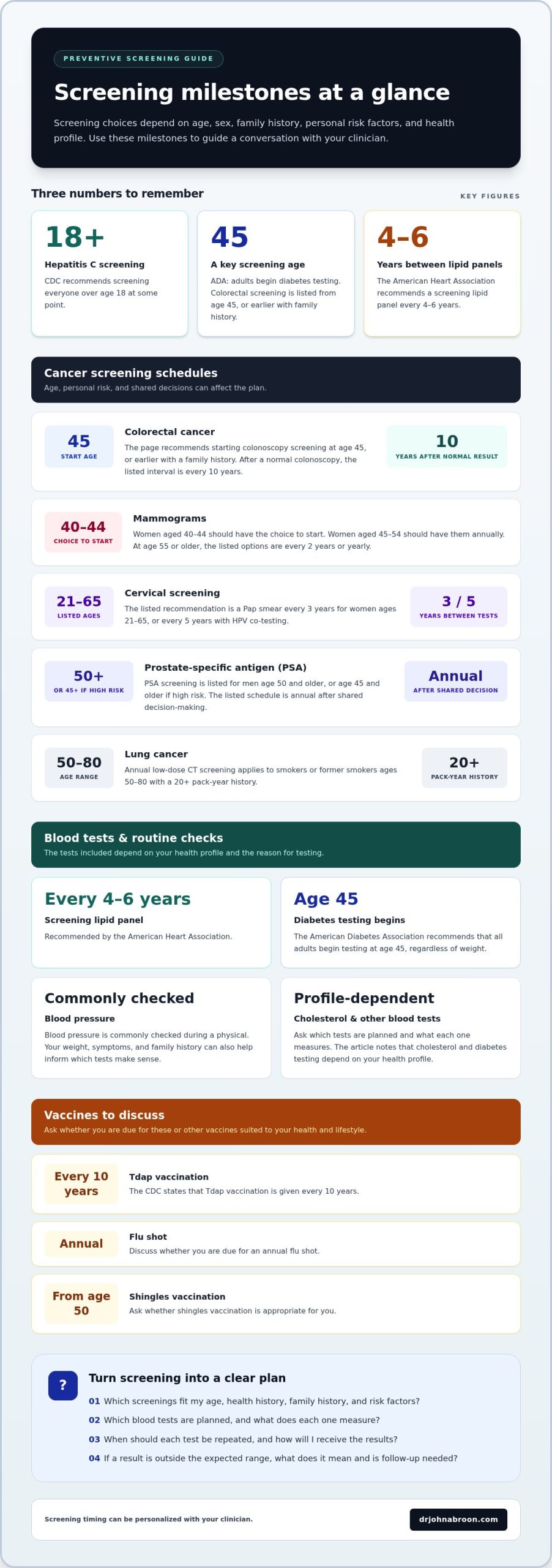
Blood pressure is commonly checked during a physical, while cholesterol and diabetes testing depend on your health profile. The American Heart Association recommends a screening lipid panel every 4-6 years; the American Diabetes Association recommends that all adults begin diabetes testing at age 45, regardless of weight. Ask which blood tests are planned and what each one measures.
For colorectal cancer, the page recommends starting colonoscopy screening at age 45, or earlier with a family history. A normal colonoscopy screening interval is every 10 years. Mammogram recommendations vary with age: people aged 40-44 should have the choice to start, women aged 45 to 54 should get them annually, and women aged 55 or older can choose every 2 years or yearly screening.
Cervical screening recommendations listed here cover Pap smears for women ages 21-65 every three years, or every five years with HPV co-testing. Prostate-specific antigen (PSA) screening is listed for men age 50 and older, or age 45 and older if high risk, annually after shared decision-making. For lung cancer, annual low-dose CT screening applies to smokers or former smokers ages 50-80 with a 20+ pack-year history.
Ask about vaccines alongside screenings. The Centers for Disease Control and Prevention recommends that everyone over age 18 be screened for hepatitis C at some point. The Centers for Disease Control and Prevention states that Tdap vaccination is given every 10 years. Also discuss whether you’re due for an annual flu shot, shingles vaccination from age 50, or other vaccines suited to your health and lifestyle.
Your weight, blood pressure, symptoms, and family history can help determine which tests make sense. Mention changes you’ve noticed and ask whether they affect your risk of heart disease or diabetes. If you don’t know your family history, ask relatives about significant diagnoses. Even partial details can help guide a preventive plan.
Before leaving, ask when each test should be repeated and how you’ll receive the results. If a result is outside the expected range, ask what it means and whether follow-up testing or a lifestyle change is appropriate. This turns screening into clear next steps, rather than just a list of numbers.
2. What tests are included in a standard annual physical exam?
A physical usually includes measurements and a conversation about your health. Your clinician may check your blood pressure, heart rate, and body mass index (BMI). These findings provide useful context, but they don’t replace a discussion of symptoms, medical history, and daily habits.
Prepare a brief health snapshot before your visit. Note recent changes, ongoing concerns, and the dates of relevant diagnoses or procedures. Bring previous test results if you have them. This timeline helps your primary care clinician understand what has changed since earlier visits and which concerns need attention.
Be specific when describing symptoms. Explain when they began, how often they occur, and what makes them better or worse. For example, note whether shortness of breath happens during activity or at rest. Mention changes in sleep, mood, appetite, energy, or pain, even if they seem unrelated.
Your weight may be measured as part of the assessment. Discuss changes you’ve noticed and whether they affect your energy, mobility, or other health concerns. If weight management is a goal, ask about practical steps that fit your health history and routine. A plan may take eating habits, activity, medications, and medical conditions into account.
Some visits include blood tests, but the tests depend on your health profile and the reason for testing. A comprehensive metabolic panel measures substances such as protein, calcium, sodium, and potassium. Ask what each test evaluates and how its result could guide your care. If a result is outside the expected range, ask what it means and what follow-up could clarify it.
The exam may also include a physical assessment tailored to your needs. Ask in advance whether it will involve an intimate exam, such as a breast, pelvic, or prostate exam, and discuss what would help you feel comfortable. Tell your clinician about any pain, concerns, or past experiences that could affect the examination.
Use the visit to connect findings with prevention. Ask which health changes could reduce future problems, such as adjusting activity or eating habits in response to changes in weight or blood pressure. Your clinician can discuss exercise suited to your fitness level and medical conditions, as well as sleep or stress concerns. Choose one or two realistic actions to revisit at your next checkup.
If you’re ready for a personalized review of your health, an annual physical exam can bring these questions and findings together in one visit.
3. Medical history and medication review
Your medical history helps your clinician interpret current symptoms and identify patterns that affect your overall health. Before the visit, note ongoing conditions, past operations, hospital stays, allergies, and treatments you’ve tried. Include dates if you remember them. A timeline can clarify whether a symptom began before or after a diagnosis, procedure, or medication change.
Family history adds context to your personal risk factors. Record close relatives’ major diagnoses, such as heart disease, diabetes, cancer, or mental health conditions. Include who had the condition and, if known, when it began. If details are uncertain, write down what you know and note questions to ask relatives. Even partial information can help shape a useful discussion.
Prepare one complete medication list instead of relying on memory during your appointment. Include prescriptions, over-the-counter medicines, vitamins, herbal remedies, and other supplements. For each item, note the name, dose, how often you take it, and why you use it. Include recently stopped medicines, and note whether side effects or another concern led you to stop.
Bring the list in an easy-to-review format, such as a printed page or a note on your phone. Check medication labels beforehand, especially if several products have similar names. Include medicines you take as needed, such as pain relievers or inhalers, and describe how often you use them. Be honest about missed doses. Accurate details help your clinician understand the treatment you’re actually following.
Ask whether each prescription is still effective and necessary. Explain what has improved, which symptoms persist, and whether you’ve noticed unwanted effects. A medicine may need adjustment, a medication may no longer be necessary, or a new one may be appropriate. Ask how any proposed change fits with your other treatments and what signs to monitor afterward.
Discuss supplements and non-prescription remedies as openly as prescriptions. For example, tell your clinician about any sleep aid, herbal product, or pain reliever you take occasionally. Mention changes in mood, sleep, energy, or concentration, since mental and physical health can affect each other. Honest answers give your clinician a clearer picture and make the medication review more relevant to your daily life.
Bring an updated insurance card if its information has changed since your last visit. Before you leave, confirm any medication changes, how to take them, and which concerns need follow-up. A written plan can help you remember the next steps and share accurate information at future visits.
4. Preparing for an annual physical
Set aside a few minutes before your appointment to organize what you want to discuss. Write down your main concerns, recent symptoms, and changes in your daily routine. Include vaccines, accidents, surgeries, and major illnesses from the past year. A concise record helps your clinician focus the visit on your priorities.
Choose your most important questions before you arrive. Ask about a symptom, a health goal, or a result you didn’t understand. Put urgent concerns first, then add topics such as sleep, stress, or exercise. Share the list at the start of the visit so you and your clinician can plan time for each issue.
Bring practical materials that may help the care team. Take your insurance card if its details have changed since your last appointment, along with relevant medical records or previous test results. If you’d like support remembering recommendations, invite a family member, spouse, or friend. You can ask them to take notes during the discussion.
Ask whether bloodwork is planned and whether any tests require fasting. If fasting is required for your bloodwork, follow your provider’s instructions about what to eat or drink beforehand. Fasting needs depend on the tests ordered, so don’t assume every annual physical exam requires it. Follow the specific directions you receive.
Preparation can affect test readings. Avoid caffeine within one hour of your physical exam, and avoid alcohol or a high-fat meal before bloodwork. If you’re feeling under the weather, mention it before taking cold medicine or attending the appointment. Tell your clinician what you’ve taken, since that context can help interpret your symptoms and results.
Plan your questions around the decisions you want to make. For example, ask what a diabetes test measures, what a result could mean, or how lifestyle changes might support your health. If weight, activity, or stress is a concern, describe your current routine. Specific details make it easier to discuss realistic next steps.
Before leaving, note any instructions, follow-up plans, or tests you need to schedule. Ask how and when your results will arrive, and write down the best way to reach your care team with questions. A written summary helps you remember recommendations after the appointment and gives you a clear starting point for your next checkup.
5. Questions to ask your doctor
Prioritize three to five questions for your annual exam, then start with the concern affecting you most. A clear question helps your clinician focus the conversation. For example, describe a recurring headache and ask which symptoms would make it urgent.
Use your questions to connect exam findings with everyday decisions. Ask whether your blood pressure or BMI readings call for home monitoring and what changes to record. If your sleep, stress, or energy has shifted, explain how it affects work or daily routines. These details help shape practical wellness advice around your lifestyle.
- Ask which vaccines you’re due for, including flu, COVID-19, and shingles vaccines.
- Ask what blood tests were ordered and what each test is intended to assess.
- Ask what an out-of-range result means and whether any action could improve it.
- Ask which symptoms to monitor and when they should prompt medical attention.
- Ask whether a result calls for follow-up, another exam, or a specialist visit.
Before the physical exam begins, clarify who will perform it. Ask whether a doctor, nurse practitioner, or another medical professional will conduct the assessment, and whether your usual doctor will review the results. If an intimate exam is planned, such as a pelvic or prostate exam, ask what to expect and what support is available.
Discuss treatment choices if a health problem comes up. Ask about the recommended option, alternatives, and the risks of each. For a lifestyle concern, such as low activity or difficulty sleeping, ask for a realistic first step that suits your health and routine. You can also ask which health actions matter most over the coming year.
Before the appointment ends, agree on how results will arrive and when to follow up if they don’t. Ask for a printed or digital copy of your results and visit summary. If results haven’t arrived within the expected timeframe, ask whom to contact. Clear follow-up steps help keep unanswered questions from getting lost after the visit.
For a more personalized discussion of preventive health, schedule an annual physical exam and bring your priority questions.
John Abroon M.D: Annual Physical Exams
John Abroon M.D. offers Annual Physical Exams to help you review preventive health needs, discuss concerns, and plan appropriate follow-up. Bring your questions, medication list, and relevant health history so the visit can focus on what matters to you. If your exam identifies a need for further evaluation, Diagnostic Testing is also available. Patients preparing for surgery can ask about Pre-operative Medical Clearances, while Immigration Medical Exams address a separate, specific need.
An annual physical is a useful next step if you’re due for a checkup or want to discuss changes in your health with a physician. Contact John Abroon M.D. today to discuss an Annual Physical Exam and your health priorities.
Make Your Next Checkup More Intentional
Your health priorities can change between visits. Use your next appointment to raise a concern you’ve postponed, revisit a goal, or clarify what support would help you move forward. A short written note can turn a general conversation into a focused plan. If you’re still deciding what to ask your doctor at your annual physical, choose the question that matters most to your daily well-being and start there.
John Abroon M.D. offers care for preventive checkups, immigration medical exams, and pre-operative medical clearances in New York City. Choose the visit that fits your current need, then bring the questions and health details that will help guide the conversation.
Contact John Abroon M.D today to take the next step. A thoughtful conversation can help you approach your health with greater clarity and confidence.
Frequently Asked Questions
How often should I get a physical?
Most adults can schedule a physical once a year as part of ongoing preventive care. A chronic condition may call for more frequent visits, depending on symptoms, treatment, and how well the condition is managed. In New York City, ask your primary care clinician how your care plan affects visit timing. If a new concern arises between physicals, raise it rather than waiting for your next routine appointment.
What other health screenings or tests do I need?
Screenings depend on your age, sex, family history, and personal risk factors. For example, the Centers for Disease Control and Prevention recommends that everyone over age 18 be screened for hepatitis C at some point. Tell your doctor about relevant family diagnoses, then ask which preventive tests fit your history and when to repeat them. This helps distinguish routine screening from testing prompted by a specific concern.
What tests are included in a standard annual physical exam?
A physical commonly includes basic measurements, such as blood pressure and heart rate, along with a review of your health concerns. Additional tests depend on your needs. Bloodwork may include a complete blood count, which can help identify anemia or infection, or a metabolic panel that measures substances such as sodium and potassium. Ask what each test assesses and how the result could affect your care.
Are the signs or symptoms I’m experiencing normal?
A symptom isn’t automatically normal just because it’s common. Describe what you’ve noticed, when it started, how often it happens, and whether it’s changing. For example, explain whether a headache follows poor sleep or occurs without an obvious trigger. Mention how the symptom affects work, movement, or rest. These details help your doctor assess its context and explain what to monitor or discuss next.
Do any changes need to be made to my medications?
Ask whether each medication is still effective and necessary for its original purpose. Describe its benefits, unwanted effects, missed doses, or changes in your condition. If you take several prescriptions or supplements, explain how you use them in daily life. Your clinician can review whether a treatment should continue, change, or be reconsidered. Don’t change a medication based on an assumption alone. Discuss the plan and instructions first.
How long does an annual physical take, and do I need to fast beforehand?
A comprehensive annual physical in the United States typically takes 30-60 minutes. Fasting depends on whether bloodwork is planned and which tests are ordered. If a test requires fasting, avoid eating or drinking for eight to 12 hours unless your provider gives different instructions. Ask about preparation when arranging the appointment, since not every physical includes fasting bloodwork. Follow the instructions for your specific tests.
Can I talk about mental health at my physical?
Yes, a physical is an appropriate time to raise mental health concerns. Mention changes in mood, stress, sleep, motivation, or concentration, and explain how they affect everyday activities. For example, tell your doctor if worry makes it difficult to rest or focus at work. Ask about stress-management techniques and mental health resources, then discuss how these concerns fit alongside your overall health.
What should I ask my doctor at an annual physical?
Prioritize three to five questions so your most important concerns get attention. You might ask which health actions matter most this year, whether a result needs follow-up, and what symptoms to monitor. If you have a specific goal, such as improving sleep or increasing activity, ask for a practical first step. Before leaving, clarify how results will be shared and what follow-up is recommended.