


A confidential medical consultation in NYC starts with choosing a practice and appointment type. There is no single citywide wait time or coverage rule: physician availability, insurance participation, and billing vary by practice and plan. Follow-up depends on the reason for your visit and the next steps recommended.
It’s reasonable to want clear answers before booking, especially when privacy, timing, and practical details all matter. Understanding where a physician sees patients, how insurance and billing work, and what follow-up may involve can help you plan with confidence.
This guide covers NYC appointment locations and physician availability, insurance and billing considerations, and follow-up after a consultation. It also explains what information to prepare so your first conversation can focus on your health needs and priorities.
Key Takeaways
- Understand how your insurance plan, the type of visit, and any testing can shape billing, so you know what details to discuss when arranging care.
- Compare appointment logistics with your needs, including the office location and the physician’s availability for an in-person visit.
- Learn how prescriptions, lab work, imaging, and referrals may fit into follow-up after a consultation.
- Prepare a concise health history, medication list, and reason for your visit to help make the first conversation more focused.
Insurance coverage and billing
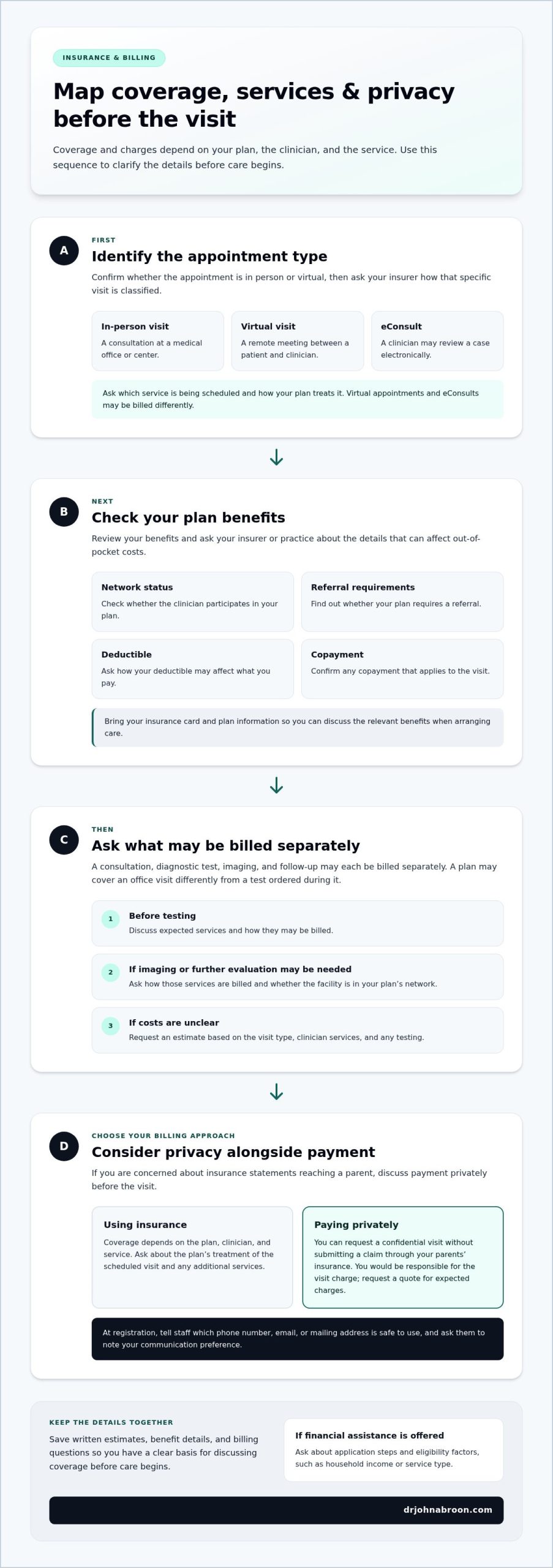
Coverage depends on your insurance plan, the clinician, and the service. Before booking, determine whether the visit is in person or virtual, then ask your insurer how it is classified. A consultation, diagnostic test, imaging, and follow-up may be billed separately. For example, a plan may cover an office visit differently from a test ordered during it.
Review your plan benefits and ask about network status, referral requirements, deductibles, and copayments, since these affect out-of-pocket costs. Bring your insurance card and plan information, and discuss expected services before testing. If symptoms may require imaging or further evaluation, ask how those services are billed and whether the facility is in your plan’s network.
Yes. You can request a confidential visit without submitting a claim through your parents’ insurance by paying privately. You would be responsible for the visit charge. The cost depends on the type of visit, clinician services, and any testing; request a quote to understand the expected charges.
Clinics protect privacy through how they handle records, conversations, and billing. At registration, tell staff which phone number, email, or mailing address is safe to use, and ask them to note your communication preference. If you’re concerned about insurance statements reaching a parent, avoid using that plan and discuss private payment before the visit.
Virtual appointments and eConsults may be billed differently. A virtual visit is a remote meeting between a patient and clinician; an eConsult may involve a clinician reviewing a case electronically. Ask which service is being scheduled and how your plan treats it. Billing and coverage depend on the service and your benefits.
Financial assistance may help eligible patients manage medical expenses when offered by a clinic or program. Ask about application steps and eligibility factors, such as household income or service type. Keep written estimates, benefit details, and billing questions together so you have a clear basis for discussing coverage before care begins.
Service locations and physician availability
In New York City, appointment options depend on the practice, visit type, and physician’s schedule. In-person consultations take place at a medical office or center; telehealth lets a clinician meet patients remotely when appropriate. Ask which format suits your concern, particularly if an examination or testing may be needed.
What types of confidential medical consultations are available in New York City? Patients may seek private appointments for primary care concerns, preventive visits, immigration medical exams, pre-operative clearances, or diagnostic testing. The right visit depends on the health need and whether an in-person assessment would be useful.
For an in-person visit, confirm the office address and appointment details before traveling. New York City is large, and a clinician’s location may vary by practice or service. Plan your route using the address in your appointment confirmation, and bring relevant medical history, medication details, and records related to your concern.
New York State confidentiality rules for minors depend on the type of care and applicable law. Young patients can ask the clinician how privacy works for the specific service, including what information may be shared with a parent or guardian.
Medical confidentiality has limits. A clinician may need to disclose information in defined safety or mandatory-reporting situations, so discuss privacy questions directly during the visit.
Are confidential telehealth consultations available in New York City? Yes, telehealth can provide remote consultations when the concern and clinical needs suit that format. A physical examination, testing, or imaging may require an in-person appointment or another care arrangement.
For urgent symptoms, use emergency services rather than waiting for a routine appointment. Chest pain or stroke-like symptoms call for 911 or an emergency room immediately. For planned care, review in-person medical care options and prepare your history so the physician can focus on your needs.
Atrium Medical is located at 160 East 56th Street, 12th Floor, New York, New York 10022. Patients arranging a visit can use this address to plan travel and should verify that their appointment is scheduled for this location. Availability may vary by physician and service, so confirm the visit format and any arrival instructions directly with the practice before setting out.
Prescriptions, labs, imaging, and referrals
A consultation may lead to a prescription, laboratory test, imaging order, or specialist referral. The doctor considers your symptoms, medical history, current medicines, and examination findings. Bring a medication list and the name of your usual pharmacy so the discussion can cover your existing treatment and practical next steps.
After a prescription is issued, confirm the pharmacy details and how to raise questions about the medication. Tell the prescriber about allergies, side effects, and other medicines you take. Bring any certified copy of a relevant record you already have. These details help the care team understand the context for a treatment decision.
Lab work can help evaluate a concern or monitor a condition. Ask what each test is intended to assess, where the sample should be collected, and how results will be shared. Keep the test order and any preparation instructions together. If a result needs further discussion, clarify how to arrange follow-up with the ordering provider.
Imaging may be considered when an examination or lab result cannot provide the information a clinician needs. The type of imaging depends on the clinical question and the body area being assessed. Before scheduling, find out where to complete the order and how the interpreting provider will send results to your doctor.
A referral connects you with a specialist for an evaluation beyond the original visit. Ask what concern the referral addresses and which records the specialist needs. Share relevant test results, prior imaging reports, and medication information. If your insurance plan requires a referral for coverage, include that step in your appointment planning.
A practical sequence helps coordinate care: discuss the concern, confirm each order, complete the test, then review results with the ordering clinician. If both a blood test and specialist visit are recommended, ask which should happen first. Keeping copies of instructions and noting the pharmacy, testing location, and follow-up plan in one place can make the next conversation more focused.
How to start a consultation
To arrange a confidential medical consultation in NYC, start by describing the condition or concern you want addressed. Note when symptoms began, what changes them, and any recent care. Then choose an appointment format suited to the clinical need. A focused description helps the practice direct your request to the appropriate visit type.
What should I bring to a confidential medical consultation in NYC? Bring photo identification, insurance details if you plan to use coverage, a current medication list, and relevant medical records. For example, bring recent test results or a prior imaging report related to your concern.
- Write down your main symptoms and questions.
- List medicines, supplements, and known allergies.
- Gather relevant records, test results, and referral details.
- Keep the appointment address or virtual care instructions accessible.
When requesting a confidential medical consultation in NYC, explain whether you need in-person or virtual care and briefly describe your concern. Mention any time-sensitive clinical issue so staff can direct you appropriately. A routine follow-up differs from a new symptom that is getting worse.
Urgent care can address problems needing timely evaluation outside routine planning. Chest pain or stroke-like symptoms require immediate action: call 911 or go to an emergency room. Don’t wait for a scheduled consultation when emergency symptoms occur.
Before the visit, note how you want the practice to reach you and have your questions ready. During the consultation, share relevant history and ask about next steps. To begin arranging a visit, start your consultation request.
John Abroon M.D: Annual Physical Exams
John Abroon M.D. offers annual physical exams for patients seeking preventive care and a physician-led review of their health. An exam is an opportunity to discuss current concerns and relevant medical history, and to consider whether diagnostic testing may be appropriate.
Turn to the practice for an annual exam, an immigration medical exam, or a pre-operative medical clearance. These visits address different needs, from a routine health review to an evaluation for an immigration process or planned surgery.
Bring your medication list, relevant records, and questions so the appointment can focus on your priorities. Contact John Abroon M.D. or visit drjohnabroon.com to schedule a confidential medical consultation nyc.
Take the Next Step With Confidence
A confidential medical consultation in NYC can be a useful starting point for a specific health priority. Before scheduling, decide what you want addressed: preventive care, an immigration-related medical evaluation, or preparation for a planned procedure. A clear goal can make the first conversation more purposeful.
John Abroon M.D. offers annual physical exams, immigration medical exams, and pre-operative medical clearances. These services address different needs, from a routine health review to an examination connected with an immigration process or surgery. Bring your main questions and explain what would make the visit useful to you.
Taking the next step can be simple. Contact John Abroon M.D to begin arranging care. A direct conversation about your needs can help you move forward with greater clarity and focus.
Frequently Asked Questions
How soon can a doctor visit, and which NYC locations are covered?
Appointment timing depends on the practice schedule, visit format, and reason for care. Share whether you need an in-person visit or virtual care, and explain if your concern is time-sensitive. John Abroon M.D’s practice serves New York City patients on the Upper East Side. For chest pain or stroke-like symptoms, call 911 or go to an emergency room.
Where can I arrange a private medical visit in New York City?
You can arrange a confidential medical consultation in NYC through a local practice, including John Abroon M.D. on the Upper East Side. Before booking, consider whether your concern calls for an in-person examination or can be discussed remotely. When contacting the practice, describe the care you’re seeking and how you prefer to receive appointment information.
How much does a private medical consultation cost in NYC without insurance?
The cost of a confidential medical consultation in NYC depends on the case; request a quote for pricing. Factors include the type of consultation, the clinician’s evaluation, and whether diagnostic or laboratory testing is involved. For private-pay care, ask for the expected charges for the planned visit and anticipated testing so you understand the services before proceeding.