


Last Tuesday, a patient in Manhattan realized their upcoming procedure was only 72 hours away, yet they still hadn’t secured their cardiac clearance for surgery nyc. You likely feel that same ticking clock, perhaps worrying that a single test result might “fail” your clearance or that the busy city medical system will postpone your recovery. It’s natural to feel anxious when an extra doctor’s visit stands between you and your health goals.
This guide ensures you can navigate your surgical journey with absolute confidence. At the practice of Dr. John Abroon, we believe every patient deserves a foundation of safety and clinical excellence. You’ll gain the peace of mind that comes from knowing your heart is prepared for the demands of anesthesia through a professional, tailored assessment that prioritizes your total well-being.
We’ll outline the essential 2026 requirements, from diagnostic EKG protocols to personalized risk evaluations. This clear roadmap helps you complete your medical prerequisites efficiently so you can move forward with your procedure at our convenient Upper East Side facility.
Key Takeaways
- Understand why Manhattan surgeons require a formal evaluation to ensure your heart can safely manage the physiological stress of your upcoming procedure.
- Learn about the comprehensive diagnostic tools used during an assessment, from cardiovascular history reviews to physical exams focused on heart stability.
- Discover the essential “30-day rule” and how to secure a fast-track cardiac clearance for surgery nyc for urgent medical needs.
- Find out how clinical tools like the Revised Cardiac Risk Index (RCRI) quantify your surgical safety to provide professional peace of mind.
- Explore how a personalized, concierge-style approach from a top-rated internist ensures your clearance is both medically rigorous and patient-centered.
What is Cardiac Clearance for Surgery in NYC?
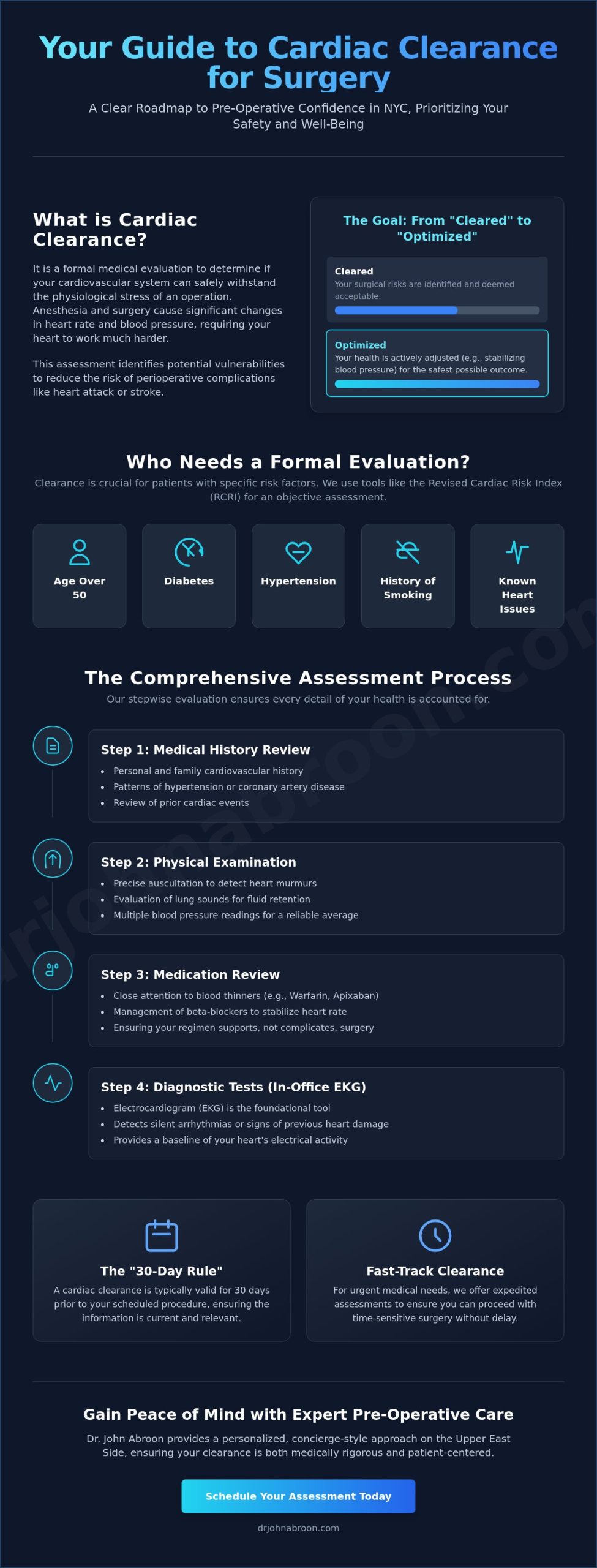
Cardiac clearance is a formal medical evaluation that determines if your cardiovascular system can safely withstand the physiological stress of an operation. During surgery, your body undergoes significant changes in heart rate, blood pressure, and fluid balance. These shifts require your heart to work harder than it does during daily activities. For patients seeking cardiac clearance for surgery nyc, this process involves a meticulous review of your medical history, a physical examination, and specific diagnostic tests to identify potential vulnerabilities.
Top-rated surgeons across New York City require this documentation from a board-certified internist or cardiologist to ensure patient safety. While the term “cleared” is common, our practice focuses on “optimization.” Being cleared simply means your risks are identified and acceptable; being optimized means we’ve actively adjusted your health status, such as stabilizing blood pressure or managing medications, to reach the safest possible baseline before you enter the operating room. This proactive approach significantly reduces the risk of perioperative complications, including heart attack or stroke, which can occur when the heart is under the strain of anesthesia and recovery.
This optimization often includes managing weight-related risk factors to improve cardiovascular resilience. Specialized services like SwiftDoctor provide access to clinically proven weight-loss treatments that can help patients achieve a healthier medical baseline prior to surgery.
The Role of Your Internist in Pre-Op Safety
An internist provides a broad, comprehensive view of your health that goes beyond a single organ. Dr. Abroon acts as the central coordinator between your surgeon, the anesthesiologist, and your primary care team to ensure no detail is overlooked. We analyze how your heart interacts with your respiratory and metabolic systems to prevent complications during the 24 to 48 hours following your procedure. Medical clearance is a multi-system health audit that ensures your body’s vital systems are prepared for the rigors of anesthesia and recovery. This level of coordination provides a concierge-like experience where your total well-being remains the priority.
Who Needs Cardiac Clearance in New York?
Not every patient requires a deep cardiac dive, but specific criteria trigger the need for a formal evaluation. Age is a primary factor; patients over 50 often require clearance even if they feel healthy. We also look for known risk factors like diabetes, hypertension, or a history of smoking. To provide an objective assessment, we utilize the Revised Cardiac Risk Index, which evaluates six clinical predictors to estimate the likelihood of cardiac events. This data-driven method is essential for high-risk surgeries, such as major orthopedic or vascular procedures, where the physical toll is greatest.
Many patients possess “silent” heart issues that only surface under the unique stress of general anesthesia. By identifying these conditions early, we can create a tailored plan that protects you throughout your surgical journey. Our goal is to provide a steady, reliable assessment that transforms a complex medical requirement into a clear path toward a successful recovery.
The Components of a Comprehensive Cardiac Risk Assessment
Securing your cardiac clearance for surgery nyc involves more than a simple signature; it is a meticulous process designed to identify potential vulnerabilities before you enter the operating room. Dr. John Abroon utilizes a stepwise patient evaluation to ensure every physiological variable is accounted for. We begin with an exhaustive review of your personal and family cardiovascular history, looking for patterns of hypertension, coronary artery disease, or sudden cardiac events. This history informs our physical examination, where we use precise auscultation to detect heart murmurs and evaluate lung sounds for signs of fluid retention. We also monitor blood pressure across multiple readings to establish a reliable average.
A critical part of this assessment is the medication review. We pay close attention to blood thinners like warfarin or apixaban, which may need to be paused 5 days before certain procedures to minimize bleeding risks. Beta-blockers require similar scrutiny; we often maintain these to stabilize the heart rate during the physiological stress of surgery. This proactive approach ensures that your current regimen supports, rather than complicates, your recovery.
Essential Diagnostic Tests Performed In-Office
The Electrocardiogram (EKG) remains the foundational tool for detecting silent arrhythmias or evidence of previous heart damage that you might not even feel. For patients undergoing major abdominal or thoracic procedures, we perform Pulmonary Function Tests (PFTs) to ensure your lung capacity can safely handle general anesthesia. If your surgery is classified as high-risk or if you exhibit low functional capacity, we may escalate to advanced testing like a stress test or an echocardiogram to visualize heart chamber function in real-time. These diagnostics provide a clear roadmap for the anesthesiology team.
Laboratory Work and Biomarkers
Our in-office lab work includes a Complete Blood Count (CBC) and Comprehensive Metabolic Panels to evaluate kidney and liver function. We focus intensely on electrolyte balance, particularly potassium and magnesium levels, because even a minor imbalance can trigger an irregular heart rhythm under surgical stress. These baseline labs are vital for post-op comparison, allowing your surgical team to identify and treat deviations from your normal physiology within minutes of a change. If you’re preparing for an upcoming procedure, you can schedule a consultation with our top-rated internist to begin your personalized assessment.
Navigating Surgical Risk: How We Evaluate Your Heart’s Readiness
When you visit our Upper East Side office for cardiac clearance for surgery nyc, we don’t simply look for a green light. We conduct a detailed assessment to quantify your safety. Dr. Abroon utilizes the Revised Cardiac Risk Index (RCRI), a validated system that evaluates six specific clinical markers, including history of ischemic heart disease, heart failure, and renal insufficiency. This data allows us to move beyond guesswork and provide a precise risk percentage. If you manage high blood pressure, our focus is on stability. We want to see consistent readings below 140/90 mmHg in the weeks leading up to your procedure to ensure your blood vessels can handle the fluctuations that occur during surgery.
Functional capacity is another critical benchmark in our evaluation. We often ask if you can climb two flights of stairs without chest pain or severe shortness of breath. This activity represents 4 Metabolic Equivalents (METs). Patients who meet this 4-MET threshold statistically have lower rates of post-operative cardiac events. For those with complex histories like AFib or coronary artery disease, we align our protocols with the 2024 AHA/ACC Guideline. This evidence-based approach helps us decide if your current medication regimen needs adjustment or if further diagnostic imaging is required before you enter the operating room.
Anesthesia and Your Heart
Anesthesia acts as a unique stress test for your cardiovascular system. General anesthesia can cause significant shifts in heart rate and systemic vascular resistance, while local or regional blocks offer a lighter workload for the heart. We view the surgical process as a period of controlled trauma that triggers a sympathetic nervous system response. By communicating directly with your anesthesiologist, we share your specific cardiac profile. This collaboration ensures they can tailor their choice of agents to protect your heart muscle from start to finish.
Common Misconceptions About ‘Failing’ Clearance
Many patients worry they will “fail” their clearance. It’s helpful to remember that cardiac clearance for surgery nyc isn’t a pass or fail exam; it’s a comprehensive risk management strategy. If we identify an issue, such as a new arrhythmia or poorly controlled glucose levels, we don’t just stop the process. We pivot to a stabilization phase. This might mean postponing a non-elective surgery for 14 to 30 days to optimize your health. Our priority is ensuring you return home to your family safely, and sometimes that requires a brief pause to maximize your surgical outcome.
Timeline and Logistics: Getting Your Clearance in Manhattan
Timing is everything when you’re scheduled for a procedure at a major Manhattan institution. Most hospitals, including Mount Sinai, Lenox Hill, and NYU Langone, strictly enforce the 30-day rule. This means your cardiac clearance for surgery nyc must be completed within exactly 30 days of your operation date. If you’re cleared too early, the hospital may reject the paperwork; if you wait too long, you risk a last-minute postponement. For urgent cases on the Upper East Side, Dr. Abroon offers fast-track evaluations, often providing comprehensive results within 24 to 48 hours to accommodate sudden surgical needs.
When you arrive for your appointment, having your documentation ready prevents delays. You’ll need to provide specific items to ensure the evaluation is thorough and meets hospital standards:
- The surgeon’s official notes and the specific name of the planned procedure.
- A detailed list of all current medications, including dosages and frequencies.
- Records or imaging from any cardiac tests performed within the last 12 months.
- Contact information for your surgical coordinator to facilitate direct communication.
Coordinating with Your Surgical Team
Efficiency is vital for a stress-free experience. Dr. Abroon’s office acts as a central hub, transmitting detailed reports directly to your surgeon’s coordinator. The most critical document we produce is the History and Physical (H&P) form. This standardized report outlines your current health status and ensures the hospital admissions team has every data point they need before you walk through their doors. For a deeper look at this process, see The Definitive Guide to Pre-Operative Medical Clearance in NYC (2026).
Preparing for Your NYC Appointment
Navigating the Upper East Side requires precise planning. We recommend arriving at least 15 minutes before your scheduled time to settle in and complete any remaining paperwork. To ensure your EKG provides the most accurate data, please avoid caffeine for at least 4 hours before your visit. Stimulants can cause minor heart rate fluctuations that might complicate your results or require repeat testing. We respect your time and offer a concierge-level experience that minimizes wait times, letting busy New Yorkers return to their day with confidence. This personalized approach transforms a standard medical requirement into a supportive, high-end healthcare experience.
Don’t leave your surgical schedule to chance. Contact Dr. Abroon’s office now to book your priority cardiac clearance appointment.
Expert Pre-Operative Care with Dr. John Abroon on the Upper East Side
Dr. John Abroon brings more than 25 years of experience as a board-certified internist to his Manhattan practice. He understands that securing cardiac clearance for surgery nyc is a vital step for your safety and peace of mind. Instead of treating the appointment as a simple administrative hurdle, Dr. Abroon focuses on the individual behind the surgical requirement. He evaluates your unique medical history to ensure your heart is prepared for the stresses of anesthesia and recovery. This personalized attention distinguishes his practice from high-volume clinics where patients often feel like just another number.
Patients have access to state-of-the-art diagnostic tools right in the Upper East Side office. This eliminates the need to travel to multiple laboratories across New York City for baseline testing. You can complete necessary evaluations, such as EKGs and advanced blood work, during a single visit. Dr. Abroon integrates these findings into your broader health goals, ensuring that your pre-operative preparation aligns with your long-term wellness. By identifying potential risks early, he helps optimize your health before you ever enter the operating room.
Why Choose an Upper East Side Internist?
Choosing a physician on the Upper East Side places you in the heart of New York’s medical corridor. Dr. Abroon’s office is located near world-class hospitals and surgical centers, facilitating fast communication with your surgical team. Beyond the immediate need for clearance, he serves as a Primary Care Physician NYC: Comprehensive Internal Medicine on the Upper East Side. This long-term relationship is invaluable during your post-operative recovery, as a trusted expert who knows your history can better manage your transition back to daily life.
Schedule Your Cardiac Clearance Today
Timing is a critical factor when you’re preparing for a procedure in 2026. Dr. Abroon’s staff prioritizes time-sensitive requests to ensure your surgery remains on schedule. Booking an appointment is straightforward, and the office works efficiently to provide your surgeon with the necessary documentation. You’ll leave your visit with a sense of confidence, knowing a top-rated professional has thoroughly vetted your cardiovascular health.
After your visit with Dr. Abroon, you will receive a complete pre-operative package including:
- A formal cardiac clearance letter for your surgical team.
- A detailed summary of your diagnostic test results.
- A personalized medication management plan for the days surrounding your surgery.
- Specific recommendations for post-operative care and monitoring.
Don’t leave your surgical safety to chance. Book your pre-operative cardiac clearance with Dr. Abroon today.
Take the Next Step Toward a Safe and Successful Procedure
Preparing for surgery involves more than just a date on the calendar; it’s about ensuring your heart is ready for the physiological demands of anesthesia and recovery. A thorough pre-operative assessment identifies potential risks early, allowing for a seamless transition into the operating room. By integrating in-office EKG testing and comprehensive diagnostic reviews, you can focus on your recovery instead of worrying about last-minute medical delays.
Dr. John Abroon is a Board-Certified Internist with 25 years of NYC experience navigating the complex medical landscape of Manhattan. His practice is currently top-rated on Healthgrades and Zocdoc, providing patients with the clinical authority they expect from an elite Upper East Side facility. When you schedule your cardiac clearance for surgery nyc at our office, you’re choosing a provider who prioritizes both diagnostic precision and your personal peace of mind. Our team streamlines the logistics so your surgical team receives every necessary document on time.
Schedule Your Cardiac Clearance with Dr. Abroon to ensure you’re fully prepared for your upcoming procedure. We’re here to support your health every step of the way.
Frequently Asked Questions
How long is a cardiac clearance valid for surgery in NYC?
Most surgical facilities in New York require your cardiac clearance to be completed within 30 days of your procedure. While some low-risk surgeries allow for a 60 day or 90 day window, the 30 day standard ensures your health status is current. Dr. Abroon provides precise cardiac clearance for surgery nyc to meet these strict hospital timelines and ensure your safety during the operation.
What tests are included in a standard cardiac clearance?
A standard evaluation includes a 12-lead electrocardiogram (EKG), a comprehensive physical exam, and a review of your medical history. We also perform blood tests like a complete blood count (CBC) and basic metabolic panel (BMP). If you have underlying conditions, we might add a stress test or an echocardiogram to get a 100 percent clear picture of your heart’s health before the procedure.
Can my primary care doctor give me cardiac clearance?
Yes, a top-rated internist like Dr. John Abroon can provide your clearance. Many surgeons—including those at specialized family dental practices like smileydentalbeverly.com—specifically request an internist’s evaluation because we look at your total health profile. We bridge the gap between your surgical team and your daily wellness. This ensures every aspect of your recovery is considered before you enter the operating room for your scheduled surgery.
What happens if my EKG is abnormal before surgery?
An abnormal EKG doesn’t automatically cancel your procedure, but it does require focused follow-up. Dr. Abroon will typically order secondary diagnostics like a cardiac ultrasound or a stress test to investigate the irregularity. Our goal is to mitigate risks, so we won’t provide cardiac clearance for surgery nyc until we’ve confirmed the abnormality won’t cause complications during the administration of anesthesia.
Do I need to stop taking my medications before my clearance appointment?
You should continue taking your routine medications unless Dr. Abroon gives you specific instructions to stop. It’s vital to bring a list of your current prescriptions to your appointment. We pay close attention to blood thinners or diabetic medications. These often require a 5 day or 7 day pause before your scheduled surgery date to prevent bleeding issues or blood sugar fluctuations.
How long does a cardiac clearance appointment take?
You can expect your comprehensive appointment to last between 45 and 60 minutes. This timeframe allows Dr. Abroon to conduct a thorough physical examination and perform necessary diagnostic tests like an EKG. We value your time in the busy New York environment. We’ve streamlined our process to ensure you receive elite care without unnecessary delays, allowing you to stay on schedule for your procedure.
Will insurance cover my pre-operative cardiac evaluation?
Most major insurance providers, including Aetna, Blue Cross Blue Shield, and Medicare, cover pre-operative evaluations when they’re deemed medically necessary. Since these tests are required for a safe surgical outcome, they’re standard covered benefits. Our office staff can verify your specific plan details to ensure your peace of mind regarding your coverage and any applicable co-pays or deductibles before your visit.
What is the difference between medical clearance and cardiac clearance?
Medical clearance is a broad assessment of your overall health, while cardiac clearance focuses exclusively on your heart’s ability to handle the stress of anesthesia. A medical clearance covers everything from your lungs to your kidneys. Cardiac clearance is a specialized deep dive into your cardiovascular system. This prevents heart attacks or rhythm issues during your 2 hour or 4 hour operation.