


A cholesterol result is more than one number. For cholesterol screening on the Upper East Side, a useful starting point is that a desirable LDL level for adults is below 100 mg/dL, while triglycerides are considered normal below 150 mg/dL; the full panel also includes HDL and total cholesterol. High cholesterol usually has no symptoms, so a blood test is the way to identify it.
It’s understandable to look at a lab report and wonder which figures matter most. Their meaning depends on how the numbers fit together and on your overall health, not on one result in isolation.
This guide explains what total cholesterol, LDL, HDL, and triglycerides measure, how screening intervals vary with age and risk factors, and when a result may be considered high. It also covers fasting: according to the National Library of Medicine, people getting a lipid panel usually need to fast for 9 to 12 hours before the test. With a clearer picture of the test and its results, you can have a more informed conversation about your heart health.
Key Takeaways
- The American Heart Association says many adults get their cholesterol checked every 4 to 6 years; age and health risks can affect how often screening is appropriate.
- The American Heart Association describes about 150 mg/dL as optimal total blood cholesterol, but the full lipid panel provides a more complete picture.
- Diabetes, high blood pressure, cardiovascular disease, and cholesterol-lowering medication can mean more frequent monitoring is needed.
- Compare your results as a pattern, including LDL, HDL, and triglycerides, rather than judging heart risk from total cholesterol alone.
- A lipoprotein(a) blood test can be done once during adulthood to help assess heart risk.
Recommended cholesterol screening intervals
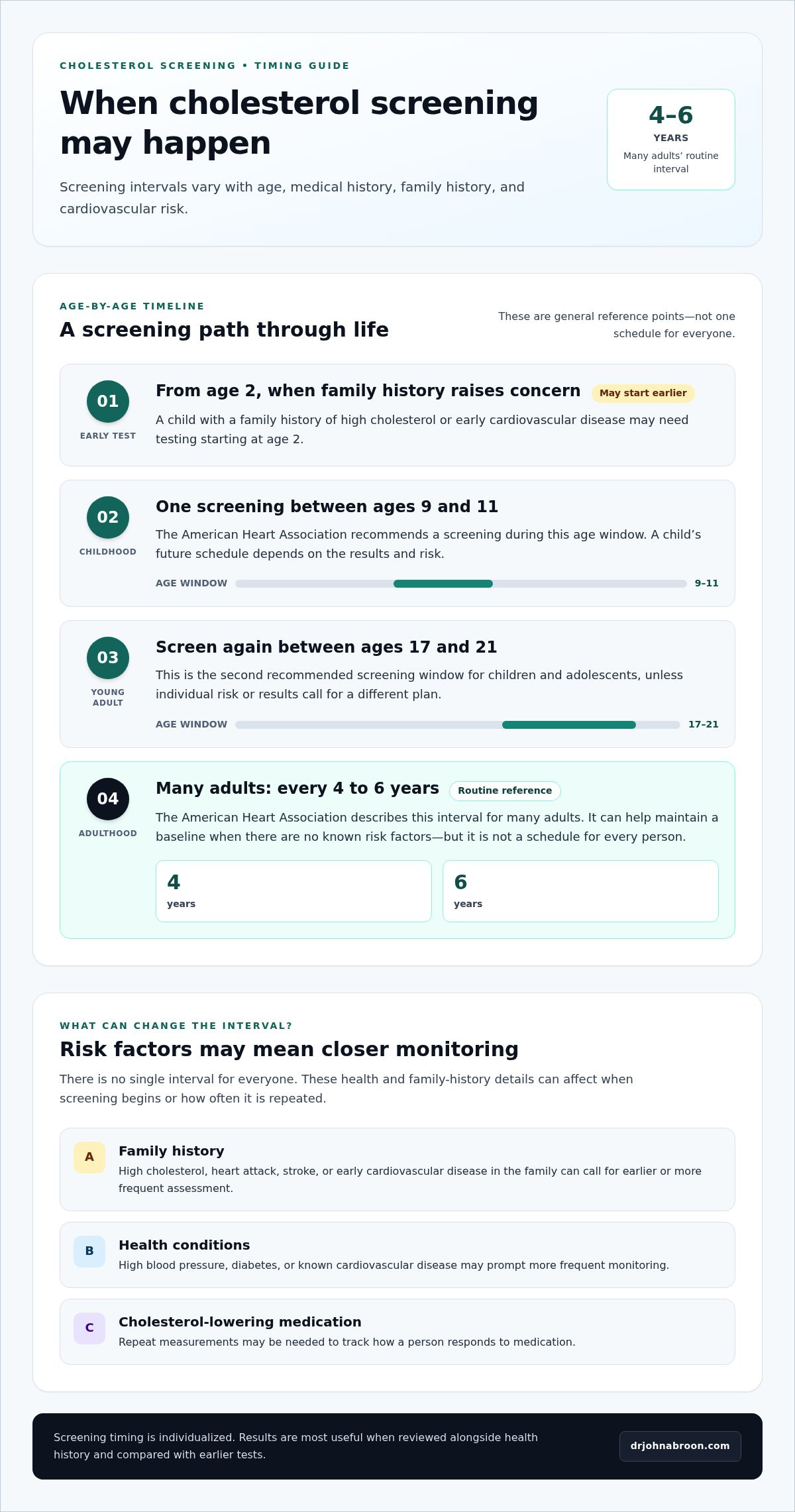
Screening intervals depend on age, medical history, and cardiovascular risk. The American Heart Association says many adults get their cholesterol checked every 4 to 6 years. That general interval helps people without known risk factors maintain a baseline, but it isn’t a schedule for every person. A family history of high cholesterol, heart attack, or stroke can call for earlier or more frequent assessment.
For children, screening can begin before adulthood. The American Heart Association recommends screening once between ages 9 and 11 years, then again between ages 17 and 21 years. A child with a family history of high cholesterol or early cardiovascular disease may need testing starting at age 2. After an initial test, a child’s future screening schedule depends on results and risk.
For adults, testing may be more frequent when health conditions raise cardiovascular risk. High blood pressure, diabetes, known cardiovascular disease, or high cholesterol treated with medication can all affect the schedule. People taking cholesterol-lowering medicine may also need repeat measurements to track their response. The test measures blood lipids, including low-density lipoprotein (LDL) cholesterol, which a clinician interprets alongside other health details.
- Lower risk: Use routine screening to establish and update a cholesterol baseline.
- Higher risk: Conditions such as diabetes or cardiovascular disease can prompt closer monitoring.
- Family history: Early heart disease or inherited high cholesterol can affect when screening begins.
Interpreting results means looking at the whole panel, not one flagged value. An LDL result, for example, is considered alongside HDL, triglycerides, age, blood pressure, and family history. One measurement can identify a concern, but the pattern and a person’s overall risk help explain what it means. Results are most useful when compared with earlier tests and reviewed in light of health history.
How much does screening cost without insurance? The out-of-pocket cost depends on the test and whether a separate visit fee applies. The cost varies by case and is provided after a quote request.
Does health insurance cover screening in New York? Coverage depends on your plan, the reason for testing, and how the service is billed. Under plan terms, preventive screening and testing for a diagnosed condition may be treated differently.
How do I schedule screening at an Upper East Side hospital or clinic? Contact the clinic’s scheduling team to request a cholesterol or lipid panel. Have your insurance details ready, and ask about preparation and how you’ll receive the results.
Are same-day results available? Turnaround depends on whether the sample is processed onsite or sent to another laboratory, along with that laboratory’s processing time. The processing route determines whether results can be returned that day.
Understanding total cholesterol, HDL-C, LDL-C, and triglycerides
A lipid panel measures several blood fats, not just total cholesterol. Looking at the values together helps clarify how each relates to cardiovascular risk.
Total Cholesterol
Total cholesterol is a combined measure that includes HDL-C, LDL-C, and part of the triglyceride level. The American Heart Association describes about 150 mg/dL as optimal total blood cholesterol. That figure offers a broad reference, but it doesn’t explain which component is driving the total. Two people with the same total can have different LDL and HDL patterns.
For adults, total cholesterol from 200 to 239 mg/dL is classified as borderline high, while 240 mg/dL or higher is classified as high. These ranges help identify results for closer review, not provide a complete estimate of heart risk. A result near either threshold gains meaning when compared with LDL-C, HDL-C, triglycerides, and personal risk factors.
LDL, HDL, and Triglycerides
LDL-C, or low-density lipoprotein cholesterol, carries cholesterol that can contribute to plaque buildup in arteries. For adults, a desirable LDL-C level is less than 100 mg/dL. HDL-C helps remove LDL cholesterol from the blood, so the two values describe different roles. An adult HDL-C level below 40 mg/dL in men or 50 mg/dL in women is considered low.
Triglycerides are fats in the blood, rather than cholesterol, and a normal level is below 150 mg/dL. High triglycerides combined with low HDL-C or high LDL-C can increase the risk of heart attack and stroke. A lipid panel measures all four values, giving a clinician more context than a total cholesterol figure alone.
Consider a panel with LDL-C at 130 mg/dL and triglycerides at 145 mg/dL. The triglyceride value is below the stated normal threshold, but the LDL-C falls in the 130 to 159 mg/dL borderline-high range. That contrast shows why each measurement deserves separate attention. A single “normal” result doesn’t make every other value normal.
Non-HDL cholesterol offers another way to interpret the panel. It represents total cholesterol minus HDL-C; a desirable adult non-HDL level is below 130 mg/dL. Comparing non-HDL with LDL-C can help describe cholesterol carried by particles other than HDL. Your clinician can interpret these measurements alongside health history and cardiovascular risk.
Results are most useful as a pattern: total cholesterol provides an overview, while LDL-C, HDL-C, and triglycerides show what contributes to it. The same total cholesterol level can reflect different LDL-C and HDL-C levels, prompting different discussions. Review each value alongside the laboratory’s reference ranges.
Cholesterol screening and how to know if cholesterol is high
High cholesterol usually causes no symptoms, so testing is how it is detected. A blood test measures cholesterol and related fats, including lipoproteins that carry cholesterol through the bloodstream. You may feel well even while LDL cholesterol contributes to plaque buildup in your arteries. Screening can identify this risk before symptoms appear.
Results use ranges to flag patterns that need attention. For adults, total cholesterol from 200 to 239 mg/dL is classified as borderline high, while 240 mg/dL or higher is classified as high. LDL results offer another clue: higher levels may be classified as elevated or borderline high. These labels describe laboratory categories, not a diagnosis of heart disease.
- LDL from 160 to 189 mg/dL: Classified as high.
- LDL at 190 mg/dL or higher: Classified as very high.
- Non-HDL below 130 mg/dL: A desirable adult level.
- Lipoprotein(a) above 125 nmol/L or 50 mg/dL: Considered high.
Risk assessment goes beyond one threshold. A clinician considers LDL, HDL, triglycerides, blood pressure, diabetes, smoking, and family history together. For example, an LDL-C result over 190 mg/dL plus a family history of early heart attack, heart disease, or stroke may indicate familial hypercholesterolemia. That inherited condition can explain persistently high cholesterol levels and risk across relatives.
A high lipoprotein(a), or Lp(a), level adds information beyond a standard panel. Since Lp(a) levels generally change little, a blood test may be done once during adulthood to help assess heart risk. A result above 125 nmol/L or 50 mg/dL is considered high. The units matter, so compare the result with its stated unit rather than converting it yourself.
Screening matters because high LDL can contribute to atherosclerosis, heart attack, and stroke without causing warning symptoms. One in six adults in the United States has high cholesterol. Lifestyle choices can influence cholesterol, but family history and medical conditions matter, too. Test results provide a starting point for discussing the pattern, risk factors, and next steps with a healthcare professional. A flagged value alone doesn’t tell the whole story: compare each result with the others and your health history.
Fasting before a cholesterol panel
Fasting is preparation for a lipid panel, a blood test that measures cholesterol and triglycerides. People getting a lipid panel usually need to fast for 9 to 12 hours before the test, according to the National Library of Medicine. Follow the preparation instructions provided for your appointment so the sample is collected under the requested conditions.
The fasting period is counted backward from the blood draw. If your appointment is scheduled for the morning, note when you last ate the night before and compare that time with the required interval. For example, a 9 to 12 hour fast means the time between your last food and the test must fall within that range. The appointment time alone doesn’t show whether you fasted long enough.
Preparation matters because a lipid panel measures triglycerides as well as cholesterol. Tell the clinical team when you last ate, especially if you ate sooner than instructed. Don’t conceal a meal or snack before the test. This context helps the person interpreting your results understand the conditions under which the sample was collected.
Fasting instructions can also affect people taking medicines or managing a health condition. Don’t change or skip a prescribed medicine just to prepare for a cholesterol test unless your care instructions say to do so. Follow any written directions about medicines. If your instructions don’t address them, contact the team arranging the test before changing your routine.
- Before the appointment: Read the lipid panel instructions and note the requested fasting interval.
- Track the timing: Remember when you last ate and when the blood draw is scheduled.
- At the visit: Tell staff about food or drink consumed during the fasting period.
- After collection: Resume your usual routine according to the instructions you received.
A fast that ends too early or continues beyond the requested interval changes the preparation conditions. If this happens, tell the person collecting your sample exactly when you last ate. For example, saying you ate shortly before the appointment gives clearer context than simply saying you “didn’t fast.” The information can be considered when your results are reviewed.
For a cholesterol test on the Upper East Side, preparation helps ensure the lipid panel is interpreted in context. It doesn’t indicate whether your cholesterol is too high. Results still need to be considered alongside LDL, HDL, triglycerides, and cardiovascular risk factors. Discuss which values were measured and how the sample conditions may affect their interpretation.
Fasting before a cholesterol test
Fasting instructions can shape how a cholesterol test is collected and interpreted. A lipid panel measures LDL, HDL, total cholesterol, and triglycerides, a type of fat in the blood. The American Heart Association explains that triglycerides are included in cholesterol testing. Follow the instructions for your specific appointment, as preparation can affect the conditions under which the sample is collected.
Keep preparation practical. Read the test instructions, note when you last ate, and be ready to tell the collection staff. If you ate during the requested fast, share what and when. That gives the clinical team useful context for interpreting the sample instead of leaving them to assume you followed the instructions exactly.
Fasting needs particular planning when diabetes affects your meals or medication routine. Don’t skip prescribed medicine or change your usual treatment on your own to prepare for a blood test. Follow the instructions provided for your test and raise any conflict with the care team before your appointment. This helps avoid disrupting your diabetes care plan for test preparation.
For example, if you usually eat breakfast before taking morning medicine, consider how a fasting appointment fits your routine. The relevant details include the test instructions, your medication schedule, and your diabetes plan. Explaining these factors clearly helps the team understand the circumstances around your sample and interpret the results.
Fasting does not diagnose cardiovascular disease, a heart attack, or a stroke. It is a preparation condition for a blood test. The measured lipid values still need to be considered alongside your health history and risk factors. High cholesterol can contribute to plaque buildup in arteries, while triglycerides measure a different type of blood fat. The full panel is more informative than any one value alone.
At your appointment, tell the collection staff what you ate or drank during the fasting period and when. Keep a copy of the instructions and note any questions about how the sample will be reviewed. If the test includes triglycerides, the result provides information about this type of fat, rather than cholesterol alone. A clinician interprets these values alongside the rest of the panel and relevant health information.
For guidance on how your preparation and results fit your health picture, discuss your cholesterol test results with a healthcare professional.
John Abroon M.D: Annual Physical Exams
John Abroon M.D. offers Annual Physical Exams, where you can review cholesterol results alongside your broader health history. Bring your lipid panel and any previous results to discuss how LDL, HDL, and triglycerides relate to your health profile. The practice also offers Diagnostic Testing when additional evaluation is appropriate.
Consider an annual exam if you want to discuss a new result, track cholesterol over time, or review how conditions such as diabetes or high blood pressure affect your heart health. A focused conversation can help you understand which measurements matter and what to ask about follow-up.
To discuss your results or arrange an Annual Physical Exam, contact John Abroon M.D. or visit drjohnabroon.com.
Make Your Next Health Conversation Count
A cholesterol result can be the starting point for a broader conversation about your health, not simply a number to file away. If you’re considering cholesterol screening on the Upper East Side, think about what you want to understand next: how the result relates to your health history, which questions matter for follow-up, and how prevention fits into your overall care.
John Abroon M.D. offers Annual Physical Exams, Immigration Medical Exams, and Pre-operative Medical Clearances. An annual exam provides an opportunity to discuss cholesterol results in the context of your health and preventive care. Bring your questions and relevant records to help keep the conversation focused on what matters to you.
For a thoughtful next step, contact John Abroon M.D to discuss your care. A clearer understanding can help you move forward with confidence.
Frequently Asked Questions
What do blood cholesterol numbers mean?
Cholesterol numbers show the amount of different lipids in your blood, and each value has a distinct role. For adults, LDL below 100 mg/dL is desirable, while total cholesterol from 200 to 239 mg/dL is classified as borderline high. Use the lab report’s units and reference ranges when reviewing results. For example, note whether a flagged value is LDL, HDL, or triglycerides before discussing it.
Where can I get a cholesterol screening on the Upper East Side of Manhattan?
John Abroon M.D.’s New York practice offers Diagnostic Testing on the Upper East Side. Ask about a lipid panel when scheduling and have your insurance information ready. Bring any prior results, as comparing tests can help clarify whether a value has changed. You can also discuss how the results relate to your health history during an Annual Physical Exam.
Do I need to fast before a cholesterol blood test?
People getting a lipid panel usually need to fast for 9 to 12 hours before the test, according to the National Library of Medicine. Follow the specific preparation instructions for your appointment, and tell the collection team when you last ate. If you take medication or manage diabetes, don’t change your routine on your own. Share any preparation concerns with the team arranging the test.
What does a cholesterol screening test measure, including LDL, HDL, and triglycerides?
A cholesterol screening commonly measures total cholesterol, LDL, HDL, and triglycerides in a blood sample. LDL and HDL are lipoproteins that carry cholesterol; triglycerides are a different type of fat. Total cholesterol gives an overall value, while the other measurements reveal more about its individual components. Check the report for each result and its unit, then review how the values relate to one another.
How often should adults get screened for high cholesterol?
Many adults get their cholesterol checked every 4 to 6 years, according to the American Heart Association. The interval may be shorter with diabetes, high blood pressure, cardiovascular disease, high cholesterol requiring medication, or a family history of early heart disease. If you’re unsure when your last test was, look through previous lab reports or visit summaries and share the date with your healthcare team.
What should I do if my cholesterol screening results are abnormal?
Review abnormal results with a healthcare professional instead of changing medication or treatment on your own. Bring the full lab report, a list of medicines, and any earlier cholesterol results. Ask which specific value is outside its reference range and how it fits with your health history, blood pressure, diabetes status, and family history. This keeps the discussion focused on more than one flagged number.