


The lowest advertised price for a physical may not be the lowest final bill. If you’re asking how much does a physical cost without insurance nyc, the most useful estimate starts with what the visit includes, not a citywide average. A routine exam and a visit that also involves laboratory work or diagnostic testing may have different costs. Fees can also vary between practices across New York City.
It’s understandable to want a clear total before booking, especially when tests could appear as separate charges. This guide explains which parts of an uninsured physical can affect your bill, what to clarify before agreeing to additional services, and how a primary care office may differ from a walk-in clinic. On Manhattan’s Upper East Side, Dr. John Abroon, a board-certified internist and primary care physician, offers annual physical exams and diagnostic testing, including in-office EKGs, pulmonary function tests, and laboratory services. Knowing what to ask can help you plan for preventive care with greater confidence.
Key Takeaways
- There’s no single answer to “how much does a physical cost without insurance nyc”; the practice’s fee and the services performed determine the total.
- Separate the clinician’s evaluation from possible laboratory work, specimen collection, or diagnostic testing when reviewing an estimate.
- Compare a primary care office and a walk-in clinic by care purpose, continuity, and services, not by assuming one will always cost less.
- Before scheduling or accepting additional services, ask what the quoted fee covers and which tests may be billed separately.
- Dr. John Abroon, a board-certified internist on the Upper East Side, provides annual physical exams and diagnostic testing as part of personalized preventive care.
How much does a physical cost without insurance in NYC?
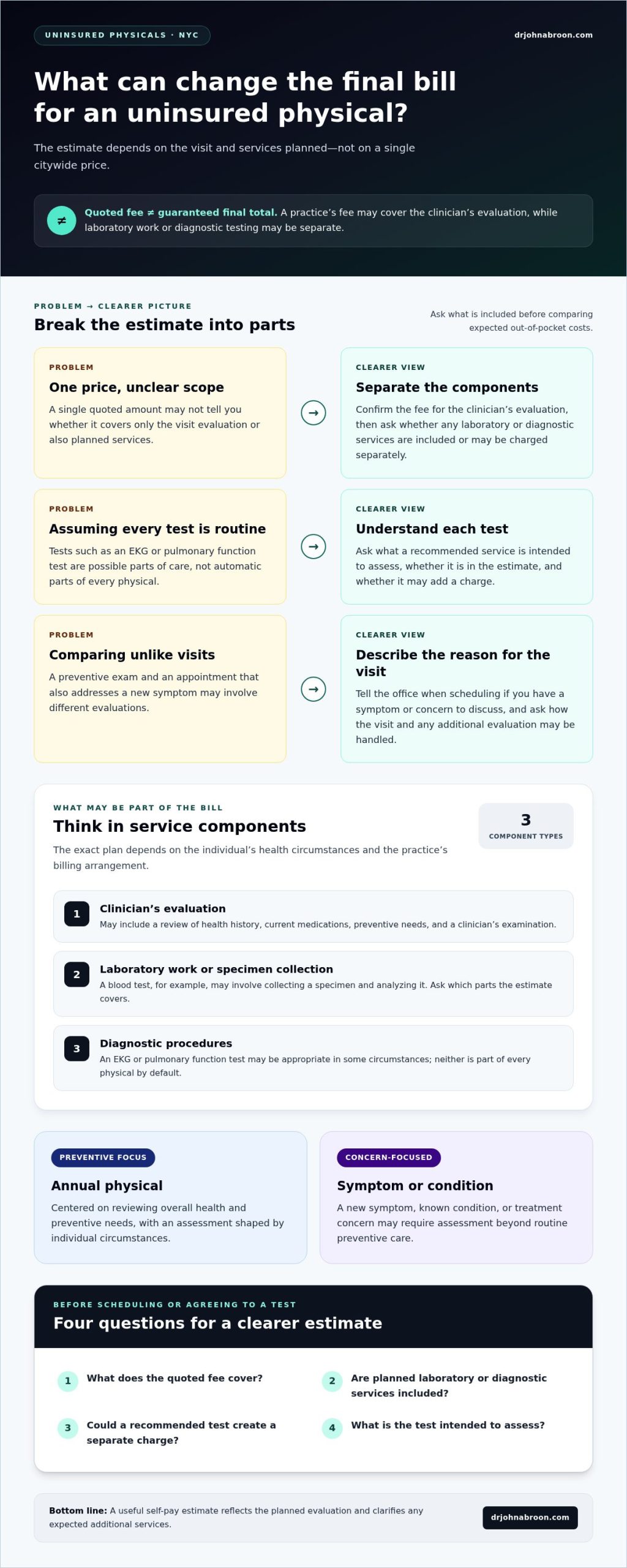
There’s no single reliable price for every uninsured physical in New York City. The amount you pay depends on the practice’s fee and the services provided during your visit. A quoted fee may cover the clinician’s evaluation, while laboratory work or diagnostic testing may be separate. Each office sets its own fees and defines what they include, so a citywide figure can’t tell you the final cost at a specific practice.
An uninsured self-pay estimate is a planning figure based on the expected visit and services, not a universal fee for every NYC physical. Before scheduling, clarify what the estimate covers and whether recommended services could add charges. A useful estimate should distinguish the planned evaluation from any tests or other services expected during the visit.
The purpose of the appointment matters, too. A preventive physical focuses on reviewing overall health and preventive needs. If you also want to discuss a new symptom or medical concern, the clinician may need to evaluate that issue as well. Explain the reason for your visit when requesting an estimate so it reflects the care you’re planning.
What does an annual physical usually assess?
An annual physical can include a review of your health history, current medications, preventive needs, and a clinician’s examination. The appropriate assessment depends on your individual health circumstances, so every patient’s visit may look different. For a general overview of the purpose and scope of an exam, see What is a Physical Examination? You can also explore Your Annual Physical Exam in NYC: A Complete Guide for 2026 for more detail on preventive care.
Why can two physical exam bills differ?
Two visits described as physicals may involve different needs, evaluations, and ordered services. One patient may need a preventive assessment, while another may have a health concern that calls for additional discussion or diagnostic testing. Laboratory services, specimen collection, and tests such as an EKG are possible components, not automatic parts of every exam. The clinician recommends services based on the individual’s situation.
That distinction helps explain why a practice’s base fee and a patient’s final bill aren’t always the same. The evaluation is the clinician’s assessment; testing, when appropriate, serves a separate clinical purpose and may be billed separately. Before agreeing to an additional service, ask what it is intended to assess and whether it changes your expected out-of-pocket total.
Dr. John Abroon is a board-certified internist and primary care physician on Manhattan’s Upper East Side. His practice provides annual physical exams and diagnostic testing, including in-office EKGs, pulmonary function tests, and laboratory services. These services support personalized preventive care, but they don’t mean every test is part of every physical. A clear estimate should reflect the visit you’re planning and any services expected for your individual assessment.
What can an uninsured NYC physical exam bill include?
An uninsured physical exam bill may include more than the clinician’s time, but each service should be understood as its own part of the visit. The professional evaluation covers the clinician’s review and assessment. Laboratory work, specimen collection, and diagnostic procedures may involve additional services and charges, depending on the practice’s billing arrangement and the care plan.
Whether a test is included depends on the visit plan and billing arrangement. A blood test, for example, may involve both collecting a specimen and analyzing it. Ask whether the estimate covers the evaluation alone or also includes any planned laboratory or diagnostic services. This distinction can make an estimate more useful than a single number when comparing expected out-of-pocket costs.
Which services may be billed separately?
Possible additional services include laboratory testing, specimen collection, and diagnostic procedures. An EKG or pulmonary function test may be appropriate in some circumstances, but neither is a routine part of every physical. The clinician considers your health needs before recommending a test, and the reason for each service should be clear to you.
Before a test is performed, ask what it evaluates, whether it is part of the quoted fee, and whether it may create a separate charge. A practice may bill the clinician’s evaluation and a test as distinct components. Dr. John Abroon’s practice offers diagnostic testing, including in-office EKGs, pulmonary function tests, and laboratory services; the appropriate plan depends on the patient.
Is a preventive physical the same as a problem-focused visit?
Preventive care is centered on health maintenance and prevention. A problem-focused visit addresses a new symptom, a known condition, or a concern about treatment. The clinician’s work may differ: discussing a symptom can require an assessment beyond routine preventive care, and additional services may be considered based on the situation.
Bringing up a concern during a physical doesn’t automatically mean the visit will be billed a particular way. The services actually provided and the practice’s billing arrangement matter. To make the appointment productive, tell the office when scheduling if you have a symptom you’d like assessed, then clarify how the preventive exam and any problem-focused evaluation may be handled.
For people researching how much does a physical cost without insurance nyc, this distinction helps explain why two visits called “physicals” may not have identical bills. The estimate should reflect the planned evaluation and any anticipated tests, rather than assume every patient needs the same services. For public health resources in the city, the NYC Department of Health and Mental Hygiene is an official source of local health information.
Clear communication can help you understand each part of the plan before care proceeds. For a preventive visit with a primary care physician, Dr. John Abroon’s annual physical exams offer a personalized setting to review health needs and discuss appropriate next steps.
How does an NYC doctor’s office physical compare with a walk-in clinic?
A primary care office and a walk-in clinic can both provide medical evaluation, but they serve different needs. A primary care office may suit preventive care and ongoing health discussions. A walk-in clinic may be convenient for an assessment when you need care without an established relationship. Neither setting guarantees a lower bill. Compare the same visit purpose and services rather than relying on headline estimates alone.
| Comparison point | Primary care office | Walk-in clinic |
|---|---|---|
| Care purpose | Preventive care, health maintenance, and broader primary care discussions. | Convenient assessment for a health concern or other services the clinic provides. |
| Continuity | An ongoing relationship can help the clinician interpret health history and prior care in context. | Care may be centered on the current visit, particularly if you don’t regularly see the clinic. |
| Likely service categories | Clinician evaluation and, when appropriate, recommended lab work or diagnostic testing. | Evaluation and services offered for the specific reason for the visit; availability varies by clinic. |
| Estimate questions | What does the physical fee cover? Could planned tests be billed separately? | What is included in the visit charge? Are additional services priced separately? |
This comparison isn’t a cost ranking. For a fair comparison, ask about the same service scope at each setting: the clinician’s evaluation, any expected specimen collection, and any planned tests. A lower quoted visit charge may not represent the same services as a broader estimate. Billing arrangements and services vary, so clarify what the estimate covers before deciding.
When might a primary care office fit a preventive physical?
A primary care office can be a natural fit when your goal is preventive care and you value having your health history considered over time. An established relationship may help the clinician connect current needs with prior medications, health concerns, and preventive care. Dr. John Abroon is a board-certified internist and primary care physician on Manhattan’s Upper East Side, offering annual physical exams and diagnostic testing. His practice provides a local option for preventive care. The page title Primary Care Physician NYC: Comprehensive Internal Medicine on the Upper East Side describes this kind of care.
When is a walk-in clinic a different kind of visit?
A walk-in clinic is generally designed to assess a current need without requiring an established primary care relationship. That can make it a different choice from scheduling a preventive exam with a physician who can review your broader history. Services and billing vary by clinic and the care provided. Compare the same purpose and expected services, not just the first price shown.
If you’re weighing how much does a physical cost without insurance nyc, match the estimate to your reason for care. A preventive checkup and an appointment centered on a new concern may involve different evaluations. Choosing the setting that fits your goal can make it easier to understand what care is planned and what the quoted amount represents.
How can you plan for a physical without insurance in NYC?
A little preparation can make an estimate easier to understand and help prevent surprises. Describe the appointment as an annual preventive physical, and mention any symptoms or other concerns you’d like assessed. Then ask how the office separates the clinician’s evaluation from any laboratory or diagnostic services. You’re entitled to understand the proposed care and discuss its cost before moving forward.
Questions to ask before scheduling
Use this checklist to request an estimate that reflects the visit you have in mind:
- Ask for the physical exam fee. Request a plain-language explanation of what the fee includes, such as the clinician’s evaluation and examination.
- Ask how additional services are handled. Find out whether laboratory work, specimen collection, or diagnostic tests could be recommended and billed separately.
- Request a written estimate. Ask whether you can receive one for the planned services and what changes, such as a different clinical need or added testing, could affect the estimate.
- Discuss recommendations before proceeding. If the clinician suggests an additional test, ask what it is intended to assess and what it may add to your expected bill. You can discuss the recommendation and cost before deciding how to proceed.
Federal rules provide for a Good Faith Estimate for eligible uninsured or self-pay patients for scheduled or requested care. The estimate describes expected charges, but it may not include services that weren’t anticipated when it was prepared. Review the current CMS guidance on Good Faith Estimates to understand how the protections apply, and ask whether a written estimate covers the services planned for your visit.
How to review an estimate or bill
Once you receive an estimate or statement, compare its listed services with what the office discussed and what took place. Look for separate entries for the clinician’s evaluation, laboratory work, specimen collection, or diagnostic procedures. A service may appear under a different description than you expected, so focus on what was provided as well as the wording.
If a charge is unclear, use the contact information on the statement to reach the billing office. Ask which service the line item represents and whether it matches the care you received. Keep the estimate and any related paperwork nearby so you can refer to the same service names during the conversation.
Clear questions can help turn “how much does a physical cost without insurance nyc” into a practical discussion about your own planned care. For personalized preventive care with a primary care physician on Manhattan’s Upper East Side, schedule an annual physical with Dr. John Abroon.
Planning an annual physical with Dr. John Abroon on the Upper East Side
Planning an annual physical is a chance to take stock of your health with a clinician who can consider your history, current needs, and preventive priorities. Dr. John Abroon is a board-certified internist and primary care physician on Manhattan’s Upper East Side. His practice, established in 1997, offers annual physical exams and diagnostic testing, including in-office EKGs, pulmonary function tests, and laboratory services.
Testing is guided by the patient’s circumstances, not automatically included in every exam. The clinician’s evaluation and any recommended tests serve distinct purposes. If you’re weighing how much does a physical cost without insurance nyc, prepare to discuss your health and the planned services so you can understand what your visit may involve.
What to bring to a physical exam
Organized information can help your clinician understand your health context and use the appointment well. Bring a current medication list, relevant medical history, and information about prior tests or results you have available. Note preventive care questions and any current concerns you’d like to discuss, including when a symptom began or what has changed.
- A current list of prescription medicines, over-the-counter medications, and supplements
- Relevant medical history, including significant past conditions or procedures
- Prior test information or results that may help inform your care
- Questions about prevention, ongoing health needs, or current symptoms
You don’t need to know which tests you should have before the appointment. Share what you know, and discuss recommendations with the clinician. Any testing considered will depend on your individual health needs and the purpose of the visit.
How to take the next step
Before scheduling, review the practice’s annual physical information and note any questions about the visit plan. If you’re paying out of pocket, ask for a clear explanation of the exam fee and which services, if any, may be billed separately. That conversation can help you plan without assuming every possible test is part of a standard physical.
A thoughtful preventive visit is personal. Your health history, medications, and goals help shape the discussion, while recommendations are tailored to your needs. Dr. Abroon’s Upper East Side practice offers annual physical exams in a primary care setting, with diagnostic testing available when clinically appropriate.
When you’re ready, explore the practice’s annual physical information and schedule a visit with Dr. John Abroon. A prepared conversation is a practical first step toward preventive care that reflects your health and priorities.
Take a thoughtful next step toward preventive care
Cost uncertainty can make it tempting to put off an annual physical. Instead, use what you’ve learned to make an informed, manageable decision. Think about what you want from the visit, which questions matter most, and what information would help you understand the plan. You deserve time to discuss recommendations and their costs before deciding how to proceed.
If you’re still asking “how much does a physical cost without insurance nyc,” remember that a useful estimate should reflect the visit planned for you. The next step is a conversation about your preventive needs, not a guess based on someone else’s experience. Understanding the plan can help you approach care with greater clarity and confidence.
Dr. John Abroon’s practice offers annual physical exams and personalized primary care in New York City. Schedule an annual physical with Dr. John Abroon and take a positive step toward staying engaged with your health.
Frequently Asked Questions
What is usually included in an annual physical exam?
An annual physical typically involves a clinician reviewing relevant health information and assessing your overall health and preventive needs. The clinician may discuss your medications, health history, and questions about staying well. Tests aren’t automatically part of the exam. If you have a prior result or medication change you’re unsure about, bring the details so the clinician can consider them when planning your assessment.
Can I get a physical without health insurance in New York City?
Yes. You can seek care as a self-pay patient in New York City, though each practice determines its own fees and billing process. Before booking, explain that you don’t have insurance and request a written estimate for the visit you’re planning. If you’re considering a community health resource, ask about its eligibility and payment process separately, since programs and fees can vary.
Are blood tests included in the cost of a physical?
Not necessarily. A clinician may recommend blood work based on your health history and preventive needs, but it isn’t automatically part of every physical. The charge may depend on how the practice handles testing, specimen collection, and laboratory processing. Before a sample is collected, ask which tests are planned, where they’ll be processed, and whether those services are included in the estimate or billed separately.
Is an annual physical the same as a sick visit?
No. An annual physical focuses on preventive care and health maintenance, while a sick visit assesses a symptom or condition, such as a persistent cough or a new rash. If you bring up a concern during a preventive appointment, the clinician may need to evaluate it separately. The services provided and the practice’s billing approach can affect charges, so mention the concern when arranging care.
Can a doctor charge separately for an EKG during a physical?
An EKG may be billed as a separate diagnostic service when the clinician considers it appropriate, depending on the practice’s billing arrangement. It isn’t automatically part of every physical. If an EKG is recommended, ask what it will help assess and whether the charge is separate from the examination. That gives you a chance to understand the recommendation and expected cost before the test is performed.
What is a Good Faith Estimate for an uninsured patient?
A Good Faith Estimate is a written projection of expected charges for planned care for eligible uninsured or self-pay patients. It can help you understand anticipated costs before a scheduled appointment, though the final bill may differ if the services provided change. Requirements and eligibility depend on current federal guidance. Review the CMS guidance for uninsured patients and ask whether an estimate applies to your planned physical.