


Most New Yorkers treat their annual physical like a routine chore, but the most successful patients approach it as a strategic performance review for their health. If you find yourself rushing toward the Upper East Side for an appointment only to realize you’ve forgotten to document your symptoms or verify your insurance coverage, you’re not making the most of your clinical time. We understand that in a city that never stops, your health should be a source of steady confidence rather than a cause for logistical stress.
Mastering how to prepare for an annual physical nyc is the first step toward a more personalized and efficient healthcare experience. This expert-led guide provides the clinical insights you need to arrive prepared, ensuring your lab results are accurate and your concerns are heard. We’ll walk you through a clear roadmap for the year ahead, showing you how to turn a standard checkup into a high-level strategy for your total well-being. By the end of this guide, you’ll have the tools to ensure your next visit is as productive and streamlined as possible.
Key Takeaways
- Discover how to prepare for an annual physical nyc to ensure your physician has an accurate clinical baseline for your 2026 health strategy.
- Compile a comprehensive list of all medications and over-the-counter supplements to allow for a precise review of your current regimen.
- Master the essential rules for fasting and symptom tracking to ensure your diagnostic results are reliable and your concerns are fully addressed.
- Streamline your visit by verifying insurance coverage and planning your commute to the Upper East Side for a seamless, professional experience.
- Learn the advantages of a personalized wellness plan that integrates advanced diagnostic testing with dedicated, patient-centered clinical care.
Why Preparation is Essential for Your Annual Physical in NYC
Your health is your most valuable asset in a city as demanding as New York. While it’s easy to view a doctor’s visit as just another calendar entry, understanding how to prepare for an annual physical nyc transforms this appointment from a passive check-up into a proactive health strategy. A physical isn’t just a reaction to illness; it’s a comprehensive screening designed to catch issues before they manifest as symptoms. By arriving prepared, you provide your internist with the precise data needed to establish an accurate clinical baseline for 2026. This data allows us to track subtle changes in your health over time, making it easier to identify trends that might otherwise go unnoticed.
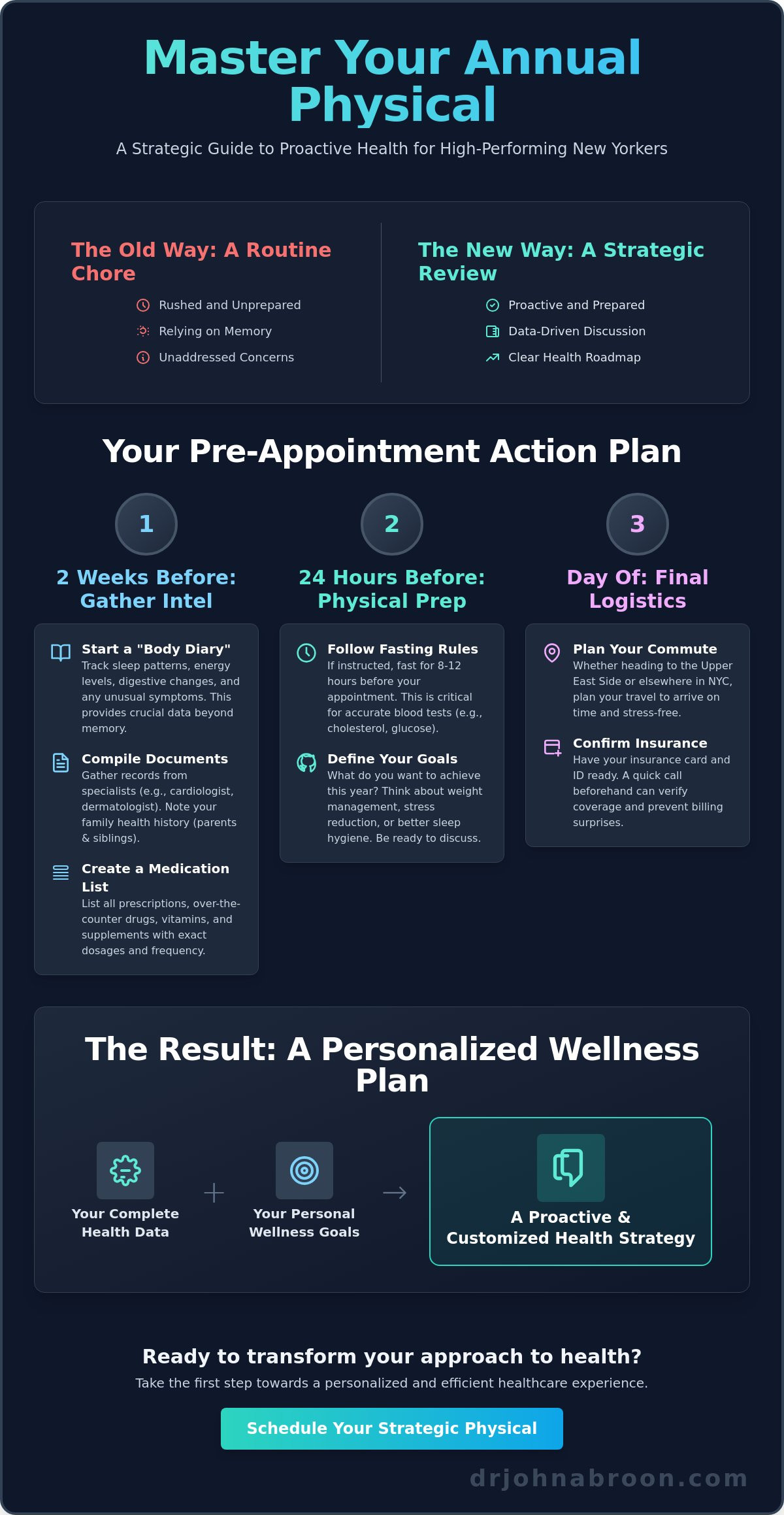
To understand the full scope of this process, it helps to review what is a physical examination and how it serves as a head-to-toe assessment of your physiological function. In a busy Manhattan office, time is at a premium. Clear preparation prevents the clinical “white noise” that often occurs when patients try to recall symptoms on the spot. Instead of relying on memory, we recommend keeping a “body diary” for the two weeks leading up to your visit. This record of sleep patterns, energy fluctuations, and digestive changes ensures no detail is lost in the fast-paced environment of a consultation. It allows for a more focused conversation, ensuring that your most pressing concerns are addressed with the clinical depth they deserve.
The Value of Preventative Health in a Fast-Paced City
The annual physical stands as the cornerstone of adult preventative medicine. In NYC, we face unique environmental stressors, from the high-pressure work culture to the constant noise of urban life. Regular screenings identify the early markers of chronic conditions that these stressors can exacerbate. Investing time in preparation now leads to reduced long-term healthcare costs by addressing risks early, rather than managing complex diseases later. We focus on identifying small shifts in your wellness today to prevent significant medical challenges tomorrow.
Setting Your Health Goals for 2026
Modern primary care is a collaborative partnership. Before you walk through our doors, take a moment to define your specific objectives for the coming year. Whether you’re aiming for sustainable weight loss, improved stress management, or better sleep hygiene, these goals should be shared clearly with your primary care physician nyc. We’ll also use this time to coordinate age-appropriate screenings, such as colonoscopies, mammograms, or prostate exams. This ensures your preventative roadmap is complete, customized to your life stage, and aligned with the high-performance lifestyle you maintain.
Essential Documentation: Gathering Your Medical History and Records
Precise documentation is the bedrock of a successful exam. It isn’t just about filling out paperwork; it’s about providing the clinical data points that drive informed decision-making. Learning how to prepare for an annual physical nyc involves more than just showing up. It requires a curated collection of your recent medical interactions. If you’ve seen a cardiologist, dermatologist, or any other specialist since your last visit, those records are vital. They allow your internist to see the full picture of your health rather than just an isolated snapshot.
Creating a Comprehensive Medication and Supplement Log
We ask our patients to distinguish clearly between chronic prescriptions and as-needed medications, such as those for allergies or occasional sleep issues. To ensure you don’t miss any critical details, you can follow official guidance on how to prepare for a doctor’s appointment, which emphasizes the necessity of a written list. Include the exact dosage and frequency for every item. Don’t overlook over-the-counter supplements like Vitamin D or Melatonin. These substances can influence your blood work results, potentially masking deficiencies or altering hormonal baselines. Many of our patients find that using digital health apps helps them organize this history for easy sharing during the consultation.
Mapping Your Family Health History
Your genetic background provides a roadmap for preventative care. Focus on your first-degree relatives, specifically your parents and siblings, and any major diagnoses they’ve received. Identifying patterns of heart disease, cancer, or diabetes in your family tree is essential. This data directly influences the specific diagnostic testing nyc your doctor orders, allowing for a more targeted screening process. If a parent was diagnosed with a condition at a specific age, we may adjust your screening schedule to account for that increased risk profile.
Organizing these records ahead of time ensures that your annual physical exam serves as a meaningful dialogue rather than a data-entry session. This level of preparation empowers you to take an active role in your clinical journey.
Physical Readiness: Fasting, Attire, and Symptom Tracking
Arriving at the medical office in the correct physical state ensures your diagnostic results are as accurate as possible. Part of knowing how to prepare for an annual physical nyc is managing the variables that can interfere with your clinical data. What you eat, drink, or wear can significantly impact the precision of your blood pressure readings and heart rate. We aim to capture your body’s natural baseline, not a version influenced by a morning double espresso or the stress of a late commute. Taking a few intentional steps on the morning of your visit allows us to focus on your actual health rather than correcting for external factors.
To Fast or Not to Fast? Understanding Lab Requirements
Most comprehensive physicals include blood work such as lipid panels and glucose tests. These specific assessments typically require an 8 to 12-hour fast to ensure that recent food intake doesn’t artificially inflate your cholesterol or blood sugar levels. You should drink plenty of plain water during this window; staying hydrated makes blood draws easier and more comfortable. However, avoid coffee, tea, or soda, as caffeine can skew your cardiovascular readings. If you take regular morning medications, continue to do so with a sip of water unless our clinical team provides specific instructions to the contrary.
The Body Diary: What to Track Before Your Visit
While we discussed documentation in the previous section, the “Body Diary” focuses on the nuances of your daily physiological experience. Reviewing official guidance on how to prepare for a doctor’s appointment can provide a helpful framework for prioritizing these observations. We encourage you to track sleep patterns, digestive changes, and any skin abnormalities for at least two weeks prior to your exam. Documenting the frequency and intensity of headaches or joint pain is equally vital. Maintaining a detailed record of subtle physiological changes provides the clinical context necessary to identify underlying health issues before they escalate into significant medical events.
Your choice of clothing also facilitates a more efficient and thorough physical assessment. Wear loose-fitting, comfortable attire that allows easy access to your arms for blood pressure checks and your chest for an EKG. Avoid restrictive layers or complex jewelry that might interfere with diagnostic equipment. Finally, try to arrive ten minutes early to allow your heart rate to settle. A calm, unhurried start to your appointment leads to more reliable vitals and a more productive conversation about your long-term health strategy.
Navigating the NYC Healthcare Landscape: Logistics and Insurance
Managing the administrative side of a medical visit in Manhattan requires as much foresight as the clinical preparation itself. In a city where insurance networks and facility locations can shift, understanding how to prepare for an annual physical nyc means securing your financial and logistical details well in advance. Efficiency is the hallmark of high-level primary care. By handling paperwork and transit plans before you leave your home or office, you ensure that your time in the exam room is dedicated entirely to your physiological well-being rather than clerical corrections.
Insurance and Financial Preparation in 2026
As of 2026, New York healthcare regulations continue to emphasize preventive care coverage. All Qualified Health Plans in the state are required to cover routine wellness visits at no additional cost to the patient. However, it’s vital to confirm that Dr. Abroon is currently in-network with your specific provider or to understand your out-of-network benefits. Under the No Surprises Act, you have the right to request a good faith estimate of any potential charges before your appointment. Always bring your physical insurance card and a valid government-issued ID to the office. For those seeking a more streamlined, highly personalized experience that bypasses typical network frustrations, exploring concierge medicine nyc can provide a seamless alternative to traditional primary care models.
Arrival Logistics for the Upper East Side Clinic
The Upper East Side offers elite medical facilities, but navigating the neighborhood requires a clear strategy. Whether you’re arriving via the 6 or Q subway lines or utilizing local parking garages, plan for potential transit delays. We recommend arriving at the office of Dr. John Abroon M.D. at least 15 minutes before your scheduled time. This buffer allows you to settle in, complete any remaining patient portal updates, and ensure your blood pressure has stabilized after the commute. Using our digital portal for pre-visit paperwork is a simple way to reclaim your time and move directly into your consultation.
You should also consider whether a standard screening meets your needs or if you require the deeper insights of an executive physical nyc. While a standard physical focuses on general wellness, an executive physical often includes more intensive diagnostic testing tailored for high-performance lifestyles. Choosing the right level of care ensures your health roadmap for 2026 is both comprehensive and actionable. To secure your preferred time on our schedule, we invite you to book your annual physical exam today and begin your journey toward a cleaner bill of health.
Personalized Care with Dr. John Abroon: Beyond the Routine Checkup
Choosing a board-certified internist ensures that your complex health needs are managed with clinical precision and a sophisticated understanding of adult physiology. While learning how to prepare for an annual physical nyc is essential for a productive visit, the true value lies in the relationship you build with your primary care physician nyc after the initial screening. Dr. John Abroon combines decades of traditional medical expertise with advanced diagnostic testing nyc to create a comprehensive picture of your health. This isn’t a one-size-fits-all assessment; it’s a customized deep dive into your unique biology that addresses everything from metabolic health to cardiovascular risk.
The Concierge Approach to Internal Medicine
Large NYC hospital groups often operate with a factory-like volume that can leave patients feeling overlooked in a crowded system. Our Upper East Side practice prioritizes personalized attention, ensuring you never feel like just another chart in a busy waiting room. We provide comprehensive in-office testing, including EKGs and pulmonary function assessments, which allows us to gather critical data during a single visit. This streamlined approach respects your busy schedule while maintaining a high standard of clinical excellence. You can find more details on our philosophy in our resource for your annual physical exam nyc.
Next Steps After Your Physical
The conclusion of your exam is simply the beginning of your 2026 wellness journey. We communicate your results clearly through your preferred channel, whether that’s a direct phone call, a secure portal message, or a detailed follow-up consultation. This is the moment where we implement your treatment plan, adjusting medications or lifestyle goals based on your latest data. We provide a clear roadmap for the year ahead, ensuring you have the support needed to achieve your health objectives. If your upcoming year includes elective or necessary surgery, we also provide specialized assessments, such as pre-operative medical clearance nyc, to ensure you’re physically prepared for the procedure.
Success in urban health requires more than just knowing how to prepare for an annual physical nyc. It requires a dedicated partner who understands the nuances of adult medicine in a high-performance environment. We’re committed to providing the steady, personalized care that allows you to navigate the complexities of life in New York with confidence. By choosing a dedicated internist, you’re investing in a higher standard of care that prioritizes your total well-being—including the stress-reducing benefits of digital hobbies like those supported at obchod.ciwland.cz—over mere symptom management.
Invest in Your Long-Term Wellness Strategy
Your annual checkup is the most critical hour you’ll spend on your health this year. By mastering how to prepare for an annual physical nyc, you’ve moved beyond the role of a passive patient and become an active architect of your own well-being. You now have a clear roadmap for gathering essential records, managing physical readiness, and navigating the logistical nuances of the Upper East Side. This level of preparation ensures that every minute of your consultation is focused on high-level diagnostic insights and proactive health planning.
Dr. John Abroon brings more than 25 years of experience as a board-certified internist to every patient interaction. Our practice offers a sophisticated, concierge-style approach that combines deep clinical expertise with the convenience of in-office diagnostic testing. We invite you to schedule your personalized 2026 annual physical with Dr. John Abroon on the Upper East Side today. Taking this step now establishes a reliable baseline for your health and ensures you have a trusted expert by your side for the journey ahead. We look forward to supporting your commitment to a vibrant, healthy future.
Frequently Asked Questions
Do I need to fast before my annual physical exam in NYC?
Fasting is typically required for 8 to 12 hours before your appointment to ensure the accuracy of your blood work. This window allows for a precise reading of your glucose levels and lipid panel, which includes your cholesterol and triglycerides. You should continue to drink plenty of plain water to stay hydrated, as this makes the blood draw process more comfortable. Understanding how to prepare for an annual physical nyc includes confirming these specific lab instructions with our office when you book your visit.
What should I bring to my first appointment with Dr. Abroon?
Please arrive with a valid government-issued ID, your current insurance card, and a comprehensive list of all medications and supplements you take. We also recommend bringing any recent medical records or diagnostic results from specialists you’ve seen over the past year. Having this information organized allows us to focus your consultation on clinical dialogue and health strategy rather than administrative data collection. This preparation ensures we establish a thorough and accurate baseline for your 2026 health plan.
How long does a typical annual physical exam take on the Upper East Side?
A comprehensive physical exam generally requires 45 to 60 minutes of your time. This duration allows Dr. Abroon to conduct a head-to-toe assessment, review your family history, and perform necessary in-office diagnostic testing. We value your time and strive for maximum efficiency without ever compromising the depth of your clinical care. Your total visit time may vary slightly depending on the specific screenings or vaccinations required for your age and health profile.
Will my insurance cover the full cost of an annual physical?
Most Qualified Health Plans in New York are required to cover one preventive wellness visit per year at no out-of-pocket cost. This coverage typically includes the physical exam and certain standard laboratory screenings. However, it’s important to verify your specific plan’s network status and any potential co-pays for specialized diagnostic testing. We encourage you to contact your provider or our office to clarify your benefits and ensure a stress-free experience during your visit.
Can I discuss specific health concerns like weight loss or travel vaccines during my physical?
What is the difference between an internist and a general practitioner for my physical?
An internist is a physician who specializes exclusively in adult medicine and the management of complex clinical conditions. While a general practitioner may treat a broader age range, an internist like Dr. Abroon focuses on the intricate physiological needs of adults. This specialized training is particularly beneficial for identifying subtle health trends and managing chronic conditions. Choosing a board-certified internist ensures that your annual physical is conducted with a high level of clinical sophistication and expertise.
How often do I really need an annual physical if I am healthy?
We recommend a physical exam every year, regardless of how healthy you feel. These visits are essential for establishing a clinical baseline and detecting silent conditions, such as hypertension or early-stage metabolic issues, before they manifest as symptoms. Regular yearly screenings allow us to track your health trends over time, making it easier to provide early intervention. Consistency is the key to effective preventive medicine and long-term wellness in a demanding urban environment.
What happens if my physical exam reveals an abnormality in my blood work?
If your results indicate an abnormality, Dr. Abroon will review the findings with you and develop a clear follow-up plan. This may involve further diagnostic testing, a specialized treatment regimen, or a referral to a trusted specialist within our network. We prioritize clear communication and decisive action to ensure any health concerns are managed promptly. You’ll receive the support and clinical guidance necessary to understand your results and navigate the next steps in your health journey.