


Most parents assume a medical exam for immigration is the same regardless of age, but the pediatric I-693 is not just a smaller version of the adult evaluation. It is an age-bracketed medical review that requires specific pediatric expertise to navigate successfully. You want your child’s residency application to proceed without a single delay, yet the complex web of age-specific vaccinations and testing protocols often creates unnecessary stress. It’s natural to feel concerned about how your child will react to a blood draw or whether a minor clerical error on the i693 form for kids could jeopardize your family’s future.
We understand these pressures and believe that high-level clinical care should feel supportive rather than sterile. This guide promises to simplify the process, offering expert insights into the mandatory TB tests for children aged two and older and the latest vaccination schedules required by the CDC. You’ll learn exactly how to prepare for a seamless office visit that prioritizes your child’s comfort and emotional well-being. We also cover the critical requirement to submit the completed medical results alongside your Form I-485 to ensure your application remains on track for a successful, stress-free outcome.
Key Takeaways
- Understand why every minor, regardless of age, must undergo a medical evaluation to establish their medical admissibility for a green card.
- Learn how requirements for the i693 form for kids change across three distinct age brackets, including specific protocols for TB and Syphilis screening.
- Discover the unique components of a pediatric exam, such as behavioral assessments and the reduced need for blood draws compared to adult requirements.
- Identify the “Essential Four” documents you need to gather to ensure your child’s appointment is efficient and the medical form is completed accurately.
- Gain practical tips for discussing the immigration medical visit with your child to minimize anxiety and ensure a calm, positive clinical experience.
Does My Child Need an I-693 Form? USCIS Rules for Minors
Every family member seeking a green card must demonstrate they don’t pose a public health risk. This includes everyone from infants to teenagers. A common point of confusion for parents is whether the i693 form for kids is mandatory for very young children. USCIS requirements are clear; every applicant filing for an Adjustment of Status must submit a completed medical exam. This document serves as the official record of “medical admissibility,” confirming that your child meets the health standards established by the Department of Health and Human Services.
While your child likely has a regular pediatrician, a standard school physical or annual checkup won’t satisfy these requirements. School physicals focus on individual developmental milestones and sports readiness. In contrast, the immigration medical exam is a specialized public health screening. Only a USCIS-designated Civil Surgeon possesses the authority to perform this evaluation and sign the official documentation. They’re trained to screen for specific conditions that could impact public health and ensure all age-appropriate vaccinations are documented according to strict federal guidelines.
When to Schedule Your Child’s Exam
Timing is everything in a successful application. As of December 2, 2024, USCIS requires that you submit Form I-693 at the same time you file your Form I-485. This stricter filing policy means you shouldn’t wait for a Request for Evidence (RFE). Under current rules, a form signed on or after November 1, 2023, remains valid for as long as your residency application is pending. We recommend scheduling the i693 form for kids early, especially if your child requires catch-up vaccinations. Some vaccine series require multiple doses spaced weeks apart, and having these completed before your appointment prevents delays. Additionally, ensure your doctor uses the correct form edition; as of May 2026, the 01/20/25 edition is the standard for forms signed after July 2, 2025.
What the USCIS Looks for in Children
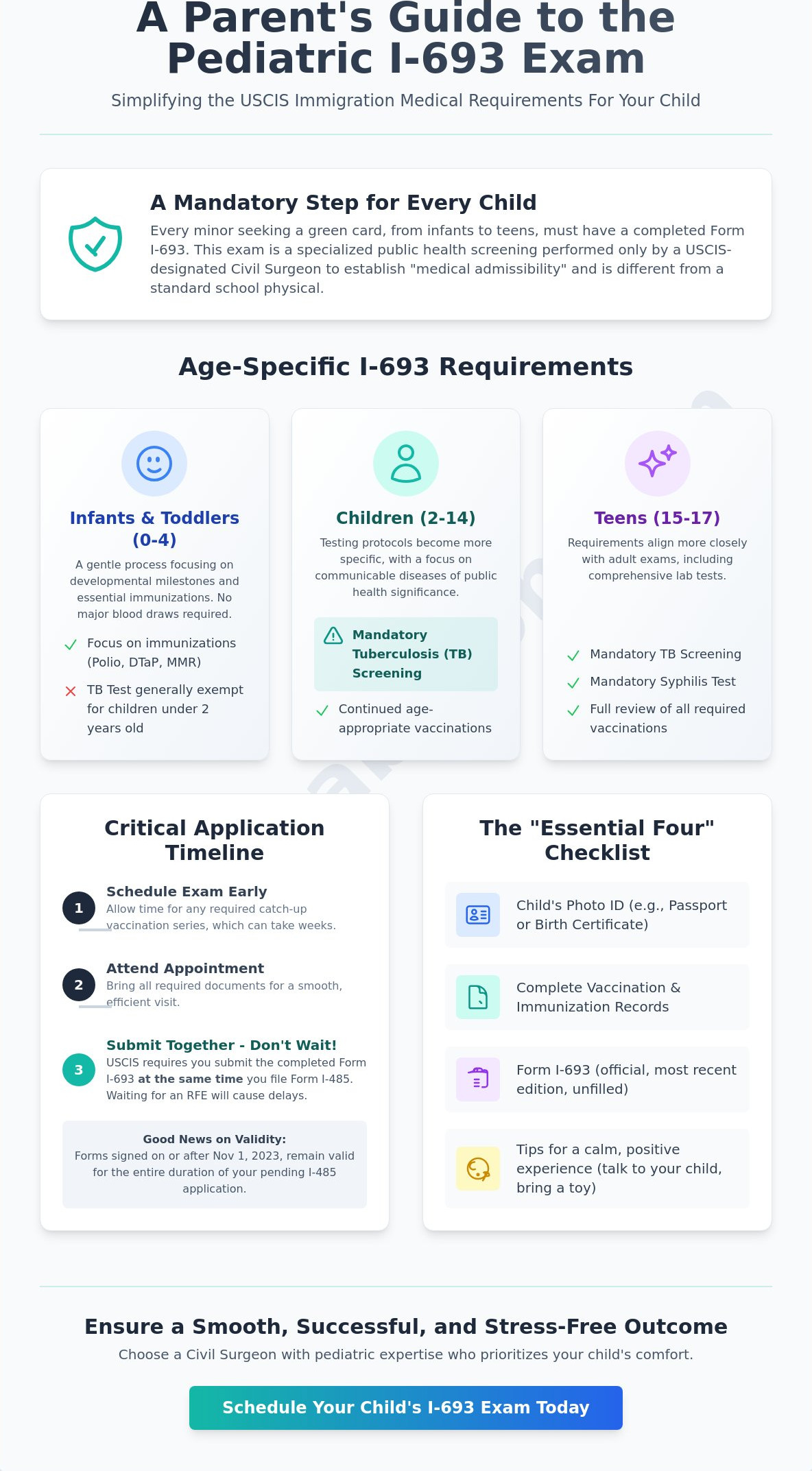
The examination focuses on identifying communicable diseases of public health significance. For any child aged two or older, a tuberculosis (TB) screening is mandatory. This is typically done via a blood test or skin test. The Civil Surgeon also reviews the child’s immunization history to ensure they’re protected against diseases like Polio, Mumps, and Measles. Beyond physical health, the doctor assesses mental health and behavioral patterns to ensure there are no conditions associated with harmful behavior. It’s a holistic review designed to protect both your child and the community. By choosing a practice that specializes in pediatric immigration exams, you ensure these requirements are met in a supportive environment that prioritizes your child’s comfort.
Age-Specific I-693 Requirements: From Infants to Teens
The medical evaluation for a child is strictly guided by the CDC Technical Instructions for Civil Surgeons. These protocols dictate specific screenings based on the child’s age at the time of the exam. It’s a common misconception that every applicant undergoes the same battery of tests. In reality, the legal requirements for the i693 form for kids differ significantly from those for adults. While your family pediatrician might suggest certain tests for general wellness, the civil surgeon must adhere to federal mandates to complete the USCIS Form I-693. This ensures that every child meets the specific health criteria for residency without undergoing unnecessary procedures.
The distinction between legally required tests and recommended health screenings is vital. For example, while a flu shot is recommended for most children annually, it’s only required for the immigration exam during specific months of the year. Our practice ensures that your child receives only what is necessary for a successful application, maintaining a focus on their comfort and total well-being.
Requirements for Infants and Toddlers (0-4 Years)
For our youngest patients, the clinical process is remarkably gentle. Infants and toddlers typically avoid the intensive blood draws mandated for older applicants. We focus primarily on essential immunizations such as Polio, DTaP, and MMR. If your child is under two years old, they’re generally exempt from mandatory tuberculosis testing. The physical examination centers on growth milestones and general wellness markers. We review their developmental history to ensure they meet the health standards required for medical admissibility. This age bracket allows for a shorter, less invasive appointment that prioritizes a positive experience for both the child and parent.
Requirements for School-Aged Children (5-17 Years)
As children enter school age, the screening requirements become more comprehensive. Once a child reaches two years of age, tuberculosis (TB) testing becomes mandatory. We prefer the IGRA blood test over the older skin test because it’s more accurate and requires only one visit. Vaccination records must also be updated to include Hepatitis B, Varicella, and, for older children, Meningococcal shots. We also assess adolescent health markers to ensure there are no physical or mental conditions that require follow-up. If you’re unsure about your child’s current immunization status, our team can provide expert immigration medical exams that address these specific pediatric needs with precision and care.
Pediatric vs. Adult I-693 Exams: Key Differences
Completing the i693 form for kids requires a nuanced clinical approach that differs significantly from adult evaluations. While adults must undergo extensive laboratory screenings for communicable diseases like syphilis and gonorrhea, children under the age of 15 are typically exempt from these specific tests unless clinical indicators suggest otherwise. This reduction in mandatory blood work often makes the appointment less daunting for younger patients. It’s not just about smaller doses; it’s about a different clinical lens. Instead of focusing on adult lifestyle risks, the civil surgeon shifts the focus toward a comprehensive behavioral and developmental assessment. We evaluate whether the child is meeting appropriate milestones and review any history of special education needs or behavioral health concerns. As the parent, you serve as the primary historian. Your role is to provide a clear narrative of your child’s medical journey, which is essential for a precise and favorable report.
The mental health evaluation for children is also distinct. While adult screenings focus on identifying psychiatric conditions that might lead to harmful behavior, the pediatric review is more holistic. We look for developmental stability and emotional well-being within the family unit. Referencing the Official USCIS I-693 Form and Instructions can help you understand the legal framework, but only a specialized civil surgeon can interpret how these rules apply to a growing child in a clinical setting. This ensures the i693 form for kids is completed with the high standard of precision that USCIS officers expect.
Vaccination Record Translation and Review
Foreign immunization records often present a unique challenge during the transcription process. If your child’s records are not in English, they must be translated by a certified professional before your appointment. The civil surgeon then transcribes these historical dates onto the official form. If records are missing or incomplete, we don’t always have to restart a vaccine series. In many cases, we can perform “titers” blood tests. These laboratory tests confirm whether your child has existing immunity to diseases like Measles, Mumps, or Rubella, allowing us to satisfy USCIS requirements without unnecessary revaccination.
The TB Screening Process for Kids
Tuberculosis screening is a high priority for USCIS, and for children aged two and older, the IGRA blood test is the gold standard. Unlike the older skin test, the IGRA requires only one visit and is not affected by previous BCG vaccinations common in many countries. If a child has a positive screening but shows no symptoms, it usually indicates latent TB. This results in a “Class B” medical notification on their form. This classification does not prevent your child from getting a green card; it simply alerts public health authorities that the child may benefit from future follow-up care after their residency is granted.
Preparing Your Child for the USCIS Medical Appointment
Preparation is the key to a calm and efficient visit. Gathering what we call the “Essential Four” ensures your appointment proceeds without administrative delays. You’ll need your child’s current passport, all available vaccination records, previous lab results, and the most current version of the i693 form for kids. As of May 2026, USCIS has strict requirements regarding form editions. If your form is signed on or after July 3, 2025, you must use the 01/20/25 edition. Arriving with these documents pre-sorted allows our clinical team to focus entirely on your child’s comfort rather than paperwork. It’s also helpful to time the appointment around your child’s natural rhythm; avoid scheduling during typical nap times or when they might be overly hungry.
Document Checklist for Parents
Organizing foreign vaccination cards is often the most time-consuming part of the process. If these records aren’t in English, ensure you obtain certified translations before your visit. We also need to see records of any previous surgeries or chronic illnesses, such as asthma or severe allergies, to provide a complete medical history. For children with special needs or developmental delays, please bring any relevant specialist reports or Individualized Education Programs (IEPs). This detailed documentation helps the civil surgeon accurately assess medical admissibility and ensures the final sealed envelope is beyond reproach.
Making the Exam Stress-Free
Managing a child’s anxiety is just as important as the clinical exam itself. We recommend an “Honesty Policy” when discussing the visit. Explain that the “green card doctor” is there to help them stay healthy for their new home. If your child is over two years old, they’ll likely need a blood draw for TB screening. Don’t promise “no shots,” but do emphasize that any discomfort will be brief. Bringing a favorite snack or a comfort toy can provide a sense of security during the evaluation. Choosing a child-friendly practice in Manhattan ensures your family is met with a warm, patient-centered approach that minimizes clinical coldness. After the visit, consider a small family reward to celebrate this important milestone in your residency journey. If you’re ready to begin the process, you can schedule an immigration medical exam with our expert team to ensure a smooth, supportive experience for your child.
Expert Pediatric I-693 Exams on the Upper East Side
Managing the immigration process in New York City often feels like a high-stakes endeavor for any family. While many civil surgeons treat these exams as a routine administrative task, our practice views them as an essential component of your child’s total well-being and your family’s future. John Abroon M.D. has spent over 25 years serving as a USCIS-designated Civil Surgeon, blending elite clinical credentials with the approachable bedside manner of a dedicated healer. We understand the specific nuances of the i693 form for kids and the anxiety that often accompanies medical requirements for residency. Our goal is to make these complex decisions feel manageable through a combination of rigorous science and a supportive, welcoming environment. We take distinct pride in our high industry rankings, which reflect our commitment to providing a premium medical experience for every patient.
Why Families Choose John Abroon M.D. in NYC
Our Upper East Side facility is designed to provide a concierge-level experience that respects your family’s time and emotional needs. Unlike many clinics that require you to visit external laboratories, we offer in-office Diagnostic Testing, including necessary blood work and screenings, in one comfortable location. This streamlined process is particularly beneficial for complex pediatric cases involving international vaccine records that require expert transcription and clinical review. The deep roots of John Abroon M.D. in the metropolitan medical community allow us to handle even the most intricate cases with steady reliability. We ensure that every detail on the i693 form for kids is perfectly documented, providing you with a sealed envelope that meets the highest standards of accuracy and clinical authority.
Next Steps: Booking Your Child’s Exam
We prioritize clear, informative communication from your very first interaction with our office. When you call to book your child’s exam, our staff provides a detailed overview of the necessary documents and what to expect during the clinical visit. This initial consultation helps eliminate uncertainty before you even step through our doors, ensuring you feel empowered rather than overwhelmed. We understand the urgency of immigration timelines and offer same-week appointments to help you stay on track with your filing requirements. Taking the next step in your residency journey should be a positive milestone for the whole family. Schedule your child’s I-693 exam with John Abroon M.D. today to ensure your application is handled with the expert care and precision it deserves.
Securing Your Family’s Future with Expert Care
Ensuring your child’s medical admissibility is a significant step toward your family’s new life in the United States. It’s clear that the i693 form for kids involves much more than a standard checkup; it requires a precise, age-bracketed evaluation and meticulous documentation of immunization histories. By organizing your records early and choosing a clinical environment that prioritizes pediatric comfort, you transform a complex legal requirement into a manageable family milestone. Accuracy at this stage is vital to avoid application delays or rejections.
John Abroon M.D. has served as a USCIS-Designated Civil Surgeon since 1997, providing the elite credentials and compassionate bedside manner necessary for such a high-stakes process. Our convenient Upper East Side Manhattan location offers comprehensive in-office pediatric testing, allowing you to complete all requirements in one supportive and professional setting. We’re here to ensure your child’s sealed envelope is accurate, complete, and ready for submission. We invite you to Book Your Child’s USCIS Medical Exam on the Upper East Side today. We look forward to welcoming your family and supporting your journey with the clinical excellence and personalized care you deserve.
Frequently Asked Questions
Does my newborn baby need an I-693 medical exam for their Green Card?
Yes, every applicant for a green card must submit a completed medical exam regardless of their age. Even for a newborn, a civil surgeon must evaluate the baby to confirm medical admissibility to the United States. While the requirements for infants are much less intensive than those for adults, the documentation remains a mandatory part of the adjustment of status process.
What happens if my child is missing some required vaccinations?
If your child is missing vaccinations, the civil surgeon will administer the required doses during the appointment to meet USCIS standards. We carefully review your child’s age against the current CDC immunization schedule to determine exactly what is necessary. If you believe your child has already had a disease like Varicella, we can often perform titer blood tests to prove immunity and avoid unnecessary shots.
Is the I-693 medical exam for children covered by health insurance?
Most health insurance policies do not cover the cost of an immigration medical exam. Because this is an administrative requirement for a legal process rather than a medically necessary visit for illness or injury, it falls outside standard coverage. You should plan to pay for the evaluation and any required laboratory work directly at the time of your visit.
Does my child need a blood test for the immigration medical exam?
Blood tests are mandatory for all children aged two and older to screen for tuberculosis. Younger children are typically exempt from blood work unless the civil surgeon identifies a specific clinical need. Once a child reaches age 15, they must also undergo blood screenings for other communicable diseases as part of the standard i693 form for kids protocol.
What if my child has a positive TB test during the USCIS exam?
A positive tuberculosis blood test is not an automatic reason for application rejection. It simply means your child requires a chest X-ray to confirm they don’t have active, contagious TB. If the X-ray is clear, the civil surgeon documents the results as latent tuberculosis. This allows the application to proceed while ensuring you have the information needed for any future follow-up care.
How long does it take to get the sealed I-693 envelope for my child?
The process generally takes between three and seven business days to complete. This window allows our office to receive and verify laboratory results and ensure all vaccination transcriptions are accurate. We focus on a meticulous review of the i693 form for kids to prevent any clerical errors that could cause delays with your USCIS filing.
Can my child’s regular pediatrician sign the I-693 form?
Your regular pediatrician can only sign the form if they are a USCIS-designated Civil Surgeon. While your pediatrician provides excellent primary care, the immigration exam is a specialized public health screening. You must visit a doctor who is specifically authorized by the government to perform these evaluations and provide the official sealed results required for residency.
Do I need to bring my child’s birth certificate to the medical exam?
You must bring your child’s passport as their primary form of government-issued photo identification. While a birth certificate is not always the primary ID used by the civil surgeon, it is helpful to have on hand to establish the legal relationship between the child and the accompanying parent or guardian. Bringing all relevant identification ensures your appointment in our Manhattan office proceeds without delay.