


You’ve spent weeks mentally and physically preparing for your procedure, but a sudden request for cardiac clearance for surgery nyc can feel like an unexpected hurdle. It’s completely natural to feel a surge of anxiety when your surgeon mentions your heart health, especially if you’re worried that a minor finding might delay or cancel your operation. We understand that you aren’t just looking for a signature on a form; you’re looking for the peace of mind that comes with knowing your body is ready for the stress of anesthesia and recovery.
This guide provides a clear roadmap for your 2026 surgical preparation, stripping away the confusion between internists and specialists while outlining exactly which tests you should expect. You’ll learn how a board-certified internist like Dr. John Abroon uses in-office diagnostics to provide the thorough, personalized assessment you need on a timeline that respects your surgical date. From understanding anesthesia risks to securing a fast professional evaluation in Manhattan, we’ll ensure you step into the operating room with confidence and clinical certainty.
Key Takeaways
- Understand that cardiac clearance isn’t a pass/fail test but a personalized strategy to ensure your heart safely manages the physiological stress of anesthesia.
- Learn why scheduling your cardiac clearance for surgery nyc two to four weeks in advance is essential for a seamless, on-time procedure.
- Identify the differences between low and intermediate surgical risks to better understand the specific clinical evaluations your surgeon expects.
- Prepare for your appointment by gathering necessary documentation and surgeon contact details to facilitate a fast, professional result turnaround.
- Discover the benefits of working with a board-certified internist who offers in-office diagnostics and a concierge-level approach to pre-operative care.
What is Cardiac Clearance for Surgery?
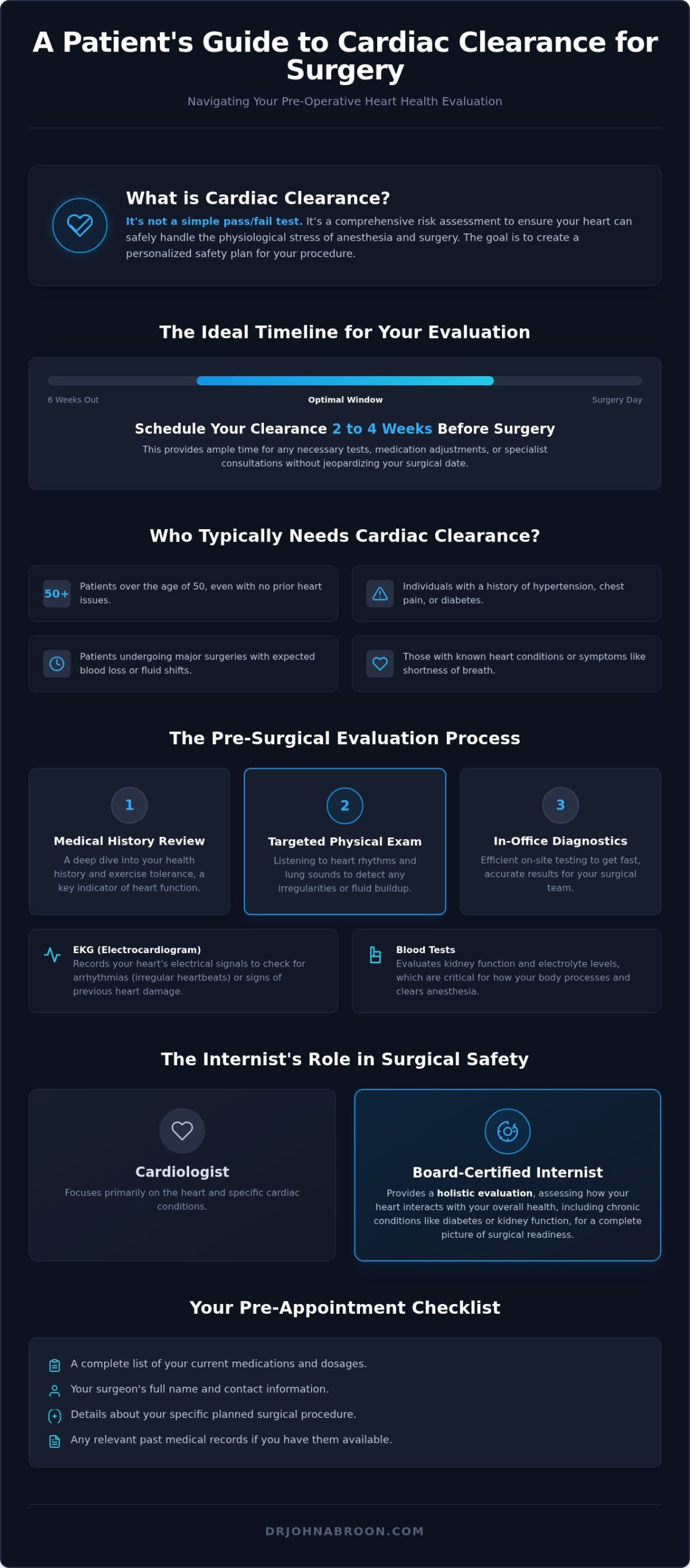
Cardiac clearance isn’t a simple “yes” or “no” for your procedure. It’s a comprehensive clinical evaluation designed to assess how your heart will handle the significant physiological stress of anesthesia and the surgical process itself. When you seek cardiac clearance for surgery nyc, you’re looking for a detailed risk assessment that helps your surgical team anticipate and manage potential complications. This process ensures that your heart is resilient enough to withstand the shifts in blood pressure and heart rate that naturally occur during an operation.
The goal involves more than just checking a box; it’s about creating a safety net for the patient. By identifying specific heart-related risks, your medical team can adjust medication dosages, monitoring protocols, and post-operative care to ensure your safety. Physicians often use established tools like the Revised Cardiac Risk Index (RCRI) to estimate the probability of cardiac events during your hospital stay. This evaluation is typically performed by a board-certified internist, such as John Abroon M.D., who specializes in pre-operative safety and works to provide a clinical roadmap for the anesthesiologist.
The Role of the Internist in Surgical Safety
An internist offers a unique perspective on your surgical readiness. Unlike a cardiologist who focuses primarily on the heart, a board-certified internist evaluates how your heart interacts with your overall health. This includes managing chronic conditions like diabetes or kidney function that might impact your recovery. At our Upper East Side office, John Abroon M.D. coordinates directly with Manhattan’s top surgeons to ensure all diagnostic data is shared quickly and accurately. This targeted evaluation goes far beyond a standard annual physical; it’s a focused examination of your heart’s resilience under the specific conditions of your upcoming procedure.
When is Cardiac Clearance Mandatory?
While not every minor procedure requires a full cardiac workup, certain triggers make this evaluation mandatory for patient safety. Surgeons prioritize these evaluations when the physiological “stress test” of surgery is high. Even if you feel healthy, underlying issues can surface when your body is under the effect of general anesthesia. Surgeons typically require formal clearance for:
- Patients over the age of 50.
- Individuals with a history of hypertension, chest pain, or diabetes.
- Surgeries that involve significant blood loss or major fluid shifts.
- Patients with known heart conditions or those who experience shortness of breath during light activity.
Securing your cardiac clearance for surgery nyc ensures that your surgical team isn’t flying blind. It’s the most effective way to prevent last-minute cancellations and ensure you return home safely after your procedure.
The Pre-Surgical Cardiac Evaluation Process
The journey toward a safe procedure begins with a deep dive into your medical history and daily physical habits. We focus specifically on your exercise tolerance, which serves as a powerful indicator of heart health. Can you walk up two flights of stairs or briskly walk a few city blocks without stopping for breath? This simple metric helps us understand your heart’s functional capacity under stress. John Abroon M.D. then performs a targeted physical examination, listening closely to your heart rhythm and checking your lung sounds to ensure there’s no fluid buildup or irregular patterns that could complicate your surgery.
A central component of cardiac clearance for surgery nyc is the Electrocardiogram (EKG). This non-invasive test records the electrical signals in your heart to check for arrhythmias or signs of previous heart damage. We also perform comprehensive blood tests to evaluate electrolyte levels and kidney function. These markers are essential because your kidneys play a vital role in how your body processes and clears anesthesia. Once the data is collected, we compile a detailed report that serves as a clinical roadmap for your surgeon and anesthesiology team.
In-Office Diagnostic Testing in NYC
Efficiency is vital when your surgery date is approaching. At our Upper East Side clinic, we provide in-office EKGs to streamline your evaluation. This test reveals your heart’s electrical activity in real time, helping us identify issues like atrial fibrillation before you enter the operating room. If your history suggests a higher risk profile, John Abroon M.D. might coordinate additional tests, such as a stress test or echocardiogram, based on this expert summary of the 2024 perioperative guidelines. Most patients find that having these diagnostics handled in one location reduces pre-surgical stress significantly.
Reviewing Medications and Supplements
Your current medication regimen plays a massive role in surgical safety. We’ll discuss managing blood thinners (anticoagulants) to prevent excessive bleeding during the procedure. Similarly, blood pressure medications must be reviewed because they can interact with anesthesia in complex ways. You must disclose all herbal supplements and vitamins. Some common supplements, like Vitamin E or ginkgo biloba, can increase bleeding risks. John Abroon M.D. provides clear, written instructions on which pills to take and which to pause as your surgery date nears. If you have questions about your specific medications, it’s easy to schedule a consultation at our Manhattan office.
After your visit, we send your final clearance report directly to your surgeon and the hospital’s surgical department. This seamless communication ensures that every medical professional involved in your care is fully informed of your cardiac status, keeping your surgery on schedule and your safety at the forefront.
Understanding Surgical Risk Levels
Surgery isn’t a one-size-fits-all event. The level of scrutiny required for cardiac clearance for surgery nyc depends heavily on the nature of the procedure itself. Medical professionals categorize surgeries into risk tiers based on the likelihood of cardiac complications. Low-risk procedures, such as cataract surgery, endoscopies, or minor dermatological removals, typically put very little stress on the heart. In these cases, the clearance focuses on ensuring no major underlying issues exist that could interfere with local or light sedation.
Intermediate-risk procedures involve more significant physiological shifts. Common examples include orthopedic surgeries like hip or knee replacements, or prostate surgery. These require a more robust evaluation because the body undergoes more stress and fluid movement. High-risk procedures, like major vascular surgery or prolonged thoracic operations, demand the highest level of clinical oversight. To quantify these risks, we utilize the Revised Cardiac Risk Index (RCRI). This validated clinical tool helps predict the probability of perioperative cardiac events by looking at specific indicators like heart failure history or insulin-dependent diabetes.
Low-Risk vs. High-Risk Surgery Requirements
Minor surgeries might only require a concise review of your history and a physical exam. However, major operations in NYC hospitals often trigger mandatory, high-level screenings to prevent complications. John Abroon M.D. doesn’t believe in a “check-the-box” approach. He tailors the depth of your clearance to the specific demands of your surgery. A patient undergoing a minor biopsy doesn’t need the same intensive workup as someone preparing for a multi-hour vascular reconstruction. This personalized attention ensures you aren’t over-tested, but you’re always fully protected.
Patient-Specific Risk Factors
Beyond the surgery type, your individual heart strength is the primary factor in our assessment. We evaluate your “metabolic equivalents,” or METs. This is a clinical measure of how much oxygen your body uses during activity. While we previously discussed functional capacity, METs provide the specific data points needed for high-risk procedures. We also look at the stability of conditions like angina. Stable angina, which occurs predictably, is manageable; however, unstable angina requires immediate attention before any elective surgery. Even controlled hypertension is reviewed to ensure your blood pressure remains steady under the influence of anesthesia.
By categorizing both the procedure and the patient’s individual health, we provide a sophisticated risk-mitigation strategy. This ensures your surgical team has a clear, actionable roadmap for your care in the operating room.
Preparing for Your NYC Cardiac Clearance Appointment
Preparing for your appointment is as crucial as the medical evaluation itself. To ensure a smooth process, we recommend scheduling your cardiac clearance for surgery nyc approximately two to four weeks before your procedure date. This window is ideal because it provides enough time for any follow-up diagnostics if needed, while still falling within the strict validity periods required by most Manhattan hospitals. When you arrive at our Upper East Side office, please bring your surgeon’s specific clearance form and their direct contact information. Having a comprehensive list of your current medications and results from any heart tests performed in the last year helps Dr. Abroon provide the most accurate assessment. On the day of your exam, wear comfortable, loose-fitting clothing. This makes it easier to perform a physical exam and place the sensors for your in-office EKG without unnecessary delays.
The 30-Day Validity Rule
Most surgical centers in New York City operate under a strict 30-day validity rule. This means your clearance and diagnostic results must be dated within 30 days of your scheduled surgery. If your evaluation happens too early, the hospital may consider the results expired, potentially leading to a stressful last-minute re-test. We carefully monitor these timelines with our patients to avoid such delays. If your surgery date gets postponed by the hospital, contact us immediately. We can often provide an updated clinical note or a brief follow-up visit to ensure your paperwork remains current and compliant with hospital regulations.
Communicating with Your Surgical Team
Clear communication is the bridge between our office and the operating room. Most hospitals provide a surgical packet that includes specific requirements for your clearance. Please ensure this packet is available during your visit. Dr. Abroon acts as the primary point of contact, ensuring your surgeon receives a professional, detailed report via their preferred fax or secure email. In the fast-paced medical environment of Manhattan, last-minute requests are common. Our practice is built to handle these urgent needs with the efficiency you expect from a premium medical experience. If you’re facing a tight deadline, contact our office today to secure an appointment that keeps your surgery on track.
By arriving prepared, you allow us to focus entirely on your clinical health rather than administrative hurdles. This proactive approach is the best way to ensure that your heart is ready for the procedure and that your surgical team has everything they need to proceed safely.
Expert Pre-Operative Care with Dr. John Abroon
Since 1997, Dr. John Abroon has provided elite medical support to patients throughout Manhattan. His practice specializes in delivering a sophisticated level of cardiac clearance for surgery nyc that balances clinical rigor with a warm, patient-centered approach. As a board-certified internist, Dr. Abroon offers a comprehensive perspective on your health, ensuring that every aspect of your medical history is considered before you enter the operating room. This holistic view is essential for identifying subtle risks that a more narrow evaluation might overlook.
Our Upper East Side office is designed for patient comfort and clinical efficiency. We provide essential diagnostic testing, such as in-office EKGs, directly on-site. This streamlined approach minimizes the need for multiple appointments and ensures that your results are processed with the speed required for upcoming surgical dates. By acting as the primary point of contact for all pre-surgical needs, Dr. Abroon simplifies a complex process and provides the steady, reliable care you deserve.
A Personalized Approach to Surgical Readiness
We recognize that the weeks leading up to a procedure can be stressful. Dr. Abroon reduces patient anxiety by breaking down complex medical concepts into accessible, manageable information. You won’t feel like just another chart in our office; you’ll receive the concierge-style attention that has made our practice a trusted name for decades. Local surgeons frequently recommend Dr. Abroon because his detailed evaluations provide the precise data they need to ensure a safe perioperative experience. This deep level of trust within the NYC medical community is built on a foundation of consistent clinical excellence and genuine human connection.
Booking Your Clearance on the Upper East Side
Our location is strategically placed near major Manhattan hospitals, providing a convenient hub for your pre-operative requirements. We understand that surgical schedules can be fluid, which is why we offer streamlined scheduling for time-sensitive needs. Whether you are preparing for an intermediate-risk orthopedic procedure or a minor elective surgery, our efficient process for cardiac clearance for surgery nyc ensures your paperwork is completed accurately and delivered to your surgical team on time. Your total well-being is our priority, and we’re committed to making your path to the operating room as smooth as possible.
Taking the next step in your health journey should be a source of confidence, not confusion. Schedule your cardiac clearance with Dr. John Abroon today and experience the difference that expert, personalized pre-operative care can make for your peace of mind.
Securing Your Path to a Safe Recovery
Preparing for your upcoming procedure doesn’t have to be a source of stress. Obtaining cardiac clearance for surgery nyc is a vital step that provides your surgical team with a clear safety roadmap. By understanding your specific risk level and preparing your documentation in advance, you ensure that your heart is ready for the physiological demands of anesthesia. Dr. John Abroon, a board-certified internist on the Upper East Side since 1997, specializes in these thorough evaluations, offering the clinical precision that NYC’s leading surgical specialists trust.
With our in-office EKG and diagnostic testing capabilities, we provide the efficient, concierge-style care you need to keep your surgery on schedule. You deserve a medical partner who prioritizes your total well-being while managing the high-stakes logistics of pre-operative clearance. Don’t let health anxieties or tight timelines stand in your way. Book Your Pre-Operative Cardiac Clearance Appointment with Dr. Abroon today to secure your peace of mind. We’re here to help you move forward with confidence toward a successful recovery.
Frequently Asked Questions
How long does a cardiac clearance appointment take?
A standard appointment for cardiac clearance for surgery nyc typically takes between 45 and 60 minutes. This timeframe allows Dr. Abroon to conduct a thorough review of your medical history, perform a focused physical examination, and complete an in-office EKG. We prioritize efficiency to respect your schedule while ensuring every clinical detail is addressed. If your case is complex, we may spend additional time discussing specific risk factors to ensure total surgical readiness.
Does cardiac clearance guarantee that I won’t have heart issues during surgery?
No medical evaluation can provide an absolute guarantee, but cardiac clearance significantly reduces the risk of perioperative complications. The process is designed to identify manageable heart-related issues and provide a safety roadmap for your anesthesiologist. By quantifying your risk profile, we help your surgical team prepare for your heart’s specific needs during the procedure. This proactive approach transforms unknown variables into a controlled, clinical plan for your safety.
Can my primary care doctor provide cardiac clearance?
Yes, a board-certified internist like Dr. John Abroon is highly qualified to provide this specialized evaluation. While some high-risk patients may eventually need a cardiologist, an internist evaluates your heart within the context of your overall health. This holistic perspective is often preferred by surgeons because it addresses how chronic conditions might impact your cardiac stability during surgery. We coordinate directly with your surgical team to meet all hospital requirements.
What happens if my EKG shows an abnormality during the clearance?
If an abnormality appears on your EKG, we’ll immediately discuss the findings and determine if further diagnostic testing is necessary. An irregular rhythm or signal doesn’t always mean your surgery is canceled; however, it may require a follow-up stress test or echocardiogram to ensure your safety. Dr. Abroon uses these findings to refine your risk assessment, ensuring your surgical team has the most accurate data before you enter the operating room.
Is cardiac clearance covered by insurance in NYC?
Most insurance providers in New York City cover pre-operative evaluations because they’re considered medically necessary for surgical safety. However, coverage can vary significantly based on your specific plan and the required diagnostic tests. We recommend contacting your insurance carrier directly to verify your benefits for pre-operative medical clearances. Our office staff can provide the necessary documentation to help facilitate this process and ensure your focus remains on your upcoming recovery.
How long is my cardiac clearance valid before it expires?
In most New York City surgical centers, your cardiac clearance is valid for 30 days from the date of the exam. If your surgery is postponed beyond this window, the hospital will likely require an updated evaluation to ensure your clinical status hasn’t changed. We carefully track these timelines with our patients to prevent last-minute administrative delays. If your date shifts, contact our Upper East Side office to discuss a brief follow-up visit.
Do I need to fast before my pre-operative cardiac exam?
You generally don’t need to fast before a standard cardiac clearance for surgery nyc unless specific blood work has been requested. A typical evaluation focuses on your heart’s electrical activity and physical resilience, which aren’t affected by a light meal. If your surgeon requires metabolic panels or cholesterol testing as part of the clearance, we’ll provide clear instructions on fasting requirements when you schedule your appointment to ensure your results are accurate.
What is the difference between medical clearance and cardiac clearance?
Medical clearance is a broad assessment of your overall health, while cardiac clearance focuses specifically on the heart’s ability to withstand surgical stress. A general medical clearance checks everything from your lungs to your kidneys. Cardiac clearance involves targeted tests, like an EKG, to look for arrhythmias or heart disease that could cause complications under anesthesia. Dr. Abroon provides both, ensuring a comprehensive evaluation that satisfies all your surgeon’s safety requirements.