


What if a follow-up visit could do more than check whether a treatment worked? If you’re searching for a follow up appointment with pcp nyc, you may be wondering whether you need one, what your doctor will review, and how to make the most of your time. Those are sensible questions, especially when you’re waiting to discuss test results or ongoing symptoms.
A primary care follow-up gives you and your physician a chance to turn new information into a personalized next-step plan. The visit may focus on test results, changes in symptoms, medication response, or whether additional evaluation is appropriate. It differs from an annual physical, which generally takes a broader preventive view, and from urgent care for a new, immediate concern.
This guide explains what to expect, how follow-ups compare with other types of visits, and what records and questions can help keep the conversation focused. At Dr. John Abroon’s Upper East Side practice, personalized primary care includes careful assessment and diagnostic testing when clinically appropriate. A little preparation can help you leave with a clearer understanding of your health and the next steps in your care.
Key Takeaways
- A PCP follow-up revisits a health concern, test result, or care plan, with timing shaped by your individual needs.
- What happens during a follow-up depends on the reason for your return and may include reviewing records, an exam, or testing.
- Know whether you need a follow up appointment with pcp nyc, an annual physical, or an urgent evaluation by considering the purpose of your visit.
- Prepare a symptom timeline, medication list, key questions, and relevant outside records to help focus the conversation.
- A follow-up with a primary care physician can connect new information with an individualized plan for next steps.
What is an NYC PCP Follow-Up Appointment for?
A primary care follow-up is a visit to revisit a health concern, test result, or care plan after an earlier appointment. Its purpose and timing depend on your individual needs and your clinician’s judgment. You might return to review findings, discuss how a treatment is working, or reassess symptoms that have changed or continued.
A primary care physician can help connect these details over time. The broader role of primary care includes serving as a first point of contact and coordinating care around a person’s health needs. A follow-up puts that continuity into practice: you can discuss what has changed, review relevant information, and agree on appropriate next steps with your clinician.
What health concerns can a PCP follow-up address?
The conversation may cover symptoms since your last visit, relevant updates to your medical history, and changes in your health or daily routine. If test findings are available, your clinician can explain what they may mean in context and decide whether further evaluation is appropriate. Depending on the concern, diagnostic testing may help inform that assessment.
Bring up medication questions, including concerns about side effects or whether a treatment seems to be helping. It can be useful to note when you started a medication or when a change occurred, as well as what you’ve noticed since then. Your clinician can consider your response alongside your symptoms and medical history. A follow-up is a chance to clarify the care plan rather than trying to judge the treatment response on your own.
How is a follow-up different from an annual physical?
A follow-up is usually focused on a particular concern or an existing plan. An annual physical takes a broader preventive view of your health. The right visit depends on what you need to discuss, and the two serve different purposes. For more detail on preventive visits, see this annual physical exam guide.
A follow-up also isn’t a substitute for urgent evaluation when symptoms may need immediate attention. If you’re unsure which type of visit fits, describe the concern and when it began when arranging care, so the next step can be guided appropriately. If you’re considering a follow up appointment with pcp nyc, think about what has changed since your last visit and what you hope to understand or decide.
What happens during a PCP follow-up appointment in New York City?
A follow-up visit usually starts with the reason for your return. Your clinician may ask what has changed since the last appointment, whether symptoms have improved or worsened, and how a treatment is affecting you. Be ready to share relevant updates, including new medications, other care you’ve received, or changes in your daily routine. If you have several concerns, lead with the one you most want to address.
The rest of the visit depends on your concern and your clinician’s assessment. They may review outside medical records, perform an examination, or recommend diagnostic testing if it could help clarify the picture. Testing isn’t automatic, and one result rarely tells the whole story. The goal is to understand the finding alongside your symptoms, history, and overall health.
How test results and symptoms may be reviewed
Describe symptoms with useful context: when they began, how often they occur, what seems to affect them, and how they influence daily activities. If you have questions about a result, ask what it means for you, whether it changes the plan, and what the recommended next step is. Clinicians interpret results in context rather than treating an isolated number as a complete diagnosis.
It can help to write down questions before the visit. The National Institute on Aging also offers guidance on how to prepare for a follow-up appointment, including organizing information to discuss with your doctor.
How the PCP and patient shape next steps
After reviewing your concerns and relevant findings, your clinician may recommend monitoring symptoms, further evaluation, or an adjustment to your care plan. Ask what each recommendation is intended to address, what changes to watch for, and when to check in again. If a plan feels unclear, say so. The discussion should leave you with a practical understanding of what happens next.
“A follow-up plan should reflect the concern, the findings, and your overall health context.” That’s why two people returning for similar reasons may have different recommendations. A follow up appointment with pcp nyc is an opportunity to make sense of new information together and agree on an individualized next step, rather than follow a one-size-fits-all script.
For a patient-centered conversation about your health, explore primary care with Dr. John Abroon on Manhattan’s Upper East Side.
Follow-up appointment, annual physical, or urgent care: which visit fits?
The best visit depends on what you need addressed. A follow-up focuses on an existing concern or care plan. An annual physical takes a broader preventive view. Urgent or emergency evaluation is for symptoms that shouldn’t wait for a routine appointment.
| Visit type | Main purpose |
|---|---|
| PCP follow-up | Revisit an ongoing health concern, test finding, or treatment plan. |
| Annual physical | Review overall health and preventive care. |
| Urgent or emergency evaluation | Address a new, severe, sudden, or rapidly worsening problem that needs prompt attention. |
A test result doesn’t automatically require a particular type of visit or the same timing for every patient. The appropriate next step depends on the result, your health history, and whether you have symptoms. Follow the clinician’s instructions for discussing findings, and ask for guidance if you’re uncertain about the plan.
When is a scheduled PCP follow-up the relevant next step?
A scheduled return may make sense when you’re checking an ongoing concern, reviewing a result with your clinician, or returning for a reassessment they requested. There’s no universal follow-up interval; timing depends on your situation and the purpose of the visit. If you’re unsure how to proceed with an existing care plan, contact the practice for guidance.
For a routine visit, a little preparation can help you use the conversation well. The National Institute on Aging shares practical tips in its guide to How to prepare for a follow-up appointment, including organizing questions and relevant health information.
When should a patient seek urgent or emergency evaluation instead?
Severe, sudden, or rapidly worsening symptoms may need immediate attention rather than a routine scheduled appointment. In an emergency, call 911 or go to an emergency department. Don’t wait for a routine PCP follow-up if you believe the situation requires urgent help.
If your concern is stable and relates to an existing plan, a follow up appointment with pcp nyc can provide a focused setting to review it. If symptoms become more serious while you’re waiting, seek urgent or emergency evaluation instead. When the right visit type isn’t clear and the situation isn’t an emergency, contact the practice for guidance.
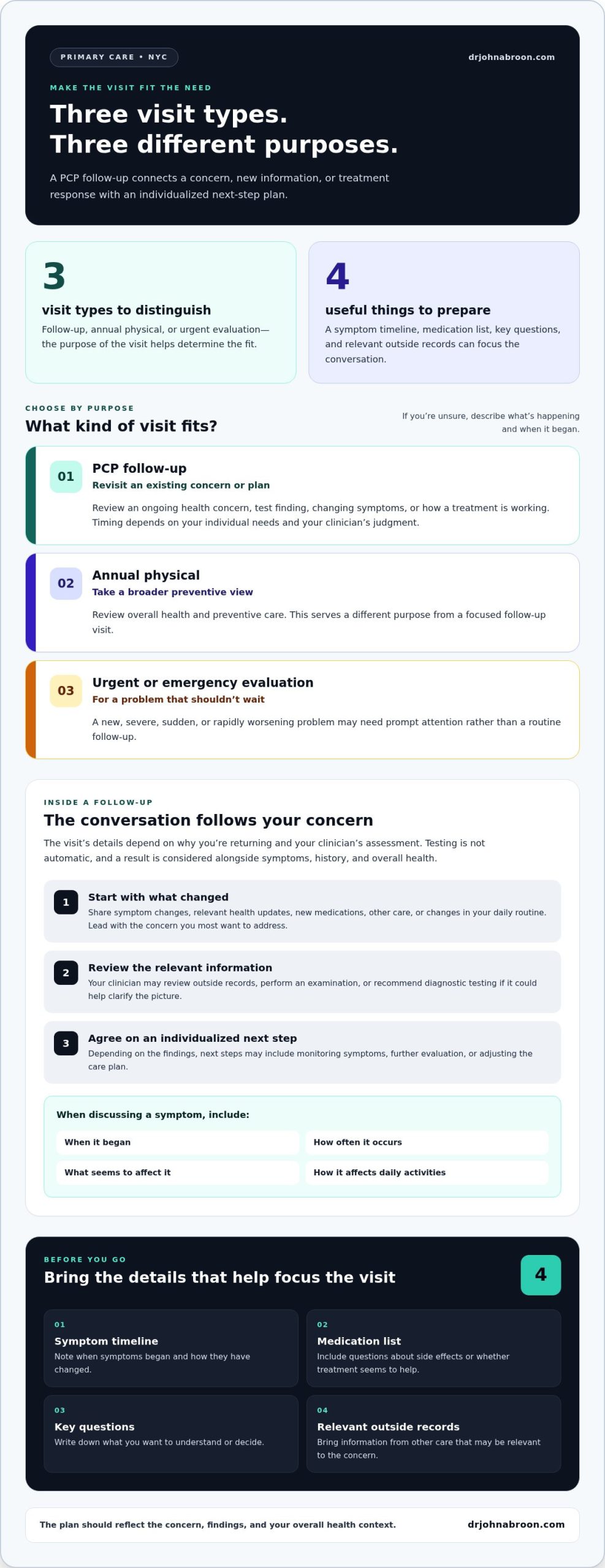
How to prepare for a follow-up appointment with a PCP in NYC
A little preparation can help you make the most of your visit. Before your follow up appointment with pcp nyc, decide which concern matters most to discuss and gather the information that will help your physician understand what has changed. You don’t need a perfect timeline or a complete file. Clear notes and relevant records are a useful starting point.
What information should you bring to the appointment?
Use this checklist to organize the essentials:
- Reason for the visit: Write a brief note about what you want to review, such as a continuing symptom, test finding, or question about your care plan.
- Symptom timeline: Note when symptoms started, how often they occur, what has changed, and how they affect everyday activities.
- Medication and supplement list: Include what you take and any recent changes. If you’re unsure of a name or dose, bring the packaging or a current list.
- Relevant records: Bring outside test reports or medical records when available and applicable, especially if another clinician evaluated the same concern.
- Top questions: List what you most want clarified so you can raise your priorities during the discussion.
Choose your top one or two concerns in advance. If you have several topics, ranking them can help your clinician understand what feels most pressing and make space for the questions that matter to you. If you have a test report, bringing the report itself can be more useful than relying on memory for the details.
Which questions help make the visit more useful?
Specific questions can turn results and recommendations into a clearer plan. Consider asking: “What do these findings mean for my health?” “How do they affect my current care plan?” “What changes should I watch for?” and “What should I do if I have questions after the visit?” If a recommendation is unfamiliar, ask what it’s intended to address and what the next step involves.
For broader context on a primary care relationship in Manhattan, read the primary care physician guide for NYC. It can help frame how a PCP supports health discussions beyond a single concern.
Plan the practical details, too. In New York City, allowing time for transit and keeping appointment information and records accessible can make arrival less rushed. These are planning tips, not medical requirements. Learn more about primary care on the Upper East Side with Dr. John Abroon.
Follow-up primary care on the Upper East Side: planning your next step
A follow-up can help bring your health questions, new information, and ongoing care into one focused conversation. Dr. John Abroon is a board-certified internist and primary care physician on Manhattan’s Upper East Side. A thoughtful return visit supports continuity: you can review what has changed, discuss relevant findings, and work together on an individualized plan.
What to expect from a personalized primary care conversation
Your concern sets the focus. Your physician can listen to what’s changed, consider relevant health context, and explain findings and possible next steps in clear terms. Depending on the clinical question, that plan may involve monitoring, further evaluation, or a change in care. Diagnostic testing is considered when appropriate; it isn’t automatically part of every follow-up. Dr. Abroon’s practice has in-office testing capabilities, including EKGs, pulmonary function tests, and laboratory specimen collection.
You remain part of the decision-making process. Share what matters most to you, and ask for clarification if a result or recommendation feels difficult to interpret. A follow-up isn’t a predetermined checklist. It’s a chance to connect your current concern with your broader health needs and understand the reasoning behind the next step.
How to take the next step with a NYC PCP
Before arranging a follow up appointment with pcp nyc, gather any relevant outside records and write down your main questions. A brief note about the concern, changes since your last visit, and what you hope to discuss can help orient the conversation. You don’t need to have every answer prepared. Bringing the information you have gives your physician a useful starting point.
Dr. Abroon’s practice is on Manhattan’s Upper East Side, offering a local setting for primary care discussions and follow-up. In planning your visit, allow time for your NYC travel and bring any records that relate to the concern. The purpose of the visit is to understand your needs and discuss a suitable path forward, not to assume that every concern calls for the same evaluation.
If you’re ready to discuss a health concern or continue an existing care plan, schedule a primary care appointment with Dr. John Abroon. Bring your questions, share what has changed, and take the next step in care with a clear, individualized conversation.
Take the next step with confidence
A follow-up visit can help turn symptoms, test findings, or treatment questions into a clearer plan. The right visit depends on your needs: a follow-up addresses an existing concern, an annual physical focuses on prevention, and urgent symptoms may need prompt evaluation. Bringing a medication list, relevant records, and your top questions can make the conversation more focused.
If you’re considering a follow up appointment with pcp nyc, Dr. John Abroon is a board-certified internist and primary care physician on Manhattan’s Upper East Side. The practice offers personalized care and in-office diagnostic testing, including EKGs and pulmonary function tests, when clinically appropriate. Your physician can review your health context with you and discuss suitable next steps.
Schedule a primary care appointment with Dr. Abroon to discuss your health concerns and plan for your care. A few notes and questions can be a helpful start, and you deserve a conversation that leaves you feeling informed and supported.
Frequently Asked Questions
What is a follow-up appointment with a PCP?
A PCP follow-up revisits a health concern, test result, or care plan from an earlier visit. Your physician may ask what has changed, review findings, discuss how treatment is working, or decide whether additional evaluation makes sense. The purpose and timing depend on your health needs. A follow up appointment with pcp nyc can help turn new information into a clear, individualized plan.
Do I need a follow-up appointment after a blood test?
Not every blood test requires a separate follow-up visit. Whether you need to discuss the result depends on what was tested, what the findings show, your medical history, and any symptoms or instructions from your clinician. Follow the guidance you received about results or next steps. If you’re unsure what a result means or whether another visit is needed, contact the practice for guidance.
How should I prepare for a PCP follow-up appointment?
Bring a current medication and supplement list, relevant outside records or test reports, and a few questions you want answered. Note when symptoms began, how often they occur, what has changed, and how they affect daily activities. Before your visit, choose the concern you most want to discuss. These details help your PCP understand the situation and keep the conversation focused on your needs.
Can a follow-up appointment be used instead of an annual physical?
A follow-up and an annual physical serve different purposes. A follow-up focuses on an existing concern, test finding, or care plan, while an annual physical provides a broader preventive review. One doesn’t automatically replace the other. Tell your physician what you need to address so the visit can be focused appropriately. Your PCP can help clarify whether a preventive exam, follow-up, or another type of evaluation fits your situation.
How soon should I schedule a follow-up with my primary care doctor?
There isn’t one schedule that fits every patient. Timing depends on the concern, test findings, treatment response, and your clinician’s recommendations. If your PCP asked you to return by a certain point, follow that guidance. If you’re uncertain about an existing plan or a new change in your health, contact the practice for direction. Don’t wait for a routine follow-up if symptoms become severe or rapidly worsen.
Should I go to urgent care or wait for a PCP follow-up?
Use a routine follow-up for a stable, ongoing concern or to revisit an existing care plan. New symptoms that need prompt attention may call for urgent evaluation rather than waiting for a scheduled appointment. Severe, sudden, or rapidly worsening symptoms may be an emergency. In an emergency, call 911 or go to an emergency department. If you’re unsure and the situation isn’t an emergency, contact the practice for timely guidance.
Can a PCP follow-up include an EKG or other testing?
Yes, a follow-up may include an EKG or other diagnostic testing when the clinician considers it appropriate for your concern. Testing isn’t automatic; the decision depends on your symptoms, medical history, examination, and other relevant findings. Dr. John Abroon’s Upper East Side practice provides in-office diagnostic testing, including EKGs and pulmonary function tests. Your physician can explain what a recommended test may help assess and how its results inform next steps.