


Did you know that nearly 10% of surgeries face stressful delays or cancellations simply because of incomplete medical clearances? When you’re preparing for a procedure, the last thing you want is a missed lab result or a confusing checklist standing between you and your recovery. Securing comprehensive pre-operative testing nyc isn’t just an administrative hurdle; it’s your personal safety roadmap for anesthesia and a smooth surgical outcome.
We understand that the weeks leading up to a procedure can feel overwhelming, especially when you’re balancing a busy New York schedule with the natural anxiety of surgery. You deserve a clearance process that’s as efficient as it is thorough. This guide will clarify exactly which tests you need, why they’re vital for your safety, and how a board-certified internist provides the precise evaluation necessary to move forward with confidence. We’ll explore everything from standard blood panels to specialized in-office diagnostics, ensuring you arrive at the operating room physically prepared and mentally at ease.
Key Takeaways
- Learn why NYC surgeons require an independent health audit from a board-certified internist to ensure your body is ready for the physical stress of surgery.
- Understand the specific lab panels and diagnostic screenings, such as 12-lead EKGs, that comprise a thorough pre-operative testing nyc evaluation.
- Discover how specialists use the Revised Cardiac Risk Index to assess heart health and mitigate potential complications before you enter the operating room.
- Get a clear checklist for your appointment, including tips on gathering your medical history and following fasting requirements for accurate results.
- Experience a personalized, concierge-style clearance process in a private Upper East Side setting that prioritizes your total well-being.
The Vital Role of Pre-Operative Testing in NYC
Medical clearance is far more than a routine formality. It functions as a comprehensive health audit, ensuring that your body is prepared for the unique physiological demands of surgery. Surgeons across Manhattan require an independent evaluation from a board-certified internist because they need a focused, objective assessment of your systemic health. While your surgeon specializes in the technical aspects of the procedure, your internist evaluates how your vital organs will respond to the stress of anesthesia and the subsequent recovery phase.
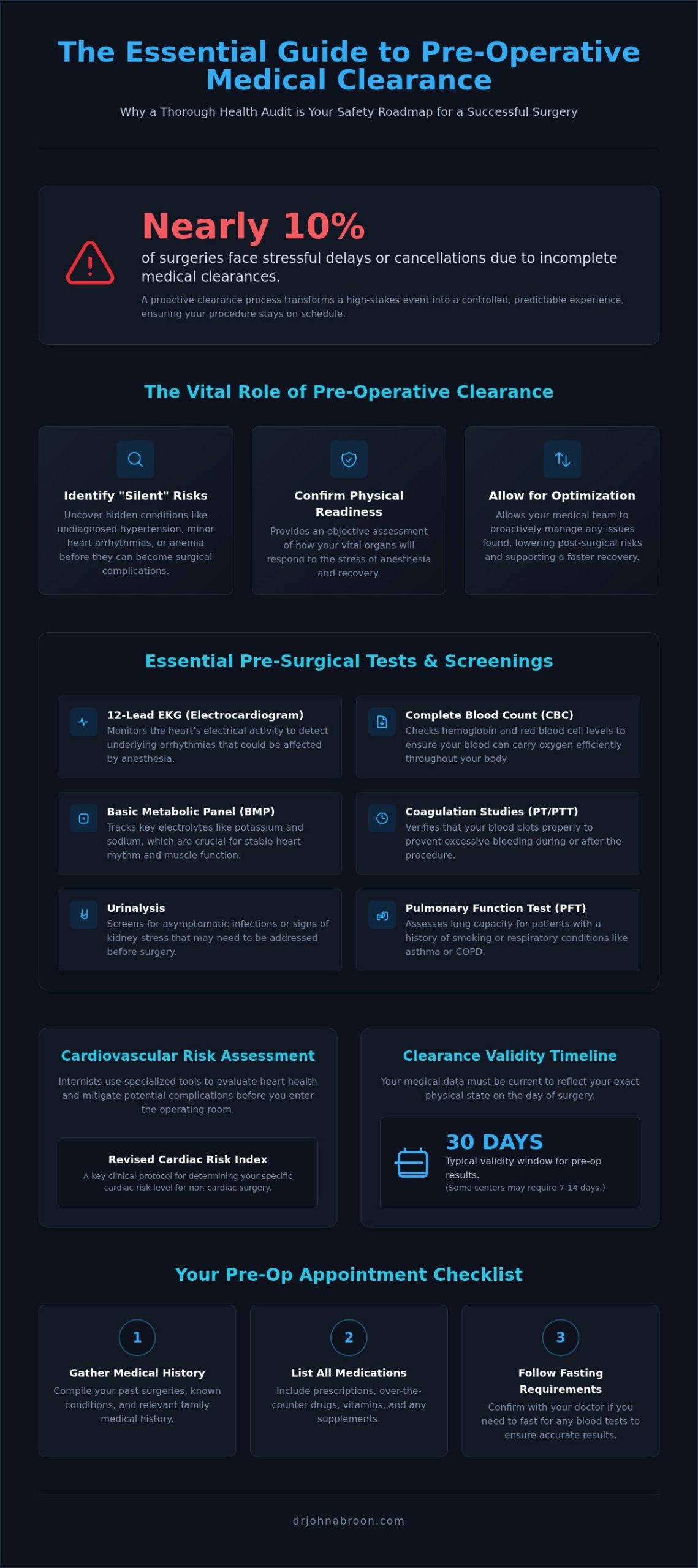
Rigorous pre-operative testing nyc helps identify “silent” conditions that could otherwise lead to dangerous complications. Research indicates that nearly 10% of surgeries face delays or cancellations due to incomplete medical clearances. Uncovering issues like undiagnosed hypertension, minor heart arrhythmias, or anemia before you reach the operating table allows for medical optimization. This proactive approach significantly lowers the risk of post-surgical readmission and ensures your procedure stays on schedule. Preoperative care provides the data necessary to transform a high-stakes event into a controlled, predictable experience.
Why an Internist is Essential for Your Clearance
The difference between a generic physical and a surgical risk assessment is significant. A standard check-up focuses on long-term wellness, while a clearance appointment is a targeted investigation into immediate surgical stability. Specialized expertise is required to identify subtle cardiovascular or respiratory red flags that might not be apparent during a casual screening. Dr. John Abroon coordinates directly with your surgical and anesthesiology teams, ensuring that every member of your care circle understands your specific health profile. This collaborative approach ensures that your medical history isn’t just a file, but a proactive tool for your safety.
The Legal and Safety Standards for Surgery in New York
Manhattan’s top-tier surgical centers adhere to elite safety protocols to maintain their high industry rankings. These standards include strict requirements for the timing of your evaluation. Most facilities in New York City consider pre-operative results valid for a 30-day window, though some specialized centers may require a more recent assessment within 7 to 14 days of the procedure. Medical clearance is the clinical bridge between elective desire and physical readiness. Adhering to these rigorous timelines protects you by ensuring that your medical data is current and reflects your exact physical state on the day of surgery.
Essential Pre-Surgical Tests and Diagnostic Screenings
Every surgical clearance begins with a specific suite of diagnostic tools designed to map your internal health before you enter the operating room. These tests aren’t generic hurdles; they’re precise instruments used to identify physiological vulnerabilities. By analyzing your blood chemistry, heart rhythm, and lung capacity, your internist creates a safety profile that guides your entire surgical team. This data allows your anesthesiologist to tailor their approach to your unique needs, minimizing risks and supporting a faster recovery.
A standard 12-lead EKG is the cornerstone of pre-operative testing nyc patients receive. This non-invasive test monitors the electrical activity of your heart to ensure there are no underlying arrhythmias that could be exacerbated by anesthesia. Alongside cardiac monitoring, we perform a Complete Blood Count (CBC) and a Basic Metabolic Panel (BMP). The CBC checks your hemoglobin levels to ensure your blood carries oxygen efficiently, while the BMP tracks electrolytes like potassium and sodium. Imbalances in these minerals can lead to heart rhythm instability or muscle weakness during your procedure.
We also include coagulation studies, specifically PT and PTT tests, to verify that your blood clots correctly. This prevents unexpected bleeding during or after surgery. Additionally, a urinalysis helps us detect asymptomatic infections or signs of kidney stress that might require treatment before your procedure. For patients with a history of smoking, asthma, or COPD, Pulmonary Function Testing (PFT) assesses lung capacity to ensure you can breathe comfortably under general anesthesia.
Cardiovascular and Pulmonary Screenings
High blood pressure often goes unnoticed until it spikes under the physiological stress of surgery. Screening for undiagnosed hypertension is a vital part of our process. If your blood pressure is elevated, we can work to stabilize it well before your surgery date. Likewise, assessing lung capacity is critical for procedures involving general anesthesia. We use in-office diagnostic tools to verify that your respiratory system is robust enough to handle the demands of the ventilator and the recovery process.
Laboratory Work and Specimen Processing
Timing is critical in Manhattan’s fast-paced medical environment, especially when you have a scheduled surgery date approaching. We prioritize fast-tracking results for patients on tight schedules, ensuring your clearance is submitted to your surgeon without delay. Checking hemoglobin levels helps us prepare for potential blood loss, while monitoring electrolyte balance ensures heart stability. If you’re ready to secure your medical clearance, you can schedule your pre-surgical diagnostic testing in our Upper East Side office. By handling specimen processing with elite laboratory partners, we provide the precise data your surgeon needs to proceed safely.
Cardiovascular Risk Assessment and Medical Clearance
Surgery acts as a significant “stress test” for your heart and vascular system. During the procedure, your body experiences increased metabolic demands and shifts in fluid balance that require a robust cardiovascular response. To evaluate your readiness, we use the Revised Cardiac Risk Index (RCRI), a gold-standard clinical tool trusted by top Manhattan internists. This assessment considers your history of heart health, kidney function, and blood sugar management to determine your statistical risk for complications during anesthesia.
Comprehensive pre-operative testing nyc helps us identify whether your heart can safely handle these demands. If your evaluation reveals specific risk factors, we don’t just provide a generic clearance. We work to optimize your health. In some cases, this involves coordinating with a cardiologist or pulmonologist for specialized screenings. This ensures that every potential red flag is addressed before you ever enter the surgical suite.
Chronic conditions like diabetes or asthma require precise management in the weeks leading up to your date. Elevated blood glucose can impair wound healing and increase infection risks, while poorly controlled asthma can complicate respiratory recovery. We provide a tailored stabilization plan to ensure these variables are controlled, giving you peace of mind that your body is in peak condition for the procedure.
Stratifying Risk Based on Surgery Type
Not all procedures carry the same physiological weight. Low-risk surgeries, such as cataracts or minor cosmetic enhancements, typically require less intensive screening. In contrast, high-risk procedures like total joint replacements or vascular surgery demand a deep dive into your cardiovascular reserve. The invasiveness of the surgery dictates the depth of our testing. We customize your evaluation to match the specific intensity of your upcoming procedure, ensuring you aren’t over-tested for simple work or under-screened for major operations.
Managing Medications Before Your Procedure
Your daily medication routine often needs to change before surgery. We create a “stop list” that typically includes blood thinners, certain herbal supplements, and anti-inflammatory drugs like ibuprofen, which can increase bleeding risks. It’s vital to have a clear schedule for the week leading up to the operation. While some medications must be paused, others, like certain blood pressure pills, are often taken on the morning of surgery with a small sip of water. We provide a written medication roadmap so you know exactly what to take and when to stop.
How to Prepare for Your Pre-Op Appointment in Manhattan
Preparation is the foundation of a seamless medical evaluation. When you arrive for your pre-operative testing nyc, having your documentation organized ensures that Dr. Abroon can focus entirely on your clinical assessment. The most critical item to bring is your surgeon’s specific “clearance form” or checklist. Every surgical specialty has unique requirements, and having this document allows us to tailor your diagnostic suite to their exact standards. It eliminates the guesswork and prevents the need for follow-up visits to collect missing data points.
We also need a detailed account of your medical and surgical history. This includes a list of all current medications, dosages, and any previous reactions to anesthesia. If you’ve had major procedures in the past, knowing how you recovered helps us anticipate your needs this time. During the physical examination portion of the visit, we’ll perform a head-to-toe assessment. This includes listening to your heart and lungs, checking your neurological reflexes, and evaluating your overall physical stamina. We aim to identify any acute issues, such as a recent respiratory infection, that might necessitate a brief postponement for your safety.
Clinical accuracy often depends on your preparation before you even walk through our doors. Many of the blood panels we perform require you to fast for eight to twelve hours prior to your visit. This is essential for obtaining accurate blood glucose and lipid levels. If you aren’t sure whether your specific tests require fasting, our office team will provide clear instructions when you schedule. You can schedule your pre-operative medical clearance today to ensure every detail of your preparation is handled with elite clinical precision.
A Checklist for the Day of Your Testing
To ensure a smooth experience, please wear comfortable, loose-fitting clothing. This makes it easier to place EKG leads and perform a thorough physical exam without unnecessary delays. If you’ve had recent imaging like chest X-rays or outside laboratory work within the last 30 days, bring physical or digital copies for our review. Finally, have your surgeon’s office contact information ready. We provide direct reporting to their team to eliminate administrative friction and ensure they have your results well before your arrival at the hospital.
Timing Your Clearance for Maximum Validity
Timing is a critical factor in the validity of your results. Most NYC hospitals and surgical centers require testing to be completed within a 14 to 30-day window before your procedure. If the testing is too old, the anesthesiology team may deem it invalid, potentially causing a day-of-surgery cancellation. We ensure that your results are processed and transmitted to your surgical center at least 48 hours prior to your arrival. You should schedule your appointment as soon as the surgery date is set to avoid delays.
Personalized Pre-Operative Clearance with Dr. John Abroon
Choosing the right partner for your medical evaluation is as critical as choosing the surgeon who performs the procedure. Dr. John Abroon, a board-certified internist since 1997, provides a sophisticated alternative to the high-volume medical groups typically found in the city. His Upper East Side practice is designed for patients who value clinical excellence delivered with a warm, concierge-like touch. By specializing in pre-operative testing nyc, Dr. Abroon ensures that your clearance is more than just a signature; it’s a comprehensive risk mitigation strategy tailored to your specific health profile and the complexity of your surgery.
One of the primary advantages of this private practice is the availability of in-office diagnostics. We perform 12-lead EKGs and pulmonary function tests right here in our suite. This allows us to gather critical data with speed and accuracy, avoiding the long wait times often associated with hospital-based testing centers. Because we control the diagnostic process from start to finish, we can guarantee that your results are reviewed immediately by Dr. Abroon himself. This level of oversight provides an extra layer of safety that generic walk-in clinics simply cannot match.
Communication is the final, vital piece of the surgical safety puzzle. Dr. Abroon maintains strong professional relationships with Manhattan’s leading surgical centers, including Lenox Hill Hospital and The Mount Sinai Hospital. We speak the language of your surgical team, providing clear, decisive reports that address their specific concerns. This seamless exchange of information ensures that when you arrive for your procedure, your medical file is complete and your surgeon has total confidence in your physical readiness.
Concierge-Level Care on the Upper East Side
Our practice offers a calm, professional environment where your comfort is a priority. Unlike large “city medical” groups where you might feel like a number, we offer personalized attention and direct access to Dr. Abroon’s expertise. This is especially important for patients with complex medical histories or those who have specific questions about how their chronic conditions might affect their recovery. We believe that a supportive, welcoming narrative makes high-stakes medical decisions feel manageable and much less stressful.
Booking Your Fast-Track Surgical Clearance
We understand that surgical schedules can be unpredictable and sometimes move very quickly. Our practice is committed to accommodating urgent surgical needs by offering priority appointments for pre-operative evaluations. We maintain a high standard of thoroughness while respecting the tight timelines that Manhattan patients often face. For a deeper look at the process, you can review The Definitive Guide to Pre-Operative Medical Clearance in NYC (2026). When you’re ready to secure your personalized clearance, our team is here to guide you through every step of the journey with clinical authority and genuine care.
Step Into Your Surgery With Confidence
Preparing for a procedure is a significant milestone in your health journey. By prioritizing thorough pre-operative testing nyc, you ensure that every physiological variable is accounted for before you reach the operating room. We’ve explored how targeted blood panels, EKG screenings, and personalized risk assessments serve as your clinical safety net, transforming potential complications into manageable data points. You don’t have to navigate these requirements alone or settle for the sterile environment of a large hospital group.
As a board-certified internist on the Upper East Side, Dr. John Abroon provides the elite expertise and personalized bedside manner you deserve. Our practice offers the convenience of in-office EKG and lab services; we ensure your results are processed with the speed and accuracy required for Manhattan’s top surgical centers. You can Schedule Your Pre-Operative Clearance with Dr. Abroon today to secure your personalized medical roadmap. We’re here to provide the steady, reliable care you need to move forward with total peace of mind.
Frequently Asked Questions
How long is a pre-op clearance valid in New York City?
In New York City, a pre-operative medical clearance is generally considered valid for 30 days. However, the specific requirements depend on your surgeon and the facility where your procedure is performed. Some high-intensity surgical centers in Manhattan may require your evaluation to be completed within a tighter window of 7 to 14 days. We recommend checking with your surgical coordinator to ensure your results remain current on the day of your scheduled procedure.
Do I need to fast before my pre-operative blood work?
Yes, fasting is typically required for at least eight to twelve hours before your appointment to ensure the accuracy of specific blood panels. Tests like blood glucose and lipid profiles are sensitive to recent food intake, and fasting provides a stable baseline for Dr. Abroon to evaluate your metabolic health. You may usually drink plain water during this time, but you should avoid coffee, tea, or other beverages until your blood work is completed.
What happens if my pre-operative testing reveals an abnormality?
Discovering an abnormality during pre-operative testing nyc doesn’t necessarily mean your surgery is cancelled. Instead, it allows Dr. Abroon to optimize your condition or coordinate with a specialist, such as a cardiologist, to mitigate risks. Our goal is to address these findings proactively so you can proceed with your surgery safely. We will clearly communicate any findings to your surgeon and develop a plan to stabilize your health before the procedure date.
Can I get my pre-operative testing done at an urgent care clinic?
While some urgent care clinics offer basic services, they often lack the specialized internist expertise required for comprehensive pre-operative testing nyc. A private internal medicine practice provides a more thorough health audit and direct communication with your surgical team. Dr. Abroon’s board-certified approach ensures that subtle cardiovascular red flags are identified, providing a level of personalized safety and clinical authority that high-volume walk-in centers typically cannot offer to patients with complex needs.
Does insurance typically cover pre-operative medical clearance?
Most insurance providers cover pre-operative medical clearances as they are considered a necessary component of surgical safety. However, coverage can vary based on your specific plan and the laboratory partners used for blood work. We recommend contacting your insurance carrier to verify your benefits for diagnostic testing and consultations. Our Upper East Side office team can provide the necessary documentation to help you understand your coverage and any potential out of pocket responsibilities.
How soon will my surgeon receive the results of my pre-op testing?
We prioritize fast-tracking your results to ensure your surgical team receives them at least 48 hours before your procedure. Because we use elite laboratory partners and perform in-office diagnostics like EKGs, we can process and transmit your data with significant efficiency. Dr. Abroon personally reviews all findings before they are sent, ensuring your surgeon receives a clear, decisive report that confirms your physical readiness for anesthesia and the subsequent recovery.
What specific tests are required for cosmetic surgery clearance?
Clearance for cosmetic procedures typically requires a Complete Blood Count (CBC), a Basic Metabolic Panel (BMP), and coagulation studies to ensure proper healing and clotting. If the procedure involves general anesthesia, a 12-lead EKG is often mandatory to assess heart rhythm. The specific suite of tests is determined by the invasiveness of the surgery and your personal medical history. We customize your evaluation to meet the rigorous safety standards of Manhattan’s top centers.
Is an EKG always required for every pre-surgical evaluation?
An EKG is not strictly required for every minor procedure, but it is a standard safety protocol for most surgeries involving anesthesia, especially for patients over age 50 or those with cardiac risk factors. This non-invasive test is the cornerstone of cardiovascular risk assessment, allowing us to identify underlying arrhythmias that could complicate your surgery. Dr. Abroon evaluates your specific risk profile to determine if an EKG is necessary for your personalized medical clearance.