


A rushed, ten-minute clinic visit isn’t preventative healthcare; it’s an administrative checkpoint that lets silent conditions slip through the cracks. If you’re exhausted by high-volume practices where doctors barely look up from their screens, your frustration is entirely justified. Urban life introduces unique pressures, and finding dedicated preventative care services nyc residents can rely on shouldn’t require bouncing across town between fragmented facilities just for basic blood draws or cardiac testing.
True proactive medicine begins with understanding precisely which clinical evaluations match your age, genetic background, and personal habits. Discover how comprehensive preventative care services in NYC protect your long-term health through proactive screenings, in-office diagnostics, and personalized medicine. In the guide below, you’ll explore the latest evidence-based screening guidelines, learn why consolidated on-site diagnostics protect your peace of mind, and see how partnering with an experienced Manhattan internist establishes a baseline for lasting vitality.
Key Takeaways
- Discover why proactive surveillance catches silent metabolic and cardiovascular conditions years before noticeable symptoms develop.
- Learn how comprehensive preventative care services nyc clinics provide can consolidate vital blood panels, EKGs, and diagnostic testing into a single visit.
- Explore the clinical differences between transactional corporate walk-in clinics and dedicated, independent internal medicine practices.
- Identify your specific screening milestones across every decade of adulthood, from baseline biological panels to targeted cancer screenings.
- Find out how partnering with an experienced Manhattan internist creates an enduring medical baseline that protects your long-term wellness.
Preventative Care Services and Why They Matter in NYC?
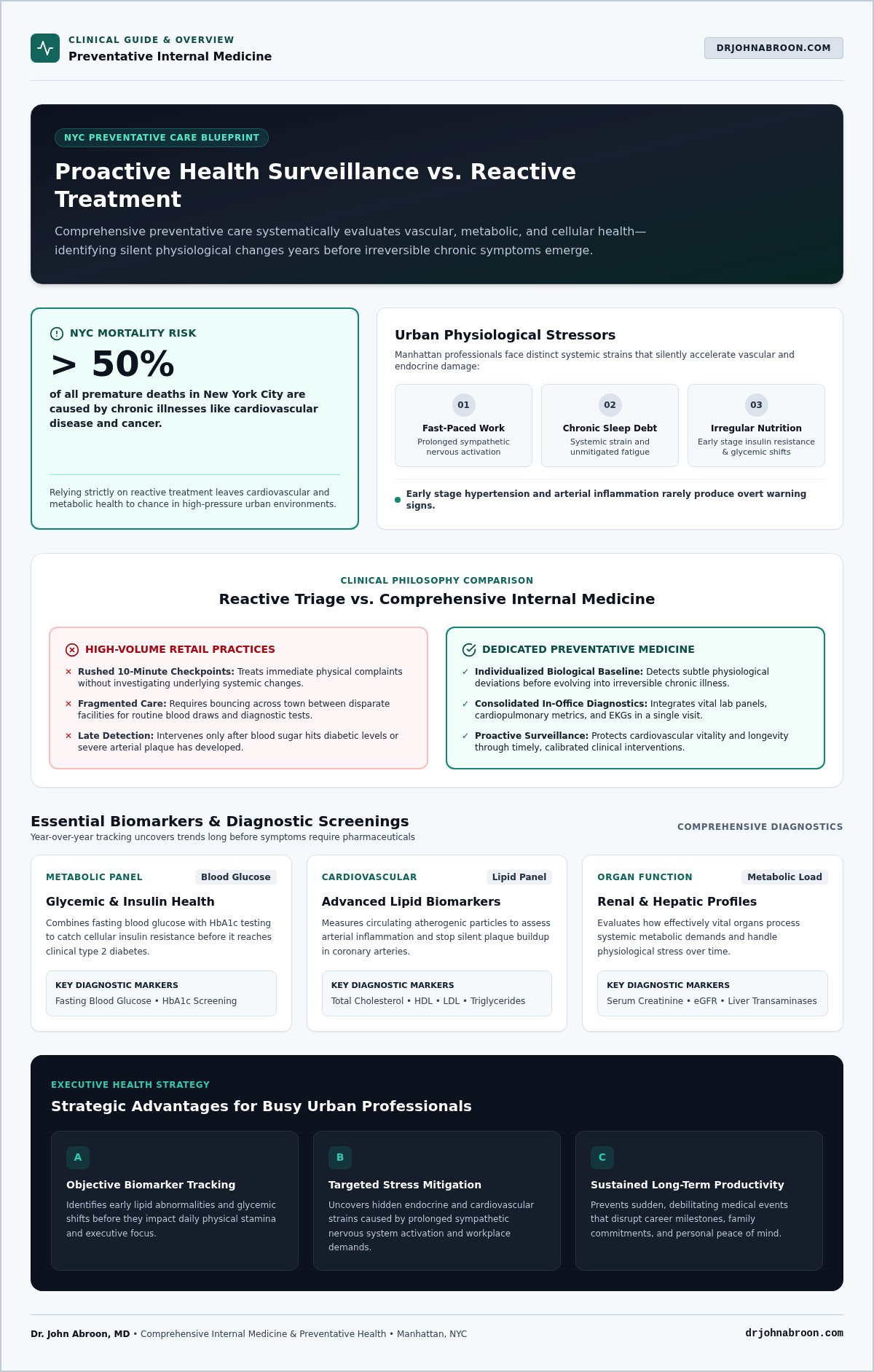
Preventative medical care represents a proactive clinical strategy designed to stop disease before symptoms ever surface. While reactive medicine waits for acute discomfort or illness to prompt an emergency visit, rigorous preventive healthcare measures systematically evaluate your vascular, metabolic, and cellular health. In New York City, where chronic illnesses like cardiovascular disease and cancer account for over half of all premature deaths, relying strictly on reactive treatment leaves your health to chance.
Living in Manhattan brings distinct physiological stressors. Fast-paced work environments, chronic sleep debt, and irregular nutrition silently strain your cardiovascular and endocrine systems. Early stage hypertension, insulin resistance, and arterial inflammation rarely produce overt warning signs. Consistent preventative evaluations establish an individualized biological baseline, allowing an attentive physician to detect subtle physiological deviations before they evolve into irreversible chronic conditions.
The Clinical Philosophy of Prevention vs. Symptom Treatment
Vascular and metabolic damage develops quietly over years. Plaque builds gradually in coronary arteries, and cellular insulin sensitivity diminishes long before blood sugar reaches diabetic thresholds. Routine retail clinic visits often function as triage, treating immediate physical complaints without investigating underlying systemic changes. In contrast, comprehensive preventative assessments utilize targeted lab panels and diagnostic screenings to identify silent pathology early. This decisive approach spares patients from lifelong chronic disease management, preserving cardiovascular vitality and overall longevity through timely, calibrated medical interventions.
Why Proactive Health Matters for Busy Urban Professionals
Demanding careers frequently disguise the early stages of physical burnout and metabolic dysfunction. High-performing professionals often push through fatigue, attributing elevated blood pressure or digestive irregularities to workplace stress. Seeking out dedicated preventative care services nyc professionals trust creates an intentional buffer against insidious health decline.
Scheduled preventative assessments offer clear strategic advantages for executives and busy individuals:
- Objective Biomarker Tracking: Identify early lipid abnormalities and glycemic shifts before they impact daily stamina.
- Targeted Stress Mitigation: Uncover hidden endocrine and cardiovascular strains caused by prolonged sympathetic nervous system activation.
- Sustained Productivity: Prevent sudden, debilitating medical events that disrupt career milestones and family commitments.
Investing in comprehensive preventative care services nyc residents depend on transforms annual checkups from routine box-checking exercises into valuable strategic health protection.
Core Preventative Care Services: Essential Screenings and Diagnostics
A comprehensive preventative evaluation moves far beyond a basic temperature check and a hurried chest auscultation. To genuinely safeguard your health, preventative care services nyc practitioners offer must integrate precise laboratory medicine, cardiopulmonary metrics, and rigorous oncological risk assessments. Evaluating these diagnostic markers under one roof provides an interconnected map of your physiological baseline.
Comprehensive Laboratory Panels and Biomarker Tracking
Routine wellness blood work establishes the foundation of proactive clinical surveillance. Rather than reviewing isolated values, an internist evaluates broader biomarker panels to catch early cellular stress:
- Metabolic and Glycemic Health: Fasting blood glucose paired with HbA1c testing flags insulin resistance before it reaches clinical type 2 diabetes.
- Renal and Hepatic Profiles: Serum creatinine, glomerular filtration rates (eGFR), and liver transaminases reveal how effectively vital organs process systemic metabolic demands.
- Advanced Lipid Biomarkers: Total cholesterol, HDL, LDL, and triglyceride fractions assess circulating atherogenic particles that drive plaque formation.
Year-over-year laboratory tracking uncovers subtle biological trends, allowing for targeted lifestyle adjustments long before symptoms require pharmaceuticals.
In-Office Cardiovascular and Pulmonary Diagnostic Screenings
Standard blood work cannot capture immediate electrical or mechanical heart changes. For urban adults living under chronic sympathetic nervous activation, on-site testing bridges this diagnostic gap. A resting 12-lead electrocardiogram (ECG) detects silent arrhythmias, conduction delays, and subclinical ventricular hypertrophy right in the exam room. For patients exposed to dense city air or past tobacco use, non-invasive spirometry assesses forced expiratory volume, highlighting early airway obstruction before shortness of breath appears. Performing these point-of-care diagnostics during your appointment eliminates the delay of third-party imaging facilities.
Routine Cancer and Metabolic Risk Assessments
Effective oncological prevention requires strict alignment with established national guidelines alongside individualized genetic reviews. A primary care assessment synthesizes family history with verified protocols like the USPSTF A and B recommendations, mapping out your timeline for colorectal, cervical, breast, and prostate evaluations. It also includes thorough dermatological examinations to spot suspicious melanocytic lesions early.
If you’re seeking to establish your baseline health with thorough on-site diagnostics, you can schedule an annual physical exam to review your complete biomarker profile in a comfortable setting.
Choosing Your Provider: High-Volume Clinics vs. Dedicated Internal Medicine
Selecting where you receive care profoundly impacts diagnostic precision. In Manhattan, healthcare delivery often splits into two models: corporate retail clinics built for speed, and independent private practices built for longevity. While high-volume clinics fulfill an urgent need for acute, minor illnesses, they fall short of providing thorough preventative care services nyc patients need for lifelong health preservation.
Navigating insurance mandates for covered preventive care services guarantees that certain screenings cost zero dollars out of pocket. However, insurance coverage alone doesn’t guarantee a clinician will take the time to evaluate subtle trends across those results. The environment where your care takes place matters just as much as the tests ordered.
The Hidden Costs of Rushed, Fragmented Medical Care
Assembly-line clinics operate on relentless volume quotas. Doctors in these environments face strict scheduling windows, often spending under ten minutes per patient. Such tight timeframes force clinicians to focus solely on immediate complaints while ignoring nuanced family histories and gradual lifestyle shifts. Rapid staff turnover means you rarely see the same practitioner twice, completely erasing clinical continuity.
Fragmented networks also rely heavily on off-site lab centers and third-party imaging facilities. This decentralized setup forces patients to coordinate their own referrals, manage delayed lab reports, and bridge communication gaps when records fail to transfer smoothly. Subtle, subclinical patterns easily get lost between disparate electronic records systems.
The Value of an Independent Board-Certified Internist
Internal medicine specialists focus exclusively on the complexities of adult physiology. Rather than triaging episodic bugs, an internist acts as an intellectual investigator, connecting lab markers, lifestyle demands, and family medical histories. Independent practitioners answer to their patients rather than corporate volume targets, ensuring consultations remain thorough, thoughtful, and unhurried.
Longitudinal care creates immense diagnostic leverage. When a physician knows your physiological baseline over years, a slight rise in blood pressure or a modest shift in liver enzymes triggers immediate clinical attention. Partnering with an attentive primary care physician nyc professionals rely on ensures your medical decisions stem from mutual trust and meticulous diagnostic follow-through.
Direct communication and in-house diagnostic capabilities eliminate the administrative friction that delays clinical action. When evaluating potential preventative care services nyc providers, prioritize practices that combine clinical authority with personal continuity.
Preventative Health Milestones by Age and Lifestyle in New York City
Urban life accelerates physical demands, making a structured preventative roadmap essential. Your diagnostic priorities must evolve across each decade, transitioning from establishing healthy baselines in early adulthood to targeted vascular and metabolic surveillance later in life. Tailored preventative care services nyc clinics deliver should align directly with your age, genetics, and daily habits.
Preventative Milestones for Adults in Their 20s, 30s, and 40s
During your 20s and early 30s, clinical evaluations focus on capturing your biological baseline and catching subtle cardiovascular patterns early. By your late 30s and 40s, high-stress professional environments often trigger early metabolic shifts that demand active clinical attention:
- Ages 20 to 39: Baseline lipid profiles, resting blood pressure evaluations, metabolic panels, and adult immunization reviews.
- Ages 40 to 49: Regular screening for prediabetes and type 2 diabetes, biennial mammography beginning at age 40, and routine colorectal cancer screening starting at age 45.
Catching insulin resistance or borderline hypertension during this critical window prevents irreversible arterial stiffening later in life.
Advanced Screenings for Adults Age 50 and Beyond
Entering your 50s requires deeper oncological, hormonal, and vascular assessments. Routine colonoscopies or non-invasive stool tests must stay on schedule, while bone density scans screen for early osteopenia. For individuals with relevant tobacco histories, annual low-dose computed tomography (LDCT) lung screenings offer vital protection. Coordinating these diagnostic updates during an in-depth annual physical exam nyc ensures subtle changes in cardiac function, cognition, or joint health are managed swiftly.
Urban Lifestyle Considerations: Travel Medicine and Executive Health
Manhattan professionals frequently face lifestyle risks that standard medical checklists overlook. Frequent international business trips require proactive travel medicine, including destination-specific immunizations and prophylactic regimens to prevent tropical infections. Chronic work stress and sleep disruption also place heavy demands on your endocrine system.
Busy executives looking for direct physician access and comprehensive preventative coordination often choose personalized concierge medicine nyc options. This high-touch model guarantees your health strategy keeps pace with demanding international schedules.
To establish your proactive health plan with preventative care services nyc residents trust, schedule an unhurried preventative consultation today.
Comprehensive Preventative Medicine with Dr. John Abroon on the Upper East Side
Securing high-caliber preventative care requires a clinical environment where your health story is heard and thoroughly investigated. Located on Manhattan’s Upper East Side, Dr. John Abroon provides dedicated preventative care services nyc residents rely on for clear answers and individualized treatment plans. By pairing clinical rigor with an unhurried, patient-focused approach, our practice ensures you never feel like a number on a daily clinic chart.
Over 25 Years of Dedicated Primary Care in Manhattan
Dr. Abroon has cared for patients across New York City since 1997. As a board-certified internist with over 25 years of private practice experience, he understands the subtle physical toll of living and working in an intense urban center. Our practice cultivates a calm, welcoming atmosphere designed to alleviate medical anxiety. Here, consultations are unhurried conversations that explore your complete biological history, stress levels, and personal health goals.
The Integrated Preventative Visit: From Consultation to Diagnostic Results
Fragmented medical care causes unnecessary friction and delayed decisions. Dr. Abroon consolidates your clinical evaluation by integrating essential diagnostic testing directly into the office visit. During your evaluation, you can complete:
- On-Site Laboratory Draws: Comprehensive metabolic panels, lipid profiles, and biomarker assessments performed without third-party transit delays.
- In-Office Electrocardiograms: Immediate resting cardiac electrical evaluations to spot subclinical abnormalities right away.
- Direct Physician Review: Clear discussions where Dr. Abroon translates complex data into practical, sustainable wellness strategies.
Completing your assessment under one roof saves valuable time and ensures nothing gets lost between outside clinics and specialty networks.
Take the Proactive Step: Scheduling Your Preventative Consultation
Protecting your vitality requires intentional planning rather than waiting for acute symptoms to disrupt your life. Preparing for your visit is straightforward: gather any recent lab records, compile a list of current prescriptions or supplements, and note any family medical developments. Taking these simple steps allows Dr. Abroon to tailor your diagnostic roadmap with maximum precision.
Prioritizing your well-being today establishes an enduring baseline for tomorrow. You can take control of your long-term health when you schedule a comprehensive preventative consultation with Dr. John Abroon at our Upper East Side office.
Invest in Your Lifelong Health and Vitality
Proactive healthcare is an active investment in your future. By replacing hurried clinic visits with thorough biomarker evaluations and age-appropriate screenings, you protect your body against silent cardiovascular and metabolic conditions before symptoms emerge. Choosing the right preventative care services nyc offers means partnering with a physician who views your health as a lifelong continuum rather than an isolated transaction.
Since 1997, board-certified internist Dr. John Abroon has provided Upper East Side patients with attentive, unhurried care. Backed by a comprehensive on-site diagnostic suite that includes resting EKGs, spirometry, and full-spectrum lab processing, our clinic delivers clear answers without the stress of fragmented referrals. Schedule your comprehensive preventative health examination with Dr. John Abroon today, and take the definitive step toward lasting vitality and peace of mind.
Frequently Asked Questions
What services are typically included in preventative care in NYC?
Comprehensive preventative care services nyc practices offer include detailed physical exams, metabolic blood panels, advanced lipid testing, resting electrocardiograms, pulmonary function assessments, and age-appropriate cancer screenings. Additionally, visits incorporate adult immunizations, vital sign monitoring, and customized lifestyle risk counseling. In private internal medicine clinics, diagnostic collections often occur directly on-site to provide immediate baseline health clarity without outside referrals.
How does preventative care differ from a standard sick visit?
A standard sick visit is reactive triage focused on treating an immediate acute symptom, such as an infection, injury, or sudden flare-up. Preventative care is proactive and holistic, evaluating your entire physiology while you feel completely healthy. Instead of prescribing quick symptomatic relief, your internist investigates subtle metabolic and cardiovascular shifts to prevent silent chronic conditions before they ever cause noticeable physical distress.
Is an EKG considered part of a routine preventative medical evaluation?
While standard insurance checklists often classify resting EKGs as diagnostic, experienced internists frequently include in-office 12-lead electrocardiograms during comprehensive physicals. An EKG captures your baseline cardiac electrical activity, helping detect silent arrhythmias, conduction delays, or chamber enlargement. Identifying these subtle markers early allows your physician to intervene with proactive cardiovascular strategies long before significant symptoms like chest pain or palpitations ever arise.
Can healthy young adults benefit from annual preventative health screenings?
Yes, healthy young adults benefit significantly by establishing early biological baselines for blood pressure, blood glucose, and lipid fractions. Conditions such as familial hypercholesterolemia, borderline hypertension, and early insulin resistance often develop quietly during your 20s and 30s. Engaging early with comprehensive preventative care services nyc doctors provide ensures these subtle shifts are managed swiftly through tailored nutritional and lifestyle interventions.
How frequently should I schedule preventative checkups with my internist?
Most adults should schedule a comprehensive preventative examination once every calendar year. An annual cadence ensures your physician can monitor subtle year-over-year biomarker fluctuations, maintain updated immunizations, and adjust screening protocols as you pass key age milestones. If you have pre-existing cardiovascular risk factors or a complex family medical history, your internist may recommend targeted bi-annual check-ins to monitor specific physiological markers.
What should I bring to my preventative care appointment in Manhattan?
Bring an up-to-date list of all prescription medications, over-the-counter supplements, and exact dosages, along with your photo identification and insurance card. It’s also helpful to gather past laboratory records, diagnostic imaging reports, and documented family medical history. Writing down specific lifestyle questions or subtle physical changes beforehand helps your internist make the most of your unhurried consultation time.
What happens if a preventative screening reveals an unexpected abnormal result?
An abnormal finding immediately transitions your care from routine surveillance to targeted diagnostic investigation. Your internist will discuss the clinical implications directly with you, explaining what the data means in plain language. From there, your doctor outlines a precise follow-up plan, which may involve specialized confirmatory labs, advanced imaging, or targeted lifestyle interventions, ensuring any emerging health concern is managed calmly and decisively.