


Could a sore arm or a day of fatigue after a travel vaccine put your plans at risk? Mild symptoms often settle within 24 to 48 hours, but reactions vary by vaccine and person. These recovery tips after travel vaccinations can help you feel more comfortable while you monitor your symptoms and know when to seek medical attention.
Soreness, a mild fever, or a headache can raise questions, especially when departure is close. Rest, fluids, and a cool compress may help with mild discomfort. Symptoms that are severe, persist, or include difficulty breathing or facial swelling need prompt medical attention.
This checklist covers common reactions, practical self-care, and signs that mean you should seek advice rather than wait. Your vaccine, health history, and itinerary all matter, so personalized travel-health guidance can also help you plan with greater confidence.
Key Takeaways
- Reactions vary by vaccine and person. Mild symptoms are a possible response, not proof that a vaccine has worked.
- Use simple recovery tips after travel vaccinations, such as resting as needed, drinking fluids, and gently moving your arm if comfortable.
- Note your symptoms and how severe they are, then choose routine monitoring, prompt medical advice, or emergency care as appropriate.
- Plan travel-health care early because vaccine schedules and timing differ by vaccine and destination.
- Seek personalized clinical guidance about persistent symptoms or questions involving your health history, medications, or past vaccine reactions.
Recovery after travel vaccinations: what to expect in the first hours and days
Many people return to their usual activities after a travel vaccine, while others notice temporary discomfort. Both experiences can be normal. A reaction is the body’s response to a vaccine, not proof that the vaccine has worked. Likewise, having no symptoms doesn’t mean it hasn’t.
Travel vaccines differ, so the symptoms you may notice and when they appear depend on the vaccine and your individual response. The CDC describes common reactions such as soreness, redness, or swelling where the injection was given. Some vaccines may also be associated with fatigue, headache, or a mild fever. Check the aftercare instructions for the vaccine you received. For wider context, travel medicine focuses on protecting health before and during trips, including through immunization and other preventive care.
Quick distinction
- Routine aftercare: Mild, manageable symptoms that don’t significantly affect breathing or alertness. Track how you feel and follow the instructions you received for your vaccine.
- Get prompt medical advice: Symptoms that are severe, worsening, concerning, or lasting beyond the expected period described in your instructions.
- Seek emergency care: Trouble breathing, swelling of the face or throat, or other signs of a severe allergic reaction. Don’t wait for these symptoms to pass.
Which mild reactions can occur after travel vaccines?
The injected arm may feel sore or show some redness or swelling. Depending on the vaccine, you may also experience fatigue, headache, or a mild fever. These effects don’t happen to everyone, and their timing and intensity vary. If a symptom feels unusually intense or differs from the guidance you received, seek medical advice instead of assuming it’s routine.
Why vaccine reactions differ from person to person
Your experience can depend on the vaccine, its dose schedule, your health history, and your individual response. Some travel vaccines are given in multiple doses, so the timing of doses and reactions can differ. A symptom after vaccination doesn’t automatically mean you have an infection. Consider its severity and pattern, and consult a clinician if you’re unsure.
Vaccine reactions vary because the vaccine, dose schedule, and person all matter. CDC guidance notes that side effects differ by vaccine and individual. A travel-medicine clinician can consider your itinerary and health history alongside the vaccine you received. The recovery tips after travel vaccinations that work for one traveler may not suit another, so treat general advice as a starting point, not a diagnosis.
Simple recovery tips after travel vaccinations that you can use at home
A few simple steps may make routine soreness or feeling a little off easier to manage. The best recovery tips after travel vaccinations are practical, flexible, and consistent with the instructions for your vaccine. The CDC’s overview of common vaccine side effects explains typical reactions and why guidance may differ between vaccines.
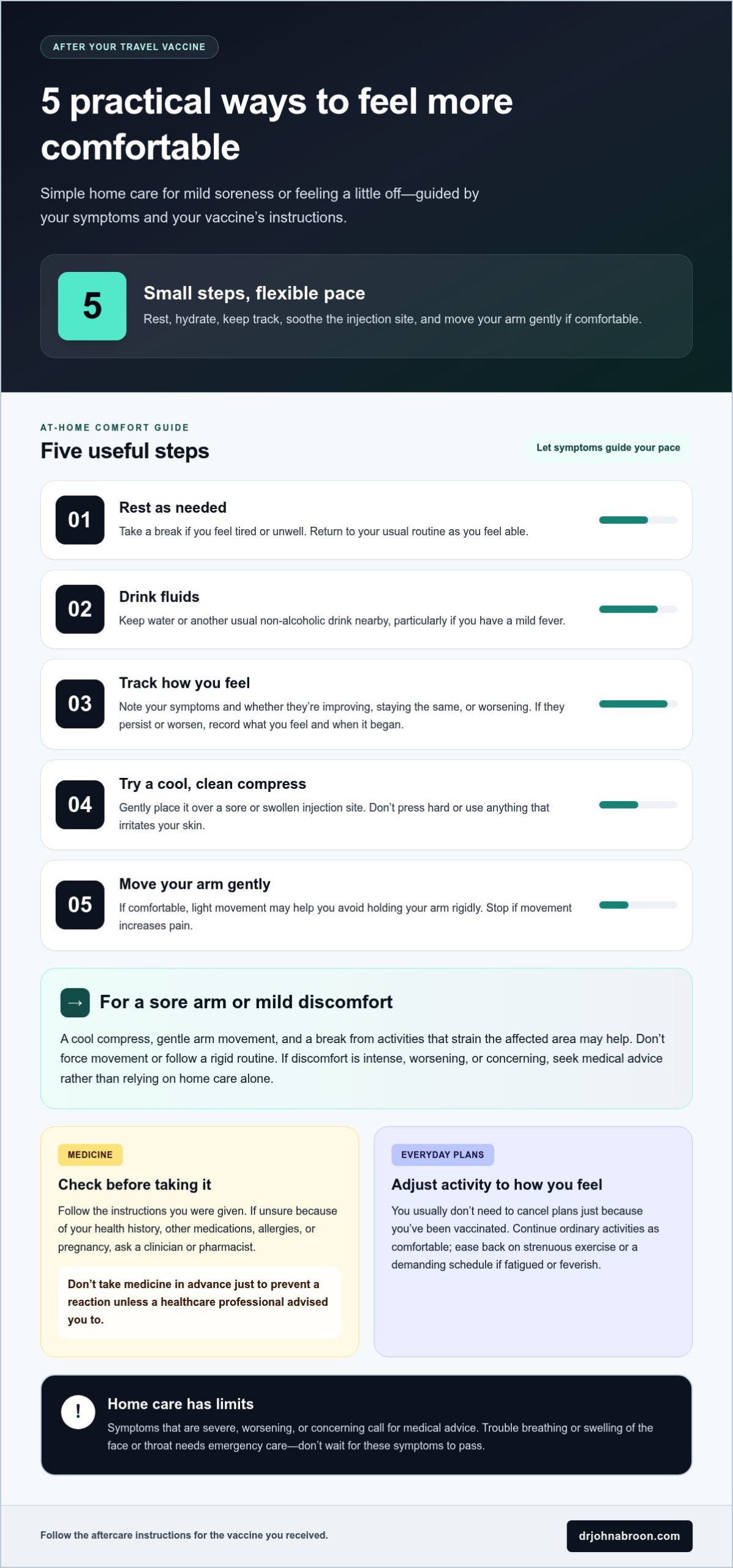
- Rest as needed. Take a break if you feel tired or unwell, then return to your usual routine as you feel able.
- Drink fluids. Keep water or another usual non-alcoholic drink nearby, particularly if you have a mild fever.
- Track how you feel. Note your symptoms and whether they’re improving, staying the same, or worsening.
- Try a cool, clean compress. Gently place it over a sore or swollen injection site for comfort. Don’t press hard or use anything that irritates your skin.
- Move your arm gently. If comfortable, light movement may help you avoid holding the arm rigidly. Stop if movement increases pain.
How to ease a sore arm or mild discomfort
For local soreness, try a cool compress, gentle arm movement, and a break from activities that strain the affected area. Tenderness may make you protective of the arm, but there’s no need to force movement or follow a rigid routine. If discomfort is intense, worsening, or concerning, seek medical advice rather than relying on home care alone.
Before taking an over-the-counter medicine, follow the instructions you were given. If you’re unsure whether a medicine is appropriate because of your health history, other medications, allergies, or pregnancy, ask a clinician or pharmacist. Don’t take medicine in advance simply to prevent a reaction unless a healthcare professional has advised you to do so.
How to pace work, exercise, and everyday plans
You usually don’t need to cancel plans just because you’ve been vaccinated. Let your symptoms guide your pace. If you feel well, continue ordinary activities as comfortable. If you feel fatigued or feverish, consider easing back on strenuous exercise or a demanding schedule until you feel better. Recommendations can differ based on the vaccine and your circumstances.
If symptoms persist or worsen, write down what you’re experiencing and when it began. A brief record can make a conversation with a clinician more useful. If your questions relate to your health history or travel plans, consider individualized travel medicine guidance.
Normal reaction or warning sign? How to decide what to do
A sore injection site or feeling tired can occur after vaccination, but no single symptom tells you whether a reaction is harmless. Consider what you’re experiencing, how intense it is, and whether it’s changing. Your health history and the vaccine you received also matter.
Use this three-step check to decide what to do next:
- Note the symptom. Be specific. Record where swelling is, when it began, and whether you have other symptoms.
- Assess its severity and pattern. Is it mild and manageable, or severe, worsening quickly, or affecting breathing or alertness?
- Choose the level of care. Monitor mild symptoms using the instructions for your vaccine, contact a clinician promptly about concerning or worsening symptoms, and call emergency services for signs of a severe allergic reaction.
When mild symptoms can usually be monitored
Mild arm discomfort or tiredness can occur after a vaccine, but that alone can’t establish the cause or predict how symptoms will progress. If symptoms are manageable and not worsening, track any changes and review the information for your specific vaccine. The NHS’s Travel vaccination planning guidance offers general information for travelers, but your personal instructions may differ. Seek medical advice if you’re uncertain, have relevant health concerns, or notice your symptoms becoming more severe.
When to seek urgent or emergency medical care
A severe allergic reaction is uncommon, but it can become life-threatening and needs immediate attention. Warning signs can include difficulty breathing, swelling of the face or throat, a fast heartbeat, dizziness, or weakness. If these occur, call emergency services. Don’t wait to see whether they pass or try to manage them at home.
Trouble breathing or swelling of the face or throat means emergency care. Worsening or unusual symptoms without those emergency signs still deserve prompt clinical advice. This distinction can help you act decisively without treating every mild reaction as an emergency. If symptoms are rapidly worsening, severe, or concerning to you, seek timely professional assessment. General recovery tips after travel vaccinations can support routine care, but they can’t determine the cause of your symptoms.
Travel planning after vaccination: a practical checklist before departure
Travel involves several moving parts, and vaccine timing is worth sorting out early. Some vaccines require more than one dose, and recommended intervals vary by vaccine. Planning ahead gives a clinician the opportunity to consider your destination, itinerary, health history, and timing together rather than relying on a one-size-fits-all rule.
Before departure, use this checklist:
- Share your itinerary. Bring your departure date, destinations, and planned activities to your travel-health appointment. A city stay, rural travel, and outdoor activities can involve different health considerations.
- Review the vaccine schedule. Ask how many doses are recommended and how they fit before your trip. Don’t assume one vaccine’s timing applies to another.
- Keep key documents together. Store vaccination records and written aftercare instructions somewhere accessible, including while traveling.
- Make a brief symptom record. If you feel unwell, note when symptoms began, how severe they are, and whether they change. Include medicines you take or have taken so the details are ready if you need clinical advice.
How to plan around a travel date
Discuss your departure date, destination, and activities during travel-health care, especially if your trip is approaching or includes multiple stops. There isn’t a universal number of days to wait before flying after every travel vaccine. A clinician can offer guidance based on the vaccine schedule, your health history, and the trip. New York travelers may also need to plan around a multi-stop itinerary or limited time between vaccination and departure.
What to keep handy while you recover
Keep your vaccine documentation and written instructions in one easy-to-find place. If symptoms arise, make a short note of their timing, severity, and changes, along with any relevant medicines. This can make follow-up more focused. For a broader overview of preparation, see this New York travel medicine guide.
Questions about vaccine timing or symptoms can depend on your itinerary and personal health needs. For individualized planning, schedule travel medicine guidance with Dr. John Abroon’s practice.
When personalized travel-vaccine advice can help you recover with confidence
General aftercare can help you manage mild discomfort, but it can’t account for every health history or determine what’s causing an individual symptom. Consider personalized advice if symptoms persist or concern you, if you’ve had a previous vaccine reaction, or if you have questions about medications, allergies, or an underlying health condition. Not every mild reaction needs a visit. The goal is to get appropriate guidance when your circumstances call for it.
Travel-health questions may connect recovery to the wider trip. The vaccine you received, your destination, and your departure date can all shape the advice that’s relevant to you. Dr. John Abroon is a board-certified internist and primary care physician whose New York City practice offers travel medicine. A personalized discussion can take your symptoms, health needs, and itinerary into account.
Questions to raise with a clinician
To make a conversation more useful, share the details you have rather than trying to diagnose the reaction yourself. Bring or note:
- The vaccine you received and when you received it.
- When symptoms started, how severe they feel, and whether they’re improving or worsening.
- Your relevant health history, allergies, current medicines, and any prior vaccine reactions.
- Your upcoming travel dates, destination, and planned activities.
If you’re in New York, local travel-medicine care can help you discuss these questions in the context of your plans. Individualized guidance can be useful when your circumstances call for it, but it isn’t necessary for every traveler or every mild symptom. Recovery tips after travel vaccinations can offer a starting point, but they can’t assess your symptoms or replace a clinician’s evaluation when one is needed.
How a travel-health consultation supports the wider trip
A travel-health conversation can connect vaccine questions with destination-specific prevention and your broader health needs. This perspective may be especially helpful if your itinerary is complex, your departure is approaching, or you’re unsure how a symptom fits with your medical history. Individual guidance can help you make an informed plan without assuming every traveler needs the same advice.
For a personalized conversation about travel health, Explore travel medicine care.
Recover with confidence and plan your next steps
Useful recovery tips after travel vaccinations are simple: rest as needed, drink fluids, and pay attention to how you feel. Mild reactions vary by vaccine and person, so follow the specific aftercare instructions you received. If symptoms become severe or rapidly worsen, or you notice trouble breathing or swelling of the face or throat, seek urgent help.
If you have questions related to your health history, medications, previous reactions, or itinerary, personalized guidance can help you make a more informed plan. Dr. John Abroon is a board-certified internist and primary care physician whose New York City practice offers travel medicine.
To discuss travel-health questions with a clinician, explore travel medicine care with Dr. Abroon. Contact the practice to plan a travel-health consultation in New York.
Frequently Asked Questions
How long do side effects from travel vaccinations usually last?
There isn’t one timeline that applies to every travel vaccine or every person. Local soreness or fatigue may be temporary, but the vaccine and your individual response affect what to expect. Follow the aftercare information provided for your immunization, and note whether symptoms are improving or changing. If they’re severe, worsening, or lasting longer than the instructions suggest, contact a clinician for advice tailored to your situation.
What should I do after getting travel vaccinations?
Rest if you feel tired, drink fluids, and pay attention to how you’re feeling. For ordinary injection-site discomfort, a cool, clean compress or gentle arm movement may help if comfortable. Follow the instructions for your specific vaccine, and ask a clinician or pharmacist before taking medicine if you’re unsure what’s appropriate. These recovery tips after travel vaccinations can support routine aftercare, but severe or rapidly worsening symptoms need prompt medical attention.
Is it normal to feel tired after travel vaccines?
Some people feel tired after vaccination, while others don’t. Fatigue can also have causes unrelated to a vaccine. Rest as needed and notice whether you’re improving or feeling worse. Check the aftercare guidance for the vaccine you received. If fatigue is severe, persistent, accompanied by other concerning symptoms, or makes you unsure about traveling safely from New York, contact a healthcare professional for personalized advice.
Can I exercise after getting travel vaccinations?
There’s no single activity rule that fits every vaccine and person. If you feel well, follow the vaccine-specific instructions you received. If you’re tired or unwell, consider scaling back strenuous exercise and resting until you feel better. Your health conditions and planned activity can affect what’s sensible. If you have unusual symptoms or concerns about a particular workout, ask a clinician rather than relying on a universal restriction.
Can I fly after getting travel vaccinations?
A travel vaccine doesn’t create one universal waiting period for flying. Consider how you feel, your health history, the vaccine schedule, and your departure plans from New York. If you have significant symptoms, a complex series of doses, or other medical concerns, ask a travel-health clinician for individualized guidance. Don’t delay urgent care to catch a flight if you develop signs of a severe reaction or rapidly worsening symptoms.
What happens if I develop a fever after a travel vaccine?
A mild fever can occur after some vaccines, but the likelihood and expected course depend on the vaccine and individual. Follow the instructions for your immunization and monitor how you feel. If you’re unsure whether medicine is appropriate, ask a clinician or pharmacist. Seek prompt medical advice for a fever that’s high, persistent, worsening, or concerning to you. Severe symptoms, especially trouble breathing or facial or throat swelling, require emergency care.
What are the warning signs of a serious vaccine reaction?
Trouble breathing or swelling of the face or throat can signal a severe allergic reaction and requires immediate emergency care. Serious reactions are uncommon, but don’t wait to see if these symptoms pass. Call emergency services for breathing difficulty or rapidly worsening symptoms. For other unusual, persistent, or concerning reactions, contact a healthcare professional promptly and share which vaccine you received, when symptoms began, and how they’ve changed.