


What if the most important preparation for your journey to Thailand or Indonesia isn’t found in a packing list, but in a personalized medical strategy? It’s common to feel overwhelmed by conflicting online forums and the sheer complexity of tropical disease prevention. You want to focus on your itinerary, yet the anxiety of navigating Malaria risks or Dengue precautions can cast a shadow over your excitement. Finding a trusted physician on the Upper East Side who truly understands international travel is the first step toward peace of mind.
This guide delivers expert travel health advice for southeast asia nyc, offering a clear roadmap for your upcoming trip. You’ll learn how a board-certified internist tailors vaccinations and prescriptions to your specific destination, whether you’re visiting urban hubs or rural escapes. We will cover the essential 4 to 6 week preparation window, current CDC guidelines for 2026, and practical methods to maintain your well-being in tropical climates. By the end, you’ll have the clinical clarity needed to travel with absolute confidence.
Key Takeaways
- Begin your medical preparation at least four to six weeks before departure to ensure all vaccine series are complete and effective before your long-haul flight.
- Distinguish between core immunizations like Hepatitis A and situational vaccines such as Japanese Encephalitis based on your specific travel itinerary.
- Receive expert travel health advice for southeast asia nyc to navigate the varying risks between urban luxury stays and rural eco-adventures.
- Build a professional-grade medical kit and maintain digital records of your immunizations to handle local health requirements with ease.
- Consult a board-certified internist on the Upper East Side for a holistic pre-travel evaluation that includes baseline diagnostic testing for total peace of mind.
Preparing for Southeast Asia: Why NYC Travelers Need a Head Start
Departing from JFK or Newark for a journey to Southeast Asia is a physical marathon. These 18 to 20 hour flights do more than just cause significant jet lag; they place immense stress on your circulatory system and dehydrate your body long before you step into the tropical humidity of Thailand or Vietnam. For a busy New Yorker, understanding the principles of travel medicine isn’t just a box to tick. It’s a vital diagnostic step to ensure your body can handle the transition from a temperate urban environment to a high-heat, high-pathogen region. Seeking professional travel health advice for southeast asia nyc early allows us to address these physiological impacts before they compromise your trip.
The 2026 health landscape in Southeast Asia is complex, with updated CDC guidelines and new vaccine options for conditions like Chikungunya. Relying on a quick shot from a retail pharmacist often misses the broader clinical picture. A board-certified internist provides a personalized consultation that evaluates your full medical history, ensuring that vaccinations and preventive prescriptions don’t conflict with your current health regimen. Because your immune system requires time to respond to immunizations, starting this process early is the only way to guarantee full protection.
The NYC Traveler’s Health Timeline
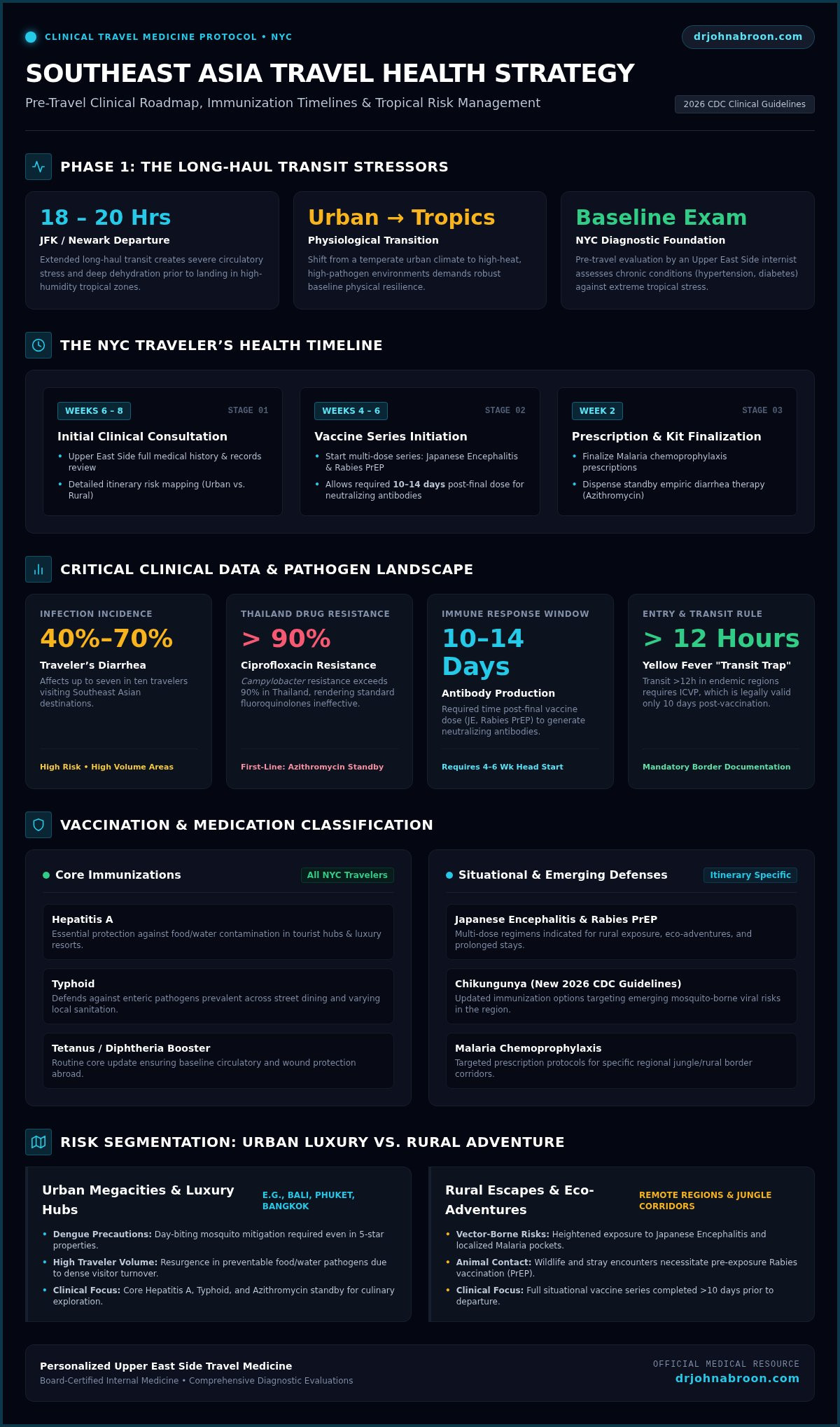
Timing is everything when you’re managing a demanding Manhattan schedule. Most travelers need at least a month to achieve full immunity. We recommend this structured approach to stay ahead of the curve:
- Weeks 6-8: Schedule your initial consultation on the Upper East Side. We review your specific itinerary and past medical records to determine exactly what you need.
- Weeks 4-6: Begin your vaccine series. This is critical for immunizations like Japanese Encephalitis or the multi-dose Rabies PrEP, as your body needs 10 to 14 days after the final dose to produce neutralizing antibodies.
- Week 2: Finalize your travel health advice for southeast asia nyc with prescriptions for malaria prophylaxis and localized treatments for traveler’s diarrhea.
Why Your Current Health Status Dictates Your Travel Prep
Your safety abroad depends entirely on your baseline health here at home. An annual physical exam nyc serves as the essential foundation for any international journey. Chronic conditions such as hypertension or diabetes require specialized management when exposed to the extreme humidity and potential food-borne illnesses of the tropics. Dr. Abroon conducts a personalized risk assessment based on your Manhattan lifestyle and fitness level. By integrating your travel medicine nyc preparation with a holistic view of your well-being, we ensure you have the resilience needed for both urban megacities and rural adventures.
Essential Travel Vaccinations and Medications for Southeast Asia
Securing the right immunizations involves more than just checking a list. While popular tourist hubs like Bali and Phuket offer world-class luxury, they’ve also seen a resurgence in preventable diseases due to high traveler volume and varying local sanitation standards. Expert travel health advice for southeast asia nyc prioritizes core defenses against Hepatitis A, Typhoid, and Tetanus/Diphtheria. We also address the high risk of traveler’s diarrhea, which affects 40% to 70% of visitors. Because Campylobacter resistance to older antibiotics like Ciprofloxacin now exceeds 90% in Thailand, we provide standby prescriptions of Azithromycin as the current first-line empiric therapy. Having these defenses ready allows you to explore local cuisine with significantly less anxiety.
Required vs. Recommended Immunizations
Understanding the distinction between what is recommended for your health and what is required for entry is vital. For example, Southeast Asia does not harbor Yellow Fever, but most nations enforce a strict “transit trap” rule. If your flight from New York transits through an endemic region in Africa or South America for longer than 12 hours, you must present an International Certificate of Vaccination or Prophylaxis (ICVP). According to CDC Travelers’ Health destination guidance, this certificate only becomes valid 10 days after the injection. We also ensure your 2026 itinerary accounts for the latest Chikungunya vaccine approvals, IXCHIQ and Vimkunya, which are now recommended for those visiting active outbreak zones. For a complete breakdown of these requirements, you can review our travel medicine nyc resources to stay fully informed.
Malaria, Zika, and Dengue: Beyond the Needle
Vector-borne diseases require a dual strategy of medication and physical protection. When choosing malaria prophylaxis, we compare Malarone and Doxycycline based on your specific itinerary and potential side effects. While urban centers like Bangkok or Singapore carry virtually no malaria risk, rural trekking necessitates consistent chemoprophylaxis. Dengue fever remains hyperendemic across the region, yet the FDA-approved vaccine, Dengvaxia, is not indicated for general U.S. travelers. Instead, we focus on high-efficacy repellents like Picaridin to protect against day-biting Aedes mosquitoes. Managing these risks through a structured clinical plan provides the psychological peace of mind necessary to truly enjoy your vacation. Our goal is to replace confusion with a decisive medical roadmap tailored to your body and your journey.
Navigating Regional Health Risks: Urban Luxury vs. Rural Adventure
Your health risks in Southeast Asia shift dramatically depending on whether you’re dining at a Michelin-starred restaurant in Singapore or trekking through the Sapa Valley. While high-end resorts offer a sense of security, the underlying regional health landscape requires a nuanced approach. Professional travel health advice for southeast asia nyc helps you differentiate between the environmental stressors of a megacity and the biological risks of the backcountry. In cities like Bangkok, air quality and extreme humidity often pose a greater immediate threat to your well-being than tropical diseases, potentially triggering respiratory issues or heat exhaustion for those unaccustomed to the climate. Balancing these factors is a core component of a sophisticated travel strategy.
Adhering to the “boil it, cook it, peel it, or forget it” rule remains the gold standard for avoiding gastrointestinal distress. Even in luxury settings, hidden risks exist in ice made from tap water or salads washed in local streams. If you do experience symptoms, follow a strict protocol: stay hydrated with oral rehydration salts and use your prescribed Azithromycin if symptoms become severe. This proactive self-treatment is essential, as local resistance patterns in Southeast Asia render many over-the-counter options ineffective. We provide the clinical guidance you need to handle these situations decisively, ensuring a minor ailment doesn’t derail your entire itinerary.
Temples and sanctuaries are highlights of any trip, yet they present unique Rabies risks. Monkeys and stray dogs at these sites can be aggressive. Because post-exposure treatment is often difficult to source in remote areas, we recommend a 2-dose pre-exposure series for anyone planning significant time outdoors. This simple step provides a vital safety net, ensuring you aren’t forced to cut your trip short for emergency medical evacuations. It’s a proactive measure that mirrors the concierge-level care we provide to our Upper East Side patients.
The ‘Safe Water’ Strategy for NYC Palates
For New Yorkers used to reliable tap water, the transition requires vigilance. Beyond avoiding the obvious, be wary of fruit that has already been peeled or juices diluted with untreated water. We recommend carrying electrolyte supplements to combat the rapid fluid loss caused by the intense Southeast Asian sun. While bottled water is widely available, travelers heading to remote islands might consider specialized filtration tools to ensure a consistent, safe supply. Staying hydrated is your first line of defense against the physiological toll of tropical travel.
Itinerary-Specific Risk Modeling
We customize your medical roadmap based on your specific activities. Urban travelers in Kuala Lumpur should focus on respiratory health and basic food safety. In contrast, those heading to Northern Vietnam or rural Indonesia must account for vector-borne illnesses. According to the WHO Japanese encephalitis fact sheet, the risk of JE is highest in rural areas where rice cultivation and pig farming are common. By modeling these risks against your itinerary, we provide the specific travel health advice for southeast asia nyc needed to keep your journey safe and uninterrupted.
The NYC Traveler’s Health Checklist: Expert Packing and Prep
Preparing for a journey from Manhattan to Southeast Asia requires more than just a valid passport and a flight itinerary. The 12-hour time difference creates a significant physiological hurdle that can disrupt your sleep cycles and immune response if not managed correctly. We focus on providing travel health advice for southeast asia nyc that addresses these logistical challenges, ensuring your transition from the Upper East Side to the tropics is as seamless as possible. Proper preparation allows you to arrive feeling resilient rather than depleted by the journey.
Your medical kit should be professional-grade and tailored to your specific health history. It is vital to keep all prescription medications in their original pharmacy packaging, accompanied by a formal doctor’s letter. Countries like Singapore and Thailand maintain exceptionally strict regulations regarding controlled substances, including some common sleep aids or ADHD medications. Having the correct documentation prevents unnecessary legal complications at customs. We ensure our patients have a clear, typed summary of their travel medicine nyc records to facilitate care if a local consultation becomes necessary.
Documentation should exist in both digital and physical formats. While a smartphone is convenient, physical copies are indispensable in remote regions where power or data access is unreliable. We also recommend reviewing your current health insurance policy. Most standard Manhattan plans do not provide comprehensive coverage for international medical evacuation, which can be an immense financial burden in the event of a serious injury or illness. Securing a supplemental travel policy that includes medical repatriation is a standard recommendation for any high-level pre-travel strategy.
The Essential Medical Packing List
A well-stocked kit serves as your first line of defense. Beyond your prescriptions, include oral rehydration salts to combat heat-related fluid loss and high-potency antihistamines for allergic reactions to local flora or insect bites. While many NYC pharmacies stock basic repellents, we often recommend sourcing specific concentrations of Picaridin or DEET that provide long-lasting protection against day-biting mosquitoes. These items, along with a small supply of sterile bandages and antiseptic wipes, ensure you can manage minor issues without searching for a local clinic.
Safety in the Sky: JFK to SE Asia
The flight from JFK or Newark is one of the longest commercial routes in the world, often exceeding 15 hours of air time. Deep Vein Thrombosis (DVT) involves the formation of blood clots in the legs during periods of prolonged immobility; wearing medical-grade compression socks is a vital preventative measure for any flight lasting more than eight hours. We advise our patients to maintain a strict hydration schedule and perform periodic calf exercises while seated. This proactive approach to travel health advice for southeast asia nyc minimizes the risk of circulatory issues, allowing you to begin your adventure in optimal physical condition. To ensure your medical kit and travel strategy are complete, book your appointment at our Upper East Side office today.
Personalized Travel Consultations on the Upper East Side with Dr. Abroon
Choosing a medical partner for your international journey involves more than finding a clinic with the right vaccines in stock. At our boutique Upper East Side practice, we believe that high-level medical care should feel personalized and unhurried. When you consult with a primary care physician nyc who already understands your cardiovascular health and medical history, your travel preparation becomes a seamless extension of your overall wellness plan. We provide direct access to a board-certified internist; this ensures that every recommendation is grounded in rigorous clinical science and tailored to your unique physiology.
Our facility is equipped with advanced in-office diagnostic testing, allowing us to perform baseline EKGs and comprehensive blood work during your visit. These diagnostics are particularly important for travelers managing existing conditions or those planning strenuous activities like high-altitude trekking or deep-sea diving. By establishing these baselines before you depart, we can more accurately assess your health if you return to Manhattan feeling unwell. This continuity of care is a hallmark of our practice, providing a level of security that high-volume retail clinics cannot match.
Expert travel health advice for southeast asia nyc doesn’t end when your plane lands back at JFK. Tropical illnesses can sometimes have incubation periods that last weeks; if you experience persistent fatigue, fever, or digestive issues after your return, having a trusted physician ready to evaluate your symptoms is critical. We prioritize post-travel follow-ups for our patients, utilizing our diagnostic capabilities to quickly identify and treat any lingering health concerns acquired abroad. This concierge-like approach emphasizes your total well-being over mere symptom management.
Why a Board-Certified Internist Makes the Difference
A board-certified internist possesses the specialized training required to manage complex drug interactions, which is essential for travelers on daily medications for hypertension or cholesterol. We take a calm, reassuring approach to your medical preparation, breaking down complex health risks into manageable segments. This professional experience ensures you feel empowered and informed, rather than overwhelmed by the logistics of your trip. We focus on your long-term health, ensuring your travel plans align with your baseline physical condition.
Booking Your UES Travel Consultation
Preparing for your appointment is straightforward. We ask that you bring a detailed copy of your travel itinerary and any past immunization records you have available. Our convenient location at 34 East 72nd Street is designed to accommodate the busy schedules of Manhattan professionals, offering minimal wait times in a sophisticated, welcoming environment. Take the final step in your pre-travel journey and schedule your travel health consultation with Dr. John Abroon today.
Secure Your Journey with Clinical Precision
Your journey through the vibrant landscapes of Southeast Asia should be defined by discovery, not by health concerns that could have been managed in advance. By prioritizing a pre-travel timeline of at least four to six weeks, you ensure that your body has the necessary time to build immunity through essential vaccinations. Whether you’re navigating the humidity of a Bangkok megacity or the remote trails of rural Indonesia, a tailored medical roadmap remains your most valuable travel asset.
Relying on expert travel health advice for southeast asia nyc transforms your preparation from a stressful checklist into a proactive wellness strategy. As a board-certified internist at a top-ranked UES medical practice, Dr. John Abroon provides the expert international travel guidance required to navigate complex 2026 health requirements with absolute confidence. We combine rigorous diagnostic testing with a warm, concierge-level approach to ensure your specific health needs are met before you ever reach JFK.
Book Your Comprehensive Travel Health Consultation with Dr. Abroon
Step onto your flight with the peace of mind that comes from elite professional medical oversight. We look forward to helping you stay healthy on your next great adventure.
Frequently Asked Questions
Do I really need a travel consultation for a trip to Southeast Asia?
Yes, a professional consultation is essential because Southeast Asia presents unique environmental and biological risks that general online advice cannot address. A personalized evaluation considers your medical history, itinerary, and current health status. This ensures you aren’t just getting generic shots, but a diagnostic strategy tailored to your specific journey. It’s the most reliable way to receive professional travel health advice for southeast asia nyc.
How far in advance should I see a doctor in NYC before my trip?
You should schedule your appointment at least four to six weeks before your departure date. This window is medically necessary because many vaccine series, such as Japanese Encephalitis or Hepatitis B, require multiple doses to be effective. Additionally, your body needs approximately 10 to 14 days after the final dose to develop the necessary antibodies. Planning early ensures you’re fully protected before you board your flight from JFK or Newark.
What are the most common vaccines required for Thailand and Vietnam in 2026?
For 2026, the CDC recommends core immunizations for Hepatitis A and Typhoid, along with ensuring your Tetanus-Diphtheria and Polio boosters are current. Depending on your specific itinerary, vaccines for Japanese Encephalitis, Rabies, and Cholera may also be advised. We also monitor recent approvals for Chikungunya vaccines to ensure you stay current with regional outbreaks. We’ll review your exact destinations to prioritize which biologics are truly necessary for your safety.
Can Dr. Abroon provide prescriptions for Malaria and Traveler’s Diarrhea?
Yes, Dr. Abroon provides all necessary prescriptions for malaria prophylaxis and traveler’s diarrhea as part of your consultation. We tailor these medications to your specific destination and personal health profile. For instance, we typically prescribe Azithromycin for severe diarrhea in Southeast Asia due to high local resistance to older antibiotics. We also help you choose between Malarone or Doxycycline based on your itinerary and potential side effects.
What happens if I get sick after returning to New York City?
If you return to New York feeling unwell, you should contact our Upper East Side office immediately for a follow-up evaluation. Some tropical illnesses have incubation periods that last several weeks after exposure. Because we maintain your baseline diagnostic records, including EKGs and blood work, we can quickly identify deviations and provide targeted treatment. Our goal is to ensure your long-term health is protected even after your adventure ends.
Will my regular NYC health insurance cover travel vaccinations?
Most standard health insurance plans in New York don’t cover vaccinations specifically for international travel. While they often cover routine annual physicals or diagnostic tests, travel-specific biologics and consultations are typically out-of-pocket expenses. We recommend checking with your provider directly to understand your coverage limits. Our practice provides a clear breakdown of professional fees for these specialized services, ensuring there are no surprises during your visit.
Are there specific health risks for seniors traveling to Southeast Asia?
Seniors often face increased risks related to extreme heat, humidity, and pre-existing chronic conditions like hypertension or diabetes. Tropical climates can place significant stress on the cardiovascular system, making a pre-travel EKG and holistic health evaluation vital. We also pay close attention to potential interactions between your daily medications and travel-specific prescriptions. Our concierge-like approach ensures that older travelers receive the steady, personalized care needed for a safe international journey.
What should I do if I missed the 4-week window for vaccinations?
If you’ve missed the ideal window, you should still schedule a consultation as soon as possible. While some vaccine series can’t be completed in a short timeframe, we can implement accelerated schedules for certain immunizations like Japanese Encephalitis. Even last-minute preparation provides valuable protection through single-dose vaccines and essential prescriptions for malaria or diarrhea. It’s always better to have partial protection and expert guidance than to travel without any medical defense.