

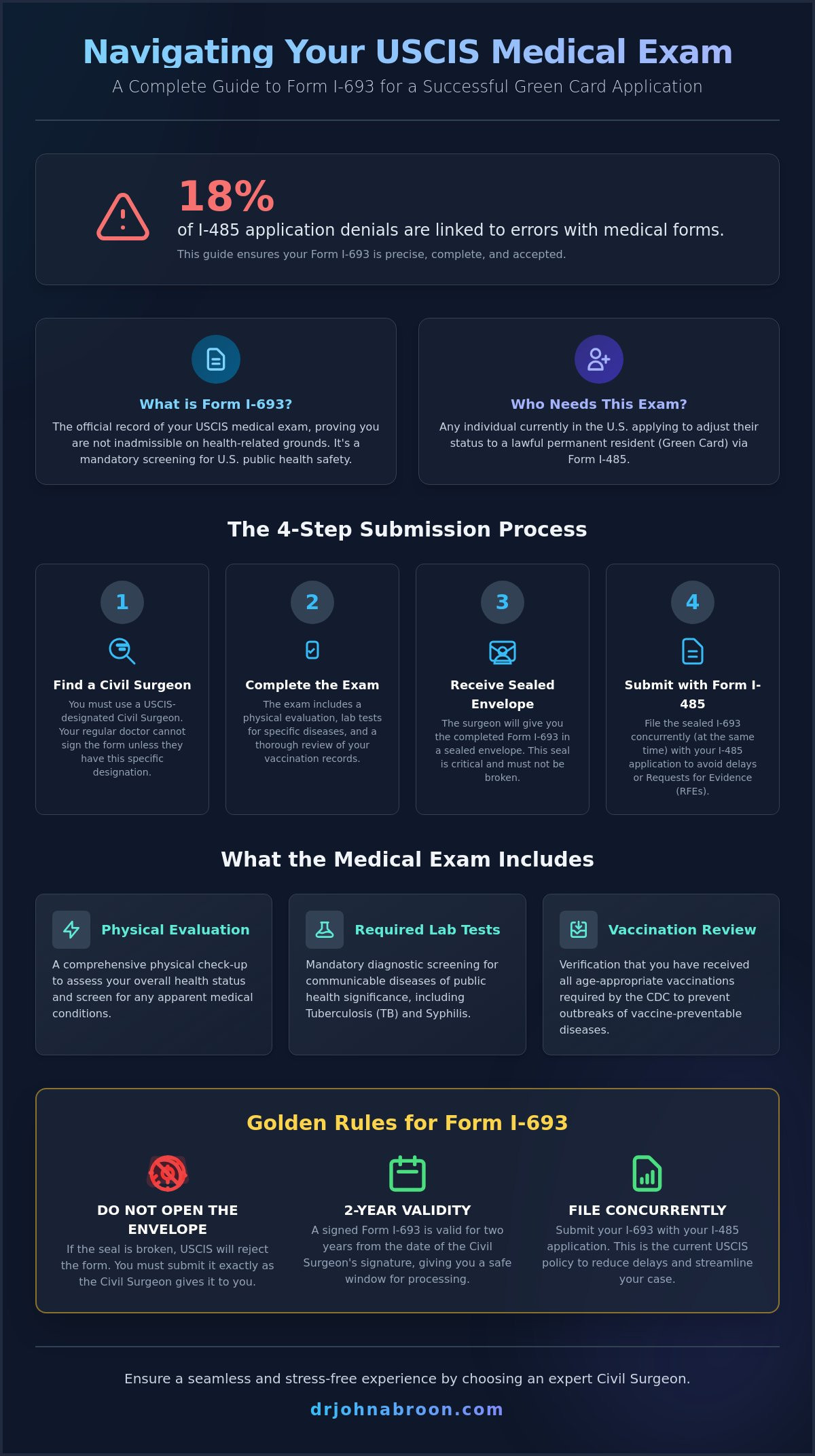
Did you know that nearly 18% of I-485 application denials are linked to missing or outdated medical forms? This statistic highlights why your uscis medical exam is much more than a simple checkup; it’s a critical component of your immigration journey that requires clinical precision. We understand the weight of this moment. The fear of a rejected application due to a minor clerical error or a misunderstood vaccination requirement is a heavy burden to carry while living in New York City.
You deserve a medical experience that replaces this uncertainty with professional reassurance and clear results. We’ve designed this guide to help you manage the I-693 process with complete confidence, ensuring you meet every USCIS requirement without the typical stress. We’ll cover the essential 2026 updates, including the current Form I-693 edition requirements and the latest CDC vaccination guidelines. You’ll also learn how to coordinate with a civil surgeon to ensure your sealed envelope is prepared perfectly for a seamless, successful submission.
Key Takeaways
- Understand why the I-693 is a mandatory requirement for public health safety and how it’s used to secure your path to residency.
- Learn how to select a USCIS-designated civil surgeon with the internal medicine expertise needed to handle complex medical histories.
- Navigate the step-by-step process of a uscis medical exam, including the physical evaluation and the diagnostic tests required for a complete profile.
- Identify the specific, age-appropriate vaccinations required by the CDC to avoid common delays and ensure your records meet federal standards.
- Discover the advantages of a sophisticated, NYC-based medical practice that offers in-house diagnostics for a more efficient and stress-free experience.
Understanding the USCIS Medical Exam & Form I-693 Requirements
The uscis medical exam serves as a specialized health audit designed to protect the collective well-being of the United States. It’s a mandatory requirement for most individuals seeking to adjust their status to that of a lawful permanent resident. While many patients view this as a bureaucratic hurdle, its clinical purpose is to ensure that applicants are not inadmissible on health-related grounds. This screening process is rooted in the long history of the immigration medical exam, which has evolved to balance national health security with the needs of those seeking a new life in America.
Who Needs a USCIS Medical Examination?
If you’re currently residing in the U.S. and applying for a Green Card through Form I-485, you must undergo this evaluation. It’s important to distinguish this from the exams required for those applying from outside the country. Applicants processing their cases through an overseas embassy or consulate visit “panel physicians,” whereas domestic applicants must see a USCIS-designated civil surgeon. This is not the same as a standard annual physical exam nyc. While a routine physical focuses on your personal long-term health goals, the immigration physical is a targeted screening for communicable diseases, such as tuberculosis and syphilis, and a verification of your immunization status.
The Role of Form I-693 in Your Application
Form I-693 is the official document where the civil surgeon records the results of your uscis medical exam. The form is structured into several sections, requiring the physician to document your physical examination, laboratory findings, and vaccination history. As of 2026, USCIS policy mandates that you submit your completed I-693 concurrently with your initial I-485 application. This change was implemented to streamline processing and reduce the frequency of Requests for Evidence (RFEs), which often cause significant delays in the residency process.
The handling of the final document is just as critical as the exam itself. Once the civil surgeon completes the form, they’ll provide it to you in a sealed envelope. You must not open this envelope under any circumstances. If the seal is broken or the envelope shows signs of tampering, USCIS will reject the form entirely, and you’ll likely need to repeat the exam. In 2026, a signed Form I-693 remains valid for two years from the date of the civil surgeon’s signature, providing a reliable window for your application to be processed.
- Concurrent Filing: Submit Form I-693 alongside your I-485 to avoid processing pauses.
- Sealed Envelope: Keep the physician’s envelope closed to maintain the integrity of the results.
- Validity: Your results are valid for 24 months, ensuring your medical clearance stays current during the standard review period.
Finding a Designated USCIS Civil Surgeon in NYC
Selecting the right physician for your uscis medical exam is a decision that directly impacts both your health and your future residency status. You cannot simply visit any doctor for this requirement; you must see a USCIS-designated civil surgeon. These physicians have undergone a rigorous application process to act as authorized medical agents for the federal government. They are responsible for certifying that you meet the specific health requirements outlined in the Official Form I-693. Choosing a surgeon who also possesses deep internal medicine expertise ensures that your evaluation is handled with a high level of clinical sophistication. This is particularly vital if you have a complex medical history or require specific clearances.
Civil Surgeon vs. Regular Physician: What’s the Difference?
While your primary care physician nyc may have managed your health for years, they can’t legally sign your I-693 unless they hold the specific federal designation. The civil surgeon’s role is unique because they must follow strict protocols for diagnostic testing and vaccination verification that go beyond standard clinical practice. These doctors act as a bridge between your personal health and the public health standards of the United States. By visiting a practice that balances this regulatory duty with a patient-centered approach, you receive more than a simple checklist. You gain a partner who understands how a chronic condition or a missing vaccine record might affect your application, ensuring every detail is documented with total accuracy.
Why Location Matters for NYC Immigration Physicals
Living in a fast-paced environment like New York City makes convenience and efficiency a top priority. For many Manhattan-based applicants, finding an Upper East Side practice simplifies the logistics of what can often be a multi-step process. A local civil surgeon with in-house diagnostic capabilities can significantly reduce your wait time for blood work and tuberculosis screenings. If a health issue is flagged during your initial physical, a practice rooted in the local medical community can quickly coordinate the necessary follow-up care. This level of personalized attention prevents you from feeling like just another case number in a high-volume clinic.
- In-house Diagnostics: Look for clinics that handle lab work on-site to avoid traveling to multiple locations.
- Internal Medicine Expertise: A doctor with a broad clinical background can better interpret complex health histories.
- Clear Communication: Choose a provider who explains the results of your uscis medical exam directly to you before sealing the envelope.
If you value a concierge-like experience and clinical excellence, consider scheduling your immigration medical exam with a provider who prioritizes your total well-being throughout the entire certification journey.
Step-by-Step: What to Expect During the Immigration Physical
Walking into a professional medical suite for your uscis medical exam shouldn’t feel like an interrogation. Instead, it’s a structured consultation where your personal health history meets federal safety standards. We begin the process with a thorough review of your medical records and any vaccination history you’ve brought along. This initial conversation allows the physician to identify gaps in your immunizations or chronic conditions that might require specific documentation. After this review, the doctor performs a standard physical evaluation. They’ll check your vitals, listen to your heart and lungs, and observe your general physical health to ensure there aren’t any underlying issues requiring follow-up before your application moves forward.
Mandatory Health Screenings and Lab Tests
Laboratory work is a cornerstone of the immigration medical process. USCIS requires specific screenings to protect the public from communicable diseases. For instance, most adult applicants must undergo an Interferon-Gamma Release Assay (IGRA) blood test to screen for tuberculosis. Unlike older skin tests, the IGRA provides a highly accurate result and typically requires only one visit. You’ll also need blood tests for Syphilis (RPR) and urine tests for Gonorrhea, depending on your age. It’s vital to remember that these tests are mandatory. Even if you’ve recently had negative results from another doctor, federal guidelines require these screenings to be performed specifically as part of the official uscis medical exam process to ensure consistency and reliability.
Mental Health and Substance Abuse Evaluations
A comprehensive physical also includes a screening for mental health and substance-related issues. The primary goal is to identify any “harmful behavior” that could pose a risk to the applicant or the public. A board-certified internist handles these questions with the same clinical authority and warmth they bring to any other medical concern. They create a calm, professional environment where you can discuss your history openly and without judgment. This objective evaluation focuses on your current stability and safety, ensuring that your residency application is supported by a complete and accurate health profile.
Once all lab results return, the civil surgeon reviews the data against the requirements of the Form I-693, Report of Immigration Medical Examination and Vaccination Record. They’ll cross-reference your labs, physical findings, and vaccination records to ensure every field is completed with the precision USCIS expects. This thorough review process is what ultimately leads to the signed, sealed envelope that helps you navigate the final steps of your immigration journey with confidence.
- Review: Evaluation of medical history and existing vaccine records.
- Physical: Comprehensive head-to-toe examination by a designated civil surgeon.
- Labs: Mandatory blood and urine testing for specific communicable diseases.
- Finalization: Completion of the I-693 form once all diagnostic results are verified.
Managing Vaccination Records and Requirements
The vaccination component of the uscis medical exam often causes the most anxiety for applicants, yet it’s a straightforward clinical protocol designed to ensure community immunity. USCIS mandates proof of several age-appropriate vaccinations to protect public health within the United States. For most adults, this includes immunization against Tetanus, Diphtheria, and Pertussis (Tdap), Measles, Mumps, and Rubella (MMR), Varicella (Chickenpox), Polio, and Hepatitis B. If your appointment falls during the official influenza season, which runs from October through March, you’ll also need a current flu shot. While requirements can shift, as of May 2026, the COVID-19 vaccine is no longer a mandatory part of the immigration medical evaluation. This change reflects updated federal guidelines, though staying current with all boosters is still recommended for your general well-being.
What to Do If You Have Missing Vaccine Records
Many patients arrive at our Upper East Side office concerned because their childhood records are lost or were never digitized in their home country. We offer sophisticated, concierge-like solutions for these common gaps. We can perform titer testing, which is a precise blood analysis that measures the exact levels of antibodies in your system to prove existing immunity. If the titers show you aren’t protected, or if you prefer to skip the extra blood work, you can receive the required vaccinations directly at our facility during your visit. For individuals with specific medical conditions where a vaccine might be unsafe, our board-certified internist will carefully document these medical contraindications on your I-693. This ensures you remain in full compliance with USCIS standards without compromising your personal health.
A Checklist for Your Appointment
Preparation is the key to a stress-free experience in a busy city like New York. Before you arrive for your uscis medical exam, gather the following essential items to help us streamline your care:
- A valid government-issued photo ID, such as your current passport.
- Any existing vaccination records, even if they’re in a foreign language.
- Records of previous treatments for major conditions, particularly Tuberculosis.
- A copy of Form I-693 with your personal biographical information already filled out.
Providing accurate and complete records from the start prevents the need for repetitive testing and keeps your application on schedule. Our goal is to move you through this process with the calm reliability you expect from a premium medical practice.
Ready to finalize your application? Schedule your immigration medical exam with a practice that values clinical precision and patient comfort.
Completing Your I-693 with Dr. John Abroon in NYC
Dr. John Abroon understands that your residency application represents years of hard work and aspiration. Choosing a seasoned professional for your uscis medical exam ensures that this final clinical step is handled with the gravity it deserves. As a board-certified internist with decades of experience in the heart of Manhattan, Dr. Abroon brings a level of clinical authority that high-volume clinics often lack. Every line of your Form I-693 is reviewed with meticulous attention to detail. This precision is vital; even a single missing signature or an incorrectly dated vaccination entry can trigger a Request for Evidence (RFE) or contribute to the 18% of application denials linked to medical form errors.
The John Abroon Difference: Concierge Immigration Care
What sets this practice apart is the sophisticated blend of elite medical credentials and a warm, approachable bedside manner. We move away from the sterile, rushed atmosphere of typical clinics to provide a steady, personalized experience. Patients seeking an immigration medical exam nyc benefit from a facility equipped with in-house diagnostic tools. This means your blood work and screenings are coordinated within a single, trusted environment, reducing the need for external referrals and fragmented care. It’s a concierge-like approach that prioritizes your total well-being while fulfilling federal requirements with absolute accuracy.
Booking Your Appointment on the Upper East Side
Scheduling your specialized immigration consultation is the first step toward securing your medical clearance. Our Upper East Side office is designed to be a sanctuary of calm in a competitive urban environment. During your initial visit, we’ll walk through your records and perform the necessary evaluations with the directness and clarity you expect from a top-tier medical professional. This isn’t just about paperwork; it’s about providing a professional, stress-free medical experience that respects your time and your future.
While the entire process, including lab processing, typically takes one to two weeks, we recommend scheduling your uscis medical exam at least four to six weeks before you plan to file your I-485. This buffer ensures that any necessary follow-up care or vaccination cycles are completed without unnecessary stress. Your health is the foundation of your new life in the United States. We’re here to ensure that foundation is documented perfectly, providing you with a signed and sealed envelope that represents a major milestone in your residency journey.
- Expert Oversight: Benefit from the clinical judgment of a board-certified internist.
- In-house Efficiency: Streamlined diagnostic testing performed within our office.
- RFE Prevention: Meticulous form completion to ensure total USCIS compliance.
- Patient-Centered Care: A supportive, professional environment for applicants of all ages.
Secure Your Future with Professional Medical Clearance
Your residency journey is a significant milestone that deserves the highest standard of clinical care. By understanding the specific I-693 requirements and choosing a designated civil surgeon who prioritizes accuracy, you protect your application from avoidable delays. We’ve reviewed how proper vaccination documentation and thorough health screenings form the bedrock of a successful submission. It’s not just about meeting a requirement; it’s about ensuring your transition to permanent residency is as smooth and stress-free as possible.
Dr. John Abroon combines decades of expertise with a sophisticated, patient-centered approach to ensure your uscis medical exam is handled with total precision. Since 1997, our Upper East Side practice has provided a reliable sanctuary for individuals navigating this complex process. As a board-certified internist and designated civil surgeon, Dr. Abroon offers the clinical authority needed to finalize your forms correctly the first time. You don’t have to manage these high-stakes requirements alone when professional, concierge-level support is available.
Schedule Your NYC Immigration Medical Exam with Dr. Abroon Today and take the next confident step toward your life in the United States. We’re ready to support your health and your aspirations with the personalized care you deserve.
Frequently Asked Questions
What is the total cost of a USCIS medical exam in NYC?
The total cost for your examination depends on several individualized factors, including your vaccination history and the specific laboratory tests required by federal guidelines. Because every patient’s needs are unique, the final amount often includes the basic physical evaluation plus any additional diagnostic work or immunizations. We recommend discussing your specific medical history during your consultation to receive a clear understanding of the necessary steps for your certification.
How long does it take to get the signed I-693 back?
You can typically expect to receive your signed and sealed Form I-693 within one to two weeks of your initial appointment. This timeframe allows our laboratory partners to process your blood work and tuberculosis screenings with the necessary precision. Scheduling your uscis medical exam approximately four to six weeks before you plan to file your application provides a comfortable buffer for your residency timeline.
Can I use health insurance for my immigration medical exam?
Insurance coverage for the immigration physical varies widely depending on your specific provider and plan. Many insurance companies categorize this exam as an administrative or elective requirement rather than a standard medical necessity. It’s best to contact your insurance carrier directly to verify their policies regarding reimbursement for the physical exam or the associated laboratory tests.
What happens if I test positive for TB during the exam?
A positive result on your initial tuberculosis blood test isn’t a cause for alarm; it simply means we’ll need to perform a follow-up chest X-ray. This secondary screening allows our board-certified internist to confirm that you don’t have active disease and aren’t a risk to public health. We’ll manage this process with clinical authority and care, ensuring that the correct findings are documented to keep your application moving forward.
Do I need to bring my own copy of Form I-693 to the doctor?
While our office provides the necessary paperwork, bringing your own copy of Form I-693 with the personal information sections already completed can help streamline your visit. It’s essential to use the correct edition of the form to avoid rejection. For all exams signed on or after July 3, 2025, USCIS requires the edition dated 01/20/25.
Is the COVID-19 vaccine still required for the Green Card medical in 2026?
The COVID-19 vaccine is no longer a mandatory requirement for the uscis medical exam as of January 22, 2025. While we continue to support preventative health measures for all our patients, you aren’t required to show proof of this specific vaccination for your immigration medical clearance in 2026. We’ll focus instead on the other age-appropriate immunizations required by the CDC.
Can I open the sealed envelope from the civil surgeon to check for errors?
You must never open the sealed envelope, as doing so will immediately invalidate the results for USCIS purposes. If the seal is broken, the immigration authorities will reject your medical form, and you’ll be required to undergo the exam again. We provide a separate, unsealed copy of your results so you can review all the information for your own records and peace of mind.
What if I am pregnant? Do I still need all the vaccinations?
If you’re pregnant, certain “live” vaccinations like MMR and Varicella are generally waived to protect your health and the health of your baby. Our civil surgeon will carefully document these medical contraindications on your Form I-693. This ensures you meet all federal health requirements through a safe, medically appropriate pathway while you’re expecting.