


Could the same side effect be manageable for one person and a reason for concern in another? Weight loss medication side effects depend on the specific drug, dose, and individual health history. Nausea, diarrhea, or constipation can occur with GLP-1 medications, while severe or persistent symptoms may call for medical attention. It’s understandable to wonder what’s expected, what could disrupt daily life, and when to seek help.
Knowing what to watch for can make treatment decisions feel more manageable. This article explains common side effects and warning signs, why risks vary among medications and doses, and what to discuss with your clinician before starting or changing treatment. Your medical history, other medications, and weight-management goals can all shape an individualized plan. A conversation with a clinician, such as a board-certified internist, can help you weigh potential benefits and risks and consider what approach fits your health needs in New York City.
Key Takeaways
- Weight loss medication side effects can vary with the medication, dose, and your individual health history.
- Learn to distinguish symptoms that may be manageable from warning signs that need prompt medical attention.
- Track when symptoms occur, dose changes, hydration concerns, and effects on daily activities to support a clearer conversation with your prescriber.
- Consider medication risks alongside your current medicines, health history, and treatment goals.
- Ongoing clinician follow-up can help review tolerability and adjust your plan as needed.
Weight Loss Medication Side Effects: What They Are and Why They Vary
It’s reasonable to have questions before starting a medication, especially if you’re concerned about symptoms affecting work, meals, or daily routines. Weight loss medication side effects differ across medicines and from person to person. Some people experience unwanted effects; others may have few or none. A side effect, by itself, doesn’t prove that a medication is unsafe or caused a particular symptom.
A medication side effect is an unwanted or unintended response that may occur while taking a medicine, but it doesn’t happen to everyone. An allergic reaction is a specific immune response, while a complication is a health problem that may arise during treatment. These terms aren’t interchangeable, and symptoms can’t always be classified accurately without clinical assessment. If a reaction feels severe or rapidly worsens, seek medical advice rather than trying to diagnose it from a list.
Why the same medication can affect people differently
The prescribed dose and pace of dose changes can shape how treatment feels. Medical history, other medicines or supplements, and individual sensitivity can matter, too. A symptom that begins after a dose change is useful information, but timing alone doesn’t prove the medicine caused it. Illness, diet, or another treatment may also be relevant.
Keep a brief record for your clinician: what you feel, when it starts, how long it lasts, the dose and any recent changes, and whether it affects eating, drinking, sleep, or everyday activities. Include other medicines you take. This record can make a conversation more specific than relying on memory, particularly when symptoms come and go.
What to compare before weighing possible benefits and risks
Compare options by medication class and intended use, not just by brand name or someone else’s experience. Different medicines act in different ways, have different prescribing information, and may call for different safety discussions. The Weight loss drugs overview offers background on medication types and historical context; medication-specific decisions should be based on current prescribing information and your clinician’s guidance.
Before deciding, discuss how the intended treatment fits your goals, health history, current medicines, and ability to tolerate possible effects. Ask what monitoring and follow-up are appropriate for your situation. A clinician-led weight loss management discussion can bring those factors together rather than treating medication as a one-size-fits-all choice.
Online anecdotes can help you identify questions to raise, but they can’t predict your response. Two people may take the same medicine and dose yet have different symptoms, health circumstances, or treatment goals. Focus on your own experience and use it to guide a personalized conversation about potential benefits, risks, and next steps.
How Side Effects Differ Across Weight Loss Medication Types
Side-effect profiles vary by medication class and by the person taking the medicine. A symptom that is common with one treatment may be less characteristic of another, and the same person may respond differently after a dose change. Reviewing the prescribing information for the specific medication is more useful than assuming all weight loss medicines work or feel the same.
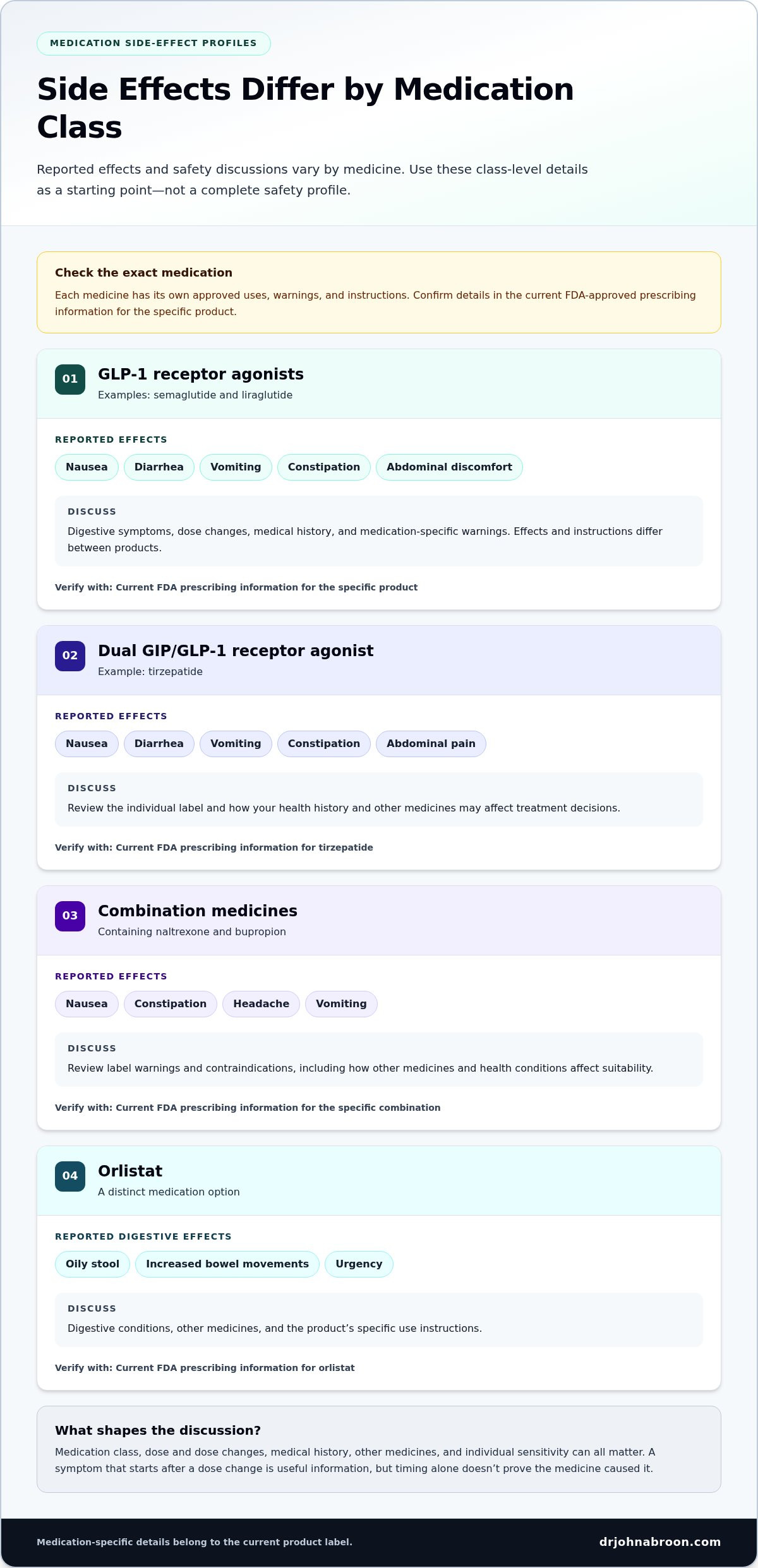
The table below offers a starting point, not a complete safety profile. Each medicine has its own approved uses, warnings, and instructions. Confirm details in the current FDA-approved prescribing information for the exact medication under consideration.
| Medication class and examples | Commonly reported effects | Key discussion points | Source to verify |
|---|---|---|---|
| GLP-1 receptor agonists, including semaglutide and liraglutide | Nausea, diarrhea, vomiting, constipation, and abdominal discomfort are reported in product labeling. | Discuss digestive symptoms, dose changes, medical history, and medication-specific warnings. Effects and instructions differ between products. | Current FDA prescribing information for the specific product |
| Dual GIP/GLP-1 receptor agonist, such as tirzepatide | Nausea, diarrhea, vomiting, constipation, and abdominal pain are among the reported effects. | Review the individual label and how your health history and other medicines may affect treatment decisions. | Current FDA prescribing information for tirzepatide |
| Combination medicines containing naltrexone and bupropion | Nausea, constipation, headache, and vomiting are among reported effects. | Review the label’s warnings and contraindications, including how other medicines and health conditions affect suitability. | Current FDA prescribing information for the specific combination |
| Orlistat | Digestive effects, including oily stool, increased bowel movements, and urgency, are described in prescribing information. | Discuss digestive conditions, other medicines, and the product’s specific use instructions. | Current FDA prescribing information for orlistat |
GLP-1-based medicines and gastrointestinal symptoms
Digestive symptoms are a potential pattern with several incretin-based treatments, but they aren’t inevitable, and the experience isn’t identical across medicines. Symptoms may change during treatment or after dose adjustments. Don’t assume one drug’s instructions apply to another. The FDA-approved weight loss medications and their side effects overview provides useful general context; the current product label is the better source for medication-specific details.
Other prescription options and their distinct risk profiles
Medicines outside the incretin groups can have different effects and precautions, as the table illustrates. These shouldn’t be confused with general risks that may arise during any treatment. A clinician considers the exact medicine alongside your conditions, current prescriptions and supplements, and weight-management goals before discussing whether its potential benefits and risks fit your circumstances.
For a personalized discussion of medication options and tolerability, weight loss management with Dr. John Abroon is available in New York City.
Common Symptoms or Serious Warning Signs? How to Tell the Difference
Some effects may be uncomfortable without being an emergency, but their intensity, duration, and accompanying signs matter. Nausea or constipation, for example, may be reported with some weight loss medicines. That doesn’t mean everyone will experience them or that severe symptoms should be dismissed as routine. The table offers general guidance; follow the current prescribing information for your medication and advice from a clinician.
| What you notice | How to respond |
|---|---|
| Mild nausea, diarrhea, constipation, or stomach discomfort that is improving and doesn’t interfere substantially with daily activities | Note when it occurs and discuss it with your prescriber, particularly if it continues or affects eating and drinking. Follow the medication’s instructions rather than changing the dose on your own. |
| Symptoms that are severe, persistent, worsening, or interfering with daily activities, including repeated vomiting or difficulty keeping fluids down | Contact your clinician promptly for individualized advice. Ongoing vomiting or diarrhea can raise concerns about dehydration, so don’t wait for a routine appointment if you feel significantly unwell. |
| Severe or persistent abdominal pain, especially with vomiting; upper abdominal pain with fever or yellowing of the skin or eyes; or a sudden change in vision | Seek urgent medical assessment. These symptoms can have different causes, and a clinician needs to assess them rather than relying on a symptom list to identify a complication. |
| Signs of a severe allergic reaction, such as swelling of the face, lips, tongue, or throat, trouble breathing, or fainting | Call emergency services now. Severe or rapidly worsening symptoms may signal an immediate emergency. |
Symptoms to report promptly to a clinician
Don’t judge a symptom by its name alone. Mild stomach discomfort may call for a different response than intense pain, repeated vomiting, or symptoms that are getting worse. The medication, dose, recent dose changes, and your health history all inform the next step. Share the medication name and dose, when symptoms began, how they have changed, and any other new symptoms or medication changes.
Use the patient information and current prescribing information for your specific medicine, since warnings and instructions differ among products. If symptoms are severe or persistent, seek individualized clinical assessment rather than assuming they’re an expected effect.
When symptoms may require urgent or emergency care
Severe abdominal pain, sudden vision changes, or symptoms that may suggest gallbladder problems warrant prompt medical assessment. These signs don’t establish a diagnosis, but they shouldn’t be ignored or watched at home when severe or worsening. A clinician can determine the appropriate response based on the full picture.
For trouble breathing, swelling involving the throat or face, fainting, or another severe and rapidly worsening reaction, call emergency services. Don’t delay urgent care to identify the cause yourself. Clear details about the medicine and symptom timeline can help guide assessment once help is on the way.
How to Discuss and Manage Weight Loss Medication Side Effects
A clear plan can make treatment concerns easier to address. If you notice a new symptom, use the steps below to organize what’s happening and decide how to seek guidance. Don’t delay emergency care to complete a symptom log if you’re experiencing a severe or rapidly worsening reaction.
- Note the symptom. Record what you feel, when it began, how often it occurs, and whether it’s improving, staying the same, or worsening. Include recent dose changes and any concerns about eating or drinking enough.
- Check how urgent it feels. Compare your symptoms with the medication’s current patient information and your clinician’s instructions. Severe or rapidly worsening symptoms, or signs of an emergency, call for urgent help rather than waiting for a routine appointment.
- Contact the prescriber. Share the medication name and dose, when the symptom started, and how it affects your day. Mention changes to other medicines or supplements, too.
- Follow individualized instructions. Your clinician can advise what to do next based on the medicine and your health. Don’t change the dose, combine treatments, or stop a prescribed medication without appropriate clinical guidance, unless emergency services direct you otherwise.
Prepare a useful symptom record
A short, consistent record is often more useful than trying to remember every detail during an appointment. Note when symptoms begin, how long they last, how often they occur, and how severe they feel. Add the medication name, dose, and any recent changes, along with prescription medicines, over-the-counter products, and supplements you take.
Include practical effects: Are symptoms making it harder to eat, drink, sleep, work, or complete usual activities? If you’re concerned about hydration, note what you’ve been able to drink and whether vomiting or diarrhea is affecting your intake. These details help your clinician understand the impact, not just the symptom label.
Questions to raise before starting or changing treatment
Before treatment begins or the plan changes, ask which effects are commonly reported with that specific medicine and which symptoms need prompt attention. Discuss relevant diagnoses, past medication reactions, current prescriptions and supplements, and your weight-management goals. Ask how dose changes are handled and what follow-up is appropriate for your circumstances.
Clarify the response plan, too: whom should you contact about a new symptom, what should you do if it worsens, and when is emergency care appropriate? Understanding these steps in advance can reduce uncertainty if a problem arises. The right approach depends on your health history and the medication, not on general advice alone.
Concerns about weight loss medication side effects deserve a thoughtful, individualized conversation. Dr. John Abroon, a board-certified internist and primary care physician in New York City, offers weight loss management to support discussion of treatment risks, health history, and personal goals.
Choosing a Safer, More Individualized Weight Loss Medication Plan in NYC
A medication plan should reflect more than a number on a scale. A clinician considers your treatment goals alongside your health history, current medicines, and ability to tolerate a particular option. The aim is an informed decision based on your circumstances, not a promise that side effects can be prevented or a claim that one medicine is safest for everyone.
How an individualized discussion supports informed choices
Medication suitability depends on an individual clinical assessment. Be candid about conditions you manage, medicines and supplements you take, and any past reactions or difficulties with treatment. Even an experience that seems unrelated may help your clinician understand what matters to you and what questions deserve attention.
Discuss what you hope treatment will support, what effects would be hard to manage, and how you’d like to approach follow-up. Monitoring is an ongoing conversation: new symptoms, changes in tolerability, or shifts in your health may prompt a review of the plan. It can help identify concerns and guide next steps, but it can’t guarantee that weight loss medication side effects won’t occur.
Broader preventive care can also provide useful context for discussing your health. An annual physical exam may be an opportunity to review overall health and raise questions about weight management with your clinician. The right timing and evaluation depend on your individual needs.
What to bring to a weight loss medication visit
Preparation helps make the conversation focused and personal. Consider bringing or preparing:
- A current list of prescription medicines, nonprescription products, and supplements, including how you take them.
- Relevant medical history, including conditions you’re managing and prior experiences with weight-loss treatments or other medicines.
- Your treatment priorities, concerns about possible effects, and any symptoms you’ve noticed during current or past treatment.
These details help your clinician consider potential interactions, relevant health factors, and how a proposed approach aligns with your goals. Ask how follow-up will work, what changes should prompt a call, and how concerns will be reviewed as treatment progresses. Clear expectations can make it easier to speak up early if your experience changes.
Dr. John Abroon is a board-certified internist and primary care physician in New York City. His practice offers weight loss management to discuss treatment options in the context of your medical history, current medicines, and priorities. No single plan fits everyone; an individualized conversation can help you weigh potential benefits and risks without assuming a particular medication or outcome.
If you’re considering treatment or have concerns about a current plan, explore personalized weight loss management with Dr. Abroon in New York City. Bring your questions; your health history and goals are a valuable place to begin.
Take the Next Step Toward Confident, Personalized Care
Your next step doesn’t have to be a final decision about medication. It can be a focused conversation about what matters most to you, the questions you still have, and how treatment choices fit your overall health. If you’re already taking medication, sharing concerns early can help you and your clinician decide how to proceed thoughtfully.
Weight loss medication side effects are best considered in the context of your individual health and goals, not as a reason to navigate treatment uncertainty alone. Dr. John Abroon, a board-certified internist and primary care physician, provides personalized weight loss management in New York City. A clinician-led discussion can help you consider your options and make informed choices at a pace that feels right for you.
Discuss personalized weight loss care with Dr. Abroon and take a clear next step toward your health goals.
Frequently Asked Questions
How long do weight loss medication side effects last?
It varies by medication, dose, and individual response. Some effects may ease as your body adjusts, but persistent, worsening, or disruptive symptoms deserve a discussion with your prescriber. Keep track of when a symptom began and whether it changes after a dose adjustment. Don’t assume it will pass, and don’t change your dose on your own. Ask for guidance based on your specific prescription and health history.
Can weight loss medication cause hair loss?
Hair shedding can occur during substantial weight loss, but the symptom alone doesn’t reveal its cause. Changes in nutrition, another health concern, or treatment may be relevant. Tell your clinician when you first noticed shedding and whether your weight, eating patterns, or medicines have changed. For example, note whether it began after a treatment change or during a period of reduced food intake. Your clinician can assess possible contributors and discuss whether evaluation or nutrition support is appropriate.
What should I do if I miss a dose of weight loss medication?
Check the official instructions for your exact medicine and formulation, since missed-dose guidance depends on the product and timing. If the instructions don’t clearly address your situation, contact your prescriber or pharmacist and provide the medication name and when you missed it. Don’t take an extra dose to make up for the missed one unless the product instructions specifically tell you to. Avoid relying on directions for a different medicine.
Can weight loss medication interact with other medicines?
Yes, some weight-loss medicines can affect how other treatments are used or monitored, and the relevant concerns differ by medication and health condition. Before starting treatment, share a complete list of prescriptions, nonprescription medicines, and supplements. Update your clinician if anything changes, including a new medicine from another prescriber. Don’t stop another prescription or adjust its dose independently. A clinician can review your full medication list and advise based on your circumstances.
Should I stop taking weight loss medication if I feel nauseated?
Not necessarily. Nausea can occur with some treatments, but the right response depends on the specific medicine and your symptoms. Contact your prescriber if it persists, worsens, interferes with drinking or daily activities, or concerns you. Seek urgent care for severe symptoms or signs of an emergency. Don’t stop or change your prescription without appropriate clinical guidance. When you report nausea, include when it occurs in relation to your dose and meals.
Are weight loss medication side effects different after a dose increase?
They can change after a dose increase, though responses differ between people and medications. Follow the schedule provided for your specific prescription, and report symptoms that are severe, persistent, or worsening. Before a planned change, ask what effects to watch for and whom to contact if they occur. Don’t increase, decrease, or repeat a dose based on general online advice. Your prescriber can interpret symptoms alongside the timing of the change.
Can I take weight loss medication if I have diabetes?
A diabetes diagnosis alone can’t determine whether a particular weight-loss medication is appropriate. The decision depends on the specific medicine, your diabetes treatment, health history, and how your care may need to be monitored. Share all current prescriptions before starting or changing therapy, including medicines prescribed by other clinicians. Don’t reduce or stop diabetes medication on your own. Coordinate decisions with your care team so any treatment changes reflect your individual health needs.
Should I discuss weight loss medication if I am planning a pregnancy?
Yes. Pregnancy plans, a possible pregnancy, or breastfeeding may affect whether a medication is appropriate and when treatment should change. Recommendations differ by product, so speak with your clinician before starting, continuing, or changing a prescription, and consult the current product information. Don’t rely on a general online timeline or assume guidance for one medicine applies to another. Share your plans early so the discussion can be tailored to your treatment and circumstances.