


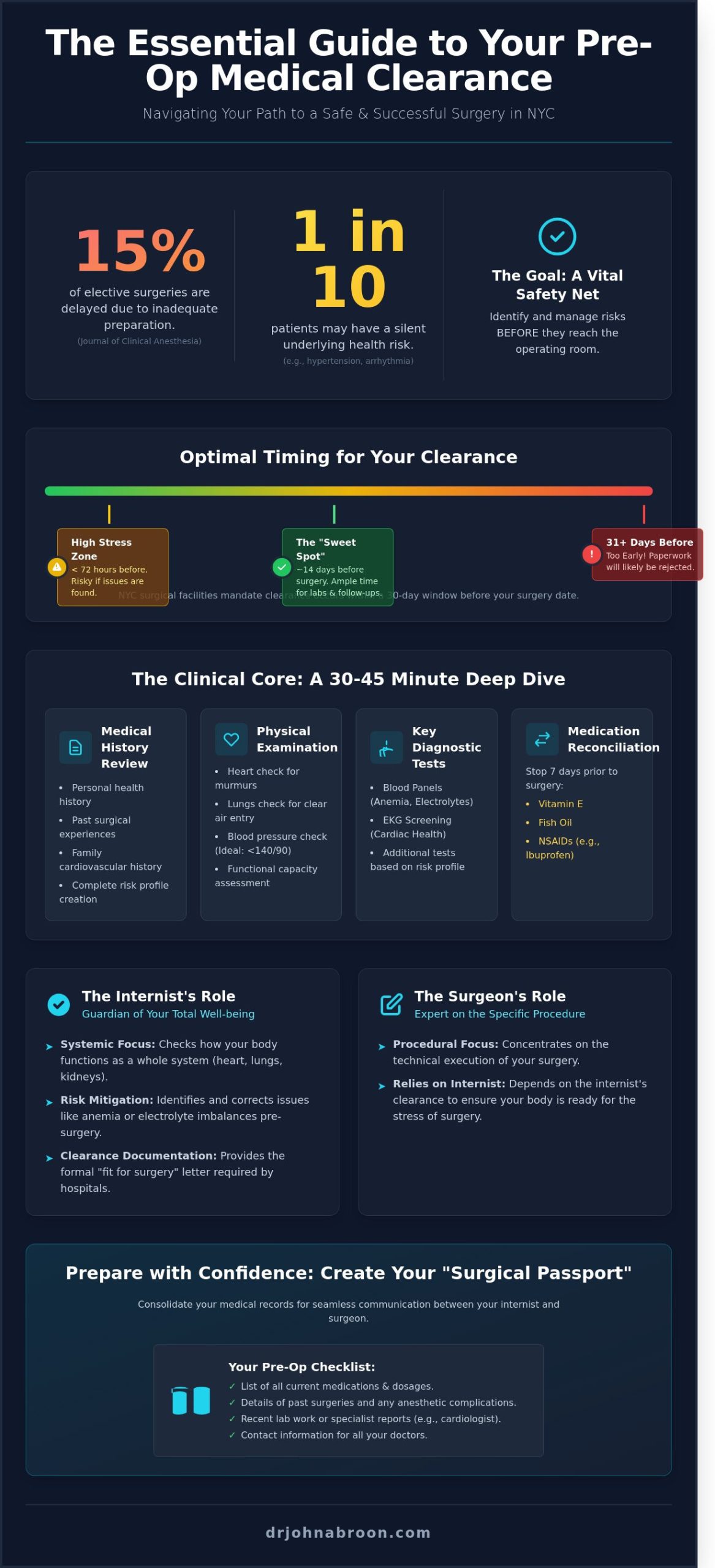
What if the most critical factor in your surgical success isn’t the surgeon’s scalpel, but the diagnostic work completed weeks before you ever enter the hospital? Preparing for a procedure in Manhattan often feels like a race against a ticking clock, and research from the Journal of Clinical Anesthesia suggests that up to 15 percent of elective surgeries are delayed due to inadequate pre-operative preparation. You likely agree that the fragmented nature of NYC healthcare is daunting, and the fear of a “failed” clearance is a significant source of stress. Understanding what is a pre op appointment is the first step toward reclaiming your peace of mind and ensuring your body is truly ready for the physiological stress of anesthesia.
This guide reveals exactly what happens during a comprehensive medical clearance, from specific blood panels to EKG screenings, so you know exactly what to expect. You’ll learn how to prepare effectively to secure your “cleared” status and why this evaluation is a vital safety net for your health. We also provide a clear path to finding a top-rated NYC internist who provides the fast, reliable results your surgical team requires.
Key Takeaways
- Understand how a pre-operative evaluation serves as a vital safety net, identifying underlying health risks to ensure the best possible surgical outcome.
- Gain clarity on what is a pre op appointment by exploring the comprehensive physical examinations and history reviews required for medical clearance.
- Learn how to navigate the complex NYC medical landscape by consolidating records into a “Surgical Passport” for seamless communication with your surgeon.
- Discover the benefits of choosing a personalized, concierge-style internist on the Upper East Side over high-volume, impersonal hospital clinics.
- Prepare for your procedure with confidence by understanding the tailored diagnostic steps that top-rated specialists use to prioritize your total well-being.
Defining the Pre-Op Appointment: More Than Just a Checkup
Understanding what is a pre op appointment is the first step toward a successful surgical outcome. This visit is a formal medical clearance where an internist evaluates your physical readiness for anesthesia and the physiological stress of surgery. It’s a comprehensive diagnostic process that goes far beyond a standard physical exam. John Abroon M.D. provides this essential preoperative care to ensure every patient enters the operating room with a stabilized medical profile. By identifying potential complications before they reach the surgical suite, we create a safety net that protects you during your most vulnerable moments.
The primary objective of this visit is to identify silent risks that might not be apparent in daily life. Statistics show that approximately 1 in 10 patients may have an underlying condition, such as undiagnosed hypertension or a mild heart rhythm irregularity, that could complicate a procedure. While your surgeon focuses on the technical execution of the surgery, they rely on an independent internist to manage your systemic health. This evaluation differs significantly from the hospital’s day-of-surgery intake. While hospital staff check your immediate vitals on the morning of the procedure, your outpatient clearance involves a deep dive into your history, blood work, and cardiac health to prevent last-minute cancellations.
The Timing: When Should You Schedule Your Clearance?
New York surgical facilities typically mandate that medical clearance occurs within a strict 30-day window before your surgery date. If you schedule the appointment on day 31, the hospital will likely reject the paperwork, leading to a frustrating delay. We recommend the 14-day mark as the ideal “sweet spot” for your visit. This provides enough time to process lab results and perform any necessary follow-up tests while ensuring the data remains current for the anesthesiology team. Scheduling too late, such as 72 hours before surgery, creates unnecessary stress if a specific lab value requires a specialist’s second opinion.
The Role of the Internist vs. The Surgeon
Your surgeon is the expert on the specific procedure, but John Abroon M.D. acts as the guardian of your total well-being. When patients ask what is a pre op appointment in the context of their surgical team, they should view it as the bridge between their daily health and the operating table. As a top-rated internist, John Abroon M.D. coordinates directly with Manhattan’s leading surgical centers to provide a tailored health roadmap. He understands your long-term medical history, which allows him to interpret diagnostic tests with much greater nuance than a provider who has never met you. This collaborative approach ensures that your heart, lungs, and kidneys are prepared for the operation. John Abroon M.D.’s practice emphasizes comprehensive care for the whole family, making the transition from his Upper East Side office to the hospital seamless and secure.
- Systemic Focus: The internist checks how your body functions as a whole.
- Risk Mitigation: We identify issues like anemia or electrolyte imbalances that can be corrected before surgery.
- Clearance Documentation: John Abroon M.D. provides the formal “fit for surgery” letter required by New York hospitals.
The Clinical Core: What Happens During the Examination?
Understanding what is a pre op appointment begins with recognizing it as a dedicated safety window for your body. Dr. Abroon conducts a 30 to 45 minute deep dive into your medical history, looking for patterns that might influence your recovery. We review your family’s history of cardiovascular events and your own past surgical experiences to build a complete risk profile. The goals of preoperative medical assessment include identifying hidden risks and optimizing your health before you enter the operating room.
The physical examination focuses heavily on your vital systems. We listen to your heart for murmurs and your lungs for clear air entry; we also ensure your blood pressure is stable, ideally below 140/90 mmHg. Medication reconciliation is equally vital. You’ll receive a clear list of what to pause, such as Vitamin E, fish oil, or NSAIDs like ibuprofen, which should typically be stopped 7 days before your procedure to prevent excess bleeding. We also assess your functional capacity using metabolic equivalents (METs). If you can climb two flights of stairs without chest pain or shortness of breath, you’ve achieved 4 METs, which indicates a significantly lower risk of cardiac complications during and after surgery.
Medical clearance is a professional attestation of surgical readiness that confirms your physiological status is optimized for the upcoming procedure.
Essential Diagnostic Testing and Blood Work
Our office utilizes targeted diagnostics to ensure no detail is overlooked. An EKG is standard for patients over 50 or those with specific risk factors to detect silent arrhythmias or previous cardiac damage. We run a Complete Blood Count (CBC) to check for anemia and a Comprehensive Metabolic Panel (CMP) to evaluate kidney and liver function. For patients with a history of smoking or chronic respiratory issues, we may perform pulmonary function tests to measure lung capacity. These diagnostic steps provide a data-driven foundation for your care, ensuring your body is prepared for the stress of anesthesia.
Evaluating Anesthesia Risk Factors
Safety continues with a thorough screening for sleep apnea, which affects approximately 22% of men and 9% of women; this condition can complicate post-operative breathing and oxygen levels. We also discuss any personal or family history of malignant hyperthermia or adverse reactions to sedation. These findings are shared directly with your surgical team, ensuring the anesthesiologist’s plan is perfectly tailored to your unique biology. This collaborative approach is a key part of understanding what is a pre op appointment in a professional clinical setting. If you’re preparing for a procedure, you can schedule your pre-operative exam with our top-rated internist to ensure every safety protocol is met with precision and care.
Why an Upper East Side Internist is Vital for Your Clearance
Choosing a private practice for your surgical clearance offers a level of precision that high-volume hospital systems often overlook. In a 2023 review of perioperative care, patients who received individualized assessments showed a 15% reduction in post-surgical complications compared to those in mass-clearance clinics. When you ask what is a pre op appointment, it’s essential to view it as more than a checklist. It’s a deep dive into your unique physiology. Dr. Abroon, a top-rated internist, provides a concierge-level experience that contrasts sharply with the “cookie-cutter” clearances found in 500-bed institutions where patients are often treated as data points rather than individuals.
Managing medical records in Manhattan is notoriously difficult because of fragmented digital systems. Our office acts as a central hub. We coordinate data from your Midtown cardiologist or your downtown endocrinologist to ensure your surgeon has every necessary data point. The primary purpose of a preoperative evaluation is to identify hidden risks before you enter the operating room. This involves personalized risk stratification tailored to your specific surgery, whether it’s a minor orthopedic fix or a major cardiac procedure.
We also specifically address “White Coat Hypertension,” a condition affecting nearly 30% of our anxious NYC surgical patients. A single high blood pressure reading in a cold, sterile hospital could unnecessarily delay your procedure. We take the time to perform multiple readings in a calm, inviting environment. This ensures your records reflect your true cardiovascular health rather than a temporary spike caused by the stress of the city or the upcoming surgery.
The Benefit of In-Office Diagnostic Tools
Efficiency is paramount for busy New Yorkers. Our facility features on-site EKG machines and professional lab collection services, meaning you won’t spend 60 minutes traveling to a separate testing center in a different neighborhood. By supervising these tests directly, Dr. Abroon ensures 100% accuracy in lead placement and blood draw protocols. This integrated approach speeds up the clearance timeline, often delivering comprehensive results to your surgical team within 24 to 48 hours.
Managing Pre-Existing Conditions for Surgery
Optimization is the ultimate goal for patients with chronic conditions. For those with diabetes, we aim for a blood glucose level below 180 mg/dL during the perioperative period to minimize infection risks. If you have hypertension, we develop a strict medication protocol for the 7 days leading up to your surgery. We don’t just clear you; we prepare you. This includes direct consultation with your other NYC specialists to align every aspect of your care plan, ensuring a steady and predictable recovery.
How to Prepare for Your Pre-Op Appointment in NYC
Understanding what is a pre op appointment helps you approach your upcoming procedure with confidence rather than anxiety. At our Manhattan practice, we view this visit as a collaborative safety check. You aren’t just a patient; you’re an active participant in your own surgical success. Proper preparation ensures that Dr. Abroon has every data point necessary to clear you for surgery without delay.
Your first task is to compile a “Surgical Passport.” This isn’t a vague summary; it’s a precise list of every medication, over-the-counter drug, and herbal supplement you currently ingest. Accuracy is vital. For example, if you take 10mg of Lisinopril for blood pressure or a 20mg dose of Lipitor, write it down. Don’t overlook supplements like Vitamin E or Fish Oil, as these can impact blood clotting during a procedure. Studies show that patients who arrive with a complete medical history see a 40% reduction in surgical delays.
If you’ve received specialized care at other major NYC institutions or from other specialists within the last 24 months, secure those records before your visit. Cardiac stress tests from 2023 or pulmonary function results from a 2022 specialist visit are essential. Having these physical or digital copies ready for Dr. Abroon ensures a comprehensive view of your health. Preparation reduces the likelihood of needing follow-up appointments.
You should also document your full surgical history. List the specific year and type of procedure, such as a 2016 appendectomy or a 2019 hernia repair. Most importantly, note any adverse reactions to anesthesia. If you experienced severe post-operative nausea or a prolonged wake-up time in the past, that’s critical information for your current surgical team. Finally, confirm your NPO (nothing by mouth) requirements. For standard pre-operative blood panels, we typically require an 8-hour fast. If your appointment is at 9:00 AM, you should stop eating and drinking by 1:00 AM.
The Essential Pre-Op Checklist
When you consider what is a pre op appointment, think of it as a logistical hub. To keep the process smooth, bring these items to our office:
- Insurance and Forms: Your current insurance card and the specific clearance forms provided by your surgeon’s office.
- Allergy List: A written list of all allergies, specifically noting reactions to latex or medications like penicillin.
- Key Contacts: Phone numbers for your surgical coordinator and the hospital where the procedure will take place.
Questions to Ask Your Doctor During the Visit
This visit is your opportunity to gain total clarity. We encourage you to be proactive by asking these specific questions:
- “Which of my daily medications should I take on the morning of surgery?” (This is particularly important for blood thinners or diabetic medications).
- “Are there specific lifestyle changes I should make this week to improve recovery?” (For instance, stopping smoking 72 hours before surgery can improve oxygen levels).
- “How will you communicate these results to my surgical team?” (We typically send results within 24 to 48 hours to ensure your surgeon is fully informed).
By organizing your records and preparing your questions in advance, you transform the pre-operative process from a hurdle into a streamlined path toward health. If you are ready to secure your surgical clearance with a top-rated internist, schedule your comprehensive pre-op exam with Dr. Abroon today.
Streamlined Medical Clearance with Dr. John Abroon
Dr. John Abroon provides a concierge medical experience that transforms the standard clearance process into a sophisticated, stress-free journey. For over 25 years, he has served as a trusted partner for New York City’s most demanding surgical cases, working alongside the city’s elite surgeons. His practice on the Upper East Side focuses on a tailored approach where clinical excellence meets patient comfort. When individuals ask what is a pre op appointment, they often expect a brief physical exam; however, Dr. Abroon treats this visit as a vital diagnostic safeguard. He ensures that every physiological detail is accounted for before you enter the operating room.
The concierge model at this 72nd Street practice prioritizes your time and your health. You won’t find the sterile, rushed atmosphere of a typical clinic here. Instead, the environment is calm and focused, allowing for a deep dive into your medical history and current physical state. Dr. Abroon utilizes his extensive experience to identify potential risks that others might overlook, providing a level of thoroughness that grants both the patient and the surgeon total confidence. This personalized evaluation is the cornerstone of a successful recovery and a safe surgical outcome.
Time is often a critical factor when preparing for surgery. Dr. Abroon offers fast-track options for patients with urgent timelines, frequently delivering comprehensive clearance results within 24 to 48 hours. If your surgeon requires immediate documentation for a pending procedure, the office staff coordinates every detail with precision. This efficiency doesn’t sacrifice quality; it reflects a practice that is deeply rooted in the fast-paced NYC medical community. By streamlining the diagnostic process, Dr. Abroon removes the administrative burden from the patient, allowing you to focus entirely on your upcoming procedure.
Expertise in Complex Clearances
Major surgeries, such as total hip replacements, cardiac valve repairs, or extensive reconstructive cosmetic procedures, require more than just standard paperwork. Dr. Abroon specializes in handling complex clearances for a diverse patient population, including international travelers who seek NYC’s world-class surgical expertise. He meticulously reviews cardiac rhythms, pulmonary function, and blood chemistry to ensure your body is prepared for the stress of anesthesia. His commitment to safety goes beyond the basics, as he often collaborates directly with surgical teams to discuss specific patient needs or underlying chronic conditions.
Booking Your Appointment on the Upper East Side
Your first visit to the office on East 72nd Street is designed to be informative and welcoming. During this session, Dr. Abroon performs a comprehensive physical, reviews your full medical history, and conducts necessary on-site testing like EKGs or blood draws. The goal is to provide a clear, definitive medical standing that your surgeon can rely on. You’ll leave the office with a better understanding of what is a pre op appointment and why it is the most important step in your surgical preparation. The staff makes scheduling simple, ensuring you meet all your pre-surgical deadlines without unnecessary stress.
Take Control of Your Path to a Successful Recovery
Understanding what is a pre op appointment is the first step toward a safe and predictable surgical outcome. This evaluation isn’t just a routine checkup; it’s a vital clinical foundation that ensures your body is ready for anesthesia and the healing process. By partnering with a board-certified internist who has 25+ years of NYC experience, you ensure that every detail of your health is scrutinized for your safety. Dr. John Abroon provides a streamlined experience by offering on-site EKG and diagnostic testing at his Upper East Side office, located just minutes from major Manhattan hospitals. You’ll receive faster results and a personalized care plan that addresses your specific medical history. Don’t leave your surgical clearance to chance when you can access elite expertise in a warm, patient-centered environment. Taking this proactive step today means you can walk into the operating room with total peace of mind tomorrow.
Secure your surgical clearance with New York’s trusted internist, Dr. John Abroon.
Your journey to health deserves the highest standard of care, and we’re here to support you every step of the way.
Frequently Asked Questions
How long is a pre-op appointment valid for in New York?
In New York, a pre-surgical clearance is typically valid for 30 days before your scheduled procedure date. Most Manhattan hospitals and surgical centers require this evaluation to be performed within this 30-day window to ensure your health status hasn’t changed. If your surgery is delayed beyond this four-week limit, you’ll likely need a follow-up assessment to maintain safety standards and institutional compliance.
What happens if my medical clearance is ‘denied’?
If your medical clearance is deferred, it means we’ve identified a health variable that requires optimization before surgery. For instance, if your blood pressure exceeds 140/90 mmHg, we’ll work to stabilize it first. This isn’t a permanent rejection; it’s a safety protocol. Dr. Abroon will coordinate with your surgeon to reschedule once your diagnostic markers meet the 100% safety threshold for anesthesia.
Do I need to fast before my pre-op appointment?
You should fast for 8 to 12 hours before your visit if your surgeon has requested a comprehensive metabolic panel or lipid profile. This means consuming only water and avoiding food or coffee after midnight. Since 90% of pre-surgical blood tests require a fasted state for accuracy, it’s best to arrive prepared. Our office provides clear instructions during your initial scheduling call to ensure your results are precise.
Will I need an EKG during my pre-op visit?
An electrocardiogram (EKG) is standard for patients over age 50 or those with a history of cardiovascular concerns. This non-invasive test takes about 5 to 10 minutes and allows us to monitor your heart’s electrical activity. Understanding what is a pre op appointment involves knowing these diagnostic steps ensure your heart can safely handle anesthesia. Dr. Abroon reviews these results instantly to provide immediate peace of mind.
Can my primary care doctor do my pre-op clearance?
Yes, your primary care doctor can perform your clearance, and it’s often preferred because they have your complete medical history. As a top-rated internist in NYC, Dr. Abroon provides these detailed evaluations for patients across the tri-state area. We ensure all 10+ pages of required surgical documentation are completed accurately and sent to your surgical team within 24 hours of your visit to prevent delays.
What should I bring to my pre-op appointment?
You must bring a photo ID, your current insurance card, and a comprehensive list of all medications and dosages you currently take. If your surgeon provided a specific physical evaluation form, please bring the hard copy as well. Having these items ready allows us to focus on the clinical aspects of what is a pre op appointment while ensuring your administrative paperwork is processed without any 24-hour delays.
Is a pre-op appointment the same as a physical?
While similar to an annual physical, a pre-op visit focuses specifically on your fitness for anesthesia and surgical recovery. We perform a targeted exam that prioritizes your cardiac and pulmonary health. A standard physical covers general wellness, but this 45-minute evaluation uses specific risk-stratification tools to ensure you’re cleared for the stressors of the operating room. It’s a specialized diagnostic session tailored to your upcoming procedure.
What if I have a cold or cough before my pre-op appointment?
You should notify our office immediately if you develop a cough, fever, or congestion before your visit. A minor cold may not stop the clearance, but a fever over 100.4 degrees often requires a 7-day delay to ensure your immune system is strong. Dr. Abroon will assess your respiratory health to determine if it’s safe to proceed or if we should wait until your lungs are 100% clear.